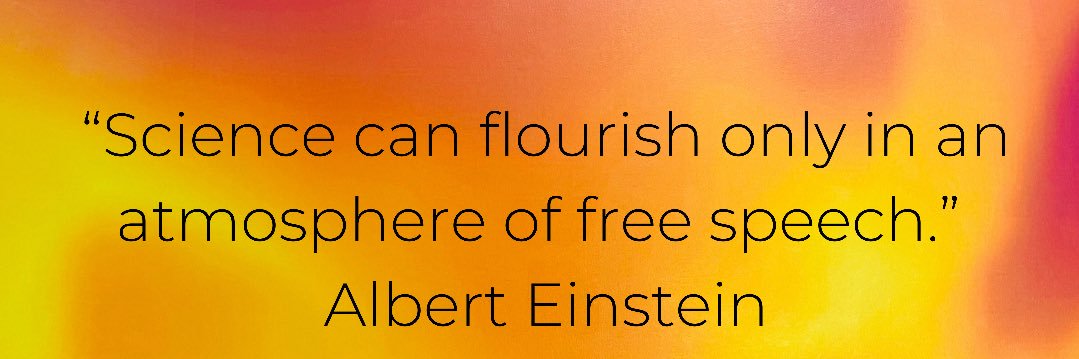
“… today’s truth is frequently tomorrow’s error. There is nothing absolute about the truth. It is elusive … Hence, if truth is to emerge … the process of free debate - the untrammelled clash of opinion - must go on.”
John Stuart Mill, Political philosopher.
On Liberty (1932)
This policy sets a precedent for mass medication of the entire population.
It must be stopped.
Signed for a parliamentary debate:
https://t.co/XzpiIGIzT7
In one of its last-ditch acts, this Labour Government has become even more unhinged.
A newly published Government green paper, Watch This Space, suggests forcing social media platforms to make content produced by public service broadcasters such as the BBC, ITV and Channel 4 “prominent and easily discoverable”.
It is truly shocking that a Western liberal democracy like the UK now thinks it is the Government’s job to decide what news its citizens should read and what is and isn’t deemed “trustworthy”.
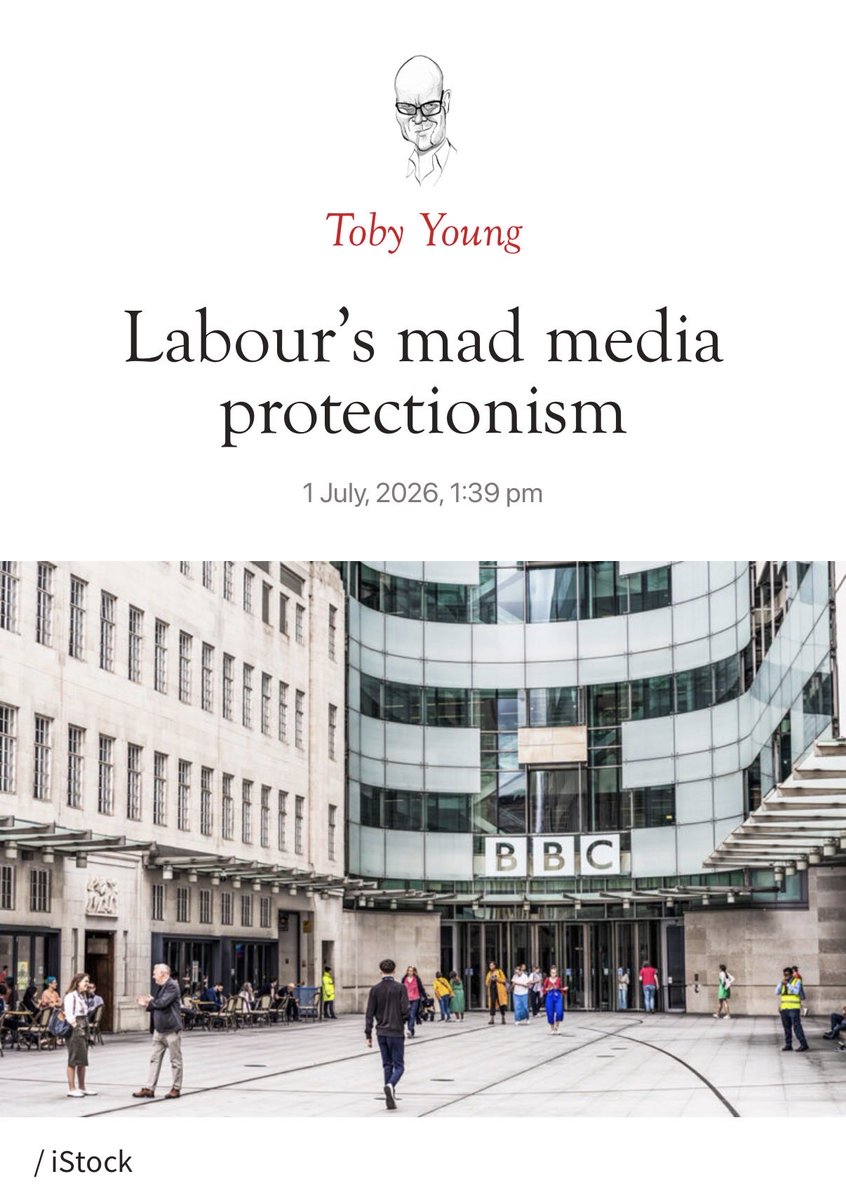
In his latest article for The Spectator, the General Secretary of the Free Speech Union, Lord Young of Acton, says that the Government’s solution to the declining popularity of our legacy media appears to be protectionism.
He raises the possibility of President Trump — the leader of our closest ally — retaliating by forcing social media companies in the US to give greater prominence to domestically produced content. That would harm UK freelance content producers and could also damage the very broadcasters the Government is trying to protect.
Lord Young also makes a serious point about the shift away from traditional news sources, noting that: “The reason the BBC now attracts fewer viewers than YouTube is because people don’t trust it – and with good reason”.
But Lord Young has also exposed what may be Labour’s real objective: bringing Britain’s free press under state control.
Chapter 2 of the green paper suggests Labour may legislate to require social media providers to boost “local and national news publishers” as well as public service broadcasters. This could be a backdoor way of persuading newspapers and magazines to accept state regulation of the press.
That has long been a goal of figures such as Ed Miliband, Harriet Harman and Andy Burnham, following the failure to implement this recommendation from the Leveson Inquiry. Now they may have another opportunity to hobble the free press.
Lord Young has said: “This could be just the ticket, since news publishers would have a powerful incentive to ‘voluntarily’ sign up to a state-controlled regulator, knowing they’d face a huge competitive disadvantage if they didn’t. It could also be a way of doing it without incurring the wrath of the press, since editors are constantly bellyaching about losing eyeballs to algorithmically promoted digital news content. There would be a benefit to submitting to state regulation, as well as a cost.”
Read more from @toadmeister in @spectator 👇
Lots of people worried about finding flour that is folic acid free.
Especially cancer patients and those with heart stents.
But look at this thread.
The problem is WAY bigger than just flour.
In yet another Orwellian move, the Government announced in a green paper this week that it wants to decide what news people can and cannot see, with plans to push approved outlets to the top of social media feeds.
Ministers should not be deciding which news sources the public read — especially in an era when three-quarters of under-25s say they get their news from social media.
As written in The Times, “In a state-sponsored regime in which inconvenient news was pushed out of view, would the grooming gangs scandal or the excesses of transgender ideology ever have come to light? You shouldn’t choose to trust everything you read online; but you shouldn’t trust the state to make the choice for you, either”.
This is dystopian.
Read more below in @thetimes 👇
Genuinely baffles me how they can think that replacing Starmer with yet another NPC will make those disastrous policies more popular with the pesky public
The Free Speech Union has serious concerns about the Government’s proposal to ban under-16s from some social media platforms (but not others).
When the proposal was first announced, ministers cited supposedly 'harmful' platforms such as X, Facebook and YouTube, but made no mention of the left-leaning Bluesky.
A selective ban, rather than a blanket one, means Ofcom will be tasked with enforcing the political preferences of whichever government happens to be in power. If there's a change of government, will X be taken off the banned list and Bluesky put in its place?
Another concern is enforcement. How exactly does the Government intend to make the ban work in practice? In Australia — the model ministers appear keen to follow — many under-16s continue to access social media through VPNs.
Will the Government’s next step be to ban VPNs as well? That would put the UK in the same company as Turkmenistan, Iran and North Korea.
The Government has also failed to explain how this proposal can be reconciled with its duties under the Online Safety Act to protect content of democratic importance and journalistic content — duties that are due to come into force next month.
This is particularly important given the Government’s intention to extend some social media restrictions to 16 and 17 year-olds and at the same time lower the voting age to 16.
How can 16 and 17 year-olds be expected to participate meaningfully in the democratic process if the Government is restricting the content of democratic importance and the journalistic content they're able to access?
The Free Speech Union will be keeping a wary eye on the Government’s plans 👇
During the COVID-19 pandemic, a group of prominent scientists challenged the prevailing government approach to lockdowns. The Lockdown Dissidents tells the story of researchers who say they were censored when they questioned the public health consensus. https://t.co/DSWzXKE7Lj
Milton Friedman on inflation:
“Inflation is just like alcoholism. In both cases when you start drinking or when you start printing too much money, the good effects come first. The bad effects only come later.”
“That’s why in both cases there is a strong temptation to overdo it: to drink too much and to print too much money.”
“When it comes to the cure, it’s the other way around. When you stop drinking or when you stop printing money, the bad effects come first and the good effects only come later.”
“That’s why it’s so hard to persist with the cure.”