Mitochondrial dysfunction continues to emerge as a key player in #SystemicSclerosis. This study provides mechanistic evidence linking mitochondrial Ca²⁺ overload to mtDNA leakage, cGAS-STING activation, and fibrosis, while highlighting circulating mtDNA as a potential biomarker of disease severity. An exciting avenue for future therapeutic development. #Rheumatology
Findings from a study of 50 patients with systemic sclerosis showed mitochondrial Ca2+ overload drives mtDNA leakage and activates cGAS-STING signaling, promoting fibroblast activation and skin fibrosis. Plasma mtDNA also correlated with disease severity, highlighting a potential biomarker and therapeutic target
A&R
https://t.co/3xvfEugVJo
Image: Illustration of the proposed mechanism of mitochondrial DNA on promoting skin fibrosis in systemic sclerosis
Gastrointestinal involvement in systemic sclerosis extends well beyond esophageal dysmotility. This study highlights anorectal dysfunction as an underrecognized manifestation, with potential associations between autoantibody profiles and anorectal manometry findings. Another reminder to proactively ask about lower GI symptoms in patients with #SystemicSclerosis. #Rheumatology
In a cohort of 50 patients with SSc who underwent anorectal manometry, anti-centromere antibodies were assoc with reduced rectal sensation, and anti-centromere/Ro52 antibodies with hypotensive resting pressures. Nearly all patients showed an abnormal rectoanal inhibitory reflex
AC&R
https://t.co/F8pj1QHzHc
Important review on the evolving role of AI in systemic sclerosis.
From ILD imaging to skin fibrosis and microvascular disease, AI may help move us toward more objective, precise assessment and risk stratification.
Will be interesting to see how this translates into routine practice.
#Rheumatology #Scleroderma #ILD #ArtificialIntelligence #PrecisionMedicine
Can AI change how we assess systemic sclerosis? New review in Arthritis Care & Research examines AI applications across: 🫁 ILD imaging 🫀 Cardiac involvement 🔬 Skin fibrosis 🔍 Nailfold capillaroscopy
https://t.co/pdvKoqiGbP
@cristianasieiro
Important data in anti-MDA5+ DM-ILD.
Upadacitinib appears non-inferior to tofacitinib for 6-month transplant-free survival.
Encouraging to see expanding JAK inhibitor options in this high-risk population. #Rheumatology#ILD#Dermatomyositis
Upadacitinib Versus Tofacitinib in Anti-MDA5-Positive Dermatomyositis With Interstitial Lung Disease: A Multi-Centre Cohort Study Emulating a Target Trial
https://t.co/XBF2uGIrdq
AHSCT has clearly moved from experimental to evidence-based therapy for carefully selected patients with rapidly progressive dcSSc and SSc-ILD. This review nicely synthesizes RCT data, long-term outcomes, and the critical importance of patient selection and expert centers.
This work also points toward next-generation cellular therapies that may further reshape treatment of severe autoimmune disease, improve safety and transform outcomes. #Ssc #Scleroderma #SARDILD #AHSCT #CellularTherapy #CART #Rheumatology
Impressive breadth of new papers in ACR Open Rheumatology this month. From SSc-ILD and lupus nephritis to pediatric rheumatology and stem cell transplantation. Great to see such a wide range of clinically relevant work published. #Rheumatology
Lots of papers online this week in ACR Open Rheumatology (and still more to post!)
Phase 2 trial of pirfenidone + MMF vs placebo + MMF in SSc-ILD
https://t.co/KdzzxfUXw6
EuroLupus regimen & clinical characteristic patterns in CYC dosing for pediatric LN
https://t.co/fzXQ6Mks22
Systematic review: renal replacement therapies in LN & end-stage kidney disease
https://t.co/Di9E4r7QFU
Review: Autologous hematopoietic stem cell transplantation in SSc
https://t.co/nbQCG3iTwC
Review: rare disease research in pediatric rheumatology
https://t.co/A8vjge5PZG
Experiences of people with knee OA using an online Tai Chi program
https://t.co/FSQ8FBbgwa
Review: a framework for rheumatologists to manage CAR T cell clinical trials for SLE
https://t.co/NtuLtI5tzl
Important data highlighting how geography continues to influence outcomes in GCA. Delayed diagnosis and higher hospitalization risk in rural settings underscore the need for better access pathways and serves as an important reminder of ongoing gaps in access and equity across rheumatologic care. #GCA #Vasculitis #healthequity #Rheumatology #AccessToCare
Association between rurality and diagnostic delay in GCA in Iowa.
✔️Time to diagnosis was longer in rural
patients (130 vs 45 days)
✔️Risk of hospitalization was also higher
✔️Risk factors in multivariable analysis: rurality⏫️, age🔽, headache🔽
https://t.co/R805RF0IlP
Another strong issue from The Journal of Rheumatology. Important updates the full spectrum of rheumatic diseases. Worth a read for anyone in the field as we close out 2025. #Rheumatology#RhematologyResearch
CAR T-cell therapy is opening a new frontier in rheumatology. Great to see a practical framework for launching SLE trials; one step closer to bringing transformative cellular therapies to patients with severe autoimmune disease. #SLE#Lupus#CART#ClinicalTrials#Rheumatology
CAR T-cell therapy is increasingly being investigated for autoimmune rheumatic diseases, but its translation into rheumatology involves logistical, regulatory, clinical, & ethical complexities. Review in ACROR discusses a framework for rheumatologists to initiate & manage CAR T-cell clinical trials for SLE
https://t.co/NtuLtI5tzl
Important data for SSc-ILD community: PFD added to MMF didn’t yield significant FVC gains, but trends in physical function are worth noting. Highlights the ongoing need for robustly powered studies to refine combination therapy strategies. #Ssc#Scleroderma#ILD#SARDILD
Randomized phase 2 trial of pirfenidone (PFD) or placebo along with MMF in SSc-ILD:
https://t.co/KdzzxfUXw6
• no statistically or clinically significant difference in FVC% improvement from baseline
• mean time to ≥3% improvement in FVC% was numerically shorter with MMF+PFD
• MMF+PFD assoc. with better improvement in PROMIS-29 physical function
• AEs, including serious AEs, more common with MMF+PFD
• low recruitment limited statistical power
An important reminder: pulmonary involvement in Behçet’s is often underestimated.
TCT can unmask not only vascular lesions but also subtle parenchymal injury that may explain atypical symptoms or persistent inflammation. Early detection can be lifesaving.
🫁 In Behçet’s disease, lungs can suffer silently!
TCT scans reveal not just vascular issues like thrombosis & aneurysms, but also hidden parenchymal damage — especially in those with odd symptoms or high inflammation.
📸 Don’t ignore the scan!
https://t.co/tMHe5K01lL
“Promising mechanistic insight into IIM-ILD. IL-33 appears to be a key upstream driver of inflammation, fibrosis, and ERK-mediated EMT in myositis-associated ILD. Targeting this could open new therapeutic avenues for SARD-ILD; an area in urgent need of options #SARDILD#ILD
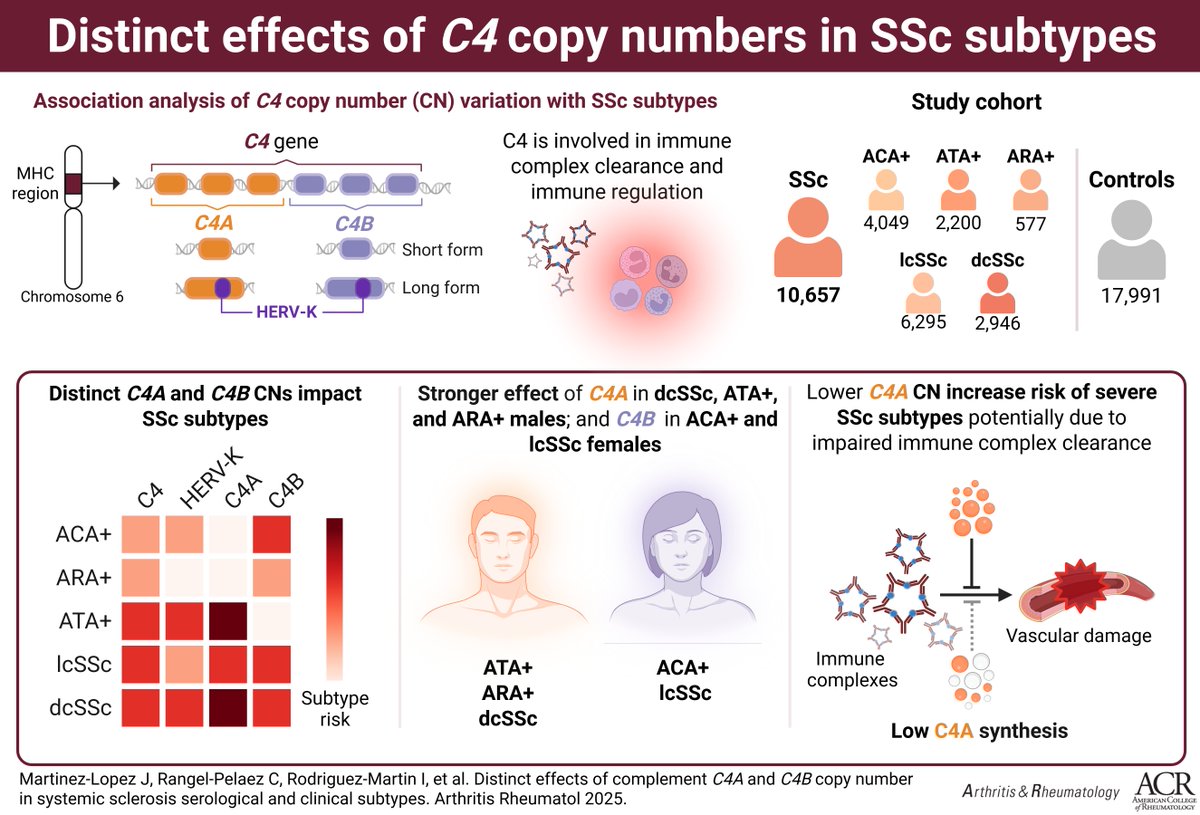
Fascinating genetic insight in SSc. Variation in C4A and C4B copy numbers appears to influence susceptibility to specific serologic and clinical subtypes. Important step toward better understanding SSc heterogeneity & risk stratification.
Genetic contributions of C4A and C4B in systemic sclerosis subtypes susceptibility - https://t.co/XcckAq9kXv
•lower copy numbers (CNs) of C4 were associated with increased risk of different clinical and serologic subtypes of SSc
•C4A CNs had stronger association with ATA+ serology (associated with dcSSc)
•C4B CN had stronger association with ACA+ serology (associated with lcSSc)
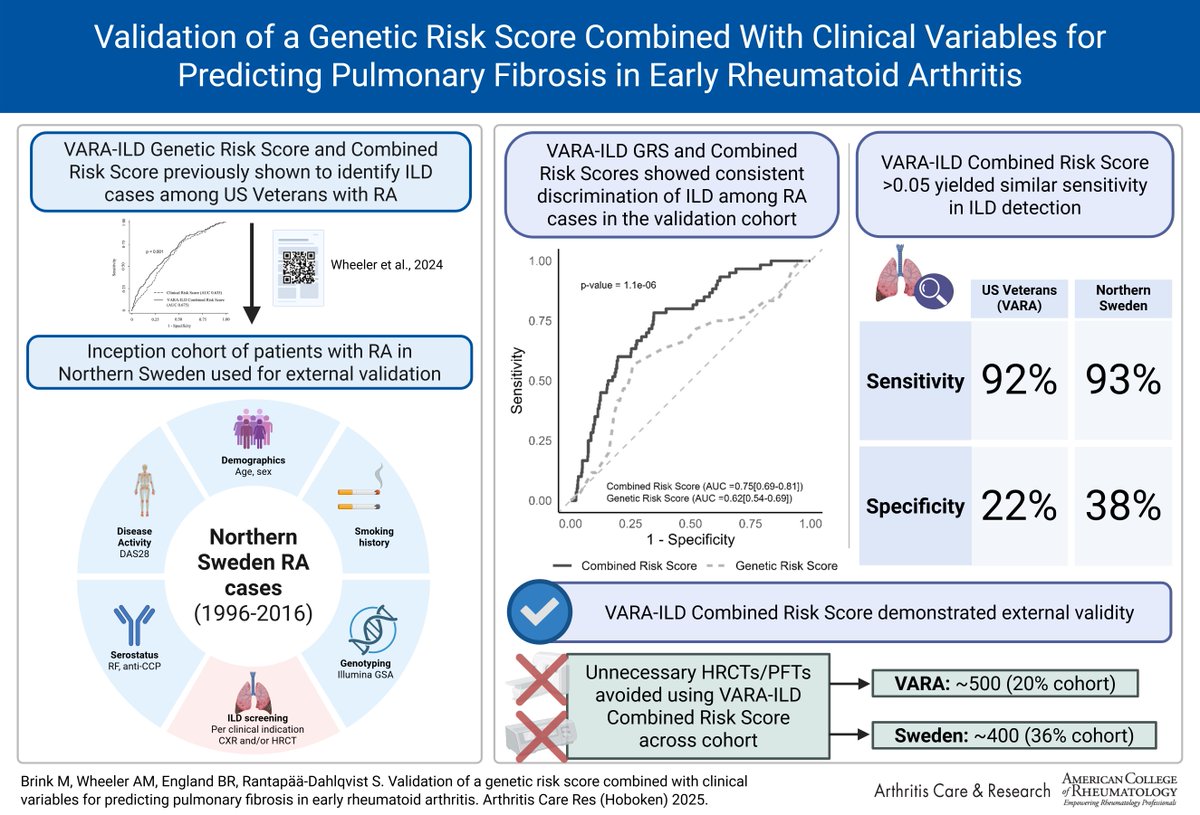
New data on RA-ILD risk prediction:
A combined clinical + genetic risk score (VARA-ILD) performs significantly better than a genetic score alone.
In external validation, sensitivity reached 92–93%. A promising step toward earlier RA-ILD detection. https://t.co/LJDFCWqNXA #SARDILD
Interesting findings:
Digital gangrene after lung or heart–lung transplant in systemic sclerosis can be devastating, with rapid onset and markedly worse survival.
Reinforces the need for close vascular monitoring and early recognition. #Scleroderma#Ssc
Digital gangrene in systemic sclerosis after lung or heart–lung transplant surgery - https://t.co/TvkRDM7Hoq
•25% (4/16) developed dry digital gangrene
•median time to onset 44.5 days (range 8–90) post-op
•all SSc patients with gangrene also had diabetes
•median survival time with digital gangrene was significantly shorter
Great to see further validation of tools that help us identify RA-ILD earlier.
Combining genetic risk scores with clinical variables meaningfully improves detection. This is a promising step toward more precise, risk-stratified screening for our RA patients. #RA#ILD#SARDILD
External validation of a genetic risk score (GRS) and combined risk score for identifying risk of RA-ILD. Combining a genetic risk score with clinical risk factors performed significantly better than the GRS alone
Arthritis Care & Research
https://t.co/i8s3Ibpg4g
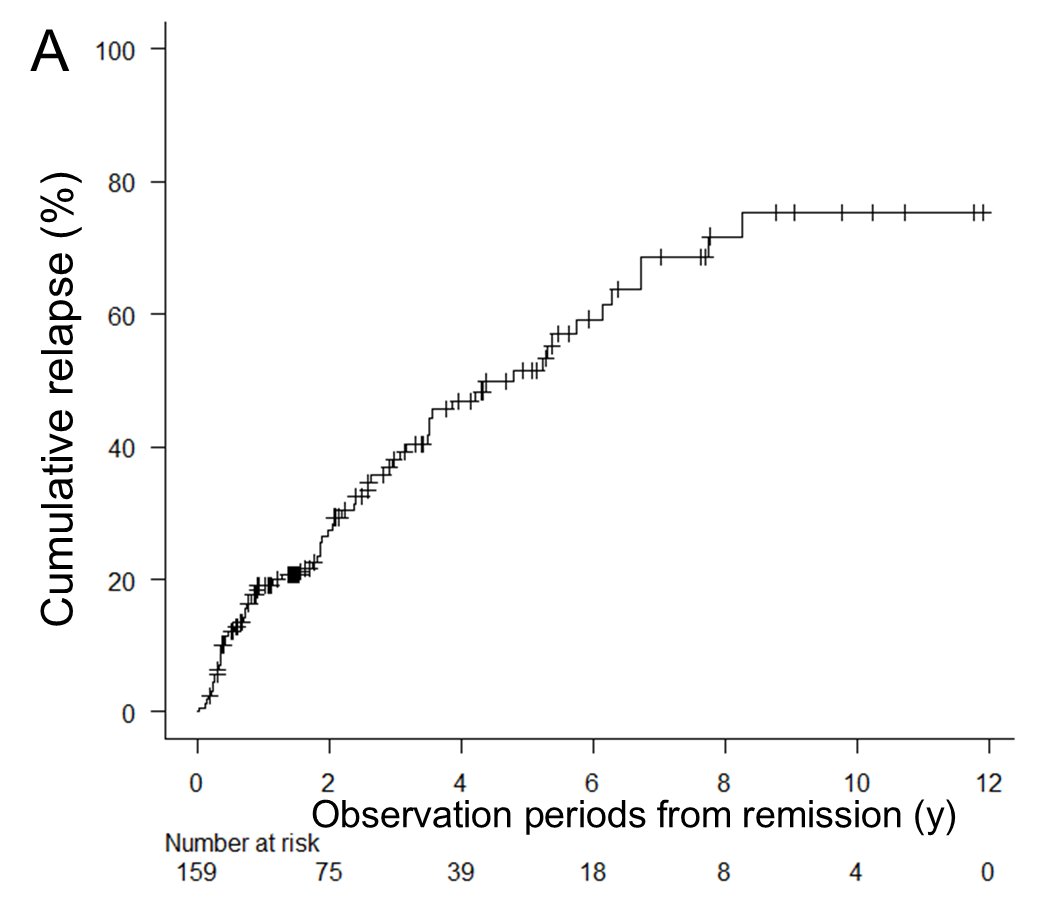
Great study with important insights into relapse patterns in IIM. Autoantibody profile clearly shapes the type of flare (muscle, skin, or ILD). Sharing a visual summary👇
#IIM#IMAC#MSA#ILD#SARDILD#Myositis#Dermatomyositis
New IIM study in A&R – https://t.co/ud2KDI1Wno
• Swedish cohort of adults with IIM
• Relapses after achieving steroid-free remission were frequent (up to 76% over 12 years)
• Patients with anti-Jo1 had nearly twice the risk of relapse
• International Myositis Assessment and Clinical Studies Group (IMACS) flare/worsening definition may lack sensitivity
Big news for the ILD community!
The FDA has approved nerandomilast (PDE4B inhibitor) for adults with IPF, based on the FIBRONEER-IPF & FIBRONEER-ILD trials showing slowed lung function decline in IPF & PPF.
An encouraging step forward for SARD-ILD. #SARDILD#IPF
FDA has approved nerandomilast (PDE4b inhibitor) for treatment of adults with idiopathic pulmonary fibrosis (IPF). Approval is based on 2 RCTs, FIBRONEER-IPF & FIBRONEER-ILD, that show slowing of lung function decline IP & progressive pulmonary fibrosis (PPF) pts. https://t.co/NoUeXi7ioc
A remarkable step forward in IL-23 targeting! Exciting to see an oral formulation showing promising efficacy and safety across psoriasis and psoriatic arthritis.
IL-23 Blockade Goes Oral
A new player is entering the IL-23 arena — and it’s a tablet! Icotrokinra (ICO), a first-in-class peptide that binds and blocks the interleukin-23 receptor (IL-23R), is showing encouraging efficacy and safety across a range of psoriasis (PSO) and psoriatic disease (PsD) studies.
https://t.co/NtrFLBAbn7