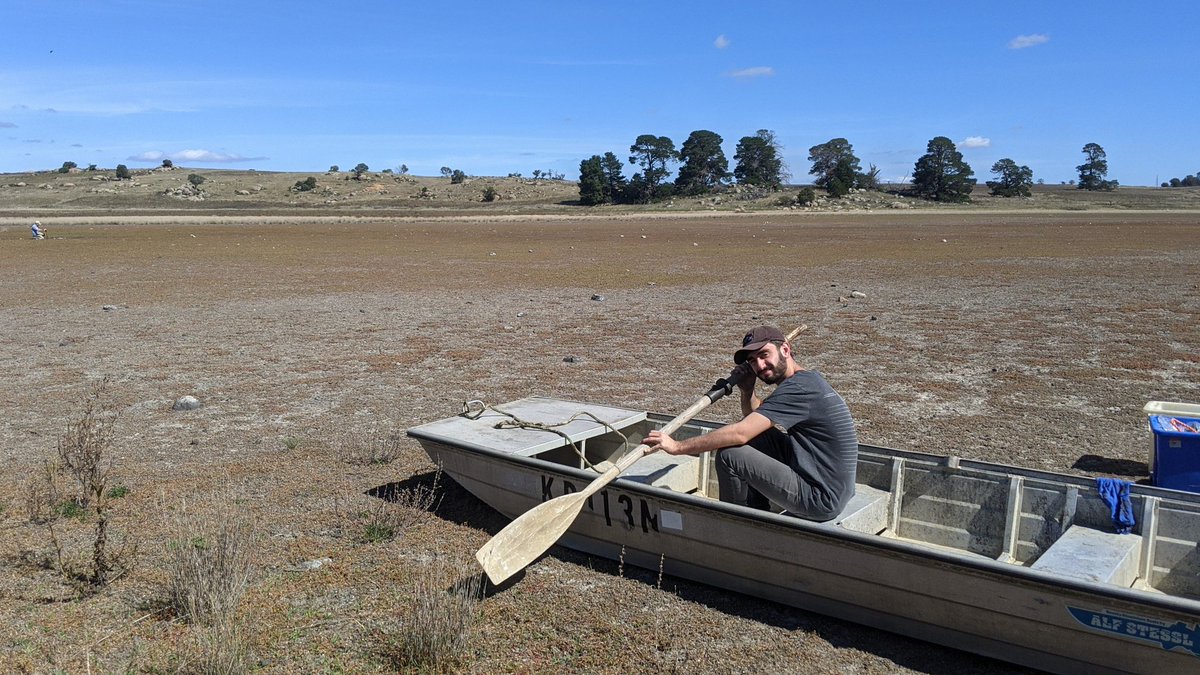
Our latest work on the #Murray#Darling River is now out in @AusQuaternary!
In it, we suggest the Darling River had substantial flows in the mid-Holocene, challenging previous ideas. [🧵1/2]
@UoN_CaMS@Uni_Newcastle@sydneyunigeo @UON_research
https://t.co/eFQMM5le4B
We have a new paper just out that further shows that part of the Lower #MurrayRiver was an estuarine central basin environment during the mid-Holocene sea level highstand. @DrThomasJob@sydneyunigeo@SciReports 1/3
https://t.co/EPvlzVe8QD”
This helps explain why universities get caught up in the culture wars - the public's feeling that academics look down on them (shared by a majority in all groups but Progressive Activists). Worth noting though: public sees UK government and media as even more condescending.
Great paper! A neat example of how hydrological variability impacts biogeochemical cycling, and the implications for important ecosystem services e.g. GHG mitigation
🔋🔋🔋
NGeo: Highly redox active compounds play an important role in biogeochemical element cycles in the aquatic systems that are exposed to frequent hydrological disturbances
@GeomicroTueb @LarsAngenent @doc_jbyrne @bay_ceer @caseycbryce
https://t.co/VRkEYDmJif
When you overpack for #fieldwork 😂
Great week in the field for James' Honours project, researching landscape change in the #SnowyMonaro region
@sydneyunigeo
People have asked whether we could reduce the Warragamba spill by all turning on all our household taps. The spill rate is currently approaching 500 gigalitres (GL) per day. The most water Sydneysiders have ever used (on a very hot summers day) is 2 GL/day. So… I don’t think so!
A clear reminder why we are in a #ClimateEmergency
"... over the coming 50 y, 1 to 3 billion people are projected to be left outside the climate conditions that have served humanity well over the past 6,000 y."
Scariest map you'll ever see
Black: areas essentially uninhabitable by humans in 2020
Brown hatching: areas essentially uninhabitable by humans 50 years from now, under high emissions scenario
Source: https://t.co/kaXvYH56sM
The Bureau has confirmed that #LaNiña has formed in the tropical Pacific, with climate models suggesting it's likely to remain until at least the end of 2020.
Read more in our Climate Driver Update: https://t.co/MKYnElWVUW #ENSO


![DrHannahPower's tweet photo. Our latest work on the #Murray #Darling River is now out in @AusQuaternary!
In it, we suggest the Darling River had substantial flows in the mid-Holocene, challenging previous ideas. [🧵1/2]
@UoN_CaMS @Uni_Newcastle @sydneyunigeo @UON_research
https://t.co/eFQMM5le4B https://t.co/bpMc41tUqX](https://pbs.twimg.com/media/FGJIRbNVIAIPI4N.jpg)