With Prusa ColorMix, your multi-material printer can create more colors than the filaments loaded in it. 🎨 Thin alternating layers blend into new shades, while ColorMix predicts the result in PrusaSlicer and EasyPrint and gives you a palette to paint with. https://t.co/3akXMu2u3d
Breaking: John Ternus to become #Apple CEO on Sept. 1, 2026. Tim Cook to become Apple Executive Chairman.
Official @apple press release https://t.co/KgaG27UDmw
Vance's speech in Budapest is truly outrageous:
1. The US vice president campaigns for an enemy of the EU & NATO, but a friend of Putin & China.
2. Vance attacks the EU for pressuring Hungary, but Hungary has received net about 3% of GDP a year from the EU, but it has squandered much on corruption.
3. In effect, Vance argues that the EU should promote corruption just as the Trump administration does.
Trump and Vance fight freedom and the rule of law in favor of autocracy, kleptocracy and Russia.
US foreign policy has hit the bottom.
Happy 50. Birthday @Apple! Founded on 1st April 1976 by Steve Jobs, Steve Wozniak and Ronald Wayne. I am grateful for all their products and services that made my life and work easier, more efficient, and joyful.
@RheinmetallAG has nothing comparable which is as efficient at this price point. Even worse it’s CEO Armin Papperger recently mocked #Ukraine for their housewife made drones. Europe cannot wait until Rheinmetall and others get up to speed!
A Patriot missile costs four million dollars. A Ukrainian Sting interceptor drone costs two thousand. Both destroy the same Shahed kamikaze drone. One of them can be manufactured at a rate of 10,000 units per month. The other cannot. And the country that invented the cheap one is now training Saudi, Emirati, and Qatari operators to use it against the exact same Iranian drones it was designed to kill in Ukrainian skies.
Ukraine spent three years learning how to destroy Shaheds. Not with expensive air defence systems designed for Cold War scenarios but with small, fast, AI-assisted quadcopters that chase them down at 280 to 450 kilometres per hour, lock on with thermal imaging and computer vision, and ram them out of the sky or detonate a proximity charge at close range. The Sting, built by a volunteer unit called Wild Hornets, has destroyed over 3,000 Shaheds since May 2025. The Bullet, produced by SkyFall and General Cherry, reaches 450 kilometres per hour with AI-assisted terminal guidance. The success rate in Kyiv’s high-threat corridor reached 70 to 90 percent in February 2026, according to Ukrainian Air Force Commander Syrskyi.
The mechanism is elegant. Sensors detect an incoming Shahed. An interceptor launches. A pilot wearing FPV goggles tracks the target using thermal imaging while AI handles detection, lock-on, and terminal-phase precision. The interceptor closes the speed gap at double or triple the Shahed’s velocity and destroys it through kinetic impact or proximity detonation. The pilot retains final manual control for jamming resistance. The entire engagement costs less than dinner for two in Dubai.
Now Zelensky has turned this battlefield necessity into a geopolitical asset. Under defence pacts signed in March 2026, Ukrainian training teams are actively working with Gulf state militaries on co-production, operator training, and AI guidance module integration. The same drones that protect Kyiv from Russian Shaheds will protect Riyadh, Abu Dhabi, and Doha from Iranian ones. The technology is identical because the threat is identical: Iran manufactures the Shahed, Russia deploys it against Ukraine, and Iran deploys it against the Gulf. The supply chain of the weapon created the supply chain of the countermeasure.
A country fighting for its survival against Russia is simultaneously becoming the Gulf’s primary anti-drone technology supplier during a war between the Gulf and Iran. Ukraine is broke, surrounded, and losing territory. It is also the only country on earth with three years of operational data on destroying Iranian kamikaze drones at scale. That data is worth more to Saudi Arabia right now than any weapons system America can sell, because America has never fought a sustained Shahed campaign. Ukraine has fought one every night for a thousand consecutive nights.
Zelensky offered Russia an energy ceasefire. He offered sea drones for Hormuz. And he is selling drone-killing technology to the countries whose oil infrastructure those same drones are threatening. Ukraine is converting its most painful vulnerability, the nightly Shahed bombardment, into a revenue stream, a diplomatic lever, and a security partnership that binds Gulf states to Kyiv’s survival in ways no UN resolution ever could.
The molecule meets the machine. The drone that threatens the refinery is destroyed by the drone that learned to kill it over Kyiv. The war that created the threat created the countermeasure. And the country nobody expected to matter in the Gulf is suddenly indispensable to it.
Watch the intercept below. This is what a $2,000 drone killing a Shahed at 300 km/h looks like in real time.
Read the full analysis - https://t.co/dAOBBMsgDS
@ihtesham2005 It would be even better if you would name and give kudos to the great developer Yousif Amanuel / @DataScientistPy who has created @terrainkapp. See here its originial post on X
https://t.co/upRKyBLmIe
People usually pay $30–$50 for these on platforms like Etsy.
I built @terrainkapp, an open-source map posters creator.
I provide the same capability for free.
TerraInk is a cartographic poster engine built on OpenStreetMap data.
Linke: https://t.co/wT1X7872FW
#mapart#maps
@MillieMarconnni It would be even better if you would name and give kudos to the great developer Yousif Amanuel / @DataScientistPy who has created @terrainkapp. See here its original post on X.
https://t.co/lqrsGNaqGz
People usually pay $30–$50 for these on platforms like Etsy.
I built @terrainkapp, an open-source map posters creator.
I provide the same capability for free.
TerraInk is a cartographic poster engine built on OpenStreetMap data.
Linke: https://t.co/wT1X7872FW
#mapart#maps
People usually pay $30–$50 for these on platforms like Etsy.
I built @terrainkapp, an open-source map posters creator.
I provide the same capability for free.
TerraInk is a cartographic poster engine built on OpenStreetMap data.
Linke: https://t.co/wT1X7872FW
#mapart#maps
someone built a $96 3D-PRINTED MANPADS rocket that recalculates its mid-air trajectory using a $5 sensor and piano wire
its called Project Canard
it integrates with distributed camera nodes to triangulate airborne targets and update flight paths in real-time
it proves the barrier to advanced hardware has completely collapsed, moving precision weapons from defense labs to consumer garages
the entire launcher and interceptor frame is 3D printed in PLA and runs off a standard off-the-shelf ESP32 microcontroller
it even spins up a local Wi-Fi network so you can monitor live telemetry and arm the system directly from your laptop
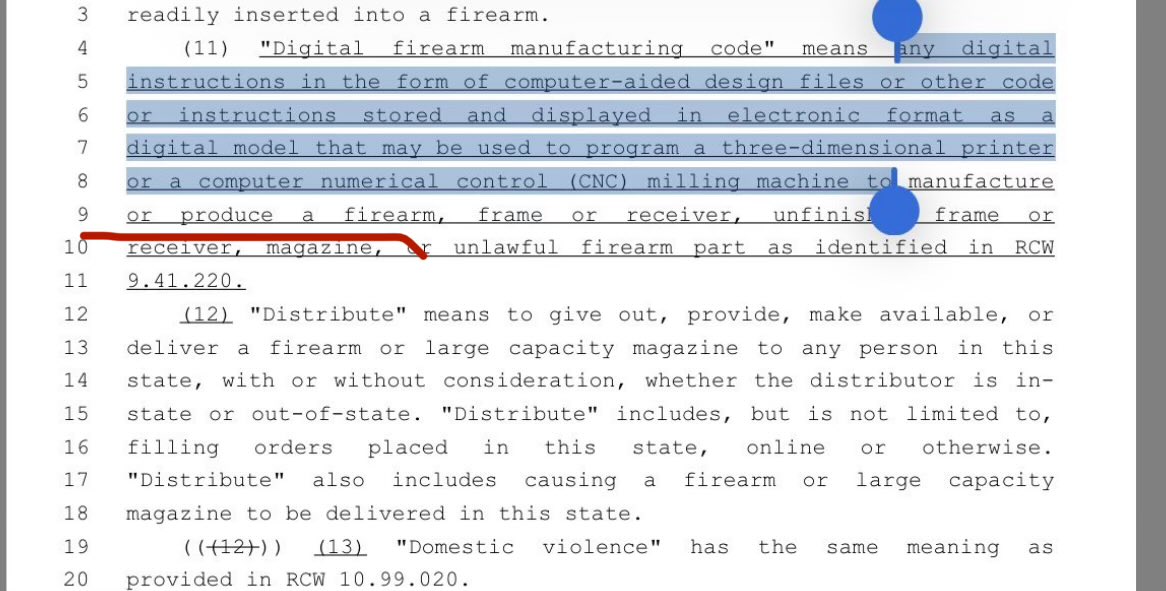
@joeltelling@loyalmoses But the scope of this only in the context of producing firearms with 3D printers or CNC. So that makes sense. Dangerous is everyone is allowed to create weapons on their own!
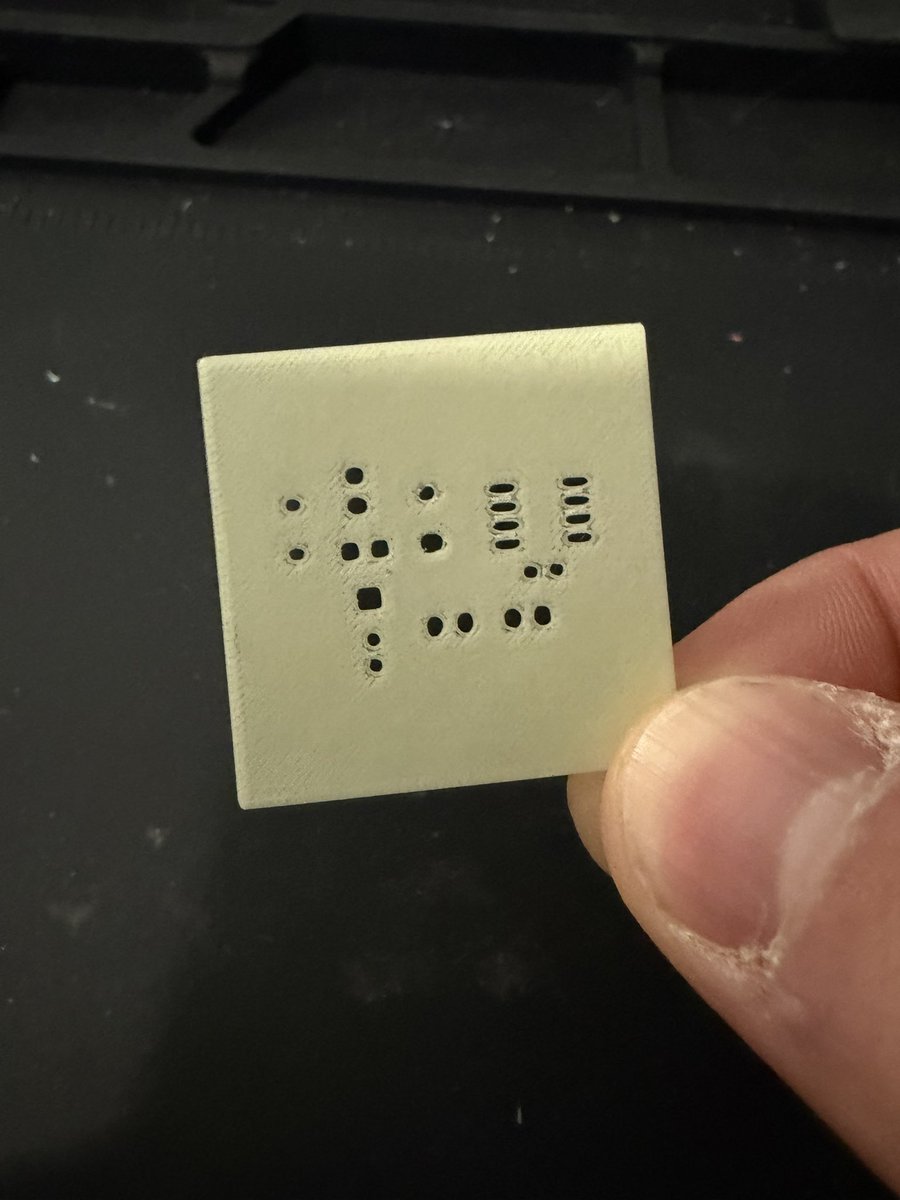
BOOM! A stencil I got quoted $20 for now costs $0.01 to make
Nobody believed in the 3d printed stencil but it worked perfectly!
You guys are all crushed under the boot of big stencil. While I’m liberating the people.
Start 3D printing your own stencils, it works!
Everyone’s missing the real story here.
Meta’s Ray-Ban glasses need human data annotators to train the AI. When you say “Hey Meta” and ask the glasses to analyze something, that video gets sent to Meta’s servers, then routed to Sama, a subcontractor in Nairobi, Kenya. Workers there manually label objects in your footage. They see everything you recorded, intentionally or not.
7 million pairs sold in 2025 alone. Every single pair generates training data that flows through human eyes in Kenya. Workers told Swedish journalists they see people undressing, using bathrooms, having sex, and accidentally filming bank card details. One worker said “we see everything, from living rooms to naked bodies.”
Meta’s automatic face anonymization is supposed to protect people in the footage. Workers say it fails in certain lighting. Faces that should be blurred are sometimes fully visible. The person you recorded without knowing? A stranger in Nairobi can identify them.
Buried in Meta’s terms of service is one sentence doing enormous legal work: the company reserves the right to conduct “manual (human) review” of your AI interactions. That’s the legal cover for routing intimate footage from Western homes to a $2/hour labor force operating under NDAs, office surveillance cameras, and a strict no-questions policy. Workers say if you raise concerns about what you’re seeing, you’re fired.
This is the same company, Sama, that TIME exposed in 2023 for paying Kenyan workers $2/hour to label graphic content for OpenAI while being billed at $12.50/hour per worker. Workers described the experience as torture. Sama ended that contract, then pivoted to labeling Meta’s glasses footage. Same workforce. Same rates.
Meta markets these glasses as “designed with your privacy in mind.” The privacy design is a tiny LED light on the frame that most people don’t notice. The data pipeline behind it routes your bedroom footage to a contractor with a documented history of worker exploitation, failed anonymization, and union-busting lawsuits.
And the next generation of these glasses? Meta is planning to add facial recognition. The same system that can’t reliably blur faces in training data wants to start identifying them on purpose.
The LED light on the frame is doing about as much for your privacy as the terms of service nobody reads.