The Stanley Cup is the ultimate prize in the National Hockey League.
If you win the cup, you get your name engraved on the trophy forever.
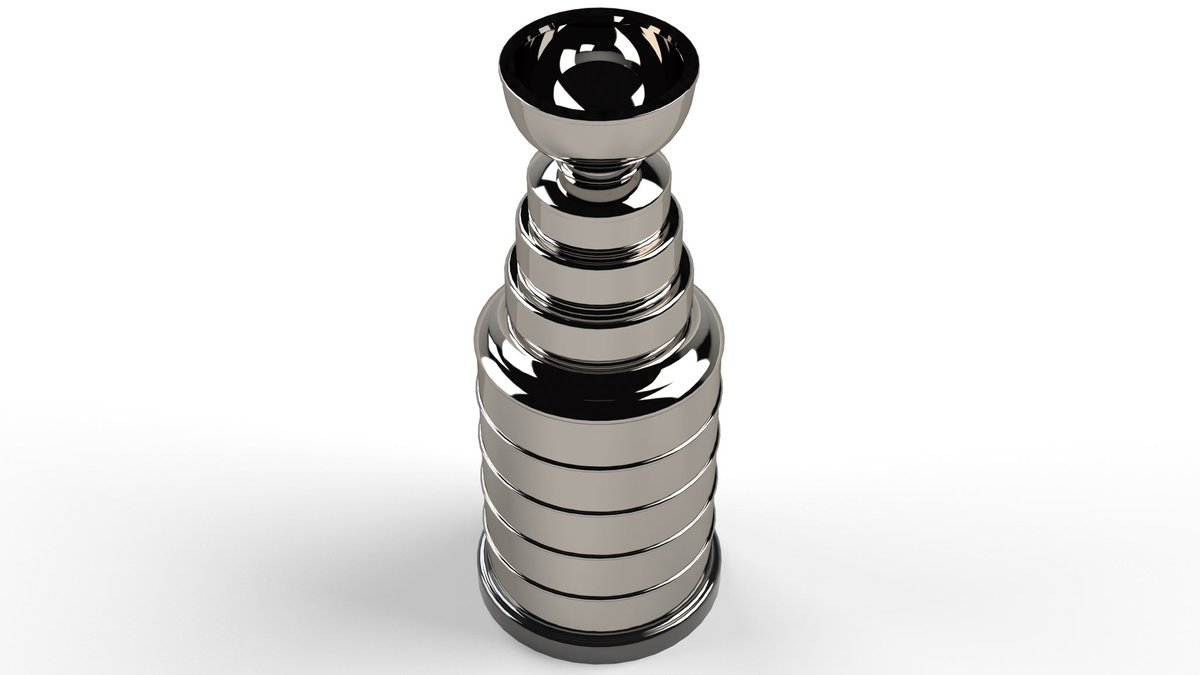
The Stanley Cup is primarily made out of silver and nickel alloy.
The trophy is largely made from sterling silver, which is 92.5% silver and 7.5% other metals, usually copper.
For durability, parts like the bands where names are engraved use a nickel alloy.
Here is a link to my SolidWorks model of the Stanley Cup without the names on it.
Have some fun and 3D print it.
https://t.co/uTg4w9OB4d
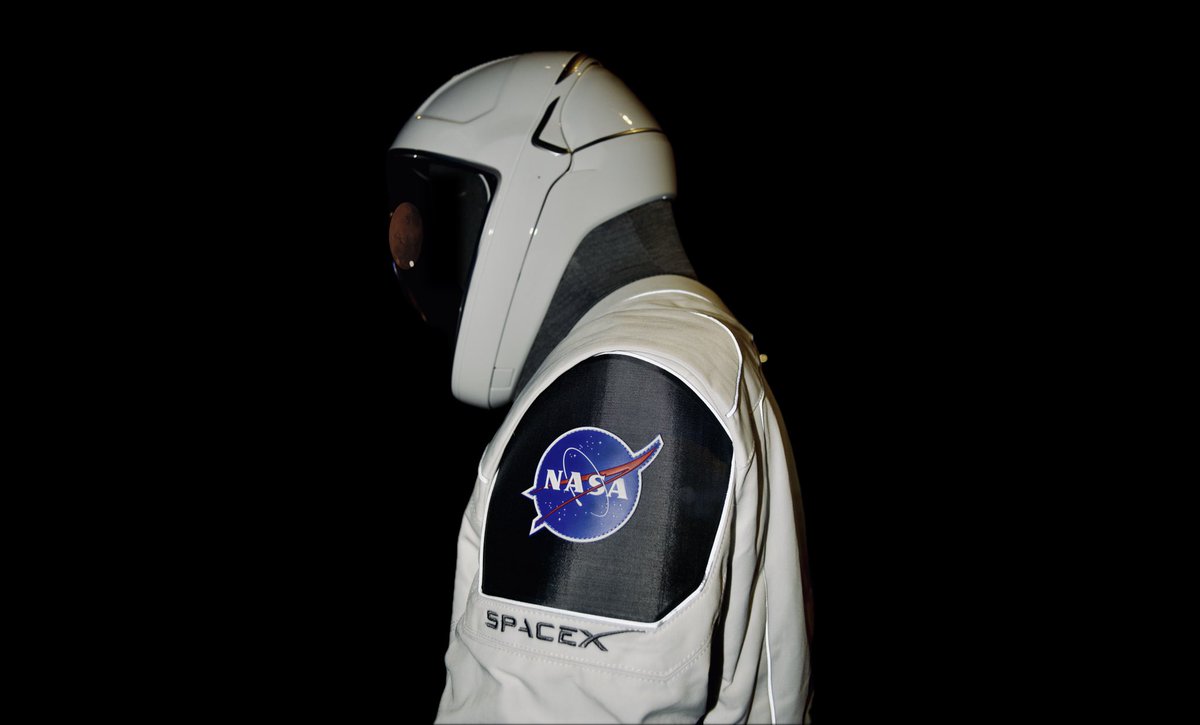
Here are some photographs I took of the @SpaceX astronaut 🧑🚀 suit.
The SpaceX space suit has become iconic for its sleek, futuristic design.
Initially introduced for the Crew Dragon spacecraft, it marks a significant shift from traditional NASA spacesuits, focusing on both aesthetics and functionality.
Astronauts can put on the suit independently in less than 10 minutes, a significant improvement over previous models that required assistance.
SpaceX developed an Extravehicular Activity (EVA) version of the suit for the Polaris Dawn mission, enhancing mobility and adding features like a heads-up display (HUD) and camera for monitoring suit metrics.
Key components like the helmet are 3D-printed using advanced polymers. This allows for precise customization and material use.
The outer layer of the suit uses materials like Nomex, Kevlar, and Teflon, which offer resistance to heat, abrasion, and environmental hazards.
The construction of the Hard Rock Guitar 🎸 Hotel in Hollywood, Florida, was part of a $1.5 billion expansion of the Seminole Hard Rock Hotel & Casino.
Let’s take a closer look at the iconic building and see how its lighting effects are achieved:
The guitar-shaped structure was designed by Klai Juba Wald Architecture, with the project taking nearly 10 years from conception to completion.
The building is 36 stories high, reaching 450 feet into the sky.
The unique shape required innovative construction methods, including the use of curved concrete for the guitar body and advanced engineering for the sloped columns.
The construction involved meticulous coordination due to the complexity of the shape, with over 40,000 cubic yards of concrete used.
The hotel's exterior is covered with 2.3 million LED lights, specifically 16,800 V-Sticks, which are strips of LED video fixtures. These LEDs are programmed to change color and pattern, allowing for dynamic light shows.
Different patterns and animations are constantly shown on the side of the entire building. One moment it can show the American flag 🇺🇸 waving in the wind and the next it can show an animation of Frosty the Snowman. ☃️
To mimic the strings of a guitar extending into the sky, six high-powered light beams, or "light cannons," are installed at the top of the building. These project beams up to 20,000 to 30,000 feet into the sky.
Current year for each planet, assuming they started at year 0 at the same time:
- Mercury: 8405
- Venus: 3287
- Earth: 2025
- Mars: 1077
- Jupiter: 171
- Saturn: 69
- Uranus: 25
- Neptune: 13
- Pluto: 9
Happy New Year! 🥳
The Christmas Tree Cluster!
The Christmas Tree Cluster (NGC 2264) is approximately 2,500 light-years from Earth.
It's estimated to be about 1-5 million years old.
This cluster in the constellation Monoceros has many young stars, which form a shape reminiscent of a Christmas tree when viewed with special imaging techniques.
The cluster contains around 600 stars, with many being pre-main-sequence stars (a young star that has not reached the stage where it is fusing hydrogen at its core), which are still in the process of formation!
Merry Christmas! 🎁🎄
The former orbiter access arm that was used at launchpad 39A by astronauts to board the Space Shuttle. 🚀
Utilized by 82 shuttle crews, the arm was positioned 147 feet up over the pad.
It also served as an escape route until 7 minutes 24 seconds before launch. Then it was retracted.
Launchpad 39A is located at NASA's Kennedy Space Center in Florida.
The arm was crucial during the Space Shuttle Program, which ran from 1981 to 2011.
The arm's connection to the orbiter includes a "white room" for six people.
Here astronauts put on their helmets and parachutes for final launch preparation.
This is where they would take their last steps on Earth until they returned.
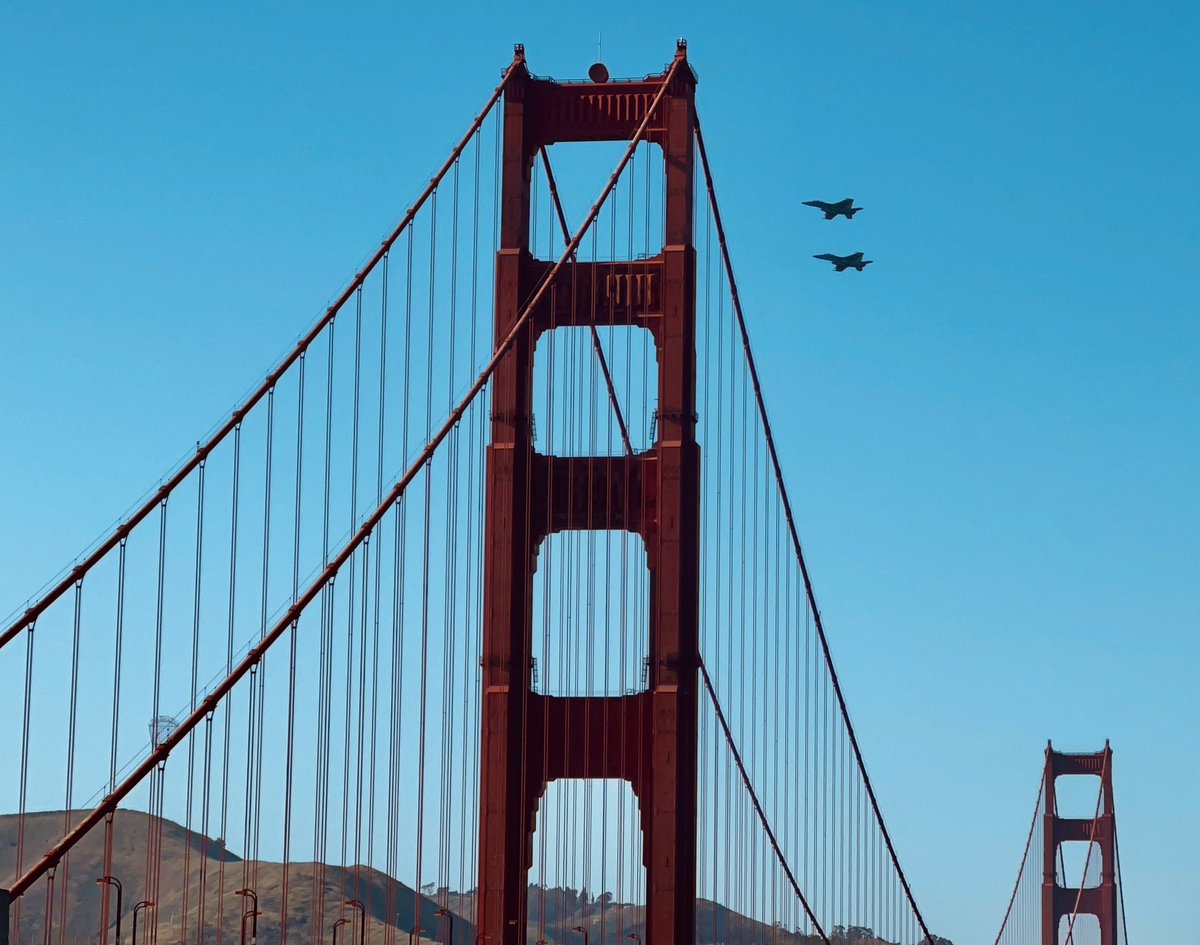
The Golden Gate Bridge 🌉 cost approximately $35 million to build, which would be over $600 million in today's dollars, adjusted for inflation.
Work began on January 5, 1933, and the bridge was completed on May 27, 1937. The total construction time was just over four years.
The main cables are made of 27,572 individual steel wires bundled together. Each main cable is about 3 ft in diameter.
Concrete was used extensively in the bridge's anchorage and towers.
During construction, safety nets were installed beneath the bridge, saving the lives of 19 men. These workers became known as the "Halfway to Hell Club."
Unfortunately, a total of 11 men died during construction including 10 in a single day.
The bridge can sway up to 27 feet and move up and down as much as 16 feet due to wind.
Golden Gate Bridge 🌁 main cable cross section.
The 27,572 individual steel wires that make up the main cables.
Each main cable is about 3 ft in diameter.
An F1 🏎️ Race Car can theoretically drive upside down on the roof of a tunnel.
This is due to the car’s front and rear wing creating more downforce than the weight of the car.
This clip explores how Bernoulli's Principle makes the F1 car wings work.
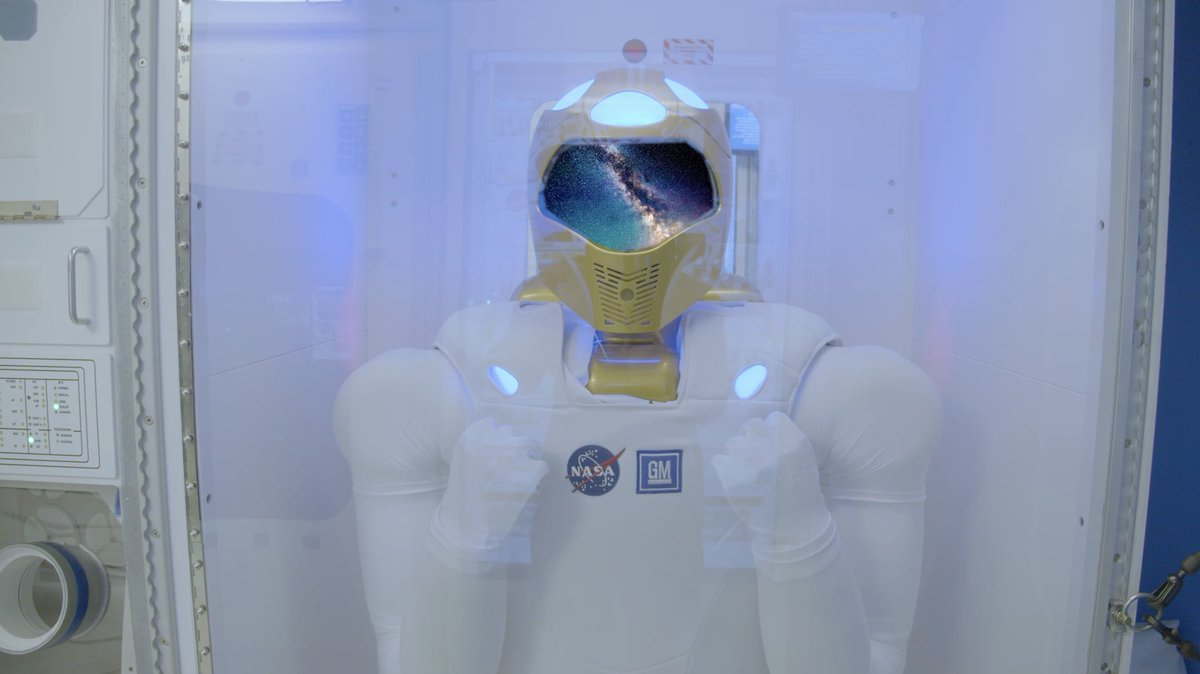
Robonaut 2 (R2): A collaboration between NASA and General Motors (GM) 🤖
R2 is a humanoid robot with human-like hands and arms.
It has 12 degrees of freedom in its hands and 2 in its wrist, equipped with touch sensors at the fingertips for fine manipulation.
Although initially a torso-only model, legs were added in 2014, allowing it to maneuver within the ISS.
The primary goal for R2 on the ISS was to serve as a robotic assistant, performing tasks that are repetitive, tedious, or dangerous for human crew members.
R2 was returned to Earth in 2018 for repairs due to a hardware issue.
In the future, AI robots such as Tesla’s Optimus will likely work hand in hand with astronauts to build colonies on the moon and Mars.
SpaceX Chopsticks Static Structural Simulation 🚀
The chopsticks eliminate the need for landing legs on the booster.
This takes weight off the rocket and increases the payload capacity to orbit and beyond!
By catching the booster directly at the launch tower, SpaceX can reduce launch turnaround time.
This allows for quicker preparation for the next launch.
Fast turnaround times make it possible to have multiple launches per day, which is crucial for missions to Mars where you have to send a fleet of spaceships with a tremendous amount of infrastructure cargo.
Catching the booster at the launch site also minimizes the need for extensive landing infrastructure, like the drone ships used in the Falcon 9 landings.
Plasma Spray Coating for Space Applications Sent To ISS 🌒
This technique is going to be used to spray coatings onto parts that work in extraterrestrial environments such as on the moon and Mars.
A plasma plume carries the coating particles and embeds them onto the part.
This protects parts on things like rovers and spacecraft that can be damaged from abrasive lunar and martian soil, known as regolith.
The plasma spray gets hotter than the surface of the sun. ☀️
Here we were plasma spraying samples that went on the outside of the International Space Station to study the effects of space radiation and thermal cycling on the coatings.
The samples are now back safely and performed well.