As electricity demand grows, we need to build at unprecedented scale. Competitive markets deliver infrastructure that's cleaner, more cost-effective, more innovative and deployed as efficiently as possible.
Swipe to learn more about the case for competition →
For more insights: https://t.co/Lv1iZY2BqD
#CompetitiveMarkets #EnergyInfrastructure #EnergyMarketDesign
"New England clearly will need additional energy supplies in the years ahead. Proposals like Project Beacon are welcome developments in signaling investment interest, even with the many hurdles that need to be overcome.” @DSMDolan https://t.co/iaVzcmjEM7
Todd Snitchler, @EPSAnews President and CEO, explains in @dcexaminer why you shouldn't trust utilities when they say they can't build generation.
Re-monopolizing the electricity system with guaranteed returns on generation benefits the utility, while shifting risks onto the backs of consumers.
Read more here: https://t.co/c7w0TmhWsS
State climate mandates are running against a brutal current between federal opposition, higher financing rates, supply chain delays, and rising inflation. In the meantime, the in the ground generation is working overtime to keep up with rising demand and affordability pressures.
For now, the examples like this past winter requiring a heavy oil burn mean, “The timing could not have been more cinematic. It really encapsulated the consequences of where we sit.”
As I said on @ezraklein show, every time there’s an oil crisis, those concerned with climate and clean energy say “this is why we need to use renewables instead.” https://t.co/5FLpYmERMz
Energy affordability is the phrase of the moment and I enjoyed getting to unpack what that means on Climate Reveal. We did a deep dive on New England’s energy profile and the tricky spots for addressing these issues down the road. https://t.co/51cqeE60kG
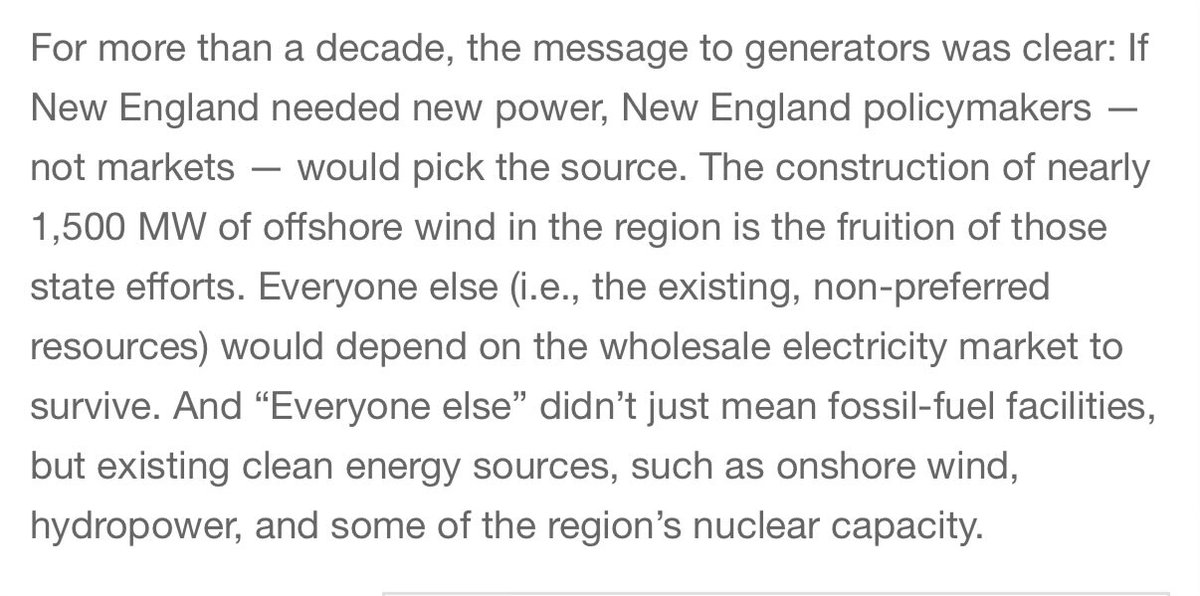
Key paragraph. Policy makers grabbed the steering wheel a decade ago and now, realizing they aren’t where they wanted to be, wonder why the market failed (and want to use the market failure narrative to justify more control over the steering wheel).
The most common question I get these days is, why aren’t there more plants under construction in New England? Why all the announcements in Ohio, Pennsylvania, Texas, etc, but nothing here? Here’s one explanation.
To face this moment requires political leadership to bridge the growing gap between state/federal policies, improved markets, and a renewed focus on a holistic energy mix that does not simply focus on the "new" at the expense of the existing workhorses. https://t.co/QeWamw852b
This week on the Codcast, reporter Jordan Wolman speaks with president of the New England Power Generators Association Dan Dolan about the challenge of delivering energy to the Bay State during a "frozen investment market." Check it out:
https://t.co/Ip3viwFkFU
Winter Storm Fern & its cold aftermath was no joke in New England. Yet, extraordinary coordination occurred across industry and all levels of government. New England’s electricity market also did what it needed to do. I looked back in @UtilityDive https://t.co/RNR04Ci0ei
The New England grid passed one winter test, but market reforms are still needed
Constructive collaboration should be celebrated while the region works to fine-tune its market to drive and sustain investments, writes NEPGA President Dan Dolan.
https://t.co/B4qvAkOfZ5
Winter Storm Fern & its cold aftermath was no joke in New England. Yet, extraordinary coordination occurred across industry and all levels of government. New England’s electricity market also did what it needed to do. I looked back in @UtilityDive https://t.co/RNR04Ci0ei
"This system works and works well. We did not have any reliability events despite arctic temperature and the coldest winter in nearly 10 years across New England." @NEPowerGen's @DSMDolan shared insights in the @hartfordcourant on how the region's power grid weathered Winter Storm Fern.
#NewEngland #WSFern #WinterStormFern #WinterStorm #Energy
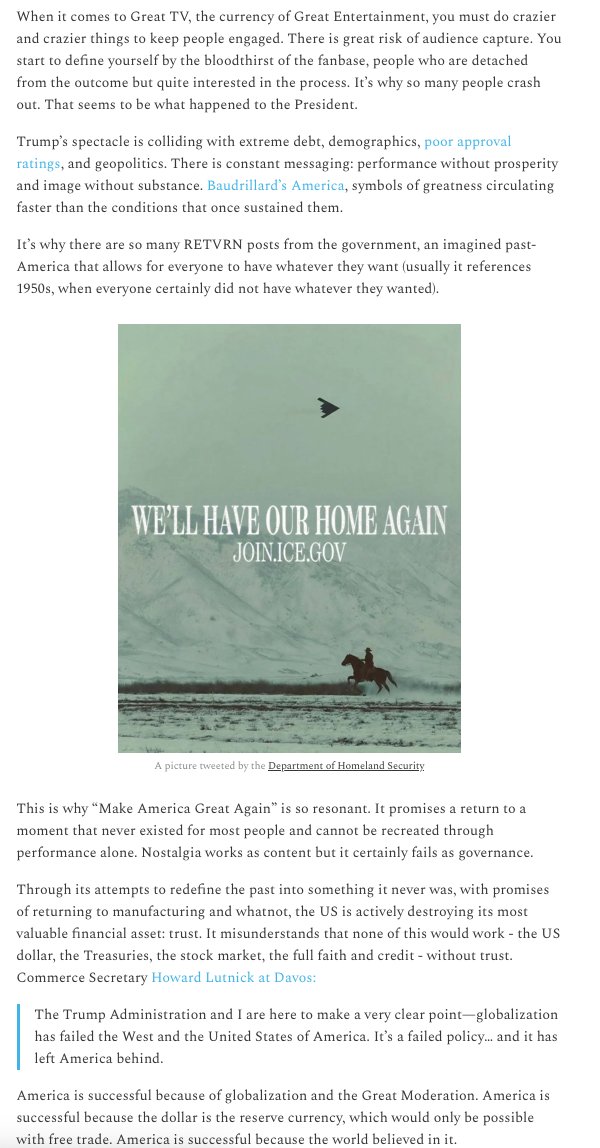
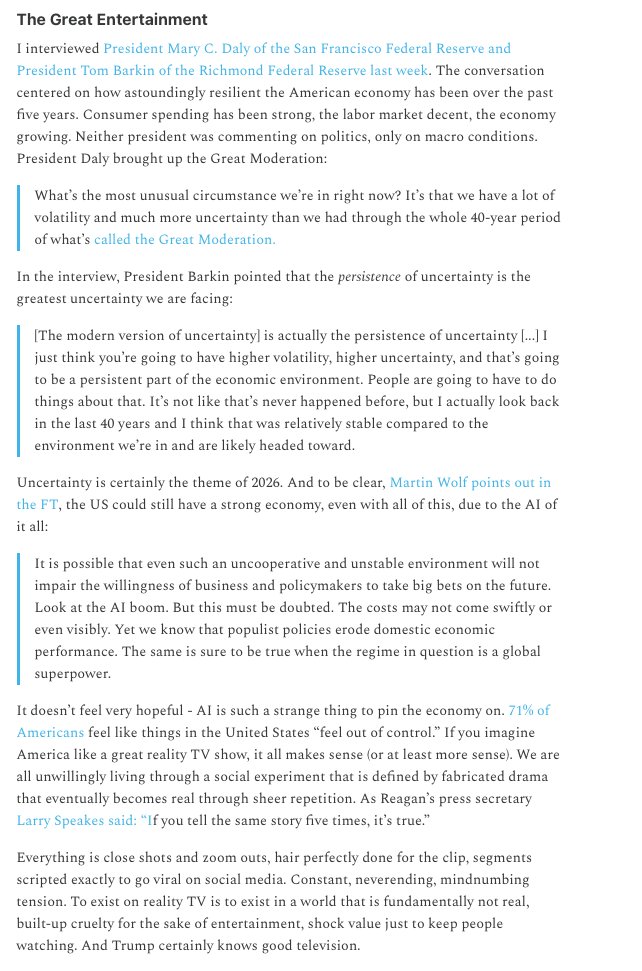
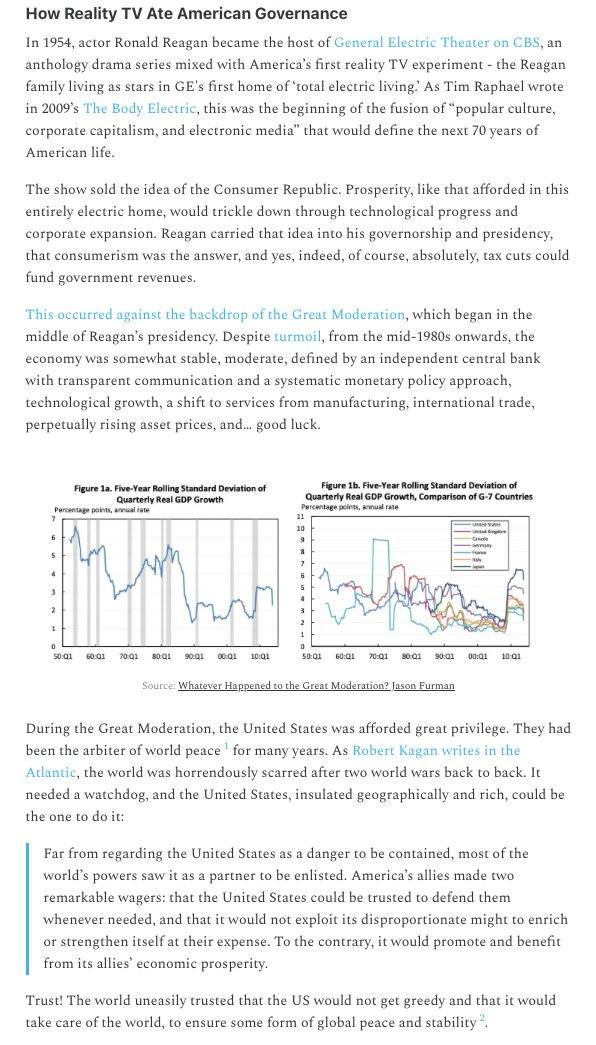
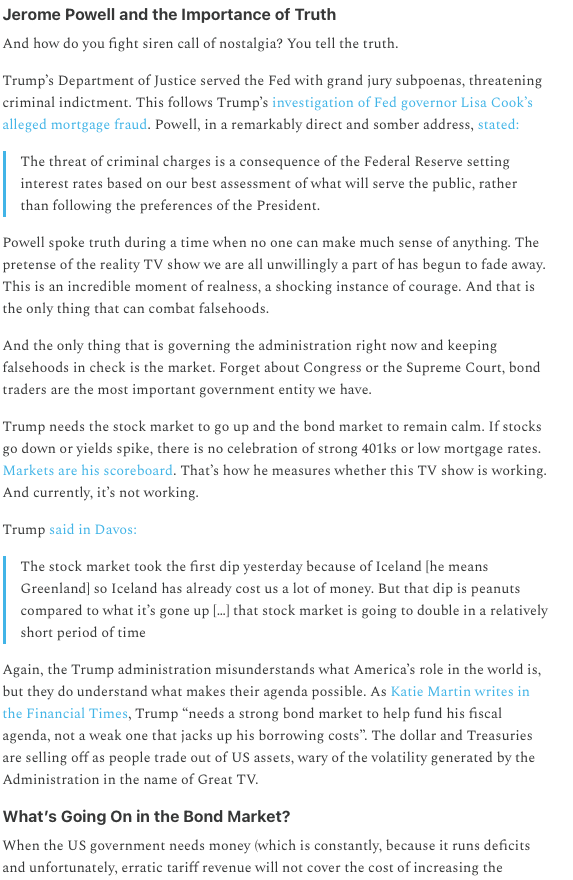
New piece attempting to synthesize the past few weeks across media, market structure, geopolitical trust, and lessons from history, asking... can you run the world like a reality TV show?
What does it look like to exit the Great Moderation, a 40-year period of macroeconomic stability? Are we in the Great Entertainment? What does that mean for the bond market, the Fed, Japan, and AI hype vs. energy reality?