Diagnostician. Author of Diagnomicon. Gang of One. Software Surgeon. Machine Learning and AI for Software Diagnostics and Observability. Generative Debugging.
In 2009, I planned to publish Dictionary of Debugging (https://t.co/pxG3079QQV), but it would have taken a long time to research and write. And it would still be much shorter. I still wrote some entries that year (published as the Debugging Dictionary section in Volume 11 of Memory Dump Analysis Anthology). Now, I used AI summarization capabilities to create it, including summaries of my analysis patterns up to date (which I still need to verify with pen once the paperback is ready). This new book uses the original ISBN. The full current PDF version is here: https://t.co/iRKOIIT6UW. Please let me know if I missed any entries (I guess there are many more worth including).
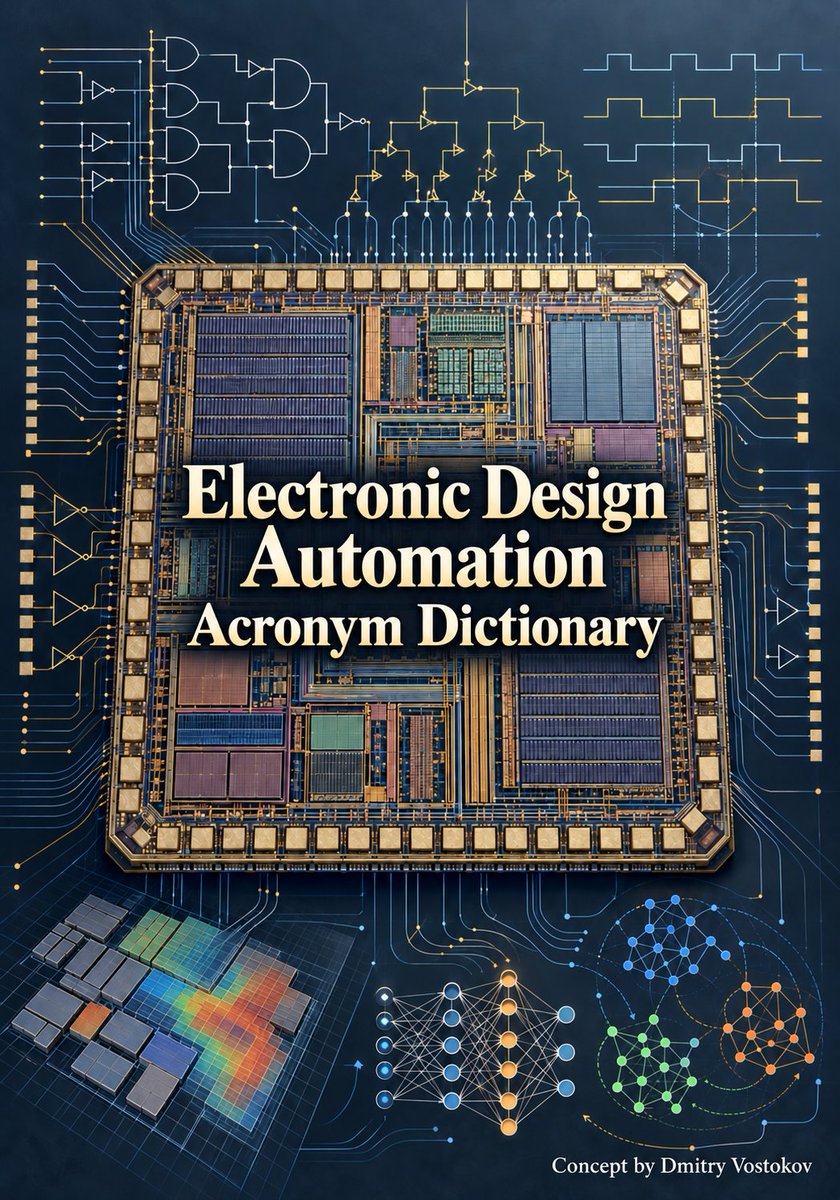
When reading books on chip design, manufacturing, and especially on electronic design automation like the 2-volume Electronic Design Automation Handbook, I discovered a lot of acronyms that are introduced on one page, and I quickly forget their meaning a page later and try to find their definition on the previous page. I recall that at Ericsson, in 2001, I had a several-page brochure of telecom industry acronyms. So I had an idea for this short book, which I will also make in paperback next week. If you don't see your favorite acronym, let me know. https://t.co/cdl7IcoTgQ
The bundle Software Diagnostics Theory and Pattern Reference by Dmitry Vostokov is on sale on Leanpub! Its suggested price is $135.00; get it for $74.25 with this coupon: https://t.co/FLDj1HxEBe @DumpAnalysis#software#c_and_cpp#dotnet
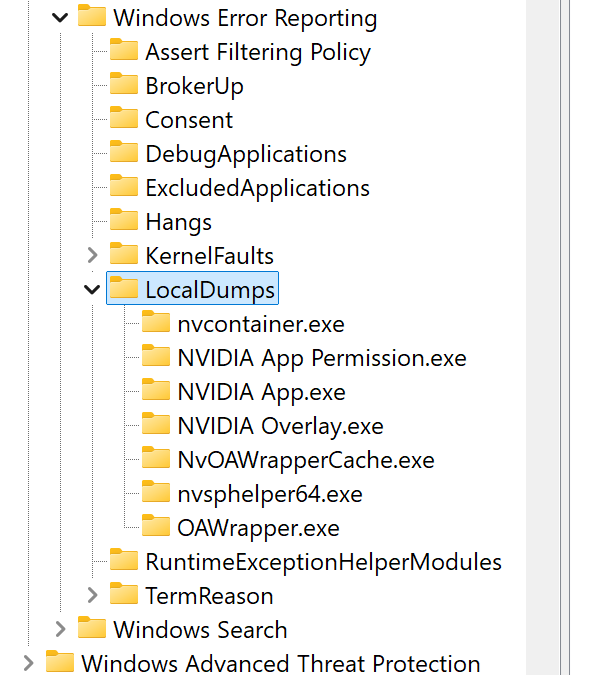
This is the first time I haven't set LocalDumps on a new laptop as the first thing, and I instantly regretted it when Explorer disappeared on Sunday while copying +100,000 files. Rectifying now.
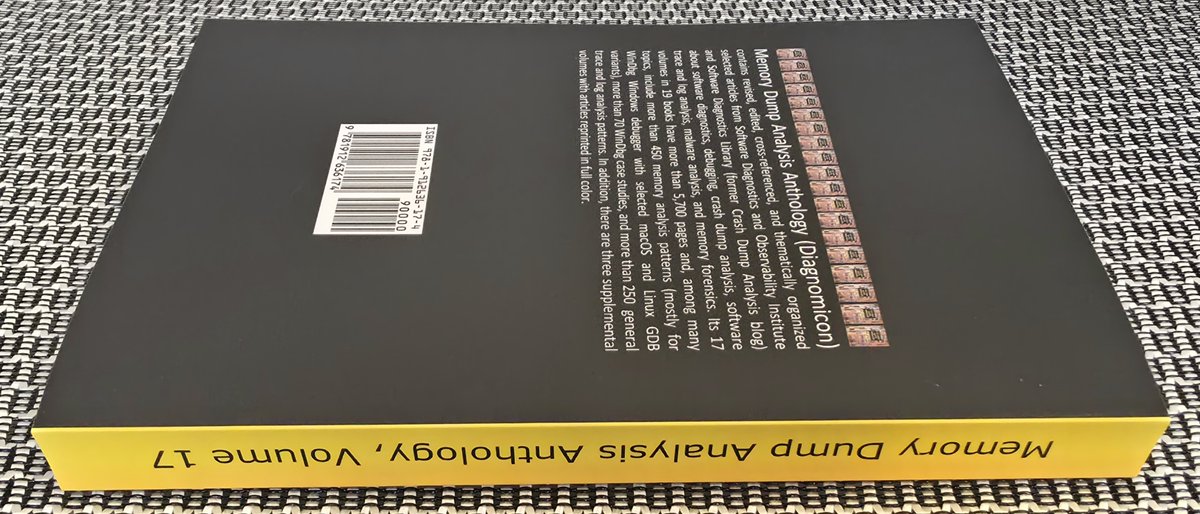
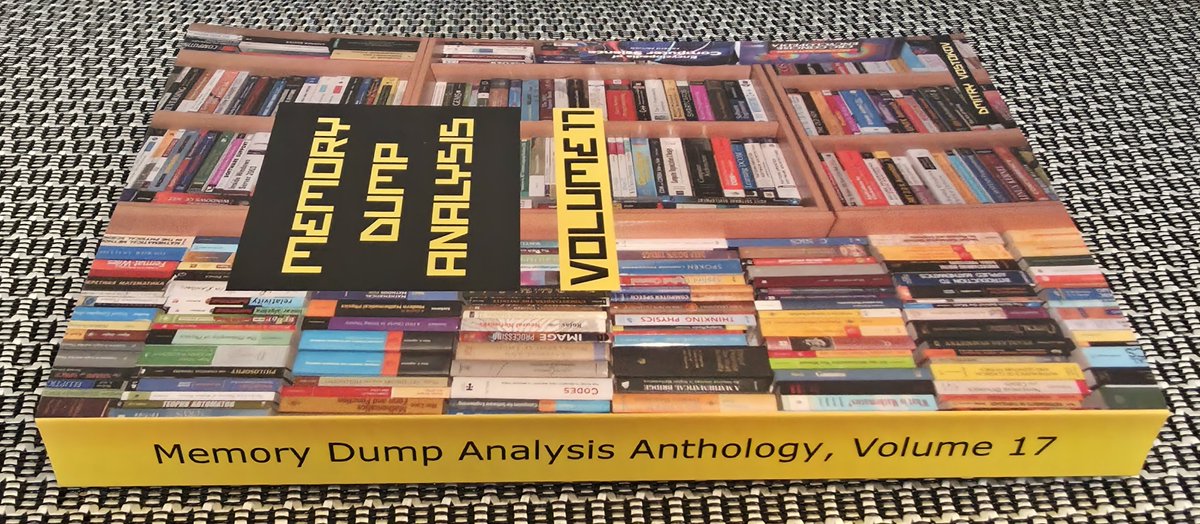
A year later, I finally got a copy of Memory Dump Analysis Anthology, Volume 17. Nice-to-the-touch matte cover, ultra-premium color printing inside, a few snippets of AI output inside are on a light yellow background to distinguish them from my own writing, and half the book is pictures of books I was/am reading. I aim to prepare Volume 18 by the end of this year. This will bring the total number of Diagnomicon books to 20 (as I have 2 books per volume in volumes 8 and 9).
The bundle Software Diagnostics Theory and Pattern Reference by Dmitry Vostokov is on sale on Leanpub! Its suggested price is $135.00; get it for $74.25 with this coupon: https://t.co/YuySDPo7YC @DumpAnalysis#software#c_and_cpp#dotnet
Quick test for Surface Ultra WSL Ubuntu
CUDA available: True
GPU: NVIDIA RTX Spark N1X (6144-core Blackwell RTX GPU)
Result for x @ x device: cuda:0
Despite the initial 3-hour install "ordeal", I'm quite happy with my new pet machine...
It's not good that the newly opened Surface Ultra laptop has been stuck on "Just a moment..." for more than an hour and keeps doing the same thing after forced reboots. Preparing a recovery drive. Highly disappointed...
Yesterday, I finished The Ninth Thermidor, a novel by Russian émigré writer Mark Aldanov (https://t.co/E1s5fmNc1Q), part of the tetralogy The Thinker (also available in English translation), which I liked for its overlapping history of late-Catherinian Russia and the French Revolution. I got a 6-volume set more than 10 years ago, but I started reading the first volume a few months ago and plan to finish all volumes, plus 6 more from a different, non-overlapping set (I read somewhere that his oeuvre amounts to 40 volumes). I also plan to read an analysis of each novel in a separate book, as you can see in the picture. I prompted AI for this short piece about writer-scientist vs. scientist-writer and how I relate this to myself:
"I would distinguish a writer-scientist from a scientist-writer by the practice that organizes the work, not by the order of occupations. Both combine writing and science, but their directions differ. The writer-scientist brings scientific knowledge and habits of inquiry into a primarily literary project. The scientist-writer starts from scientific problems and extends their investigation and explanation through writing. Writing means more than producing research papers, just as science means more than using scientific terminology in a novel.
My impression is that there are few writer-scientists and vastly more scientist-writers. The different starting points explain the asymmetry. Scientific practice can supply questions, material, and reasons to write. Literary practice does not require a parallel scientific practice. However, I would not turn this distinction into a hierarchy of literary achievement. The first word identifies the organizing activity, not the second's quality.
Mark Aldanov is a writer-scientist: he pursued chemistry alongside his literary work. In The Ninth Thermidor, I find an illustration in Shtaal’s failure as an observer: he arrives drunk at the Convention and sleeps through its historic sitting, later regretting how little he has witnessed. I read this episode as more than historical irony. Being present is not the same as observing, and observing is not the same as understanding. The event, the witness’s experience, and the reconstructed narrative are distinct. I read this through Aldanov’s double practice: the literary situation raises questions about the conditions and limits of knowledge without becoming a scientific exposition.
I describe myself as a diagnostician-writer. Diagnostics supplies my starting point: evidence, patterns, missing context, competing explanations, and the reconstruction of what happened. Writing is not merely the reporting of a completed analysis. It is a way to develop concepts, discover connections, and recognize limitations in my explanations. I read Shtaal’s experience as a diagnostician. My direction is from diagnostic practice into writing, but there is a return path: what I discover through writing changes how I approach diagnostics."
Codesign: Between Code and Design. Codesign with LLMs and the Software Codesigner Profession.
I now rarely code explicitly and spend much more time on design. I use Codesign to describe this activity between code and design, nearer the design side. Coding assistants produce much of the source text, while I develop requirements, examine proposed implementations, and decide what evidence would support their acceptance.
In this article, I explore three readings of the same word. CODE overlaps with DESIGN in CO[DE]SIGN. CODE + SIGN treats generated code as an executable sign through which I can reconstruct design decisions and assumptions. CO-DESIGN describes developing the design together with large language models. I extend these readings to the proposed Software Codesigner profession, where CODE + SIGNER adds responsibility for deciding whether to sign off on an implementation.
I place this interpretation alongside established hardware/software co-design and prior work in programming, semiotics, and code review. I also connect it to software diagnostics: the decisions expressed in generated code can be compared with the evidence left by execution. A retry example shows how I can move between requirements, implementation, and diagnostic observations while working from the design side.
https://t.co/33sfWzPksy
PS. I need to mull this text over...