Oportunidade para bolsa pós-doc na Amazônia Brasileira, ligada ao INCT NExus. Você pode ter a oportunidade de trabalhar com o excelente grupo do Dr. @dvSilverio
Link para o edital: https://t.co/F6rYhxX4In
Oportunidade para bolsa pós-doc na Amazônia Brasileira, ligada ao INCT NExus. Você pode ter a oportunidade de trabalhar com o excelente grupo do Dr. @dvSilverio
Link para o edital: https://t.co/F6rYhxX4In
November was busy! Meeting to discuss air quality in the Brazilian Amazon at the Ministry of the Environment and teaching R at the Federal Rural University of Amazonia. All these opportunities made possible by Dr. @dvSilverio research group.
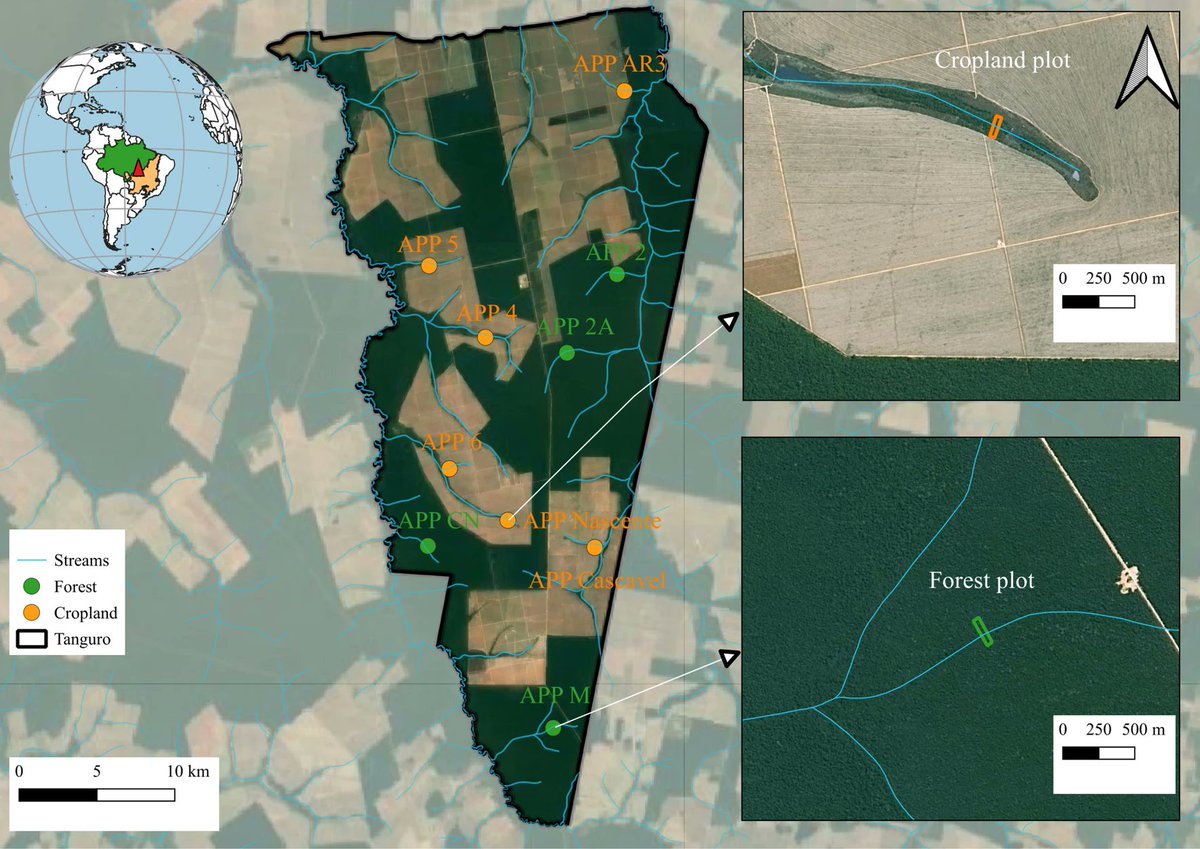
Trabalho recente Liderado pelo @maracahipes que mostra como a variabilidade intraespecífica de traços funcionais das espécies arbóreas contribui para a persistência das espécies em ambientes fragmentados.
🌳 Fragmentation alters microclimates & vegetation.
Functional traits of Amazonian riparian forests vary between croplands & forests.🍃 Species with distinct leaf traits persist in agricultural expansion areas https://t.co/qKYverNy9N
#Amazonia#ForestFragmentation@SciReports
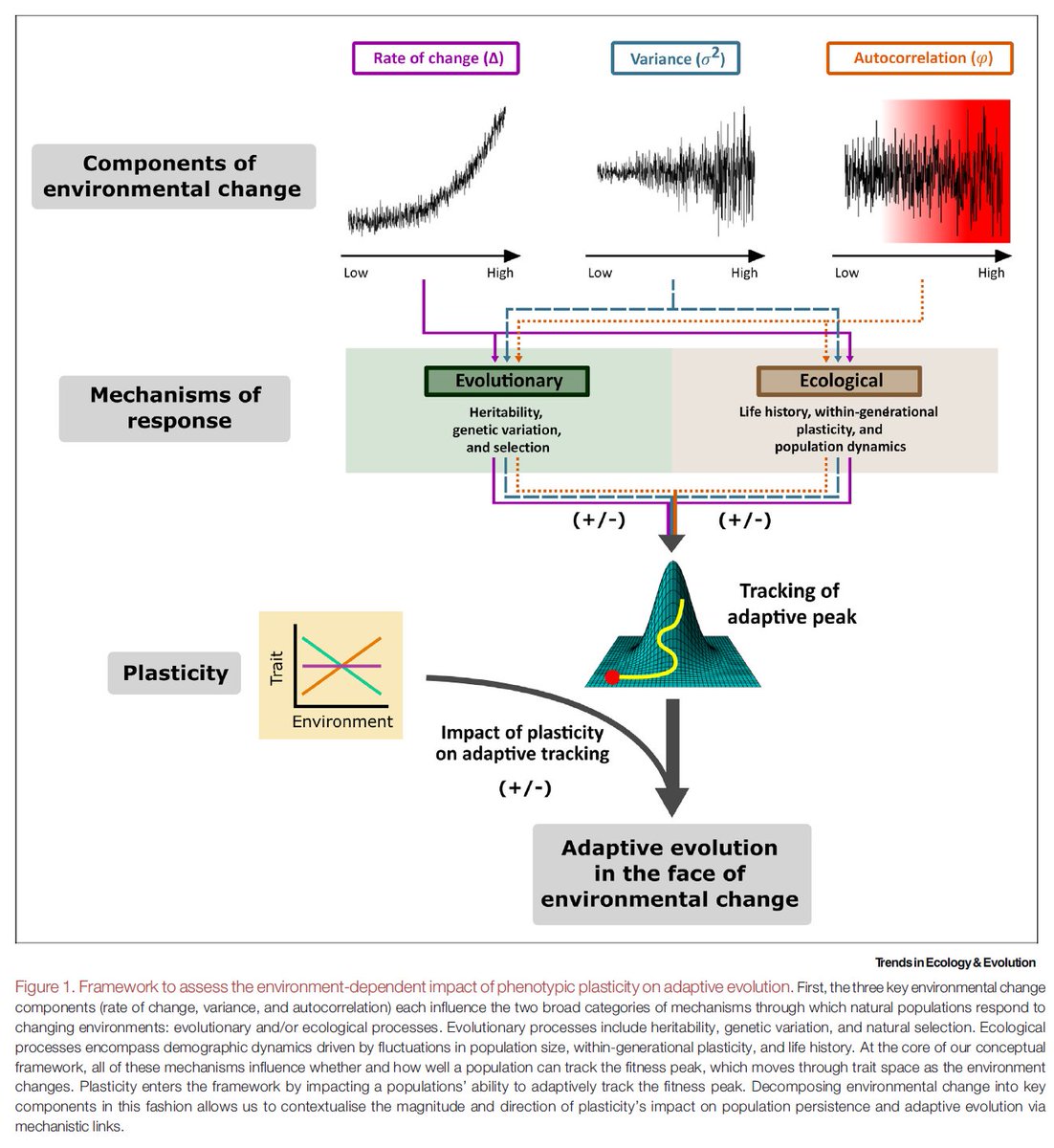
3 key climate change components--the rate of mean change, environmental variability, temporal autocorrelation--modify the impact of plasticity on adaptive tracking #ecology#climatechange new framework by @TheoreticalAnna
https://t.co/skTghcOLWC
Nesta comunicação, liderada pelo @HernaniFMO, alertamos para os possíveis efeitos negativos que a aprovação do Marco Temporal pode trazer para as populações indígenas e para a conservação da Amazônia.
#MarcoTemporalNão
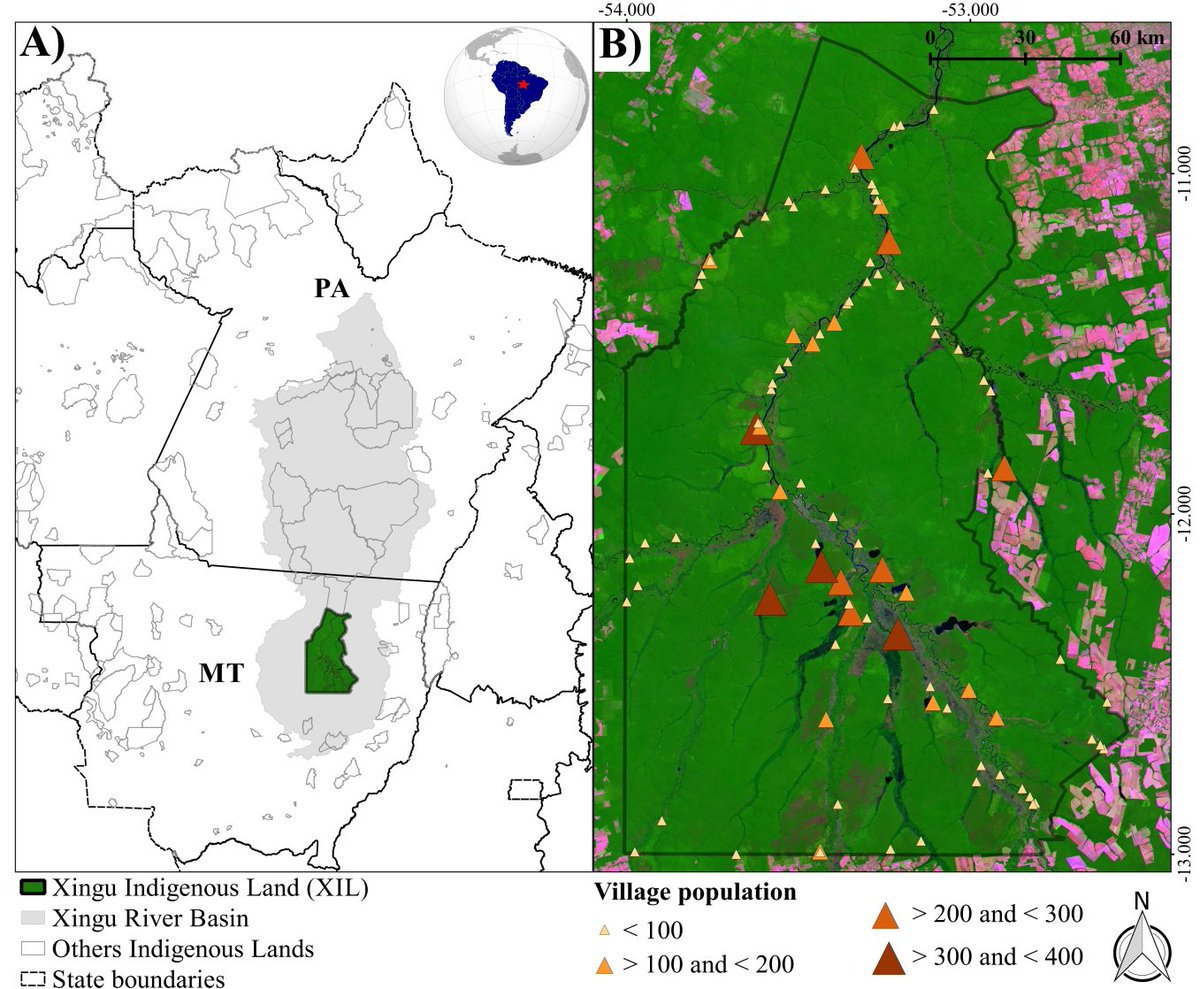
The Território Indígena do Xingu (TIX) has been cited for decades as a successful buffer against the environmental woes plaguing the rest of the Amazon.
“Climate change has completely changed that story,” said Woodwell’s Dr. Marcia Macedo.
https://t.co/wMkGzAZRH4
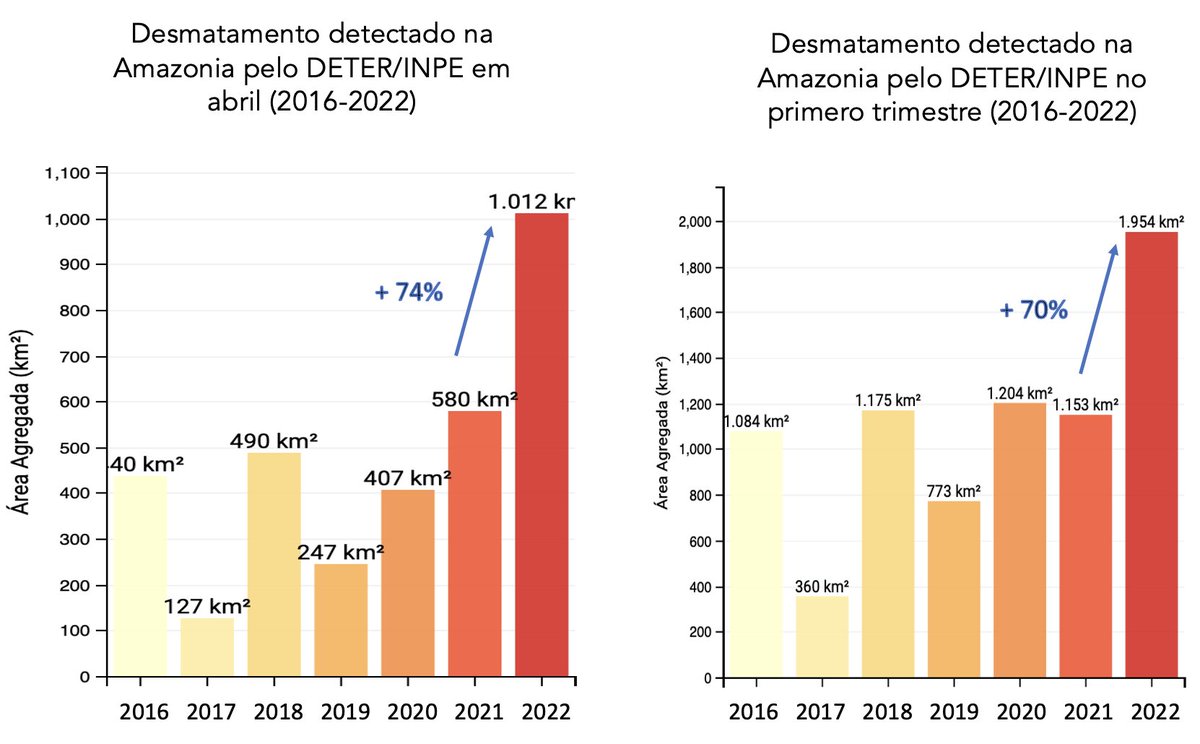
O desmatamento detectado pelo @inpe_mct em abril é desolador. Mais de 1000 km2 foi ao chão. Isso equivale a duas vezes a cidade de Porto Alegre. O ritmo do desmatamento em 2022 é quase 70% maior que em 2021, ano recorde desde inicio da série em 2016. @mapbiomas
@RicardoDalagnol Hi Ricardo,
This is an important point
Indigenous communities have been using the slash-and-burn system for centuries and forests were probably wet enough to prevent fire.
In the last decades escaped fires have occurred more often and a large area of forest has been degraded.
Our new paper is out!
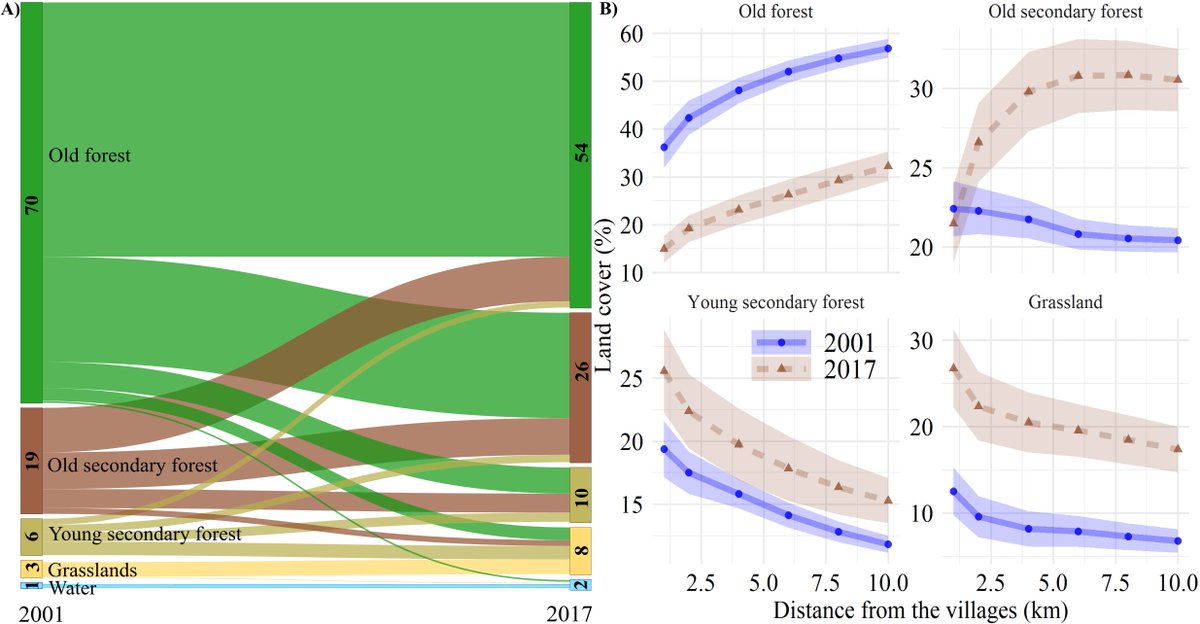
We documented changes in the fire regime and forest loss in the Território Indígena do Xingu (TIX) for the last two decades. Results indicate that conditions to which the system has adapted may have been already exceeded.
https://t.co/bRc6URm8mb
1/3
Artigo aceito!
Secas recorrentes e frequência de incêndios intensificaram a perda florestal no Território Indígena do Xingu (TIX), cerca 189 mil hectares (aproximadamente 7% do TIX) foram degradados entre 2001 e 2020.
#Amazon#Fires#Droughts#IPAM
https://t.co/ikpM6I1rQT
The video below shows the Xingu River inside of PIX. The light green area on the right, which used to be forest, is now dominated by the native grass Imperata brasiliensis.
@IPAM_Amazonia@socioambiental@WoodwellClimate
@UfraOficial
@UFRACP
3/3
Between 2001 and 2020, nearly 7% of the TIX became degraded by recurrent drought and fire. The reduction in the mature forest was accompanied by an increase in secondary forest and grasslands.
@permanewt
@AlmadaHK@pmbrando@deoliveira87@AlmadaHK
2/3