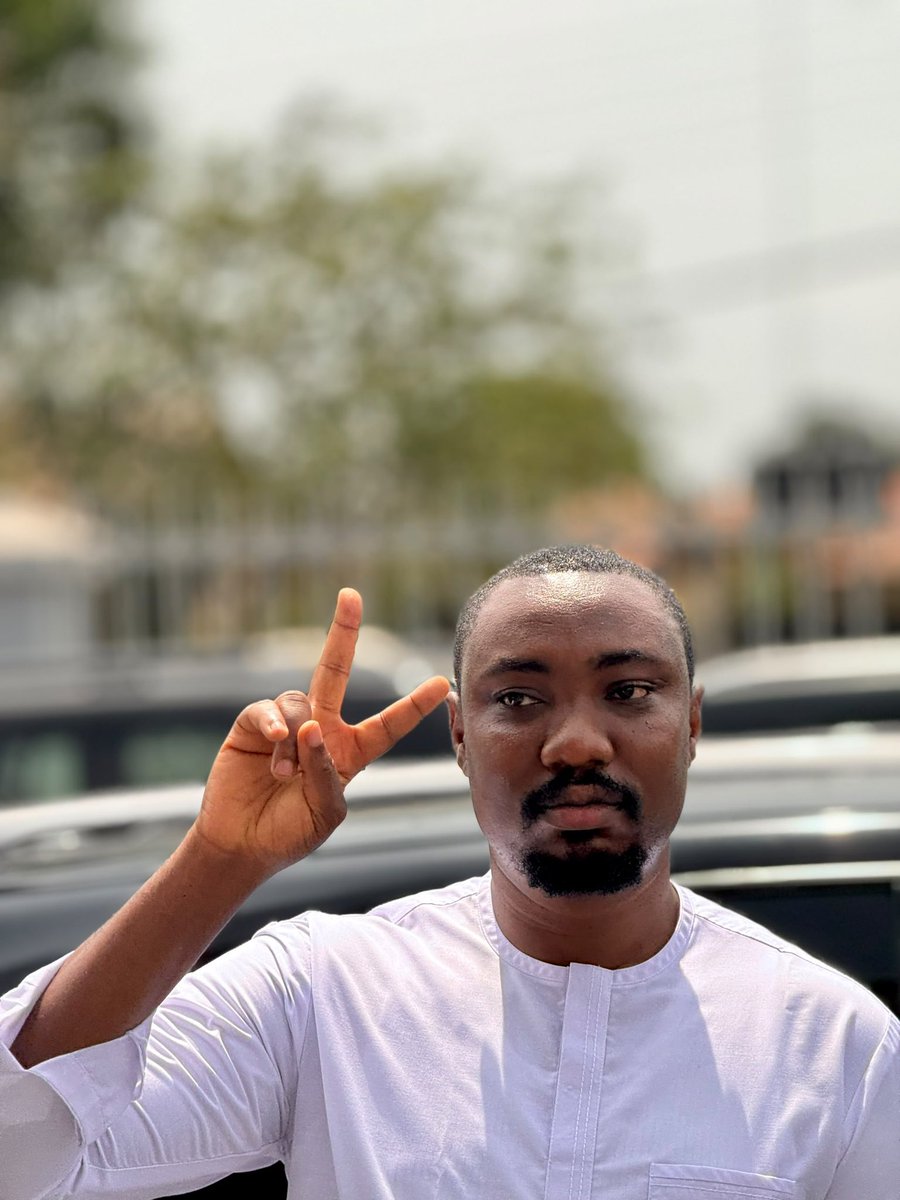
ZAMFARA TRAGEDY : MY HEART GOES OUT TO THE FAMILIES OF THE VICTIMS
I received with deep sadness the news of the tragic road accident in Zamfara State involving supporters of the All Progressives Congress (APC), which has reportedly claimed several lives and left many others injured.
My heart goes out to the families who have lost their loved ones. I can only imagine the pain and anguish they are going through at this difficult moment. I also extend my sincere sympathy to the APC family and the good people of Zamfara State.
To those injured, I pray for your speedy and complete recovery. I urge the relevant authorities to ensure that you receive the best possible medical attention and that the affected families are not left to bear this burden alone.
At a time like this, political affiliations must count for nothing. Our shared humanity must count for everything. Whether we belong to the APC, Labour Party or any other political platform, we are first Nigerians, united by our common humanity and our shared destiny.
I have always believed that every Nigerian life matters. The death of any Nigerian, regardless of political affiliation, religion, ethnicity or social status, is a loss to our entire nation. We must never become so divided by politics that we lose the ability to feel one another's pain.
We must build a country where human life is valued, protected and treated with dignity. That responsibility belongs to all of us.
May Almighty Allah grant the departed souls eternal rest in Aljannatul Firdaus, comfort and strengthen the bereaved families, and grant all those injured complete healing.
My thoughts and prayers are with the people of Zamfara State and everyone affected by this tragedy. May God comfort us all. -PO
Pete Edochie: What a Loss!
I am deeply saddened by the passing of Chief Pete Edochie, MON, a distinguished son of Anambra State and one of Africa’s most celebrated actors.
Pete was a rare talent who seamlessly combined the experience of an accomplished broadcaster, a deep understanding of our culture and an exceptional command of both English and Igbo. Through his memorable performances, especially his portrayal of Okonkwo in “Things Fall Apart,” he brought our culture and traditions to audiences across the world.
I had the privilege of being with him and listening to him on several occasions. Each encounter was so engaging that I often wished I could remain longer in his company. Beyond his extraordinary talent, he was a remarkable custodian of our cultural heritage.
His death is a profound loss to Nteje, Ndigbo, Nigeria and Africa. I am particularly saddened that he would not live to witness the emergence of the New Nigeria he believed in and fought so passionately for. His voice, artistry and contribution to our cultural identity will remain indelible.
May God grant his soul eternal repose. Amen. -PO
NIGERIANS, GO AND VERIFY (8)
TRANSFORMING COMMERCE, INDUSTRY AND INFRASTRUCTURE: BUILDING AN ECONOMY THAT WORKS
Peter Obi
I have always believed that economic development must go beyond the construction of roads and buildings. It must create opportunities, stimulate enterprise, support local industries, and improve the productive capacity of society. Government must not merely spend money; it must create the conditions that enable people and businesses to prosper.
When I assumed office in 2006, Anambra State already possessed enormous entrepreneurial energy. From Onitsha to Nnewi, Awka, and other commercial centres, our people had demonstrated remarkable ingenuity and enterprise. What was required was a government that could provide the infrastructure, institutional support, and enabling environment to harness this potential.
Under the Anambra Integrated Development Strategy (ANIDS), we therefore pursued a deliberate programme of commercial and industrial development, with particular emphasis on public-private partnerships (PPPs). Our objective was to modernise the business environment, attract investment, strengthen indigenous enterprises, and create employment.
Our approach was guided by a simple conviction: commerce must be supported by production, and industrial development must be supported by infrastructure. We could not continue to depend largely on buying and selling without deliberately creating the conditions for manufacturing, processing, and value addition.
MODERNISING COMMERCE: THE ONITSHA BUSINESS PARKS
Recognising Onitsha’s historical position as the commercial hub of the South-East, we initiated the First and Second Onitsha Business Parks. We wanted to provide organised, modern, and secure business environments capable of accommodating growing corporate and financial activities.
The parks attracted important financial institutions and corporate operations, including facilities for banks, alongside capital market operators and other businesses.
We also conceived the second phase of the Onitsha Business Village as a centre for information and communications technology-related activities. The intention was to move beyond traditional commercial arrangements and provide facilities that would accommodate emerging business opportunities and technology-driven enterprises.
Another initiative was the LG World-ANIDS project, conceived as a one-stop centre for electronic goods, services, and training. We wanted to connect commerce with technology, skills development, and modern business practices.
Our intention was to move commercial activities beyond the limitations of informal arrangements and provide the infrastructure necessary for modern corporate operations.
DEVELOPING HOSPITALITY AND TOURISM: AGULU LAKE RESORT AND PROTEA HOTEL
We also recognised that a growing commercial centre must have the hospitality infrastructure to support investors, business travellers, and tourists. A state that seeks to attract investment must be prepared to accommodate those who come to do business. This informed our conception of two important projects.
The Agulu Lake Resort was designed to harness the natural beauty and tourism potential of Agulu Lake, creating a destination for leisure, hospitality, and conferences. Beyond tourism, we saw the project as an opportunity to stimulate economic activities in the surrounding communities and create employment.
Similarly, the five-star Protea Hotel project in the GRA, Onitsha, was conceived as a public-private partnership to provide high-standard accommodation and hospitality services. We envisaged a facility that would serve investors, business travellers, and visitors while expanding the State’s hospitality infrastructure. Although the project was subsequently abandoned, its original conception reflected our determination to provide the facilities required by a modern commercial economy.
@hArtboy_VEHAM@PettyProfX In other words “vote for me because it’s a south west and north ticket” and not based on competency and capacity. It is well.
I just heard a disturbing news from a mother in Sokoto state 💔😭
She said bandits stormed their village, killed people, & others fled. Eight of them found a place & hid. 7 men, & she’s the 8th one with her baby.
They found a place & hid. The bandits came close to them but they couldn’t see them, then her baby was about to cry, in order to prevent the bandits from hearing the cry of the baby, she used her hands to block the child’s mouth.
The bandits stayed there for a while, but she couldn’t release the child’s mouth & nose let not the bandits notice where they were. That was how that child was suffocated to death right before her eyes.
God 😭😭😭💔💔
SmartBallot : Towards credible and Transparent Ballot
I have consistently believed that technology, combined with the creativity and resourcefulness of young Nigerians, can help reinforce our democracy and advance free, fair, and credible elections.
I am pleased to endorse SmartBallot (https://t.co/YgbAq2cLxE), a platform developed to facilitate grassroots mobilization, civic engagement, and election monitoring.
I urge our supporters and NDC candidates to register on SmartBallot and examine how its tools can assist them in organizing their communities, coordinating voters and polling unit agents, expanding grassroots engagement, and supporting transparent election monitoring.
Through the effective use of technology and collective action, we can reinforce our democratic institutions and help ensure that every vote is counted.
Credible elections require preparation, active participation, and peaceful vigilance. Let us make full use of every available resource to create a more organized, engaged, and empowered electorate.
A New Nigeria is Possible. -PO
OPEN INVITATION TO ALL TARABANS
PETER OBI / RABIU MUSA KWANKWASO TOWN HALL MEETING IN JALINGO
The Nigeria Democratic Congress (NDC), Taraba State Chapter, warmly invites the good people of Taraba State, political stakeholders, traditional and religious leaders, youths, women, civil society organisations, professionals, farmers, students, and the general public to a historic and interactive Town Hall Meeting with H.E. Peter Obi and H.E. Rabiu Musa Kwankwaso, the NDC Presidential Candidate and Vice-Presidential Candidate for the 2027 General Elections.
The meeting provides a unique opportunity for Tarabans to interact directly with the NDC presidential team, engage them on issues of national importance, ask questions, share concerns, and contribute ideas towards building a better Nigeria.
As Nigeria approaches the 2027 General Elections, this is an opportunity to hear directly from the leaders aspiring to take the country forward and understand their vision, policies, and commitment to national development.
This is more than a political gathering; it is an opportunity for dialogue, accountability, participation, and a shared vision for a better Nigeria.
We therefore encourage all Tarabans, irrespective of political, religious, ethnic, or regional affiliations, to come out in their numbers and be part of this important national conversation.
EVENT DETAILS
Date: Tuesday, 24th November, 2026
Venue: Crest Hall, Jalingo, Taraba State
Time: 10:00am
Come and engage the next President and Vice-President of the Federal Republic of Nigeria.
Your voice matters. Your participation counts. Together, we can build a better Nigeria.
A BETTER NIGERIA IS POSSIBLE!
From:
Media and Publicity Committee
Town Hall Meeting
NIGERIANS, GO AND VERIFY (7)
LIFTING THE VULNERABLE : ANAMBRA’S BLUEPRINT FOR POVERTY ALLEVIATION AND SUSTAINABLE EMPOWERMENT (2006–2014)
Economic growth that does not translate into improved living conditions for ordinary citizens is incomplete. This is one of our fundamental concerns with President Bola Ahmed Tinubu's government. Development must ultimately be measured by its impact on human lives, particularly those of the poor and vulnerable. This was underpinned by the Anambra Integrated Development Strategy (ANIDS). We believed that infrastructure, education, healthcare, agriculture, and social protection must reinforce one another. Poverty was not merely a shortage of money; it was also a lack of access to opportunities, productive resources, and the basic conditions necessary for a decent life.
Our poverty alleviation strategy, therefore, went beyond temporary handouts. It focused on restoring dignity, creating economic opportunities, and equipping vulnerable citizens with the means to become self-reliant.
Our approach attracted recognition beyond Anambra. In May 2010, Magnus Kpakol, then National Coordinator of the National Poverty Eradication Programme (NAPEP), commended our commitment to poverty reduction, declaring: “We are prepared to support you in the excellent work you are doing in Anambra State.”
1. POVERTY MAPPING: KNOWING WHERE POVERTY LIVES
We recognised that poverty could not be effectively addressed without knowing where it was concentrated and what caused it. We, therefore, undertook a poverty-mapping exercise to identify the most deprived local government areas and communities.
The exercise revealed that some of our poorest communities were also important food-producing areas. Their challenges included poor access to markets, agricultural inputs, electricity, water, and other economic opportunities.
Areas including Anambra West, Orumba South, Awka North, and Ogbaru required particular attention. The findings informed our development priorities, enabling us to direct roads, agricultural support, and social interventions toward neglected communities.
2. EMPOWERING WOMEN, WIDOWS, AND COOPERATIVES
We recognised that rural women, widows, and indigent households bore a disproportionate burden of poverty. Across the 21 local government areas, we provided financial assistance and productive support to thousands of beneficiaries.
Our administration provided financial assistance to support the establishment and expansion of small businesses and farming activities. We also introduced revolving loan schemes to promote enterprise development, economic self-reliance, and improved livelihoods.
We distributed productive equipment, including sewing machines, generators, ovens, cookers, hair dryers, shoe-making machines, and welding equipment. The objective was to help beneficiaries establish sustainable livelihoods rather than remain dependent on government assistance.
We also promoted access to microcredit and cooperative financing to enable small entrepreneurs to expand their businesses, improve their incomes, and create employment.
Our philosophy was simple: rather than merely giving people money to survive today, the government should help them acquire the means to earn a living tomorrow.
3. AGRICULTURE AND FADAMA: MAKING RURAL COMMUNITIES PRODUCTIVE
Agriculture was central to our poverty-reduction strategy because many rural households depended on farming.
Through partnerships with the Federal Government, the World Bank, and other development partners, particularly under the FADAMA programme, we supported farmers with finance and productive assets.
In November 2009, our administration disbursed millions to FADAMA Community Associations across the state. By October 2010, the National FADAMA office was commending Anambra’s commitment. Its National Project Coordinator, Buka Tijjani, represented by Charles Ugwuona, described Anambra as the leading state in the programme.
NIGERIANS, GO AND VERIFY (6)
SECURING LIVES AND PROPERTY: PARTNERSHIP WITH SECURITY AGENCIES
Peter Obi
In the preceding instalments, I explained how we approached governance under the Anambra Integrated Development Strategy (ANIDS), beginning with strengthening state institutions and investing in education and other critical sectors. Our conviction was that development must rest on strong institutions, capable human beings, and a secure environment.
No meaningful development can take place where lives and property are constantly under threat. Education, commerce, investment, and other productive activities can only flourish when people feel safe. This informed our approach to security. We understood that the responsibility of protecting lives and property could not be discharged through speeches and declarations alone. It required deliberate investment, effective coordination, and sustained partnership with the security agencies.
When we assumed office, Anambra faced serious security challenges. Armed robbery, bank attacks, kidnapping, and other violent criminal activities had created an atmosphere of fear. In 2006, I personally approached the then Inspector-General of Police, Mr Sunday Gabriel Ehindero, to seek urgent intervention. Following our appeal, the police authorities constituted a special team comprising experienced officers, including the late Haruna John, Alhaji Amusa Bello, and others, to confront the security challenges in the state.
We therefore made security a major priority of our administration, recognising that government must provide both the leadership and the resources required to enable security agencies to perform their duties.
EQUIPPING THE SECURITY AGENCIES
We believed that those entrusted with protecting our people must be adequately equipped. Accordingly, our administration, using funds from the security votes, provided over 600 patrol vehicles to various security agencies, including the Police, Army, Civil Defence, Customs, Immigration, NDLEA, Road Safety, Prisons, SSS, Navy, and community vigilante organisations.
Our support went beyond vehicles. We provided Armoured Personnel Carriers (APCs), armoured Hilux patrol vans, communication gadgets, repeater and linker stations, base stations, mobile vehicular radios, walkie-talkies, generators, and other logistical requirements. We also used the same security votes to provide financial support for their operations, including fuel, weekly allowances, and other essential needs of security personnel.
We paid particular attention to community security because we understood that effective policing must have a strong local presence. Again, using funds from the security votes, we provided billions of naira to the 177 communities in Anambra State to strengthen security in their respective areas. We directed traditional rulers and town union presidents to establish vigilante groups under police supervision, with the police providing uniforms for proper identification. We also contributed towards the payment of their salaries.
Additionally, we provided 250 patrol vehicles to communities across Anambra State. These vehicles were manufactured by Innoson Vehicle Manufacturing Company in Nnewi. Some towns received more than one, depending on their size and security needs. This initiative was also extended to universities and other large institutions in the state.
We also recognised that markets were particularly vulnerable because of the volume of commercial activities and the large number of people who visited them daily. Thus, in March 2014, we presented security vehicles to major markets in Onitsha and its environs. The beneficiaries included Bridge Head Market, Ogboefere Market, Building Materials Market, Ogidi, Onitsha Main Market, Marine Modern Market, Ogbaru Main Market, Ose Okwodu Market, Electronics Market, and the Amalgamated Market Traders Association.
NIGERIANS, GO AND VERIFY (5)
CONNECTING COMMUNITIES, UNLOCKING PROSPERITY: OUR ROAD INFRASTRUCTURE RECORD
Peter Obi
Another critical foundation of development is infrastructure, particularly road construction and maintenance.
Infrastructure is not just about constructing roads, bridges, and buildings. It is about connecting people, opening up economic opportunities, reducing poverty, and enhancing the well-being of ordinary citizens. A road that connects a farmer to a market, a patient to a hospital, a child to a school, or a manufacturer to a distribution centre is an investment in economic and human development.
This thinking informed our approach under the Anambra Integrated Development Strategy (ANIDS). We set out to connect all 177 communities in the State with motorable roads, paying particular attention to rural communities that had suffered years of neglect. Our objective was to build an interconnected road network that served the entire State, rather than concentrate projects in major cities or politically important locations.
I. The Road Revolution: Over 900 Kilometres of Road Projects
Between March 2006 and March 2014, during my two-term tenure in office, my administration asphalted over 900 kilometers of roads. These projects were deliberately distributed across the three senatorial zones of Anambra State to connect communities, facilitate commerce, and enhance transportation.
I acknowledge that Dr. Chris Ngige started the road revolution in Anambra State, and I commend the efforts his administration made in initiating several road projects. When we assumed office in 2006, we recognised the importance of continuing worthwhile projects rather than abandoning them simply because they had been initiated by a previous administration.
Among the roads we inherited from Ngige and completed were the Owerri–Ezukala–Umunze–Umuchu–Amesi–Uga–Igboukwu Road, where his administration stopped around Umuchu and we continued through Amesi, Uga, and onward to Igboukwu; the Iseke–Orsumoghu–Ukpor–Utu–Nnewi–Awka-Etiti Road, where his administration stopped at Ukpor and we continued towards Awka-Etiti; and the Ideani-Otuocha where work stopped around Awkuzu before our administration continued the project from Nteje to Otuocha.
There were also roads, such as Mmili John and Nkwelle Ezunaka bypass, which had been awarded before we took over, but on which no payment had been made by the time we assumed office. We took over these projects, assessed their status, and proceeded with the work. This was our approach to continuity in governance: acknowledging what had been started, distinguishing between projects merely awarded and those on which work and payment had actually commenced, and ensuring that important infrastructure projects were carried forward.
Some of the major roads and corridors included Amansea–Ebenebe Road; Aguleri–Umueze Anam–Mmiata Road; Nnewi–Ozubulu–Okija Road; and the Old Onitsha–Awka Road.
Other important projects included:
Awka and its Environs: Zik’s Avenue, Awka; Adazi-Nnukwu–Obeledu–Neni Road; 33 Junction–Nwafor Orizu College of Education Road; roads within the Awka Government Reserved Area (GRA); and the Old Nkpor–Amawbia Road.
Nnewi and Surrounding Communities: Nnobi–Nnewi Road; roads within Nnewi town; Akwaeze–Oraeri–Igboukwu Road; and Ekwulobia–Nkpologwu–Akpo–Achina–Umuchu Road.
Onitsha and its Environs: Bridge Head–Umunya Road; over 30 roads in other parts of Onitsha; more than 25 roads within the Onitsha GRA; over 20 stone-based roads within Harbour Industrial Estate, Onitsha; and the Nkwele Ezunaka Bypass.
Other Communities and Strategic Corridors: Awgbu–Amaokpala Road, with the Odor Bridge; Aguluezechukwu–Ogboji–Ajalli Road; Awkuzu–Igbariam Road, passing through the university; Owerri–Ezukala–Umuchukwu Road; Ugwuoba–Obosi Road; and Lilu Road.
Day 2. NDC Delta-North Call centre.
We still need volunteers for our call-centres (I am still collating) and please we need you to donate more Laptops and headsets for us to do more.
We also call on other zones to replicate. Let’s bring this home Nationally.