ANNOUNCEMENT: WE’RE SAVING SCIENCE!
We’re often told that science is “self-correcting.”
But that’s not really true.
Science doesn’t correct itself like a thermostat adjusting the temperature in your house. Science is a human institution run by human beings. And human beings are vulnerable to career incentives, groupthink, moral fads, political pressure, and fear.
And when those forces capture academic journals, peer review stops being a filter for bad ideas and starts becoming more of a credentialing system for fashionable nonsense.
This isn’t exactly new.
In 1996, the physicist Alan Sokal managed to publish a totally gibberish article in the journal Social Text full of trendy postmodern jargon. His point was simple: if you flatter the ideological commitments of certain academic editors, nonsense can pass as real scholarship.
Two decades later, @ConceptualJames, @HPluckrose , and @peterboghossian pulled off the “grievance studies” hoax, placing over a half dozen absurd papers in peer-reviewed journals. One paper used dog parks to analyze rape culture and queer performativity. Another rewrote parts of Mein Kampf in the language of feminist theory.
The problem wasn’t just that fake papers got published. It was that they were completely indistinguishable from the real thing.
And today, the problem is even worse.
We now have serious SCIENCE journals publishing papers about feminist lesbians marrying brine shrimp. We have disturbing papers that aim to “queer” and sexualize infants. We have scholarship on “lesbian-queer-trans-canine relationalities” and “trans-dog intimacies.”
But while Clown World papers are concerning because it makes a complete mockery of academia, the same broken, ideologically captured system is also publishing research in legitimate science and medical journals that pushes sex and gender pseudoscience, relies on deeply flawed data, and influences policies on the medical transition of children and young adults.
That’s not funny. That affects real people. It affects medicine. It affects law. It affects children.
And when critics try to respond, they often discover there’s no serious mechanism for correction. Submitted Letters to the Editor often go completely ignored. Contrary evidence is rejected without comment. As a result, the best critiques are often relegated to personal blog posts, social media threads, or newspaper op-eds, while the original paper remains in the literature wearing the armor of “peer review.”
That is untenable.
So Kevin McCaffree, editor-in-chief of Theory and Society (@Theory_Society), and I decided to do something about it.
Today, in the Wall Street Journal, we announced a first-of-its-kind article type called “Peer Review.”
The idea is simple: publication should be the beginning of academic scrutiny, not the end of it.
A Peer Review article can critique a paper from any scholarly journal. It can address problems with methods, evidence, logic, definitions, theory, or interpretation. But it has to focus on the claims and arguments, not personal attacks.
Submissions are capped at 2,500 words and go through a straightforward merit review instead of endless gatekeeping and ideological screening. We ask just one basic question: Is this critique coherent, serious, reasonable, or even popular enough to deserve scholarly attention?
If yes, it gets published.
And the authors of the original paper get a built-in right of reply, so readers can see the critique and the response in a legitimate academic venue.
That’s how science is supposed to work.
Science becomes self-correcting only when real people build the mechanisms that allow correction to happen.
That’s what we’ve done.
Now it’s time for academics to use it.
Read our announcement on the @WSJ below.
🔗https://t.co/gqkDE7aaDC
I don’t think people realize how much healthcare costs are driving big companies to fire and not hire.
It costs them $30k per family, per year for premiums and care. Most of that goes to the massive, vertically integrated insurance companies that send weekly bills that no one reviews in details. And it doesn’t include the company overhead to deal with it all. It’s usually the 2nd largest expense after payroll. Which is insane
It’s far easier to blame AI than it is to blame Healthcare costs.
Want to increase jobs, wages and improve affordability for every American ?
Break up the biggest insurance companies. Make divest non insurance companies. They don’t need thousands of subsidiaries. That’s how they game and abuse the system and increase costs for all of us.
Call your senator and tell them to support the BreakUp Big Medicine Bill by @HawleyMO and @SenWarren.
Consciousness, defined as the awareness of our existence and the hidden internal lens through which we view the world, has long been held up as a defining aspect of being human.
But why do we have this power, and are we the only ones who do?
Science writer Michael Pollan joined host @WmBrangham to explore the questions surrounding consciousness and how it relates to the human experience.
Pollan called it a "miraculous fact" that humans have a private, internal space "where we can talk to ourselves" and "where we have complete mental freedom to think about whatever we want." But, he argued, that humans are "polluting" their consciousness through excessive phone-scrolling and social media use. He said humans are not making enough time for daydreaming and mind-wandering.
As the use of chatbots rises, Pollan said he is worried that "things are going to get even more dangerous for consciousness."
“Now they're even more sophisticated algorithms that are creating chatbots that are essentially telling you they're conscious and they're your friends," Pollan said. "This isn't real companionship. These are zero-friction relationships with machines."
Pollan also discussed the idea of “consciousness hygiene” and ways to protect your internal awareness.
“When you're standing in line at the cafe, don't take out your phone, look around, listen to the conversations,” Pollan said. “Or get out in nature or meditate. Meditation is a great way to put a fence around this experience.”
Horizons from PBS News, dives into the science, health, technology and environmental issues making headlines each week. Visit the PBS News website to watch this week's episode.
“When you lose freedom, you lose everything,” pro-democracy former Hong Kong media tycoon Jimmy Lai told 60 Minutes in 2019. Lai was sentenced to 20 years in prison in the longest punishment given so far under a China-imposed national security law.
You do all realize that increasingly intelligent technology—like LLMs and other AI—will actually make being deeply knowledgeable, smart, hard-working, curious, and intellectually, humble MORE important, right?
But not in the way you can fake with a fancy degree you phoned in. It will favor real intelligence, knowledge, and hard work; things that are not best captured by our current K–PhD system.
Made it.
At 6:42pm ET on Jan. 17, the stacked Artemis II rocket and spacecraft reached Launch Pad 39B after a nearly 12-hour journey from the Vehicle Assembly Building at @NASAKennedy in Florida.
Make critical thinking a foundational subject in education. Teach students how to think critically, analyze information, and discern fact from fiction using scientific methods, creating a more discerning and informed society.
Our Street just got a little longer. @YouTube now has the largest digital library of Sesame Street content!
For the first time ever, more than 100 full episodes of Sesame Street are available for free on YouTube. Watch everything from beloved, iconic episodes to recent season adventures across the Sesame Street and Sesame Street Classics channels.
Whether you’re an old friend or a brand-new pal, we’re so excited to welcome you to our neighborhood on YouTube.
David Kelley is no stranger to design.
He created IDEO, a global design and innovation company, in 1978 before founding Stanford’s https://t.co/1Wth0LdmmH. He worked on 53 projects for Apple Computer, including the design of the mouse for the company’s computers.
“I realized that my purpose in life was figuring out how to help people gain confidence in their creative ability,” Kelley told us.
“Witnessing somebody realizing they're created for the first time is just a complete joy,” he added.
He shared his #BriefButSpectacular take on his design journey and his mission to help others discover their creative talents.
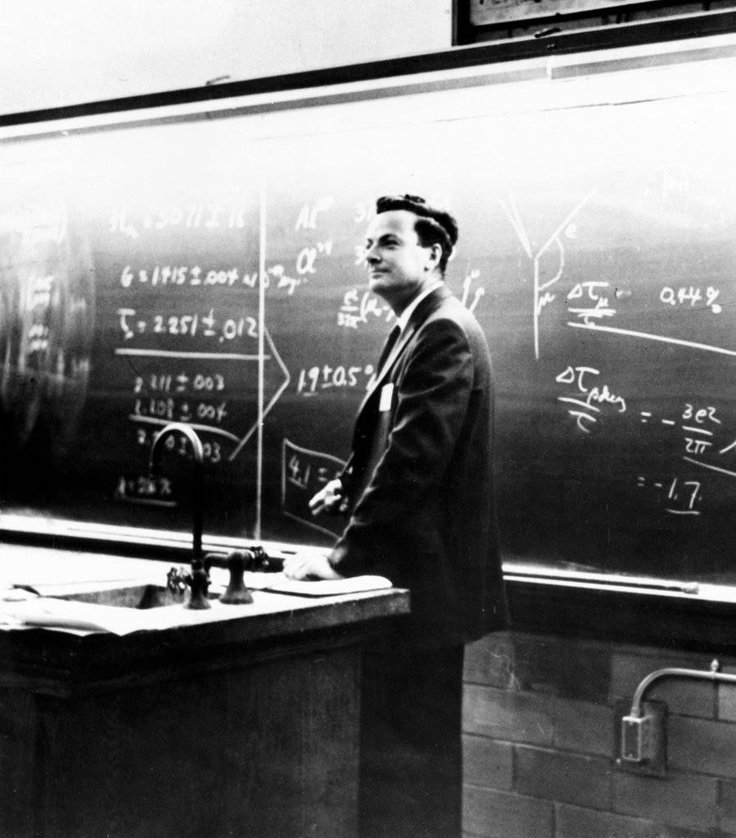
If we suppress all discussion, all criticism, proclaiming "This is the answer, my friends; man is saved!" we will doom humanity for a long time to the chains of authority, confined to the limits of our present imagination. It has been done so many times before.
For more than half a century, a cartoon dog and four teenagers have been teaching Americans a radical lesson: Evil wears a human face, and goodness is something we build together, writes Liel Leibovitz for The Free Press. https://t.co/j5zhdn03g4
For more than half a century, a cartoon dog and four teenagers have been teaching Americans a radical lesson: Evil wears a human face, and goodness is something we build together, writes Liel Leibovitz for The Free Press. https://t.co/SLiYaDzCFx
This is censorship at its worst. If IU is ashamed of its free speech ranking, the last thing they should do is punish those who report on it.
TAKE ACTION: Tell IU to stop interfering with the IDS and reinstate Professor Rodenbush.👇
https://t.co/uAEgxdnc3A
You don't wanna work somehwere where you do not feel supported and validated, where you feel forced by a need to maintain your position in the organization, where you don't have time and space to truly rest.
No one wants to trade in hours of their life to "earn" necessities.