A fascinating bronze figure from the ancient Elamite civilization of Iran, dating to 3000 BC.. ..
What immediately catches the eye is the strikingly modern appearance of the figure: the curved cap, powerful physique, pointed footwear, and almost fantasy-like silhouette. Looking at it today, one cannot help but think of characters from modern mythology, fantasy art, elves, jesters, or even iconic fictional figures such as Peter Pan and other archetypes found throughout popular culture.
The Elamites were among the oldest civilizations of the ancient Near East, flourishing in what is now southwestern Iran long before the rise of the Persian Empire. Their art reveals a rich world of mythology, religion, and symbolism. In many ancient Near Eastern cultures, horned or elaborate headgear was associated with divine power, authority, and the supernatural.
Whether by coincidence or through the long evolution of artistic symbols across millennia, this remarkable figure demonstrates how certain visual archetypes never truly disappear. From the temples of ancient Elam to the fantasy worlds of the modern imagination, the same shapes, ideas, and symbols continue to inspire humanity.
Ancient Elam, modern imagination — separated by thousands of years, yet strangely familiar.
MET Museum
#drthehistories
Roman Mosaic (late 2nd - early 3rd Century AD); it is the Greek myth of seduction, depicting Leda and the Swan, once central panel (emblema) of a Mosaic Floor. The fresco is a scene of great sensuality and full of color, decorating a small bedroom in a residence or domus. It is about a wealthy Roman family on Carrer del Vesuvio, near the city center. It was found while remodeling of the excavation fronts was underway in the vicinity of the Sanctuary of Aphrodite at Palaipafos in Cyprus.
According to Greek mythology, Leda was the wife of Tindareo of Sparta. While she was walking along the banks of the Eurotas river she was seduced or raped (according to the versions that have come down to us) by a swan, who turned out to be the incarnation of Zeus. That same night, the woman also had sexual relations with King Tíndaro. Leda later laid two eggs, from which four children were born: twins Castor and Pollux, Helena (future wife of Menelaus, king of Sparta) and Clitenmestra. But only Helena and Pollux were considered children of Zeus and therefore, immortal.
Theme Leda and the Swan, which very explicitly represents the sexual encounter between Leda and Zeus, was frequently used as decoration in the Roman Empire. In the images shown by the archaeologist, Leda is seen sitting half naked and in a gold and transparent garment receiving her guest with a sensual gaze. A look that seems to be directed towards those who once passed through the door to enter the room of this house in Pompeii.
Leda's portrait is extremely particular and different from those found so far in other houses. This myth has never been encountered with this sensual iconography. Leda looks at the viewer with absolutely pronounced sensuality. It is the same house where another Priapus fresco was found last August. Priapo, a mythological deity represented by a small man with a huge phallus. It is in the entrance hall of the house, whose owner has not been determined.
According to Osanna (director of the archaeological park), entire luxurious home was filled with high-impact decorative elements. It can be inferred that its owner was probably a wealthy merchant, possibly a former slave. And he was also eager to elevate his social status through references to high-level cultural myths." Archaeologists and restorers who clean and restore the fresco have pointed out that it is of a very high quality. Its intense colors have been beautifully preserved despite almost 2000 years. I also endure eruption of Vesuvius that buried Pompeii in ashes. At this time, it was not decided whether the fresco would be sent to a museum to protect it and expose it to the public without risk.
Archaeological treasures continue to be found that describe daily life, customs, decorations, passions and sexuality of Romans. Archaeologists continue to explore and discover residences with frescoes, sculptures, amphoras, coins, and inscriptions. Mr Osanna shares them on social networks of the archaeological site.
Archaeological Museum, Old Paphos - Cyprus
#archaeohistories
Ancient Greek Hercules Statue Discovered in Iran Reveals the Far Reach of Hellenic Civilization -
Few people know that one of the most remarkable surviving depictions of Hercules lies carved into a mountainside in modern-day Iran 🇮🇷
The statue of Hercules at Mount Behistun was created during the Hellenistic era, a period when Greek culture spread deep into Asia following the conquests of Alexander the Great. Dating to the 2nd century BC, the sculpture shows the legendary Greek hero reclining on a stone platform, holding a cup in one hand.
An ancient Greek inscription identifies the monument as a dedication to Hercules Kallinikos (“Hercules the Glorious Victor”), offering a fascinating glimpse into the enduring influence of Greek civilization far beyond the borders of Greece itself.
Over the centuries, the statue endured damage, and its head was even stolen twice before being recovered. Today, a replica stands on the monument while the original is preserved by Iranian cultural authorities.
Hidden among the mountains of western Iran, this remarkable monument remains a powerful reminder of the vast reach of Hellenistic culture and the legacy of the ancient Greeks across Asia.
#archaeohistories
Emperor Commodus as Hercules ⚔️
This 1,835 years old bust from the Capitoline Museums shows the mad son of Marcus Aurelius fully embracing his god complex: lion skin, club, and apples of the Hesperides.
He thought he was the new Hercules.
In 1408, a man known as John the Mason received permission from King Henry IV to excavate waste land below a quarry near Knaresborough and carve a chapel into the rock. The court rolls from that year record the license in Latin, granting John and his heirs the right to hold the chapel for an annual rent.
John was likely a master mason working on repairs to Knaresborough Castle and the parish church of St. Mary, and the nearby quarry provided stone for both projects. Legend says John's son was playing near the quarry when part of the cliff suddenly collapsed.
John was too far away to reach him, so he cried out to the Virgin Mary for help. The rockfall miraculously changed direction, and the boy emerged unharmed. In gratitude, John carved a chapel directly into the sandstone cliff face overlooking the River Nidd. Some historians think the legend came late,r and John simply built the shrine to showcase his skills to potential clients, medieval advertising for a tradesman who needed work.
The chapel served as a wayside shrine for pilgrims traveling to Knaresborough Priory and as a place of prayer for quarrymen working the cliff. John carved an altar from the solid rock, added a vaulted ceiling with intricate roof bosses, and included carved heads on the walls. Next to the entrance, he carved a life-sized figure of a knight with one hand on his sword.
The chapel was referred to in deeds as Chapel of Our Lady of the Crag, Quarrel Chapel, or Our Lady of the Quarrel. It stopped functioning as a chapel after Henry VIII's Reformation in the 1530s. Around 1700, traveler Celia Fiennes visited and found the altar decked with flowers and the ground strewn with rushes for the devout, suggesting Catholics were still practicing there in secret. Viscount Torrington visited in 1792 and wrote that it was filthy inside with a dirty flower garden outside.
The chapel was reconsecrated as a Catholic place of worship in 1916 after becoming the property of Ampleforth Abbey. Three carved heads from the right wall were removed at that time. A new statue of Our Lady of the Crag was installed, and in 2000, sculptor Ian Judd carved a replacement Madonna and Child from half a ton of Derbyshire gritstone, funded by a Millennium Grant.
The chapel stands on Abbey Road beside the Nidd Gorge, about 140 meters from Low Bridge. It's Grade I listed and owned by a charitable trust that opens it to visitors on Sunday afternoons during the summer months. The structure has survived over 600 years, carved into the rock, though the window glass was smashed by vandals in 2019 and repaired with donations from local residents. William Wordsworth mentioned it in his 1814 work, though he confused it with St. Robert's Cave and chapel a mile downriver, a mistake that persisted for centuries.
#archaeohistories
A man in 1835 was digging a duck pond and accidentally uncovered a 70-foot tunnel made of 2,000 sq ft of mosaic made from 4.6 million shells (mussels, cockles, whelks, limpets, oysters, scallops).
It's the Shell Grotto in Margate, Kent, England.
One of the greatest rescue operations in archaeological history.
In the 1960s, Abu Simbel temples were saved by the UNESCO rescue campaign, which cut the entire complex into giant blocks and moved it to higher ground before Lake Nasser could drown it.
Jeannie was born close to Raglan Mine. Today she works to improve understanding between Inuit and non-Inuit employees and is proud to act as a bridge between both cultures.
The Sea Peoples remain one of history's greatest mysteries. Described in ancient Egyptian records as a confederation of seafaring raiders, they swept across the eastern Mediterranean around 1200 BCE, attacking and destabilizing major Bronze Age civilizations. Their invasions are often linked to the collapse of kingdoms in Anatolia, Syria, Phoenicia, Canaan, and Cyprus, and they even threatened Egypt itself. Despite centuries of study, their true origins remain unknown. https://t.co/0oJ1Q2sRHI
Ancient Mesopotamian beer has been recreated by archaeologists, who describe it as a flat, lukewarm drink with a sour taste and a cloudy, milky appearance. Because hops were unknown at the time, the beverage lacked the bitterness of modern beer. Mesopotamians typically drank it through long reed straws, which helped filter out bits of grain and sediment. https://t.co/VK4ddL8xSd
Yuraq Rumi, also know as Ñusta Hispana is a site that few people visit because of its remoteness. It is about a 6-hour drive west of Cusco.
It’s been on my list for years and I finally had a chance to go there last week.
This imposing monolith of white granite (covered with black fungus), whose name means "White Rock" in Quechua, is as mysterious as it is mind-blowing, given the apparent randomness and precision of all these cuts in such hard rock.
I was lucky enough to visit while archaeological excavations were underway. Two new excavation pits are set to open this week, including one at the base of the monolith, as indicated by the white strings visible on the ground.
Archaeologists have already found metal artifacts buried in the ground.
I'll do my best to keep you updated on any new discoveries coming out of this exciting project.
Check out the comments for additional photos.
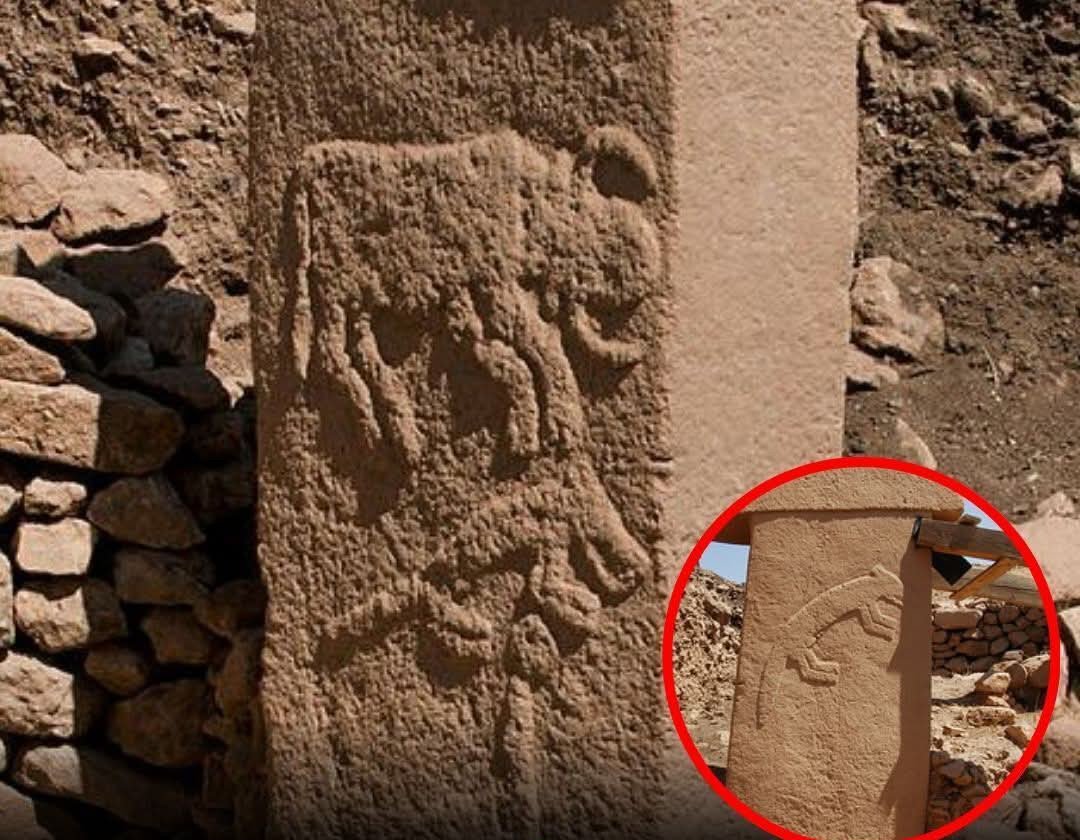
Archaeologists in Turkey, digging at a sister site to the famous Göbekli Tepe, have reached its lowest layer, unearthing incredible 11,500 year old carved pillars at a settlement called Karahan Tepe, showing that hunter gatherer societies were building elaborate communal gathering spaces before the invention of farming or the wheel.
The discovery comes from the Taş Tepeler region of southeastern Turkey, an area now recognized as home to multiple Pre Pottery Neolithic sites that are rewriting the timeline of human civilization. Karahan Tepe, located approximately 23 miles (37 kilometers) from Göbekli Tepe, features T shaped limestone pillars weighing up to 30 tons each, carved with stylized human arms, hands, belts, and animal figures including snakes, foxes, and birds. The site also contains a large "building with a phallus," a carved stone chamber used for what researchers describe as "bloody rituals," and a basin that may have held water or offerings. The architects of these structures were not farmers. They were hunter gatherers who returned to the same site generation after generation, lowering massive stones with ropes and wooden levers, carving symbols into solid rock using only flint tools.
This monumental discovery is rewriting history textbooks by flipping a century old assumption. For decades, archaeologists believed that agriculture came first: humans learned to farm, settled into permanent villages, and only then developed the surplus labor and social hierarchy needed to build temples. Göbekli Tepe and Karahan Tepe reverse that sequence. The desire for communal worship and spiritual gathering may have actually driven people to settle down and eventually develop agriculture, rather than the other way around. People gathered to build temples. They built temples to worship. And then, because they kept gathering, they needed food, then stored food, then planted food. Agriculture followed worship, not the reverse.
An 11,500 year old pillar carved with human hands. A hunter gatherer who became an architect. A temple built before anyone knew how to grow a single seed.
#drthehistories
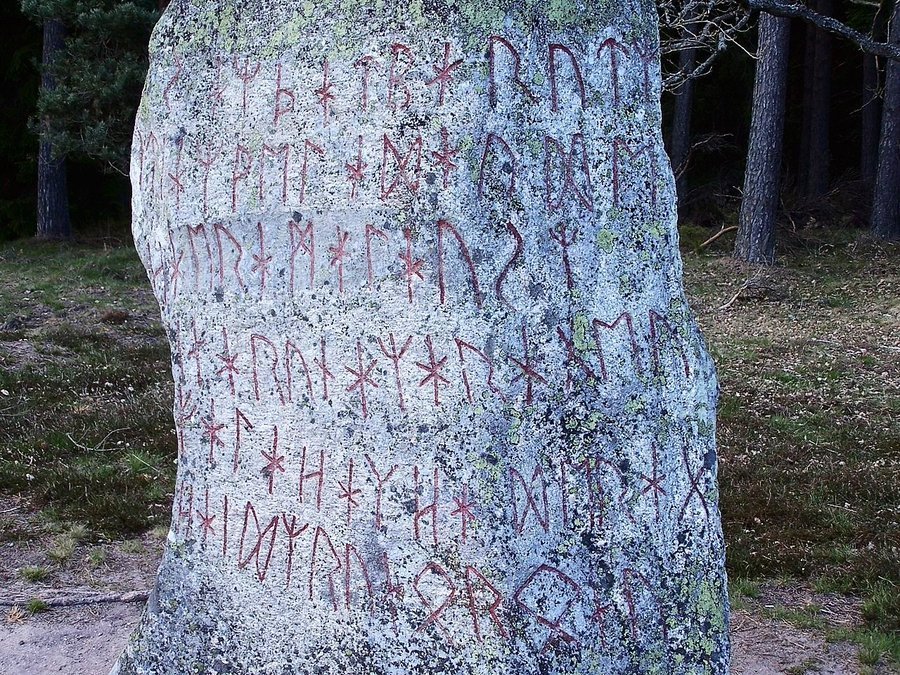
Everyone needs to know the origin of the word “rune.” When ancient Germanics formed their own alphabet, they called the letters *rūnōz or “whispers,” because as your eyes followed them, they spoke to you, silently. Reading is magic to a people at the dawn of literacy, who haven’t yet learned to take the miracle for granted.
On this day in 1965, the first American walked in space
Astronaut Ed White spent 23 minutes floating outside the Gemini 4 spacecraft, becoming the first American to perform a spacewalk and helping pave the way for future Moon missions