Naturalist/Minimalist/Doctor@esic
Passionate about protecting our planet🌍| Advocate for nature conservation🌿| tips & stories to inspire eco-friendly living
👕 It takes ~2,700 litres of water to produce one cotton T-shirt.
That’s roughly 2 years of drinking water for one person.
Fashion isn’t just about style — it’s about water, land, and life.
Choose wisely. Wear longer. 🌍💧
Tragic reality: 1 million seabirds are killed by marine plastic pollution yearly
Birds get trapped in "ghost fishing" gear or plastic packaging, leading to injury or drowning.
Ingestion: They mistake plastic fragments for food, causing internal injury, organ failure/ starvation
STAY WITH ME.
A few years ago, a patient was referred to me because he was diagnosed with complicated cirrhosis. He had an infection which led to a condition called hepatic encephalopathy (brain failure due to high ammonia levels). The treatment largely involved ammonia reducing therapies. One drug was central to this - Rifaximin - a non-absorbable antibiotic that reduced ammonia in the body. I prescribed him Rifaximin for 6 weeks and advised him follow-up.
He came back to me, not after six weeks, but in 4 weeks, this time, in liver coma (worst stage of brain failure - due to very high ammonia). He spent two days in the ICU and six days in total in the hospital. His hospital bill was close to INR 80,000. He had no insurance and his wife borrowed the money from neighbors and friends to clear hospital dues.
Upon questioning, I found that he was not taking the Rifaximin drug I had prescribed. He was only on the other two drugs (one, a syrup called lactulose for improving ammonia clearance in gut). I was furious, because the patient spent a whole week unecessarily in the ICU and wasted so much money that he never had - just because he was "not compliant" to my orders. I decided it was time for me to school him a bit.
But I was wrong. He was compliant. He had purchased Rifaximin and was on it. For 15 days. Thereafter, he could not afford it. He was an autorickshaw driver who shuttled school children every morning and evening. He could hardly make ends meet. He had two children of his own. The Rifaximin brand I prescribed him was 42 rupees per tablet. He had to consume two a day - which would mean 2520 rupees a month. He just did not have that money - so he skipped it - to not compromise on other important matters - childrens education and food.
He was confused and scared about opting for a cheaper version of Rifaximin because one, he was unsure about the quality of Rifaximin that was not prescribed by me and two, he was "scared" that I would scold him for buying a cheaper Rifaximin and if that got him into trouble.
I was confused and scared about prescribing a cheaper version of Rifaximin because one, I was unsure about the quality of Rifaximin that was not "a good promoted brand" and two, I was "scared" that his family would scold me for prescribing a cheaper Rifaximin and if that got him into trouble.
It is heartbreaking that many doctors still simply don’t trust generic medicines. Too often, they worry that these cheaper options are lower quality or might cause more problems than the big, famous brands. This fear leads them to prescribe expensive drugs instead, and the real tragedy is that it pushes vital healthcare out of reach for the ordinary people who need it most - like my patient.
This narrative, that generic drugs 'are never good' and that only big pharmaceutical marketed drugs are what works has been deeply ingrained into doctors and patients alike - I do not know by whom and since when. Looking back, these strong emotions were based on either opinions, testimonials or second- and third-hand information. Not evidence.
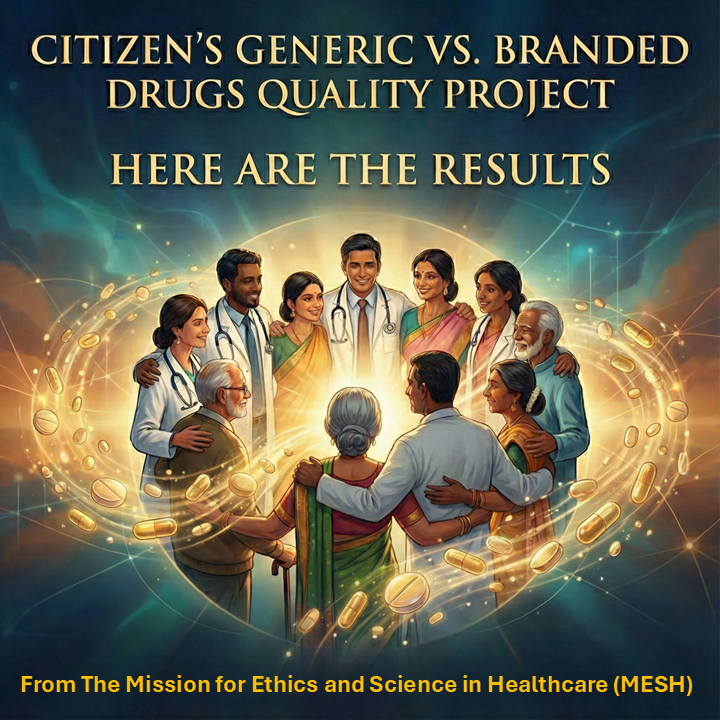
Like I said. Stay with me. This is life changing and will disrupt the drug market in India. Here are the results of The Citizens Generic vs. Brand Drugs Quality Project.
1/11
@theliverdoc Was expecting. opposite of what your study has found out. Truly remarkable results. I was hesitant in prescribing generic drugs and never bought generic drugs for my own use. Study will do a lot of good for changing the perception about generic. Results must be widely publicized
Heat waves don’t just make you uncomfortable — they strain your heart. ��️❤️
Dehydration thickens blood, the heart works harder, electrolytes drop, and clot risk rises. That’s why heart attacks increase during extreme heat.
Climate change is a heart health issue.
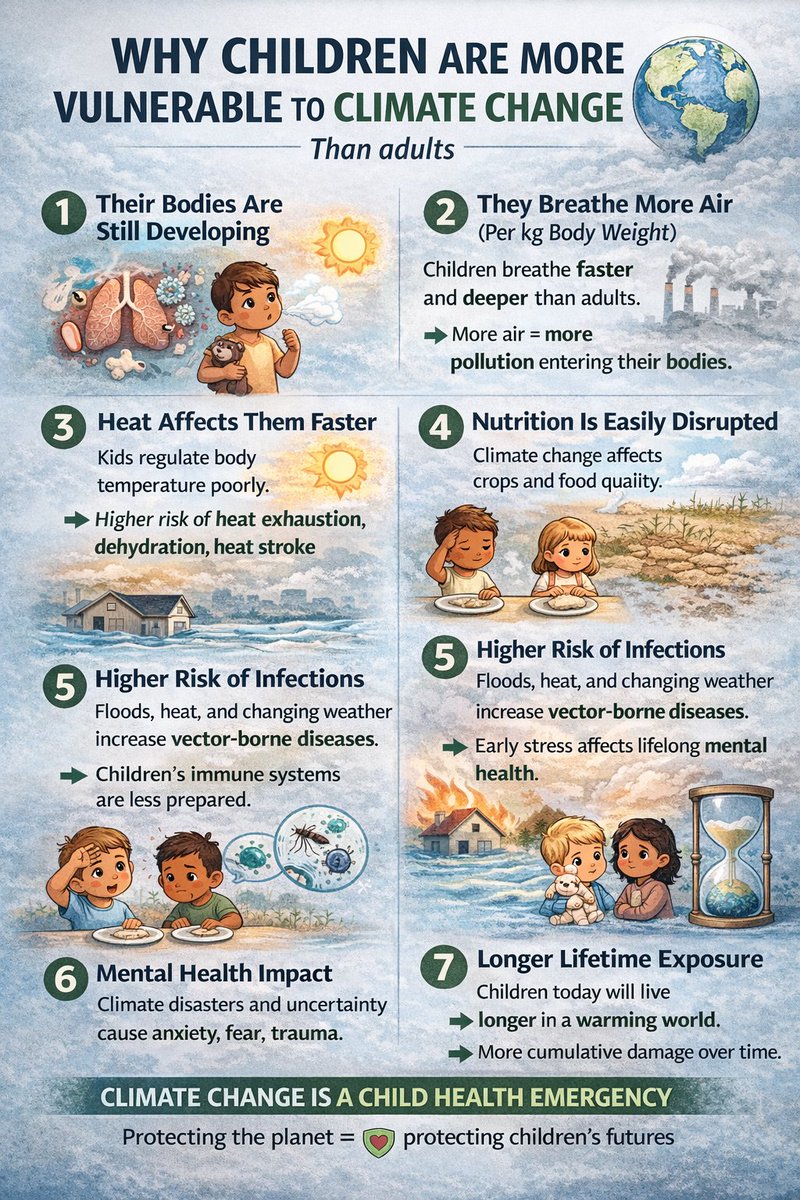
Children are more vulnerable to climate change than adults. 🌍👶
Their bodies and brains are still developing, they breathe more air per kg, heat affects them faster, and they’ll live longer with the impacts.
Air pollution doesn’t stop at your lungs. 🧠🌫️
Tiny particles (PM2.5) enter your bloodstream, breach the brain’s protective barrier, and trigger inflammation—linked to memory loss, mood disorders, stroke, and dementia.
While the wood wide web isn’t conscious, it is alive — a cooperative system millions of years old, now threatened by deforestation and soil damage.
Protecting forests means protecting this invisible network that holds them together. 🌍💚 5/5
#FungalNetwork#ClimateAction
Plant intelligence
Beneath your feet lies one of nature’s most complex networks — billions of fungal threads linking trees, plants, and roots into a living internet. 🍄🕸️
Scientists call it the wood wide web. Here’s how this hidden world works — and why forests depend on it.1/5
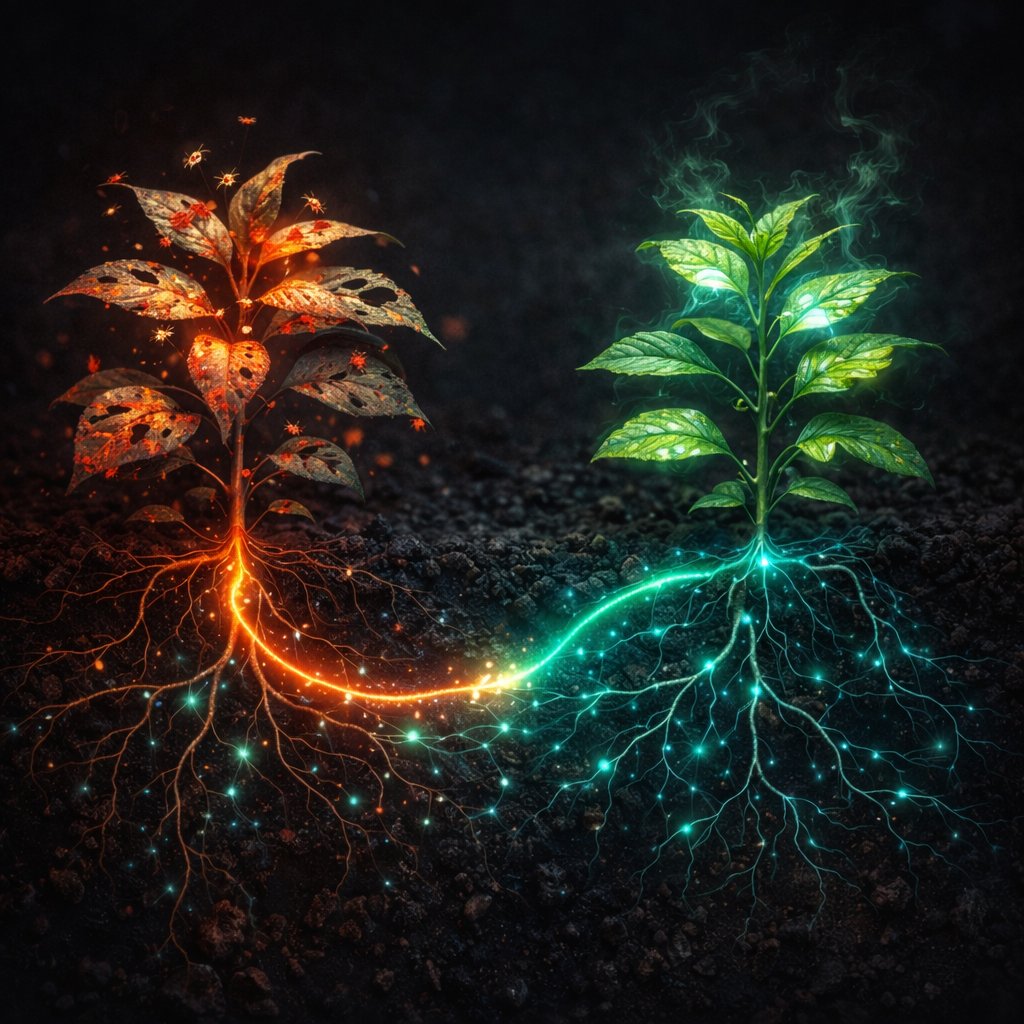
It’s not just nutrients. Stress signals can travel too.
When one plant faces drought or insect attack, others linked in the network can “prepare” their defenses early — a real‑time biochemical warning system. ⚡🍃4/5
Aurora colors depend on altitude! RED (above 240km): oxygen at high altitudes. GREEN (100-240km): oxygen at mid-altitudes—the most common. BLUE & PURPLE (below 100km): nitrogen at low altitudes. During solar storms, yellow and pink can appear too! 🎨4/4
What Are Auroras?
Ever wondered what creates those magical dancing lights in the sky? Let me break down the science behind auroras 🧵It starts 93 million miles away. The Sun constantly sends charged particles (solar wind) toward Earth. 1/4
Want to see auroras?
Head to extreme northern or southern latitudes. Northern lights (aurora borealis) appear in the Arctic, southern lights (aurora australis) in Antarctica. Your best chance? During periods of high solar activity when the Sun sends more charged particles! 🌍3/4
🧐 Did you know?
On Earth, there are 92 naturally occurring chemical elements. Eighteen are essential to plants, and 15 of them are supplied by soils.
🌱 Soil health and fertility have a direct influence on the nutrient content of food crops.