Our article in Nature Reviews Materials @NatRevMater is out now! @ShrutiHariyani, @M_Sojka_, Anant Setlur (from GE), and I discuss the challenges of developing next-gen materials for #LEDs and applying #machinelearning in our "Phosphor Discovery Pipeline."
https://t.co/ofYB2Fv5Ai
“@UTSA is honored to host the 10th annual NICE Conference Series, bringing researchers from various disciplines across the globe together to facilitate and inspire conversations that will advance the scientific excellence in #AI," said @PresidentEighmy.
https://t.co/NP4Th3LhTm
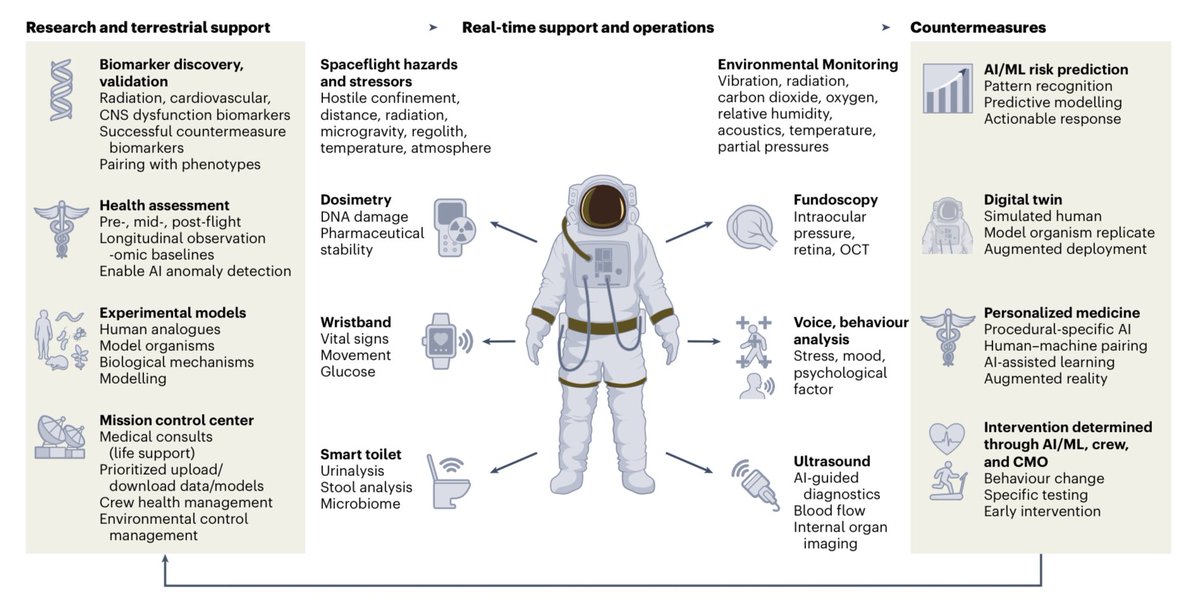
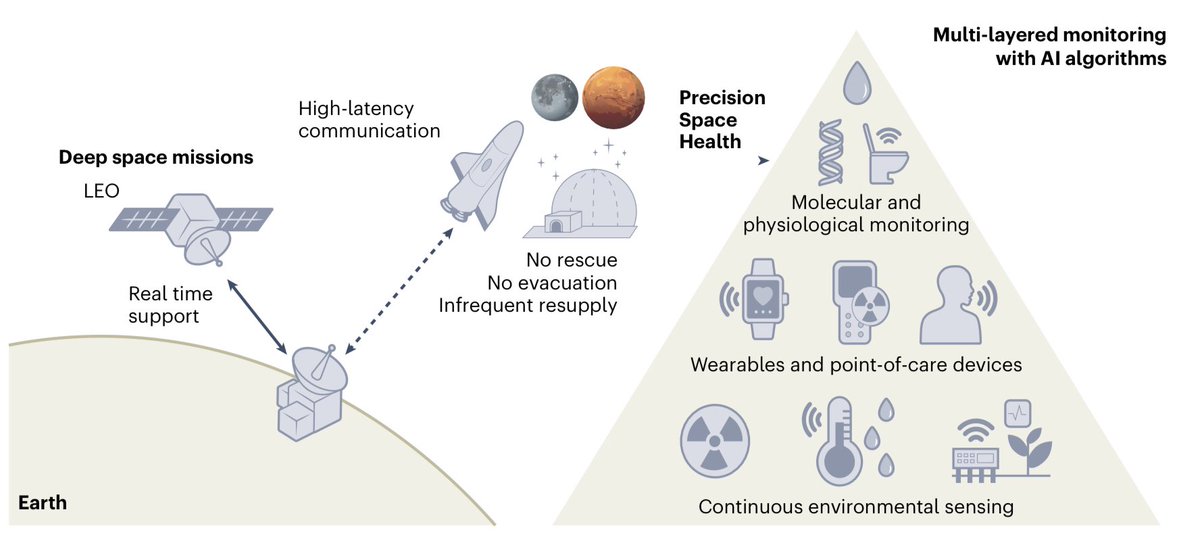
2/n Articles created to illuminate essential role AI/ML enables for astronaut health & life support for Lunar, Martian & deep space transit missions. High-latency comms, data bandwidth/power constraints highlight need for in situ crew autonomy support & automated science research
3/n A multi-layered biomonitoring system will be crucial to enable a Precision Space Health system which also involves multiomics, active & passive assays which monitors & feeds crew/crew medical officer immediate data
Our daughter has been diagnosed with this rare brain cancer, DIPG. Due to its rarity, available data and treatment options are limited! Please retweet and If you are aware of any trials, please get in touch! Thank you!
Spectrins: molecular organizers and targets of neurological disorders — a Review by Damaris N. Lorenzo, Reginald J. Edwards & Anastasia L. Slavutsky
https://t.co/elJ62ukgph
@thelorenzolab @StaceySlavutsky
.@eBionic discusses her research on how the cells of our brain and vascular system communicate and how transformative networking has been throughout her career >>>
https://t.co/ONeSYrCdkC
@QutubLab#IWD2023#WomenInSTEM#WomenInNeuroscience
"Looking at long-time-lapse imaging of human cells and tissue is mesmerizing. Brain cells are incredibly beautiful, strange and dynamic." - @eBionic@QutubLab
Read the full #IWD2023 interview here >>>
https://t.co/FtQDt3LenA
Check out this podcast from @NatureCareers, the first in a series called "Brain and behaviour" that profiles neuroscientists, and features the voice of our own Senior Editor Jean Zarate (@lady_ginseng)
https://t.co/NNlJ7NMyhp
Decreasing mitochondrial function slows down neuronal development and neuronal maturation.
This has important implications for mitochondrial diseases like Leigh syndrome, where we found impaired neurogenesis in patient-derived models. https://t.co/KSKnYMJXuR
To become neurons, brain cells must damage and immediately repair their own DNA. Some chemotherapies may harm neurons by interfering with this process. Happy to share our latest work at @ScienceMagazine (https://t.co/quYZcKjSxY)
#SfN presentation by @STritley & Christian Cruz w/Anna Sedelnikova, Luis Maldonado, Gleb Tolstykh & Chris Valdez (AFRL, @UTHResearch) on infrared effects on #neuronal activity! Part of ongoing work to study & counteract #environmental stress on the #brain@eBionic@brey_lab