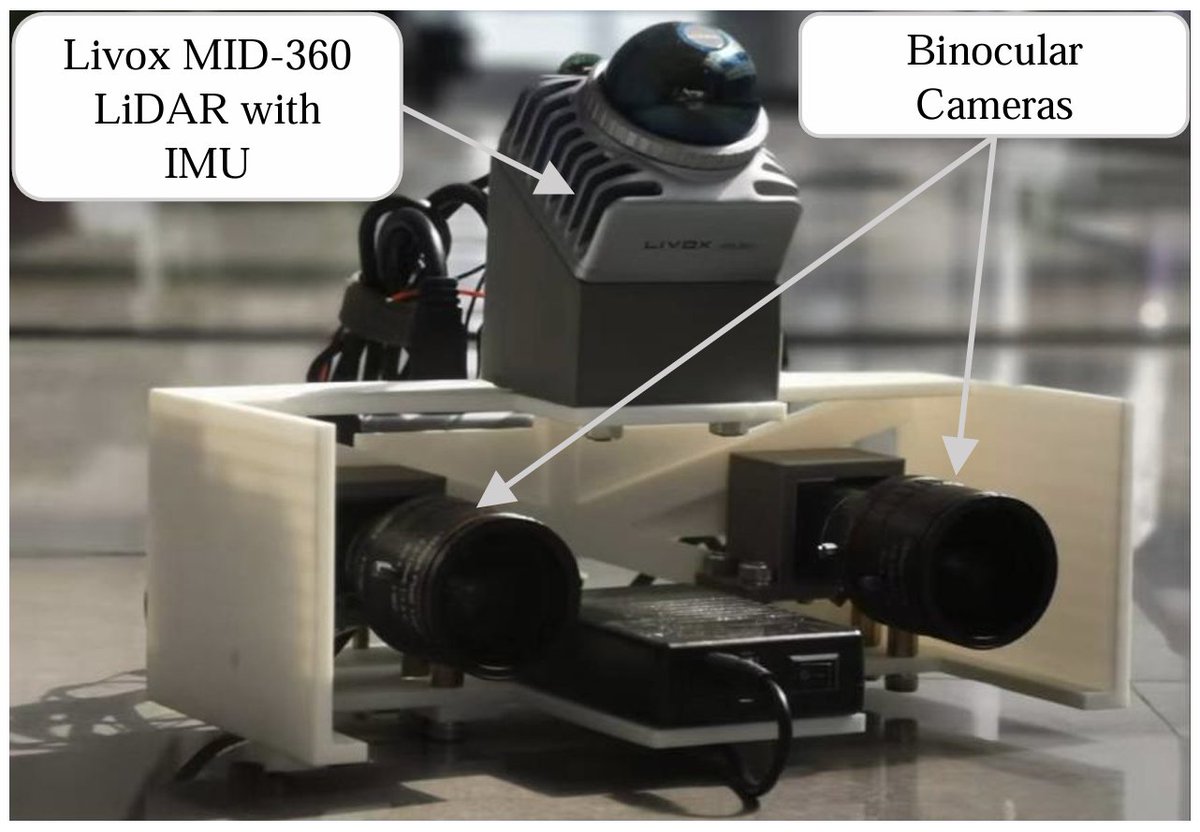
🔥 Humanoid robots don’t just need more skills — they need a way to compose them.
CHOREO tackles a problem that becomes increasingly important as robot skill libraries grow: how to combine motion controllers from different models without retraining them.
The clever part is the transition layer. When two motions don’t naturally connect, CHOREO can insert validated bridge motions to keep the robot stable before executing the next skill.
That makes me think we’re moving toward something bigger than individual policies: a composable motion ecosystem where skills can be accumulated, reused, and chained across models. 🤖🧩
2,950 validated skills · 95.4% success across 130 tasks.
🔗 https://t.co/Z4Zg2ljGAu
@ZiySun05
#Robotics #HumanoidRobots #EmbodiedAI #RobotLearning
💡ECCV 2026|DriveTeach-VLA 🚗
Most driving VLAs can describe what they see.
But can they connect that understanding to where the car should go?
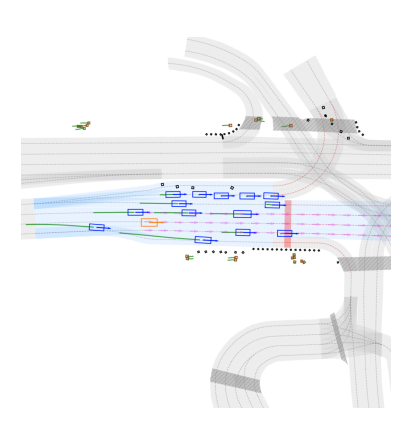
DriveTeach-VLA takes an interesting approach:
→ DVD teaches the vision encoder what to look at
→ 2D-TGP teaches the model where to look by projecting future BEV trajectories into image space
→ The planner then turns these spatial cues into future driving trajectories.
The key idea I like: don’t just teach a VLA to talk about driving. Teach it to connect visual evidence with future motion.
90.4 PDMS on NAVSIM with a 3B VLA.
🔗 https://t.co/ANr5UfeX4j
#ECCV2026 #AutonomousDriving #VLA #EmbodiedAI
🔥CVPR 2026|ViFailback 🤖
Robots don’t just need to learn how to succeed.
They need to understand why they failed.
ViFailback uses visual symbols to help robots diagnose failures, locate what went wrong, and generate corrective actions.
What I find interesting is the shift in mindset:
Failure is no longer an endpoint. It becomes training data.
With ViFailback, π0.5’s real-world success rate jumps from 50.8% → 74.6%.
To me, this is an important step toward robots that can observe → reason → recover, instead of simply repeating learned actions.
🔗 https://t.co/3kr7kX1HvS
#CVPR2026 #Robotics #VLA #EmbodiedAI
💡CVPR 2026|DMAligner💡
What if image alignment isn’t really a warping problem—but a view synthesis problem? 👀
DMAligner fixes the camera pose of the first frame, advances the scene to the second frame, and uses diffusion to generate the aligned view.
That’s a subtle but important shift: instead of asking “where should each pixel move?”, it asks “what should this scene look like from this camera at this moment?”
The idea feels especially relevant for dynamic scenes, HDR, video stabilization, and embodied perception.
The bigger takeaway for me: alignment is starting to look less like geometry and more like controlled world reconstruction. 🌍
🔗 https://t.co/bnCTBUUTVR
#CVPR2026 #ComputerVision #Diffusion #WorldModels
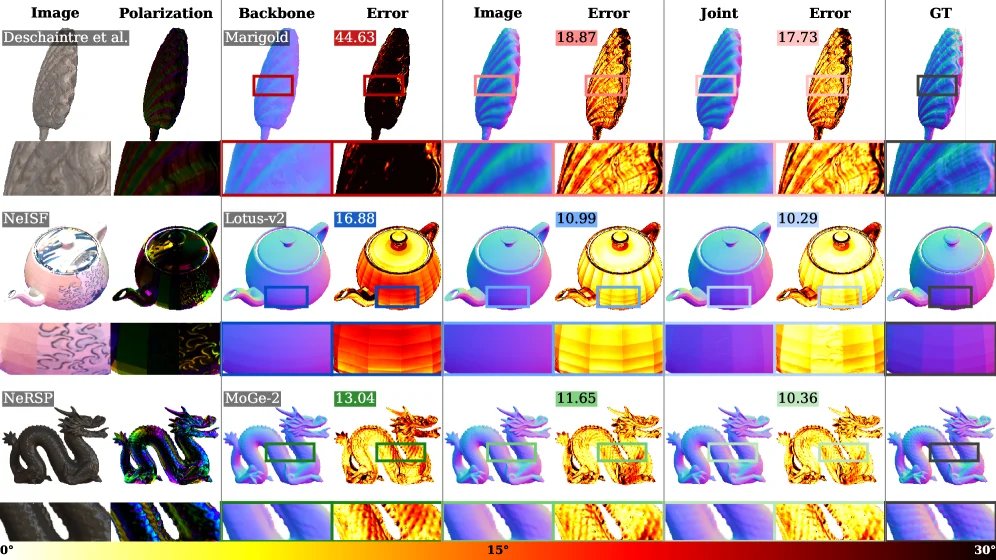
🔥 ECCV 2026 | Best Paper Honorable Mention 💡
RGB doesn’t always give us enough information about 3D geometry.
Poppy asks a simple but powerful question: what if vision models could access another physical cue?
Instead of retraining the model, it uses polarization at test time to correct predicted surface normals — improving errors by 23–26% on synthetic data and 6–16% on real data.
What I like about this work is the bigger idea:
Better 3D perception may not require a bigger model. It may require better information.
That could be especially useful for robotics, 3D reconstruction, and challenging reflective or textureless surfaces.
This is why I think Poppy deserved the ECCV recognition. 👀
📄 https://t.co/IVXphgFWse
#ECCV2026 #ComputerVision #3DVision #Robotics
ICLR 2026🔥
The next jailbreak surface may not be the prompt. It may be the reasoning process itself.
MIDAS shows a striking pattern: dangerous meaning can emerge only after a model combines information that looked harmless in isolation.
That makes me think we’re approaching a different kind of AI safety problem.
Most defenses still ask: “Is this input unsafe?”
But reasoning models are constantly transforming their internal context. A harmless-looking input can become risky after several rounds of inference, retrieval, or multimodal fusion.
So maybe the future of safety isn’t just better input filters.
It’s continuous safety checks over semantic state transitions. 🧠🔐
As models become better reasoners, this distinction could become increasingly important.
https://t.co/R6MqNGuDb5
#ICLR2026 #AISafety #MultimodalAI #ReasoningAI
💡CVPR 2026💡
A robot’s map can be accurate — and still be wrong.
GaME tackles a problem I think will become increasingly important for 3DGS in robotics: what happens when the world changes outside the camera’s view?
Most 3DGS-SLAM systems still treat old observations as reliable constraints. GaME instead lets the map forget stale geometry and update itself when new observations contradict the old state.
That’s the part I find most interesting.
A long-term robot doesn’t need a perfect static map. It needs a map that knows when its own memory is outdated.
To me, this is a step from 3D reconstruction toward persistent, adaptive world representations. 🧠🤖
https://t.co/D0Jzy1jA0s
@vyuga3d@lucacarlone1@Martin_R_Oswald
#CVPR2026 #3DGS #SLAM #Robotics #WorldModels
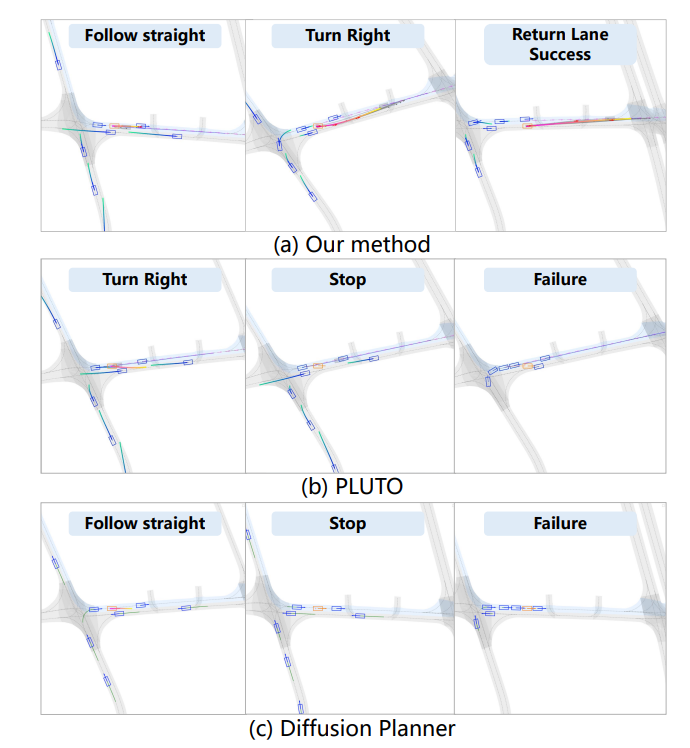
ICLR 2026🔥
What if the best way to use a VLM for driving is not letting it drive?
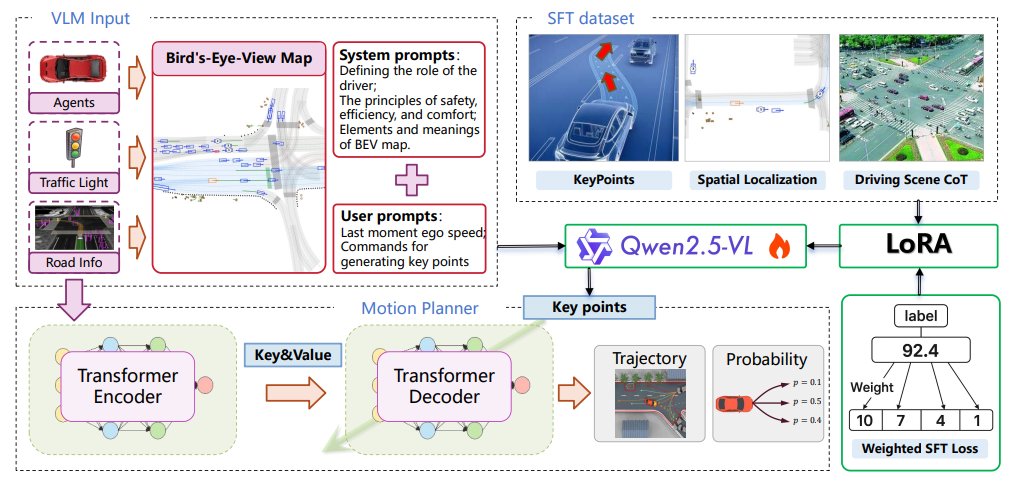
BIRDriver gives the VLM a much smaller job: understand the scene and output up to 3 spatial key points. A dedicated motion planner then turns that intent into a trajectory.
I like this separation. VLMs can bring semantic reasoning to long-tail scenarios, while the planner handles the precise geometry and control.
The interesting part isn’t replacing the planner with a VLM. It’s creating a clean interface between “what should the car do?” and “how should it move?” 🚗🧠
#ICLR2026 #AutonomousDriving #VLM #EmbodiedAI
💡 SIGGRAPH Asia 2026: World models need to understand more than geometry.
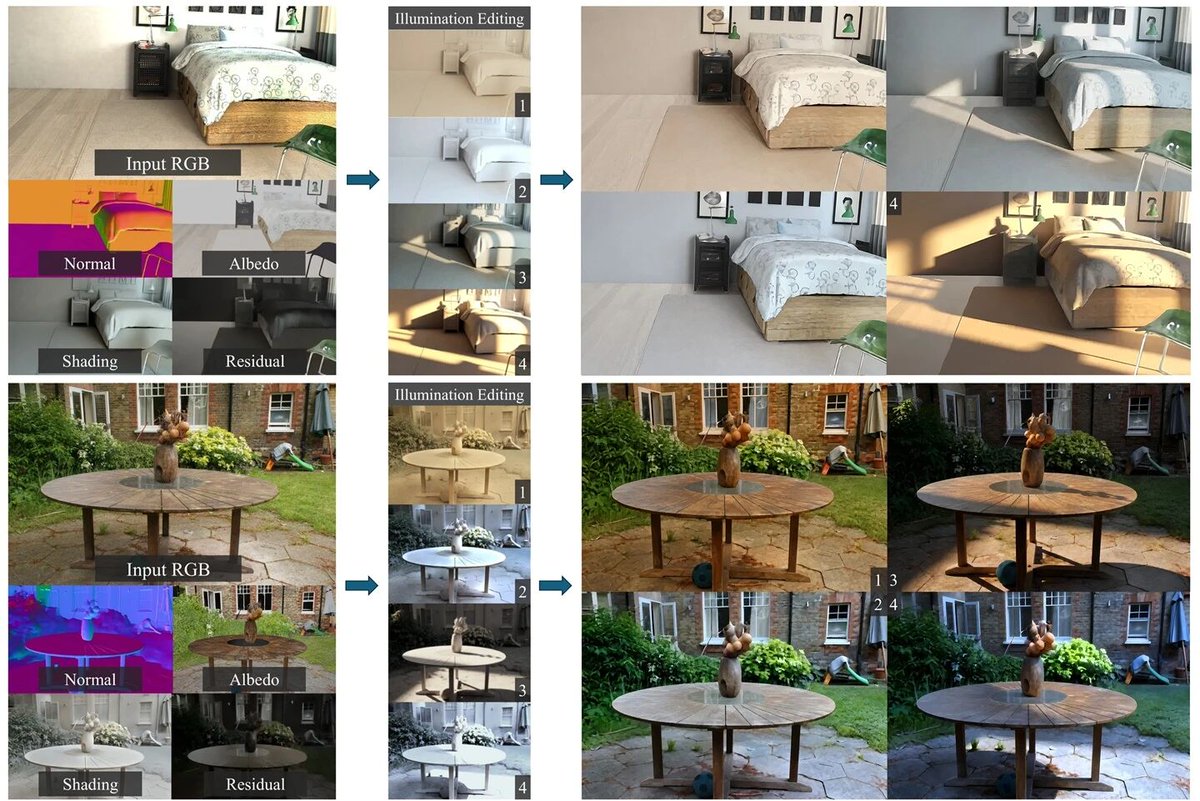
MVID from HKUST(GZ) × Tencent decomposes multi-view images into albedo, shading, and reflections in a single forward pass.
What I find interesting is the shift from “reconstruct the scene” to separating why the scene looks the way it does.
That feels like an important step toward truly controllable world models. 👀
0.19s/frame. Open-sourced.
📄 https://t.co/QIgE1tcW19
💻 https://t.co/T4dRAR2e3K
@zachzeyuwang
#SIGGRAPHAsia #WorldModels #ComputerVision #3DVision
����This SURE-MAP work nails an important direction for geometric foundation models. Prediction alone is not enough for long-horizon streaming 3D reconstruction — the model must detect its own errors and self-correct.
Impressive ATE improvements over LingBot-Map on KITTI, without sacrificing online performance. Full open source is awesome, can’t wait to see what the community builds on top of this self-correcting paradigm. #SLAM #3DReconstruction
This is what self-correcting 3D reconstruction looks like.
🚀 SURE-Map is now fully open-sourced.
We outperform LingBot-Map, an ECCV 2026 Best Paper Finalist, on long-horizon streaming reconstruction without giving up online efficiency.
The key idea is simple: streaming geometric foundation models shouldn’t just predict, they should know when they’re wrong and correct themselves.
SURE-Map combines:
→ cross-view geometric uncertainty
→ multi-timescale self-correction
→ periodic scale recalibration
On KITTI, ATE drops from 24.00m (LingBot-Map) → 17.24m, and further to 15.17m with loop closure.
Code is out. Have fun breaking it 👇
https://t.co/JDGG7TXYjZ
🤖 What if the internet is already a massive robot dataset?
RoboTok takes a refreshingly simple approach: retrieve human videos by how the hands move, not how the scene looks.
Normalize 3D hand trajectories around the torso, learn a motion embedding, then search at internet scale.
That feels like the right abstraction. A robot doesn’t care whether the kitchen, camera, or person looks similar — it cares whether the action is similar.
The bigger question is whether this can scale from simulation to real dexterous robots. 👀
📄 https://t.co/DG7dJsxREX
@xiynfi1520580@bowenwen_me@_Chen_Wei_
#Robotics #RobotLearning #DexterousManipulation #EmbodiedAI
🔥ECCV 2026 | Best Paper Honorable Mention🔥
A recurring problem in 3D reconstruction: the model simply hasn’t seen enough.
LSRM takes this idea seriously. Instead of reconstructing from a limited number of views, it scales the Transformer’s context window to process substantially more image and object tokens.
What I find interesting is that the gain doesn’t come from blindly making the model larger. Sparse attention, coarse-to-fine reconstruction, and spatial routing keep computation focused on the most relevant 2D–3D correspondences.
The result is striking: ~20× more object tokens and >2× image tokens than previous approaches.
My takeaway: for high-fidelity 3D reconstruction, better context may be just as important as a better architecture. More views can mean more geometry, more texture, and fewer ambiguities. 👀
📄 https://t.co/eLOnxiirmL
@flycooler_zd
#ECCV2026 #3DReconstruction #ComputerVision #3DVision
🤖 IROS 2026 ACCEPTED
One of the problems I think VLA models still underestimate: 2D vision is not enough for physical interaction.
GeoVLA tackles this by giving the policy an explicit 3D representation — letting the VLM handle semantics while a point-cloud encoder captures geometry, then fusing both for action generation.
What I find most interesting is the design philosophy: don’t force one representation to solve everything. Let language/vision understand what is happening, and let 3D geometry reason about where and how far.
That feels much closer to how a robot actually needs to perceive the world. 🌎🤖
📄 https://t.co/R3vrvfQi7r
#IROS2026 #Robotics #VLA #EmbodiedAI #RobotLearning
🚨 TPAMI paper worth watching.
We’ve been treating motion as one thing for too long.
Rotation, tangential translation, and radial translation have very different geometric signatures — mixing them can make supervision noisy and optimization unstable.
DiMoDE takes the opposite approach: decompose the motion, then supervise each component geometrically.
My take: sometimes better geometry beats a bigger model. 🧠📐
📄 https://t.co/MbdCiaOO3h
#TPAMI #ComputerVision #3DVision #Robotics
🏆 ECCV 2026: Best Paper Award 🔥
What if we stop forcing 3D surfaces into 2D UV maps?
Heat Kernel Textures (HKTex) takes a different route: textures are represented directly on the mesh surface using geodesic heat kernels — no UV unwrapping, no Gaussian splatting in Euclidean space.
What I find most interesting is the underlying idea: instead of adapting the geometry to the texture representation, make the representation respect the geometry from the start. 🔥
A surprisingly elegant rethink of a very old 3D graphics problem.
📄 https://t.co/oK1dlc7ZvY
@simo_foti@tolga_birdal
#ECCV2026 #ComputerVision #3DVision #Graphics #NeRF
CoRL 2026💡
Semantic SLAM can tell a robot what is around it. But that’s not enough for manipulation.
Functional-SLAM takes the next step: mapping what can be interacted with, and how.
Instead of treating functional scene graphs as an offline add-on, it maintains them online and even uses functional topology to improve loop closure.
I think this is a more interesting direction for robot mapping: the map shouldn’t just describe the world — it should become a representation for acting in it. 🤖🗺️
📄 https://t.co/et7EPfXMw4
@zhuzihan2000
#CoRL2026 #Robotics #SLAM #EmbodiedAI #RobotLearning
CoRL 2026💡
World Models don’t always need to imagine the future. 👀
WM-Craftnet uses a World Synesthesia Model as a multimodal state representation for dexterous manipulation — turning proprioception, touch, noisy depth and action history into a useful policy context.
The interesting part? It generalizes to unseen objects and improves sim-to-real robustness.
To me, this is a more practical direction for World Models in robotics: not “dreaming” the future, but learning a better representation of the present. 🤖
Paper: https://t.co/jm6IEIHYDf
#CoRL2026 #Robotics #WorldModels #DexterousManipulation
SSMs don’t just need better scaling. They need better ways to organize visual information.
That’s what I find interesting about SSR, an ECCV 2026 paper.
Instead of scanning images pixel by pixel, it uses superpixels to keep state propagation within perceptually consistent regions — essentially making the scan semantic-aware.
Only 7.05M parameters, yet it reaches SOTA on adverse-weather restoration benchmarks. 🌧️❄️
To me, the bigger idea is not weather restoration itself. It’s that the “sequence” an SSM sees may matter just as much as the SSM architecture.
Worth watching. 👀
https://t.co/EqpjBi61gp
#ECCV2026 #ComputerVision #SSM #Mamba #AI
ECCV2026💡
The interesting part of AgentVLN isn’t that a VLM can navigate.
It’s that the VLM doesn’t have to do everything.
Use the model as the “brain” → call skills for perception, SLAM and planning → observe the result → correct the plan.
I think this is a much more scalable direction for embodied AI.
The 3D→2D mapping is especially clever: instead of forcing a VLM to predict precise 3D coordinates, let it choose from visually grounded navigation candidates.
Less end-to-end magic. More agentic structure. 🤖
Paper: https://t.co/f3s8Xdx7AS
#EmbodiedAI #Robotics #VLM #VisionLanguageNavigation #ECCV