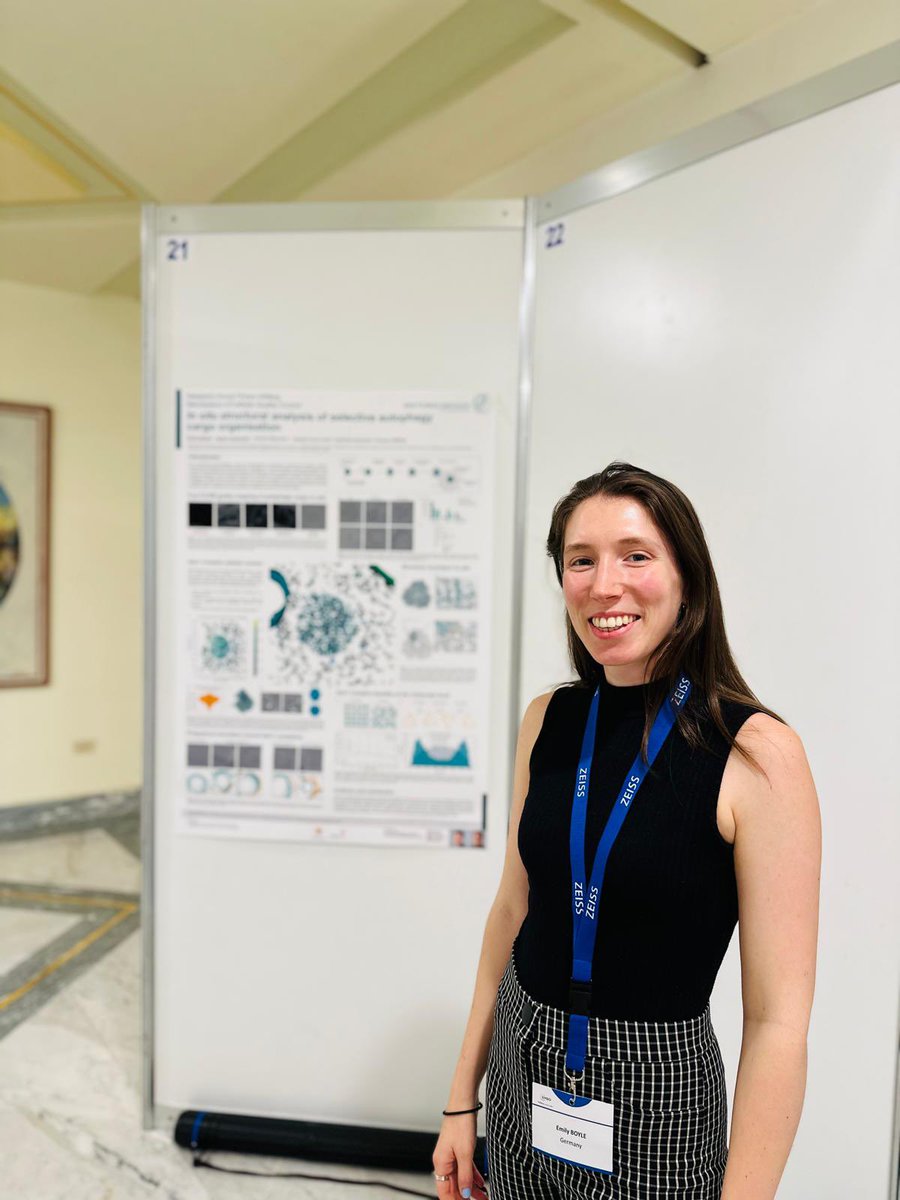
Thanks to @WAutophagy for giving me the opportunity to present our work looking at the organisation of the selective autophagy cargo Ape1 by in situ cryo-electron tomography ❄️🔬at #WIA2024meeting. What a great symposium!
It’s been a great start to the week at #EMBOautophagy24 in beautiful Sorrento ☀️ There‘s still time to come and visit our poster (number 21) and I look forward to more interesting discussions 👩🔬🔬
Want to hear about how we use in situ structural biology to investigate the properties of autophagic cargo? Come to poster number 21 at #EMBOautophagy2024 and talk to @Javi_Lizaendo and @EBoyle2499 to find out!
We are proud to welcome our new post-doc colleague, Javier Lizarrondo (@Javi_Lizaendo). He will use the tremendous structural biology skills from his Ph.D. at @SPC_EMBL_HH to study membrane remodelling proteins involved in the generation of the phagophore. Welcome, Javier! 😄
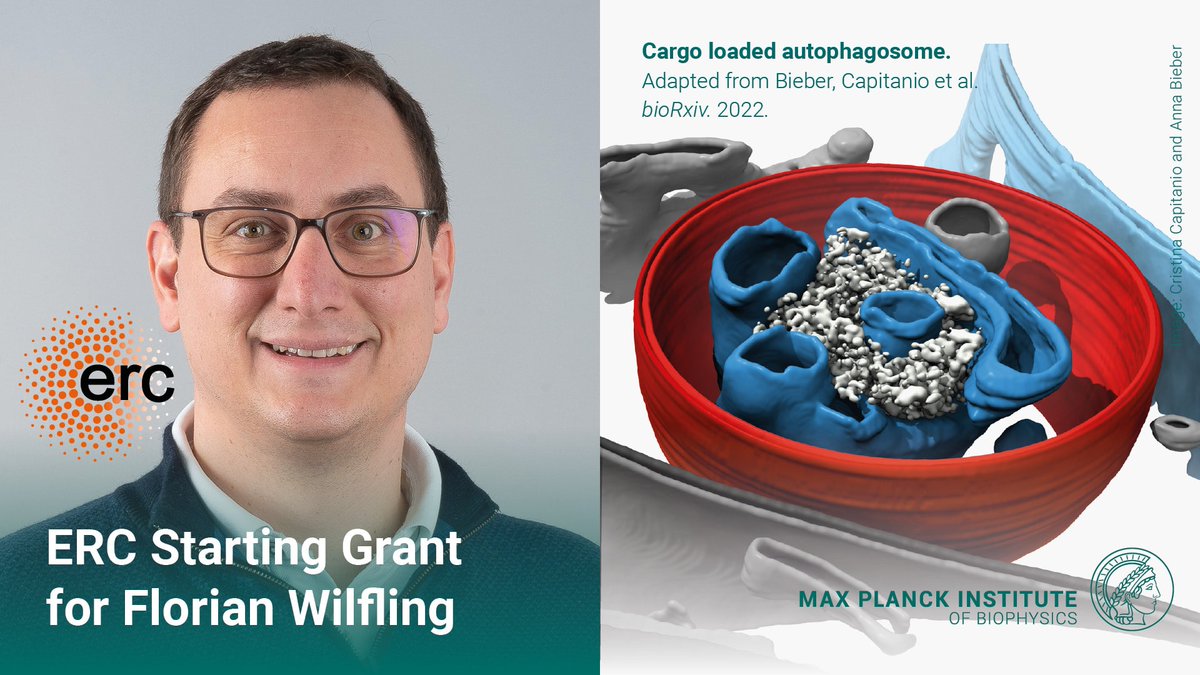
Warmest congratulations to our research group leader @WilflingFlorian (@WilflingLab) on receiving a prestigious ERC Starting Grant for his research on #autophagosomes which help the cell remove its waste! What a great success🥳👏@ERC_Research#ERCStG
👉https://t.co/5L5DCGNg85
In their recent paper, Ji et al. harness the power of #autophagy. They develop a promising platform to selectively target a range of proteins for degradation via autophagy, which they name AUTOTAC. This might create new avenues to target diseases or make new research tools.
Many congratulations to Wilfling Lab PhD student Johann Brenner (@CraignRush). Work from his Master’s thesis, using a microfluidic reactor to investigate the dynamics of a cell-free genetic oscillator, has just been published! https://t.co/1kSHbrCtNn
As promised, here is a deepdive into our #preprint from the previous post: https://t.co/nLAsclWPl2
The one-liner: We reveal for the first time the step-by-step progression of #autophagosome#biogenesis directly in a cell by using correlative #cryoet. 1/7