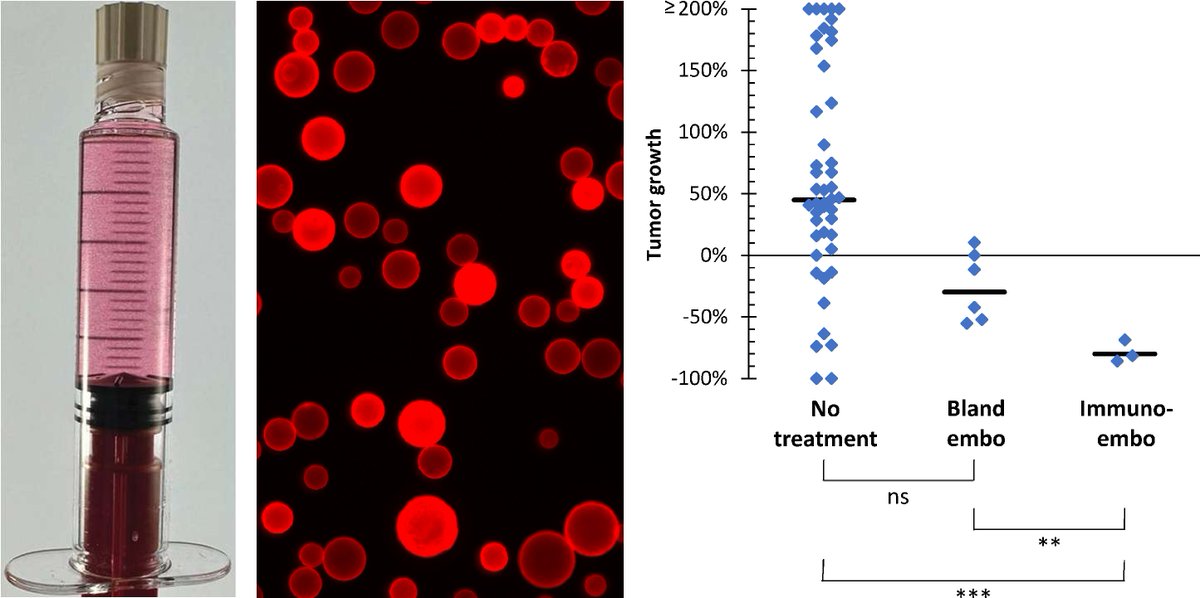
Can immunoembolization turn liver tumors into an in situ cancer vaccine? We use extended-release lipiodol formulations to deliver CpG-STAT3ASO into liver tumors in pigs. Lipiodol-directed immunotherapy resulted in decreased tumor size, compared to bland embolization, with no autoimmune adverse events.
https://t.co/utZ5SLEjlh
Why do cures for cancer in mice usually fail in human clinical trials? Even with humanized mouse models, clinical trial success rate remains low. One important reason is simply animal size. Humans are not large rodents -- The physics is different for different sized animals (allometric scaling), similar to how a scale model of an airplane does not predict the behavior of the full size airplane. Compared to humans, mice have 60 times faster drug diffusion, 7 times higher metabolic rate (per kg), and typically require 12 times the drug dosage (per kg). On the other hand, pigs have similar physiology, drug dosing, and immune response as humans. The Oncopig model of liver, pancreatic, and lung cancer has the potential to more accurately predict drug dosing and outcomes in humans.
What does pig cancer tell us about the differences between mouse and human cancer? In mice, 1-2 mutations (Kras and p53) are sufficient to generate non-regressing adenocarcinomas (KP model). In Oncopigs, KRAS and TP53 mutations generate inflammatory carcinomas that spontaneously regress. In adult humans, at least 5 driver mutations are generally required to cause cancer. Thus, larger and longer living animals needed to evolve more defenses against cancer, and require more mutations to develop cancer.
More info on the Oncopig model:
Commentary:
https://t.co/kmJ9DBlpEB
Testing percutaneous therapies:
https://t.co/ANZ3SMWoRe
Testing intra-arterial therapies:
https://t.co/1gFOPmhcYY
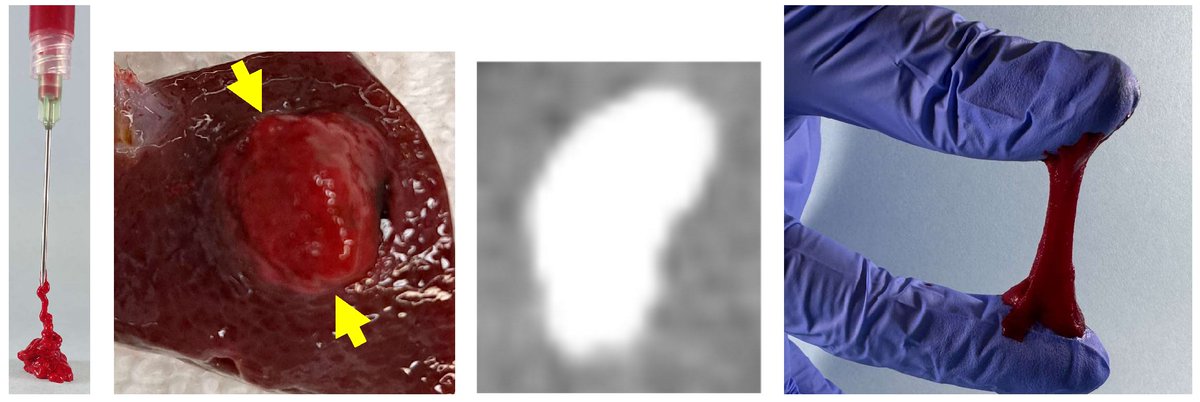
Just published! New intratumoral depot immunotherapy platform achieves 6 days of intratumoral drug release, from a single injection. Tumors can be “painted” with drug percutaneously, and the drug stays exactly where it’s injected, maximizing immune activation in the tumor, while reducing systemic toxicity. Highly toxic drugs can be injected into tumors, with no serious or severe adverse events.
https://t.co/ANZ3SMWoRe
Amazing work from @HoomanYarMD! Embolization of pancreatic tail tumors, via the dorsal pancreatic artery, using lipiodol and bumetanide (an anti-glycolytic agent), resulted in decreased tumor size, with no pancreatitis (in Oncopigs). https://t.co/Eo7pq7kz3P
An intratumoral infusion port catheter enables direct infusion of immunotherapy agents into tumors, using arbitrary dosing schedules. The catheter has barbed sideholes, modeled after the barbs in a bee stinger. The barbs maintain the catheter position in the liver tumor, despite respiratory motion. High resistance side holes within the barbs regulate fluid flow, improving uniformity of drug infusion into tumor. 183x improvement in local drug delivery.
Lessons for other academic IR labs:
- Complex and unusual catheter designs can be 3D printed using microstereolithography.
- Academic IRs can invent new devices that are too long-term or unconventional to develop in industry.
https://t.co/lJOrv21HQ5
Join our IR team at City of Hope! Patient-centered care, state-of-the-art facilities and equipment, and groundbreaking research, from pre-clinical to first-in-human trials. Help us build the future of IR, and improve the lives of cancer patients. #1 cancer hospital in California.
https://t.co/QjAah5Ri3Y
See our commentary just published in JVIR -- Beyond Mean Tumor Dose: The Importance of Particle Density in Radioembolization. Number of Y90 particles affects T:N ratio, dose heterogeneity, and effective dose. https://t.co/SZoGlNVwSc
We just launched the Interventional Oncology Bioengineering Lab. Join us to create the next generation of minimally invasive cancer therapies: intra-arterial immunotherapy, bronchial artery chemoembolization, and new devices for local drug delivery. https://t.co/maumSaZQyJ
Results of the first lung chemoembolization trial in the United States just published in Radiology. Lung, mediastinal, and endobronchial metastases can be treated. High intratumoral drug concentration after TACE can overcome chemoresistance. https://t.co/qx9D5aWDTV