The Edge is a campaigning built-environment think tank. Follow us for updates on Edge debates, events, news, publications and more. *Check out our new website!*
The Edge has published a set of policy proposals for the built and natural environment to accelerate action to tackle climate change and ecological loss.
If you only have time to read one thing today, make it this. 🧵 #edgedebate#ClimateActionNow
https://t.co/HLtEdemSEd
New Editorial! Disrupting the imaginaries of urban action to deliver just adaptation
New adaptation imaginaries will facilitate just adaptation and enable radical changes in the relationship between humans and their environment. How it can happen?
Read: https://t.co/G1wBRao4VI
The authors conclude, “Helping people afford the housing stock that is available would be more cost effective than expanding new home construction in the hope that additional supply would bring prices down.”
https://t.co/PuzNvw50FP
New Book Review! Healthy Urbanism. Designing and Planning Equitable, Sustainable and Inclusive Places By Helen Pineo
Bomin Kim reviews this excellent book that provides a actionable guide to create equitable, inclusive and sustainable urban environments.
https://t.co/6kScAp7brJ
How will processes like retrofitting and life cycle assessment help us reach net zero? Join us on Wednesday 29 November for a webinar exploring energy saving in the built environment, with Steve Fernandez @Arup and Jane Anderson @constructionlca
https://t.co/hrU5Kbk5Sn
It's taken me nearly 3 yrs to write, involving over 80 hours of interviews with some of the world's leading #circulareconomy thinkers, practitioners & enablers. Now the Second Edition of @RIBA RE-USE ATLAS is finally complete. #Reuse
Pre-Order now
https://t.co/WBtkgbq52X
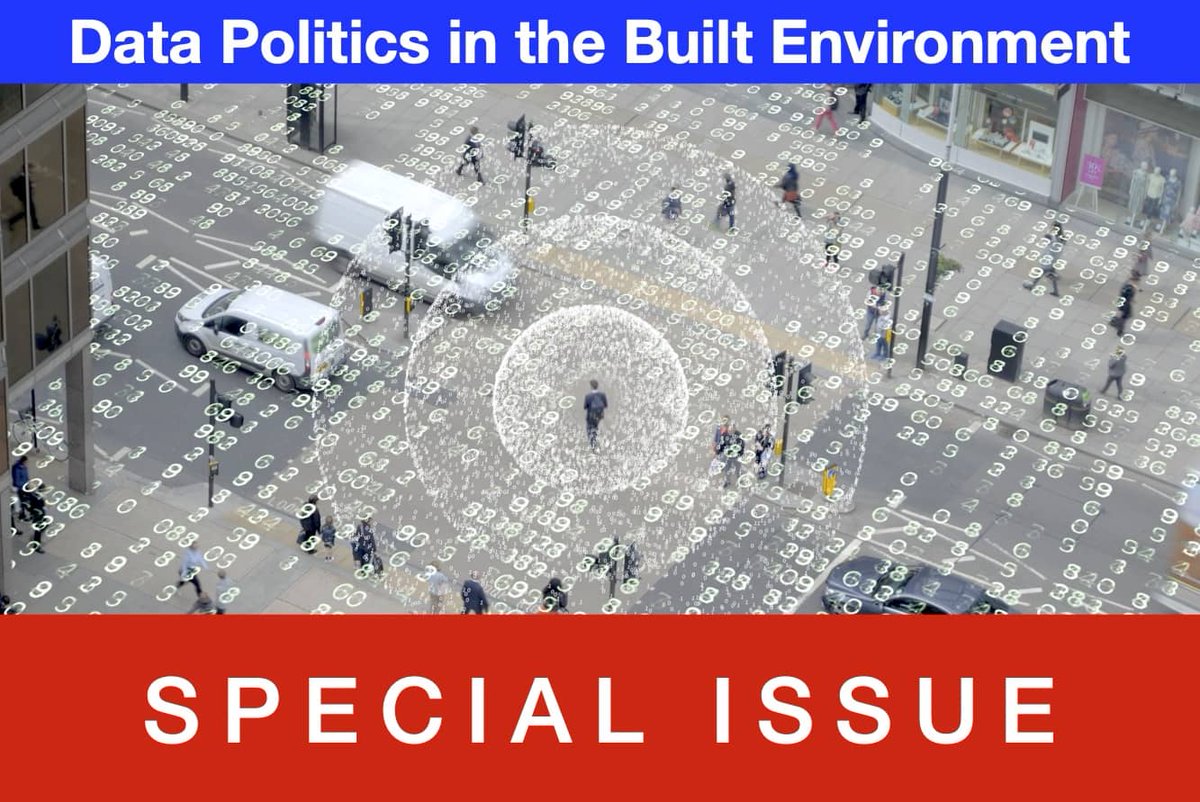
New: DATA POLITICS IN THE BUILT ENVIRONMENT
Datafication processes are far from neutral & foster exclusion. This @BuildingsCities special issue explores (often invisibile) practices, politics & power implications of data-driven buildings & cities
https://t.co/GKN1wyqSl0
READ THIS: Impact of 2050 tree shading strategies on building #cooling demands.
Using proxy neighbourhood models, the boldest tree planting strategy (16% canopy cover) reduced neighbourhood-scale building cooling energy demand by 48%. #urbanplanning
https://t.co/biO3LTVO3o
Aecom are researching the Impacts to Business of Carrying Out Whole Life Carbon Assessments (WLCAs) on behalf of DLUHC. Please consider filling out the enclosed survey if you are involved in whole life carbon assessments.
https://t.co/LzZHnkfyz3
Wealth tax of 0.5% could cover UK’s share of loss and damage fund, says charity https://t.co/lqj8CKvjob. A good step in the right direction maybe but why don’t we move the whole system to a pollster pays operation - water, air travel, food etc @EdgeDebate
Fossil fuel firms owe climate reparations of $209bn a year, says study https://t.co/hdjyyfOd27. Don’t we need to restructure our economy on a polluter pays principle?@EdgeDebate@BuildingsCities@CullinanStudio
This is getting ridiculous.
OISST provides a real-time daily index of ocean surface temperature (60 S - 60 N). For the last month it has been continuously reading higher than in any previous year and still shows no sign of settling.
How will different possible social and behavioural changes affect the path to net zero?
Read the Government Office for Science report featuring UK energy systems modelling from @UCL_Energy and @UCL_ISR researchers using our UK TIMES model.
https://t.co/Ugvns6ssSR
Thanks Sophie. We never did need to build tall if we plan our towns and cities efficiently and stop uncontrolled land value speculation -we need an effective planning system @CullinanStudio@EdgeDebate