Esta semana nos volvemos a encontrar para seguir interrogando el cosmos!
El equipo NAEC-Colombia invita a la 3ª sesión del III Seminario Permanente sobre Enseñanza de la Astronomía, un espacio para pensar juntos cómo la pregunta puede abrir caminos de curiosidad, pensamiento científico y aprendizaje significativo en la enseñanza de la astronomía.
En esta sesión conversaremos sobre “Interrogar el cosmos : el papel de la pregunta en la enseñanza de la astronomía” , con la participación de la profesora Alexandra Gutiérrez.
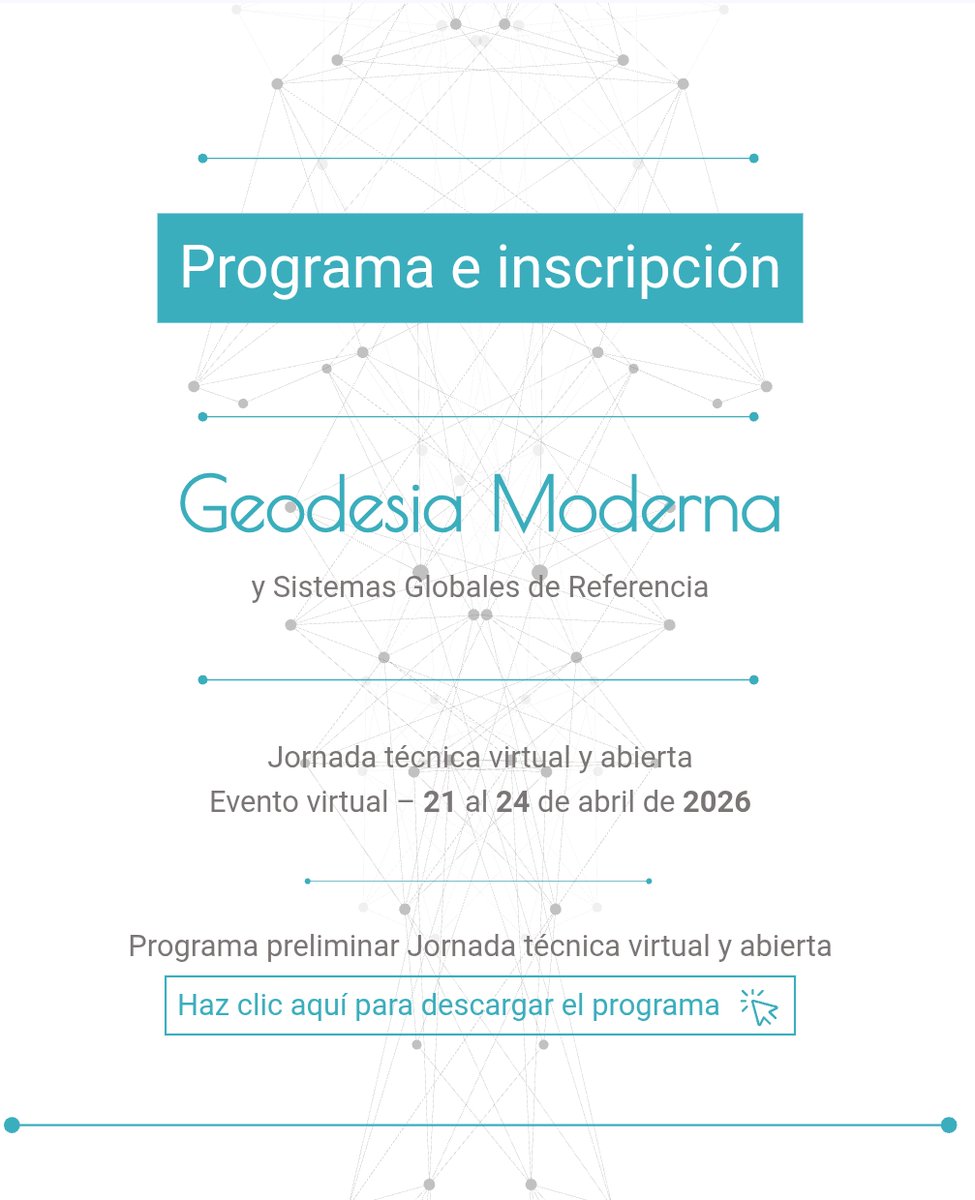
La geodesia moderna nos conecta con el mundo 🌍
Durante 4 días, expertos internacionales compartieron conocimiento sobre sistemas globales de referencia, GNSS, geodinámica y nuevas tecnologías aplicadas a la Tierra.
⬇️
🌍✨ ¡Estás invitado/a!
📢 Jornada técnica virtual y abierta
Geodesia Moderna y Sistemas Globales de Referencia
Consulta:
https://t.co/k75Sg2SxgX
🗓️ Fecha: 21 al 24 de abril de 2026
💻 Modalidad: 100% virtual
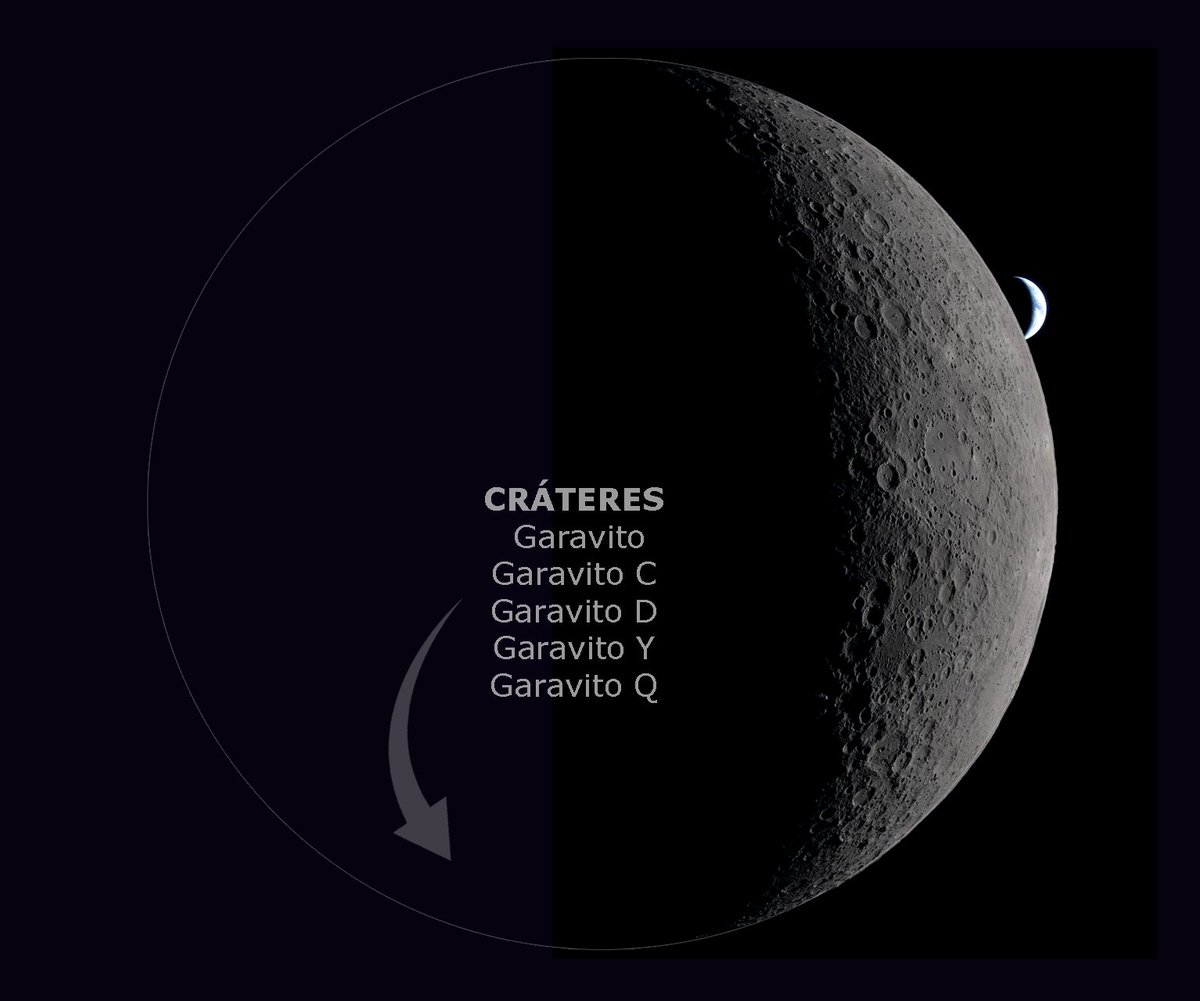
El 1970, en la Asamblea General de la Unión Astronómica Internacional en Brighton (Inglaterra), por primera vez el nombre de un latinoamericano fue dado a un cráter de la Luna. Fué el del científico colombiano Julio Garavito Armero (1865-1920), quien fuera director de @astronomiaOAN Posteriormente otros 4 cráteres cercanos fueron bautizados como Garavito C, D, Y, Q
En la imagen su ubicación en las fotografías de Artemis II @NASAArtemis
Did you know Earth doesn't just spin — it wobbles like a cosmic top?What you're witnessing in diagrams of this phenomenon is one of the most mesmerizing yet subtle dances of our planet: axial precession — a slow, majestic gyration of Earth's rotational axis that completes a full circle roughly every 26,000 years (precisely around 25,772 years according to modern astronomical measurements). At first glance, Earth feels rock-steady: spinning once a day, orbiting the Sun once a year. But zoom out over millennia, and its 23.5° axial tilt traces out a vast, invisible cone in space — exactly like a spinning top that's starting to slow and wobble before it topples (though Earth won't topple; this is a stable, ongoing process driven by gravity).
Let's unpack the magic step by step:23.5° Axial Tilt (Obliquity) → This fixed angle (varying only slightly over longer cycles) gifts us our seasons. Without it, every latitude would experience monotonous, unchanging weather year-round — no dramatic summers or winters!
The ~26,000-Year Precession Cycle → Earth's bulging equator feels gentle gravitational tugs from the Sun and Moon, causing the axis to slowly pivot. Today, the North Celestial Pole points almost directly at Polaris (the current North Star in Ursa Minor). But rewind ~5,000 years to ancient Egypt, and Thuban in Draco reigned as pole star. Fast-forward ~12,000 years from now, and the dazzling Vega in Lyra will shine near the pole — far brighter than Polaris ever does!
Celestial Poles on the Move → Earth's geographic poles (the physical North and South Poles on the surface) stay put relative to the planet. But the celestial poles — where the axis pierces the imaginary celestial sphere — drift in slow circles against the backdrop of stars. This shifts which star claims the title of "North Star" over deep time.
Ecliptic, Equator, and Tropics → The plane of Earth's orbit (the ecliptic) intersects the celestial equator at shifting points, defining the Tropic of Cancer and Tropic of Capricorn — the northernmost and southernmost latitudes where the Sun can appear directly overhead at solstice.
Why does this epic slow-motion wobble actually matter?It plays a starring role in Milankovitch cycles, the trio of orbital variations (eccentricity, obliquity, and precession) that pace Earth's long-term climate rhythms. Precession tweaks which hemisphere gets peak summer sunlight when Earth is closest to (or farthest from) the Sun, subtly amplifying or dampening seasonal extremes over tens of thousands of years — helping trigger ice ages and interglacial warm https://t.co/sT5jtVkWMb also reshapes ancient skywatching: civilizations aligned monuments and calendars to shifting stars. And for modern astronomers and navigators, it demands constant updates to star charts and celestial https://t.co/jAImLVi9hR short, Earth isn't a static ball — it's a dynamic, ever-evolving world in a grand gravitational ballet. Next time you gaze at Polaris twinkling overhead, smile: it's only our North Star for now. In the grand cosmic timeline, the night sky itself is slowly rewriting its own story.
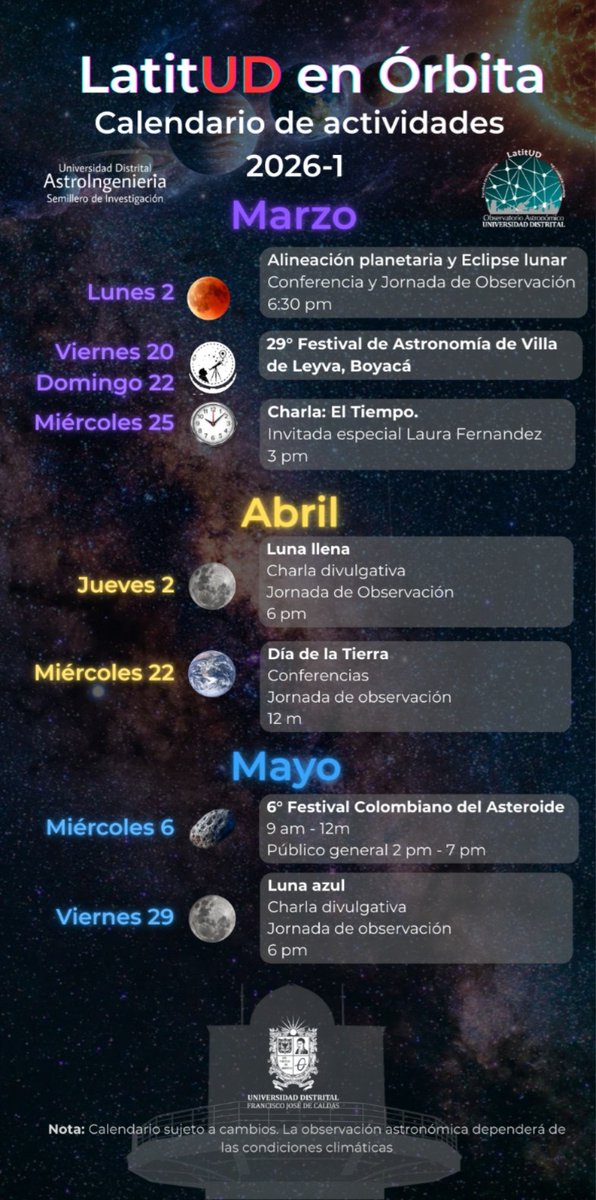
✨🌌 ¡Se vienen meses llenos de astronomía en LatitUD! 🌌✨
En el Observatorio Astronómico LatitUD tenemos preparada una cartelera imperdible para el semestre 2026-1.
Toma nota y acompáñanos a descubrir el universo.
📍 Lugar: Sede Aduanilla de Paiba
Calle 13 #31-75
🌍 New Website: Discover the Importance of VLBI for Geodesy and Society
📌 How can we measure the Earth with millimetre precision? How can radio telescopes observing extragalactic black holes help us monitor sea-level rise and tectonic plate motion? These questions and more ...
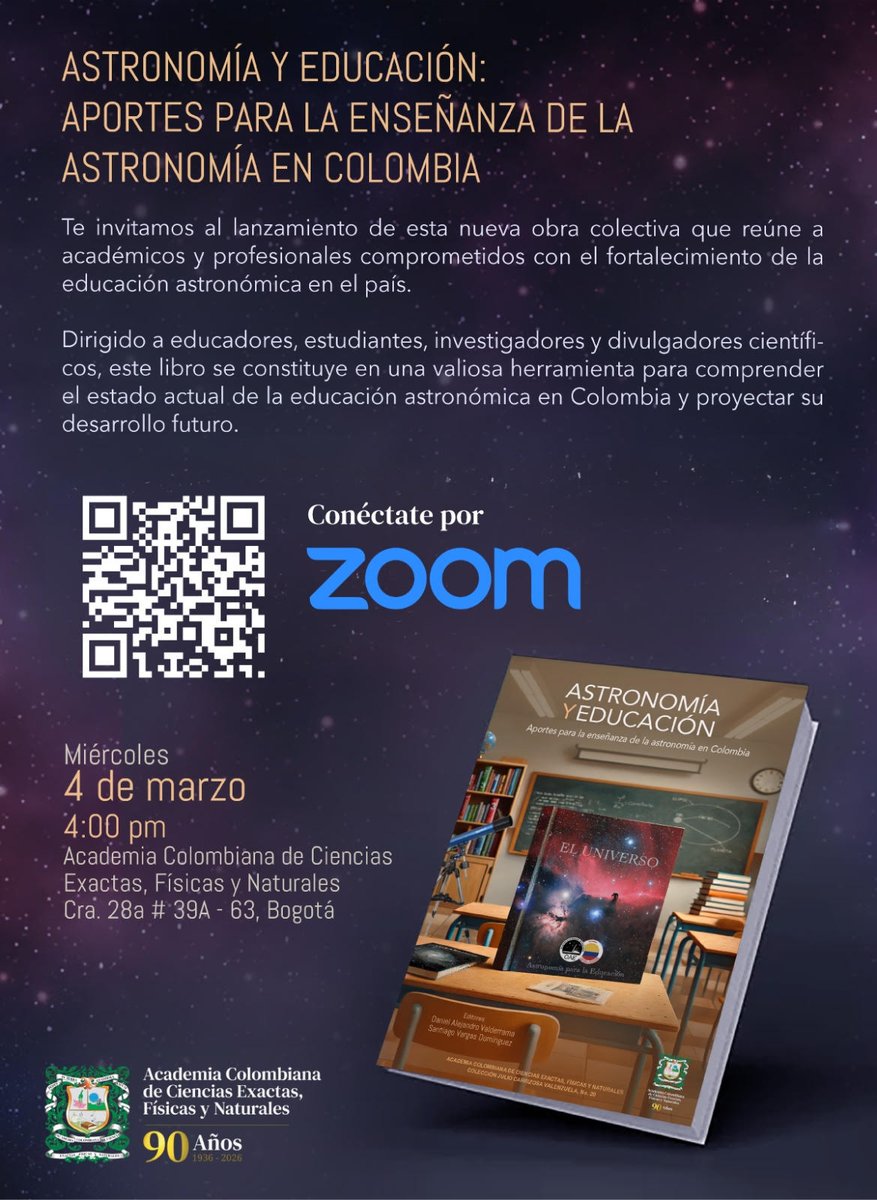
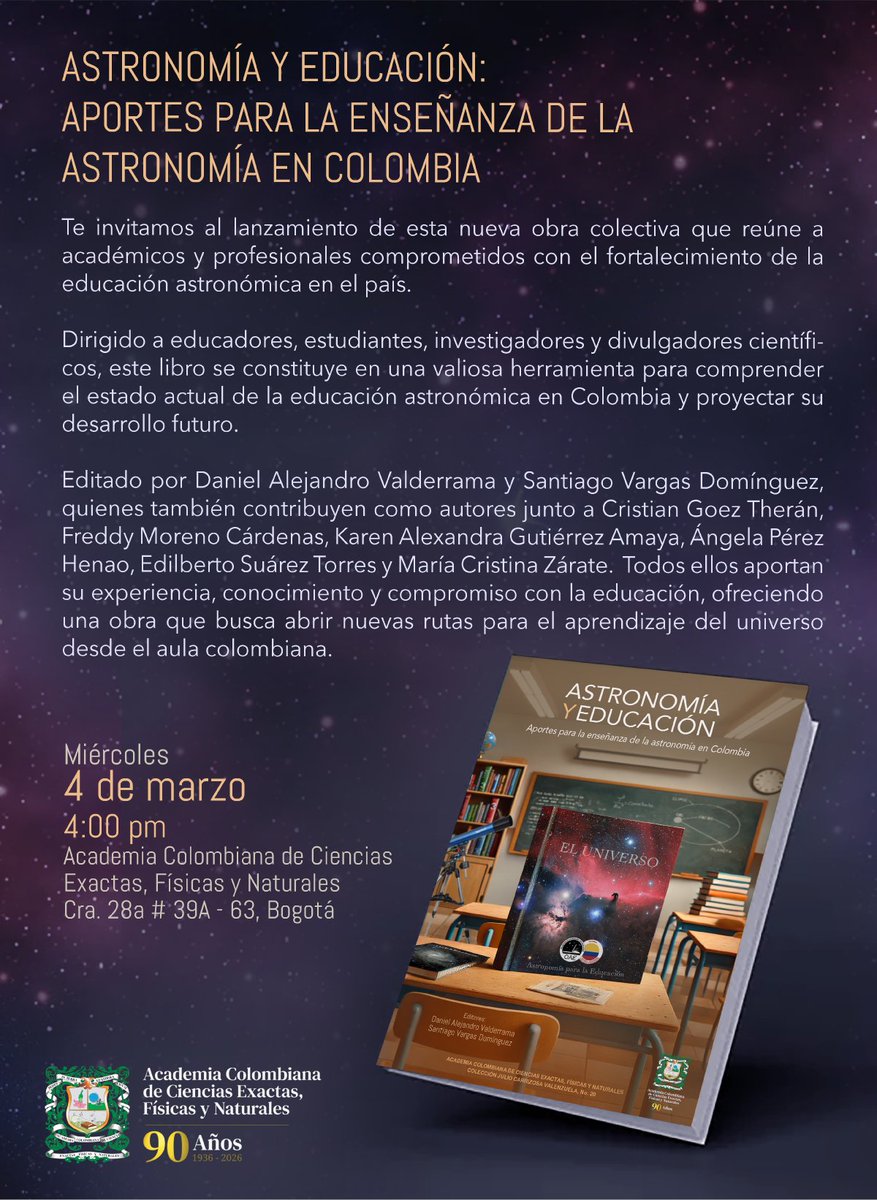
Ya llega el lanzamiento de "Astronomía y Educación" en @acadcienciacol Invita el equipo de la Oficina de Astronomía para la Educación en Colombia. Allá nos vemos !!
📡El IGAC pone a disposición de entidades territoriales imágenes satelitales del Observatorio de la Tierra y el Territorio para analizar y evaluar la emergencia climática.
Con esta herramienta se puede:
🗺️Facilitar la identificación de áreas afectadas.
➡️Hacer seguimiento de la evolución de la emergencia ☝️Fortalecer la toma de decisiones para la gestión del riesgo, la atención humanitaria y la planificación de acciones de recuperación en los territorios impactados.
📰https://t.co/GVvK4Y1GDR
El universo también se enseña.
Muy pronto lanzamos Astronomía y Educación, una obra que abre nuevas rutas para aprender y enseñar astronomía en Colombia. #AstronomíaYEducación@IAU_org
Eres profe en las regiones señaladas? Completa el formulario o comparte la convocatoria.
Si eres de otra zona, regístrate también para futuros proyectos de RECA Educación.
Si tienes dudas también nos puedes contactar por redes sociales o al correo [email protected]
📢 Last call to get creative! 🎨
🗓️ Deadline: March 22, 2026 – 1 month left to join the #Geodesy#Cartoon#Competition! Win up to 900 € 🏆
💡 Can’t draw? Team up or use AI tools — just make #geodesy fun & visible!
👉 https://t.co/UKSM7r6ZHS
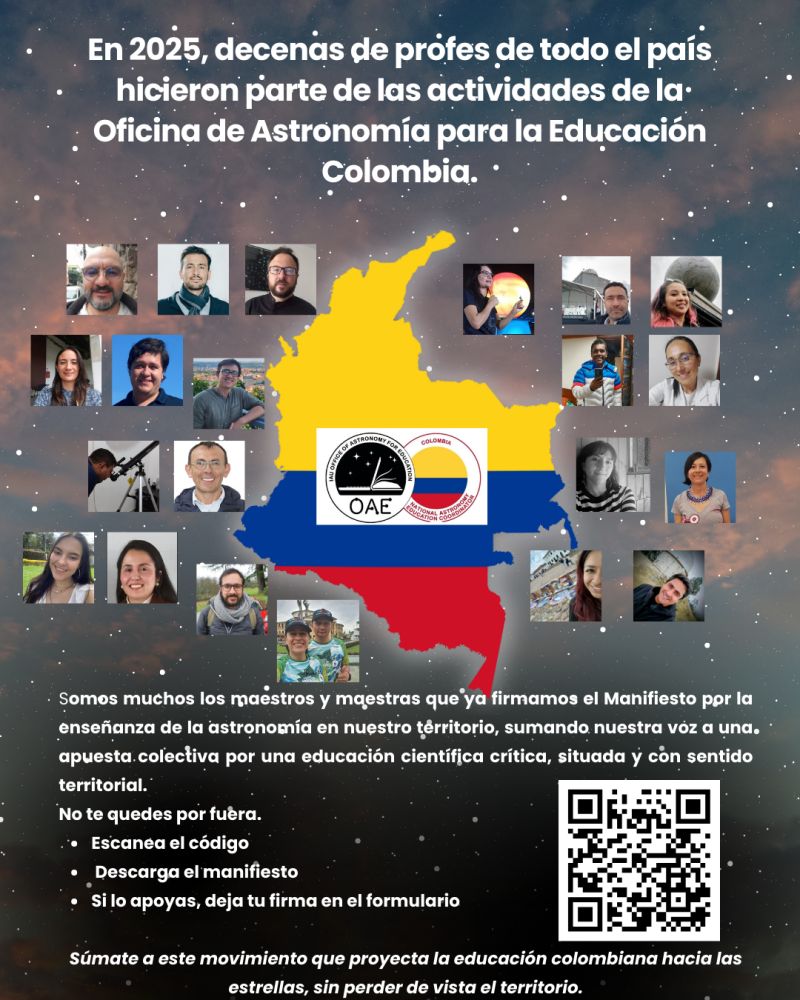
En el 2026 continuamos con el equipo NAEC-Colombia de la Oficina de Astronomía para la Educación con muchas actividades. Descarga y apoya el manifiesto por la enseñanza de la astronomía en nuestro territorio. @IAU_org
#LaDistriTeCuenta || 🤩 Fuimos los anfitriones de la tercera escuela de tiempo real de @SirgasAmericas.
Junto al @ObsLatitUD, encargado de esta actividad, los asistentes aprendieron sobre un sofware que permitirá a los científicos ser más precisos en la creación de mapas. 🗺️
UDistrital recibe la "Escuela Tiempo Real" y apoya el "Simposio SIRGAS 2024 - Bogotá.
Hoy, en la Universidad Distrital, se llevó a cabo el evento #Sirgas, Escuela en Tiempo Real, un espacio donde la innovación y la tecnología se unieron para transformar la forma en que aprendemos
Hoy con los estudiantes de primero del Gimnasio Marie Curie explorando la actividad solar de esta semana y respondiendo algunas de las preguntas que surgieron tras la lectura de "Mi Primer Libro del Sol"
Astronomía a la familia Ramón D´Luiz | ACICG |.
Con ingenieros egresados de la UD tuvimos la experiencia de hacer una jornada de avistamiento astronómico de Júpiter, Venus y el Sol gracias al grupo de @ObsLatitUD#Ingenieriacolombiana#ACICG#ICG
https://t.co/Yiovzdeeff
Buenos días... Hoy a la 1:00pm estaremos en una jornada global de medir el campo magnético terrestre 🧲🌎 con tu celular. Toma un receso y diviértete. Solo sigue estos pasos:
Comparte los datos en https://t.co/yfM0aft0iP