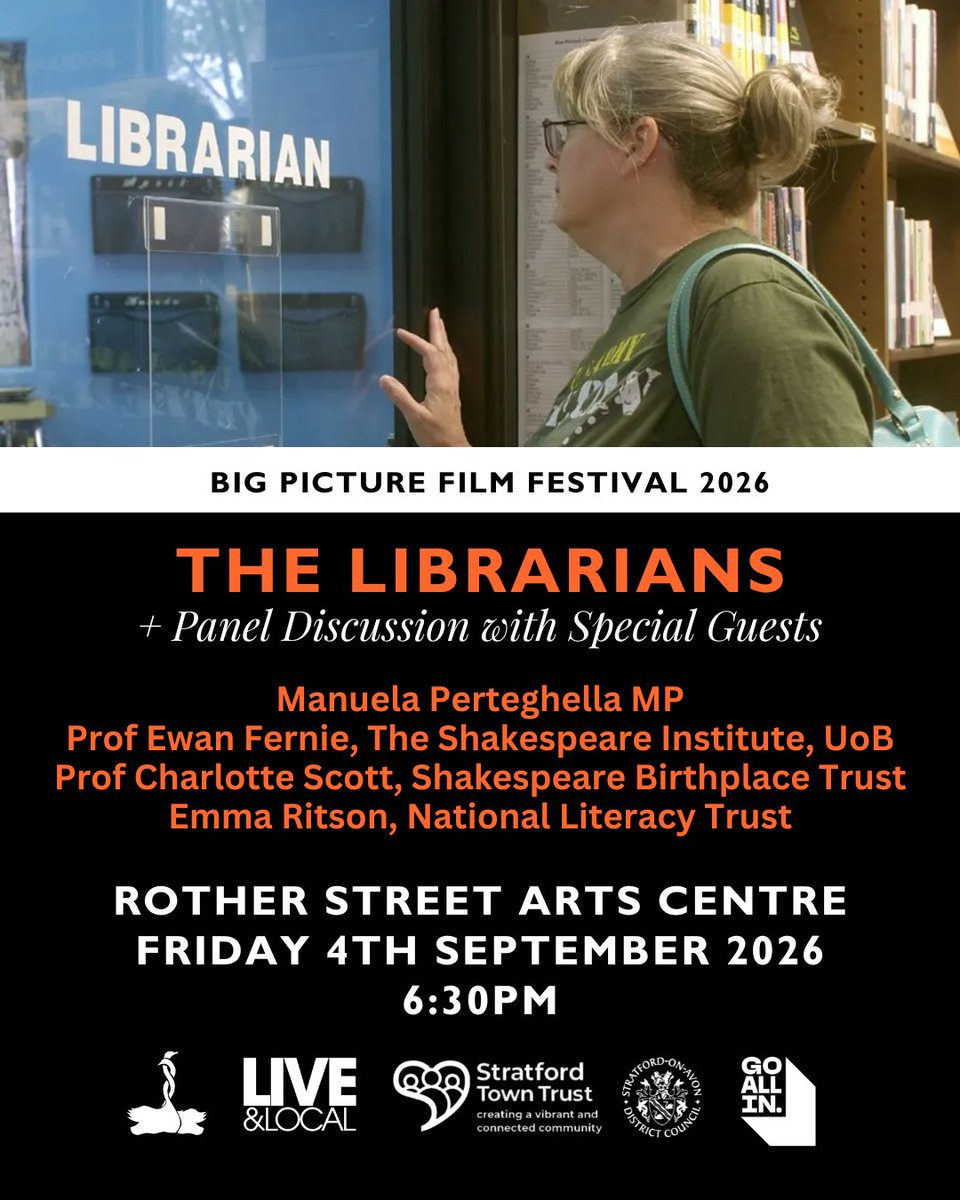
@BillyRubin1974@encorebennett Yes, the free / public library movement was a reaction to paid subscription libraries: but to e.g. Birmingham’s George Dawson free meant culturally comprehensive as well as freely available to all citizens. I’d forgotten about Dunfermline, where I have some family roots. 🍻
In the face of book banning & aggressive censorship, it's poignant to recall that, in the 19thC, public libraries were called FREE libraries.
Such libraries, as much as any institution, made me & I look forward to this screening & discussion with distinguished colleagues.
@axaxaxasfml I don’t entirely disagree with this, notwithstanding your aggression. I’d maintain we need to make a refreshed case for universities & the Arts. That might well involve reappraising & reworking traditional reasons / accounts / values. It wouldn’t necessarily betray them.
The threat to the Arts & Humanities in UK universities demonstrates Newman’s 'Idea of a University', to which they were crucial, has collapsed.
We need a new, deep & convincing - non-moralistic & non-partisan - account of what both universities & the Arts are for.
Completely insane. Management at the University of Exeter is threatening 85% of its staff in the Faculty of Humanities and Social Sciences with redundancy. What do these people even think universities are for? Solidarity with members of the EUCU.
@HigherEd_UK Given the current political hostility or indifference to universities & esp the Arts & Humanities, I feel it would be productive to reflect on fundamentals, both in order to renew the case for the academy & to stimulate positive change.
@HigherEd_UK But yes: you’re right about superficial, flashy rebranding. It has to be deeply authentic & convincing - & that will involve, as you intimate, reappraising traditional accounts, like Newman’s.
@HigherEd_UK It has to be renovated if not new. Classic statements like Newman’s are ignored or aren’t working. It has to be convincing to those who love their disciplines & to society at large - one thing to press is the relationship between the Humanities & humanity.
BBC Shakespeare: Rise of a Genius producers, Alice Boorman & Luke Boneham-Ahmed, first approached me & Emma Smith with this:
‘His life is the story of a boy from the sticks who became the world’s greatest writer.’
Never underestimate the potential of overlooked places or people.
@WomackPhilip OK, let's agree to differ. I'm with Lena Orlin in the most thoroughly researched recent bio:
'John Shakespeare could never have envisioned for him a life in the urban commercial theatre; it was not a pursuit for children of the provinces in the mid-sixteenth century.'
@WomackPhilip He cautions other playwrights, including Marlowe, against the same; but he sees the ‘upstart crow’s success as *in itself* transgressive.
@WomackPhilip Agreed, Philip: but it was in no way central to national culture - & that was doubtless part of what made him an ‘upstart crow’ to Robert Greene & his University Wits. Shakespeare’s success was totally unpredictable & the more inspiring for it, for me at least.
A privilege & a pleasure to appear with Prof Emma Smith & the brilliant producers of @bbcarts Shxpr: Rise of a Genius (on iplayer) @ChalkeFestival.
Squaring Shakespeare’s mortal life with his deathless plays remains a fascinating challenge - perilous & imperative.
The @ShakesInstitute's Professor Ewan Fernie will be appearing at Chalke History Festival on Friday 26 June, 17:30 - 18:30, for 'Truth or Dare? Shakespeare’s Story on Screen': an exploration of retellings of Shakespeare's life on TV .
Learn more: https://t.co/RWmecYoC8R