Cut the government in half. Not 5%. Not “reform.” Half. That’s the target: waste, debt, and overreach cut down to size with actual numbers, not slogans. I’ll post the data, the math, and the specific cuts. Follow if you’re tired of incremental excuses.
@CPC_HQ When your salary is north of 400K, today's Canada would be rather affordable. It seems the Prime Minister is out of touch with regular Canadians...
Of the last 100 destination pages updated on https://t.co/prQbkPOP4L, Europe has exactly one entry: Albania. France is the only other European country drawing an explicit “we’ve updated our advice” post lately.
Most of Europe is apparently quiet enough that Canadian officials haven’t needed to touch the pages. France stands out as the exception. What does that say about stability and governance there right now?
@iPoliticsCA Nobody can justify importing cheap labour when we have a 6.5% unemployment rate, and 13% youth unemployment rate. This government is not working for Canadians.
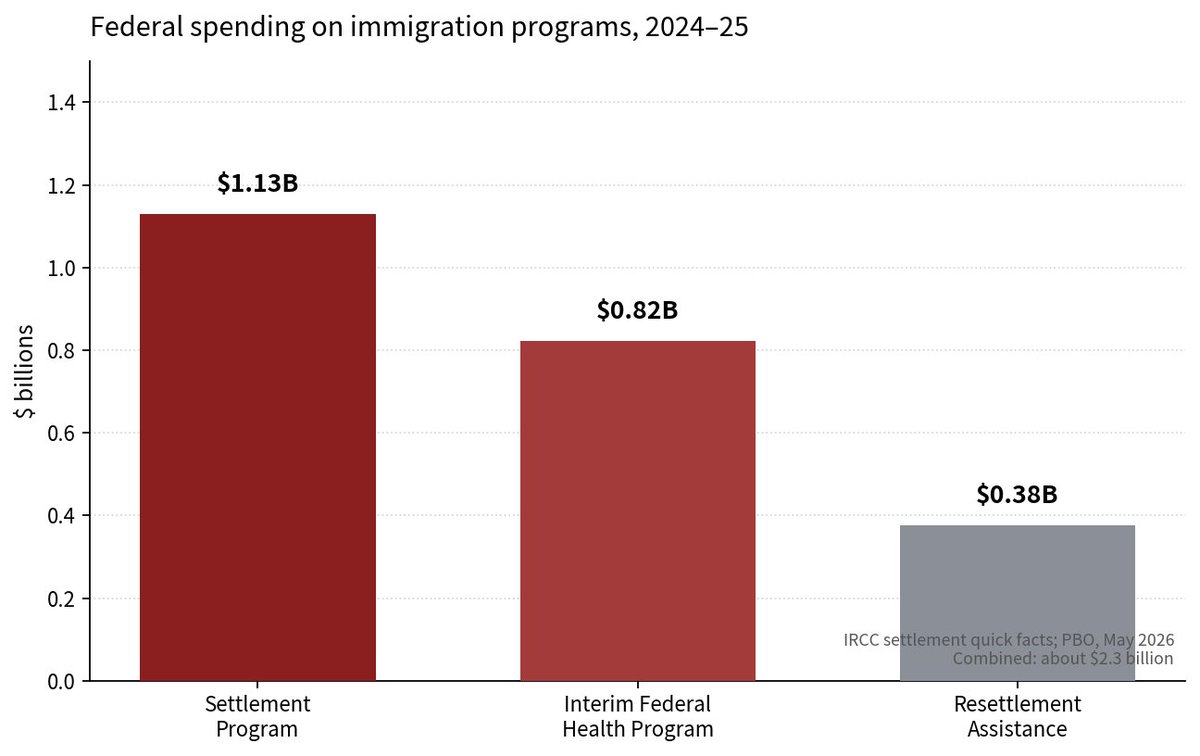
Immigration is not free growth. It has a departmental price tag.
Federal spending, 2024–25:
Settlement Program: $1.13 billion Interim Federal Health Program: $822 million Resettlement Assistance: $376 million
That is about $2.3 billion in one year. Urgent dental care inside the health program rose from $30 million to $257 million in five years. IRCC’s own Main Estimates for 2025–26 are $5.17 billion.
These figures exclude provincial welfare, schooling, and shelter. A one-time Quebec asylum-housing grant in 2024–25 was another $581 million.
The intake is a program. Programs have budgets. This one was growing while interest on the federal debt was already about $54 billion.
IRCC, 2024–25. PBO, May 2026.
Cut the Government in half.
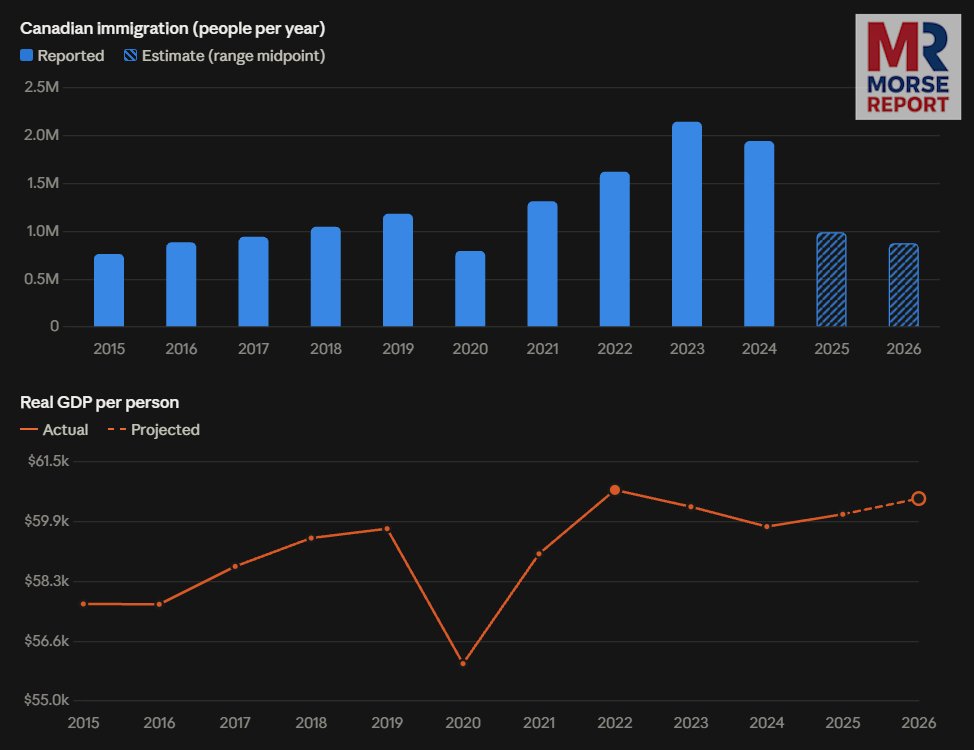
🚨Mass Immigration DESTROYS Canadian Economy:
Since 2015, Canada has admitted roughly 14.5 million immigrants, almost all of whom are from India – so many, in fact, that right now almost one-third of all people currently in Canada are immigrants who have arrived within the last ten years.
However, despite this massive wave of immigration, Canada’s real GDP per person has failed to substantively increase, with the long-term data indicating that importing 14.5 million immigrants has actually proven to be an economic detriment, effectively suppressing Canadian real GDP per person.
Follow: @MorseReport
That sentence jumps months. July 2025 is the immigrant gap. February 2026 is the youth number. Split them so each figure carries its date.
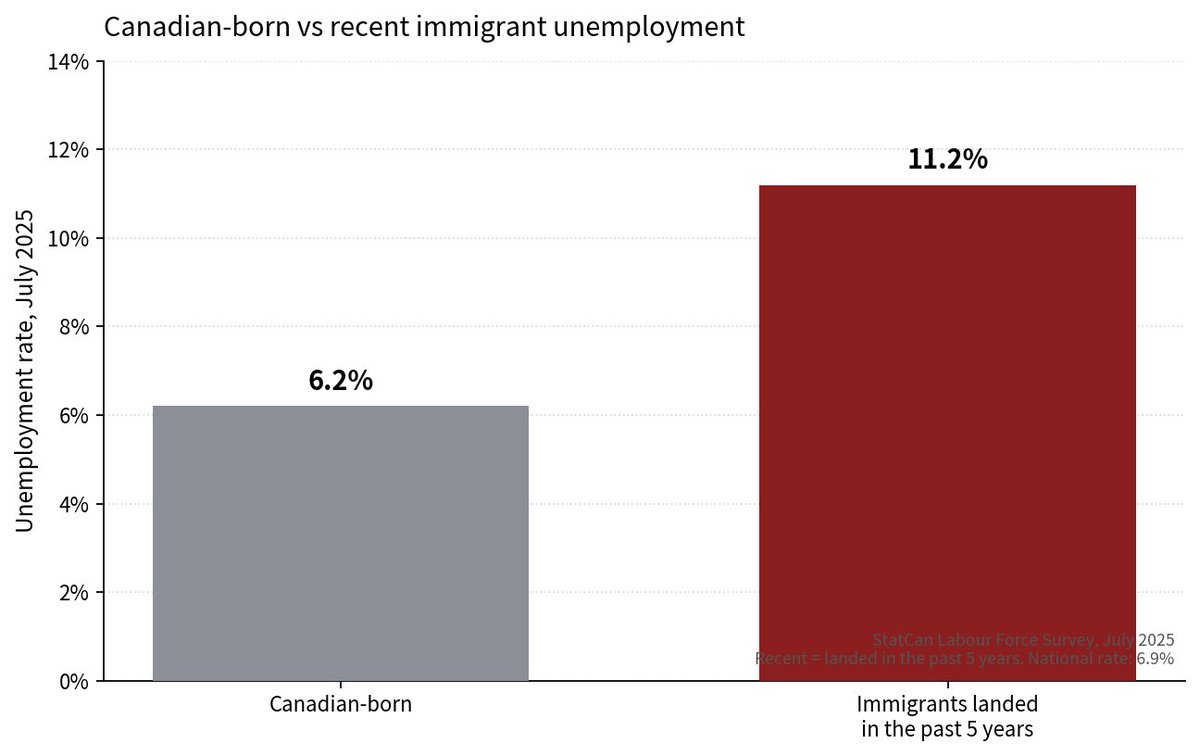
Recent arrivals were not filling a tight labour market. They were joining a loose one.
Unemployment, July 2025:
Canadian-born: 6.2% Immigrants landed in the past 5 years: 11.2% National rate: 6.9%
Youth, February 2026: 14.1% unemployed, against a national rate of 6.7%. Youth employment fell by 64,000 in January and February 2026.
Ottawa still planned 367,750 new temporary-worker arrivals in 2025. Extra labour supply in a soft market shows up as unemployment and slower wage growth, then as EI and social assistance.
This is not a claim that each work permit displaced a named Canadian. It is the gap StatCan measured while the levels plan kept adding workers.
StatCan Labour Force Survey, July 2025 and February 2026. IRCC 2025–27 levels plan.
Cut the Government in half.
@CanRevAgency When the average Canadian family is paying over 40% of their income in taxes, they're gonna have a hard time paying the 'stay out of jail' fee.
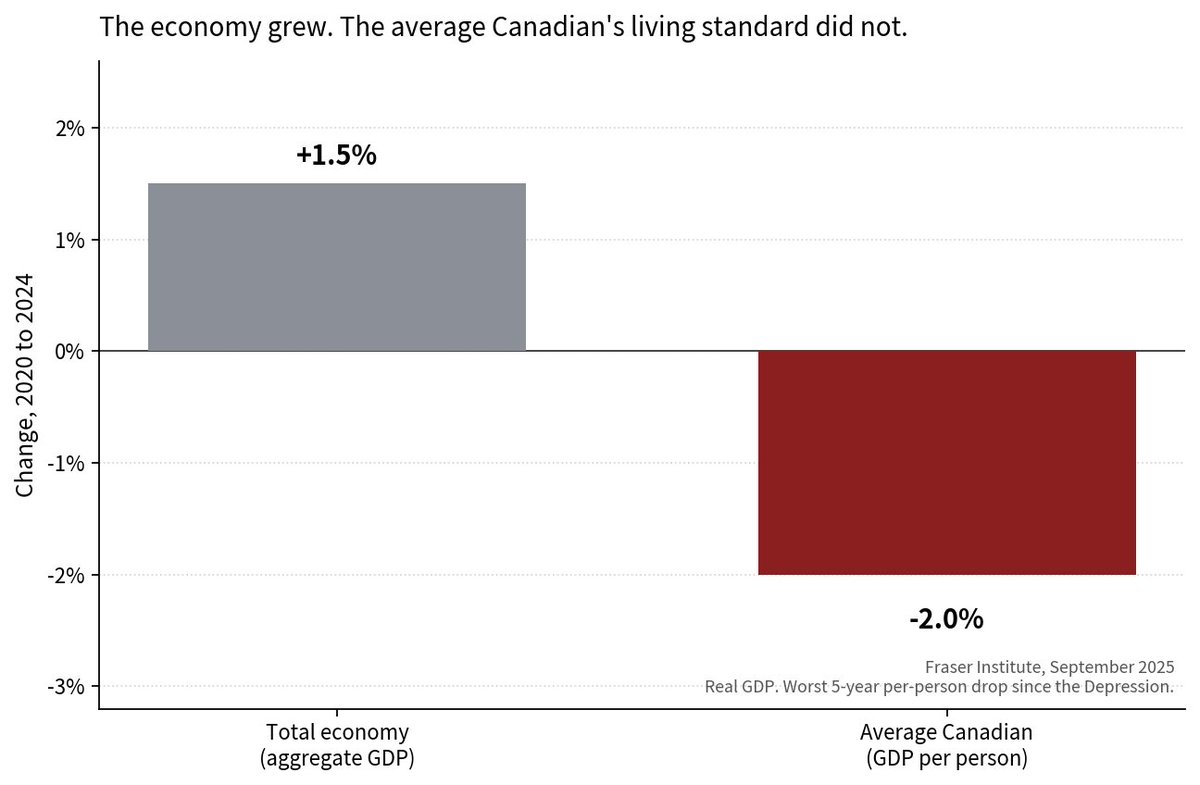
The economy grew. The average Canadian got poorer.
Real GDP per person, 2020 to 2024: −2.0%. Total GDP over the same years: +1.5%.
That is the worst five-year drop in living standards since the Great Depression. Inward migration rose from 2.1% of the population in 2020 to 5.6% in 2023. Ottawa added people faster than the economy added output. The extra workers arrived with less capital per worker, so productivity fell.
Headline GDP can rise while the person paying the rent falls behind. The levels plan did that.
Fraser Institute, September 2025.
Cut the Government in half.
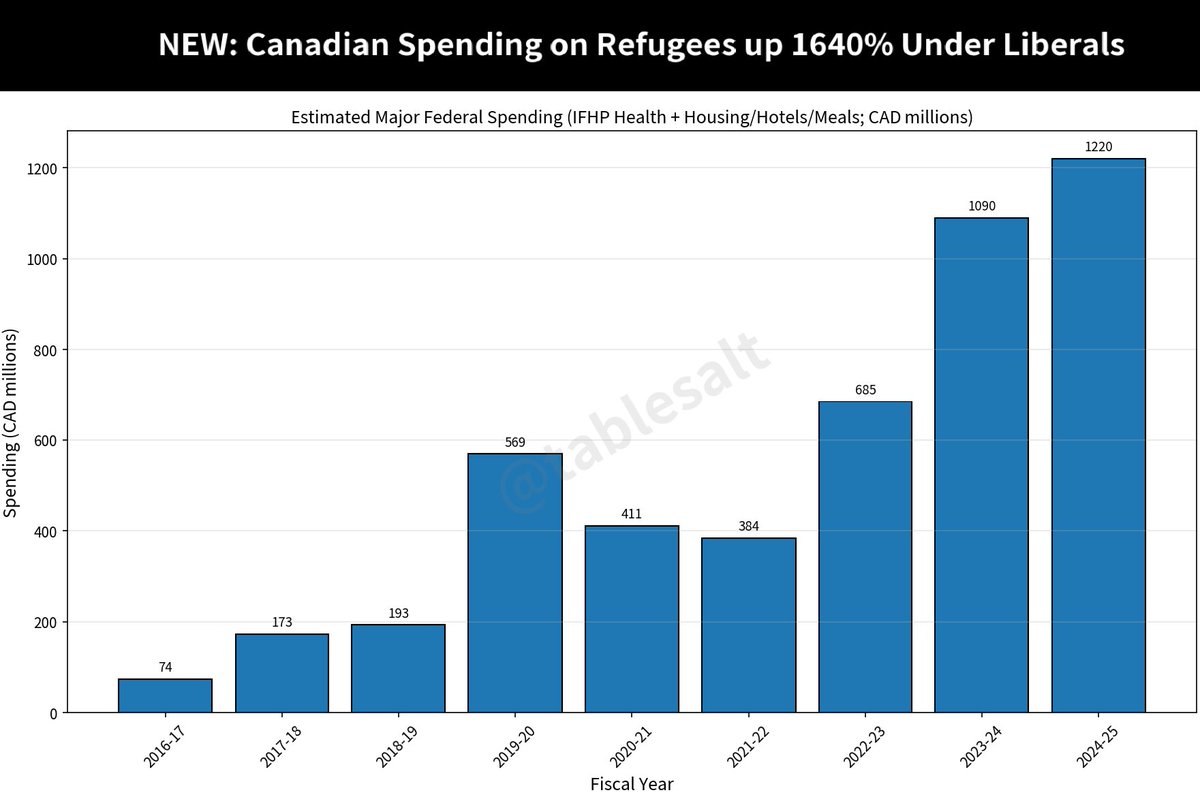
Refugee-related spending rose from $74M (2016-17) to $1.2B (2024-25) - a 1640% increase.
That’s IFHP health coverage + housing/hotels/meals for claimants, while average families already pay ~42% of income in taxes (more than shelter, food, and clothing combined) and Ottawa food bank visits rose 101% since 2019.
Taxpayers fund the open-ended claims, backlogs, and hotel stays. The books don’t close themselves.
WOW - Just charted out refugee spending in Canada.
The Liberal government increased spending on refugees by 1640% in just ten years.
From 74 million in 2016 to 1.2 billion in 2025.
They WENT NUTS.
Record food bank demand tracks years of weak private job growth and a high tax take.
From 2015–2024, governments added roughly 950,000 employees, about 30% of all net job gains, while private-sector employment grew slower (1.7% vs 2.7% annual average). Employment rate has trended lower and real disposable income per capita is still below 2022 levels.
Average family ($121k income) paid 41.9% of income in taxes in 2025—more than shelter, food, and clothing combined. Combined top marginal rates reach 53.5% in Ontario.
Stagnant take-home pay plus rising costs is the direct path to the 101% rise in Ottawa food bank visits since 2019.
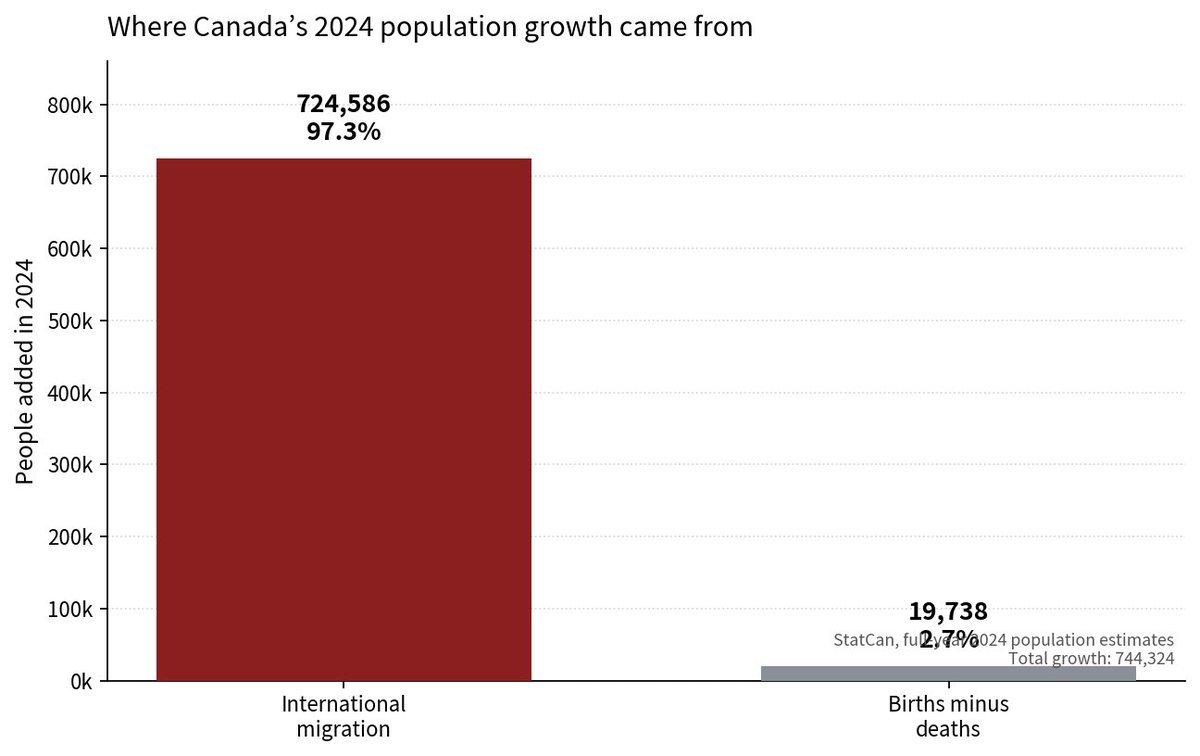
Ottawa did not grow the country by making it easier to start a family. It imported the growth.
In 2024, 97.3% of new residents came from international migration: 724,586 of 744,324. Births minus deaths were the other 2.7%.
Canada’s fertility rate hit a record 1.25 children per woman in 2024. Average age of a mother: 31.8. Non-permanent residents alone were 3.02 million on January 1, 2025 — 7.3% of the country.
The people already here are having fewer children, later. The federal levels plan filled the gap. Housing, wages, and childcare did not get easier. The intake got larger.
StatCan population estimates, 2024; StatCan fertility release, September 2025.
Cut the Government in half.