4. You lose motivation. Learning English is like climbing a mountain. No one reaches the peak after just a few steps. The most important thing is not your speed, but your perseverance to keep moving up, step by step.
2. You have not accumulated enough time.
According to Cambridge, to communicate confidently (Level B1), you need 350–400 hours of practice. Progress does not come from how many years have passed. It comes from how many hours you actually practice.
1. You want to speak confidently at work but choose a goal that is easy to measure, like IELTS. This makes learning harder. Why? Because academic IELTS topics rarely appears in daily office life. As a result, you study hard but still can't speak in real work situations.
What can we learn from the things Dr. Taylor Swift — the singer and songwriter — wishes she had known earlier in her career? 👇👇
#eJOYEnglish#TaylorSwift
‘Parasocial’ has just been chosen as Cambridge Dictionary’s Word of the Year 2025. It describes a relationship where someone feels deeply connected to a celebrity they don’t actually know in real life. 👇📷👇
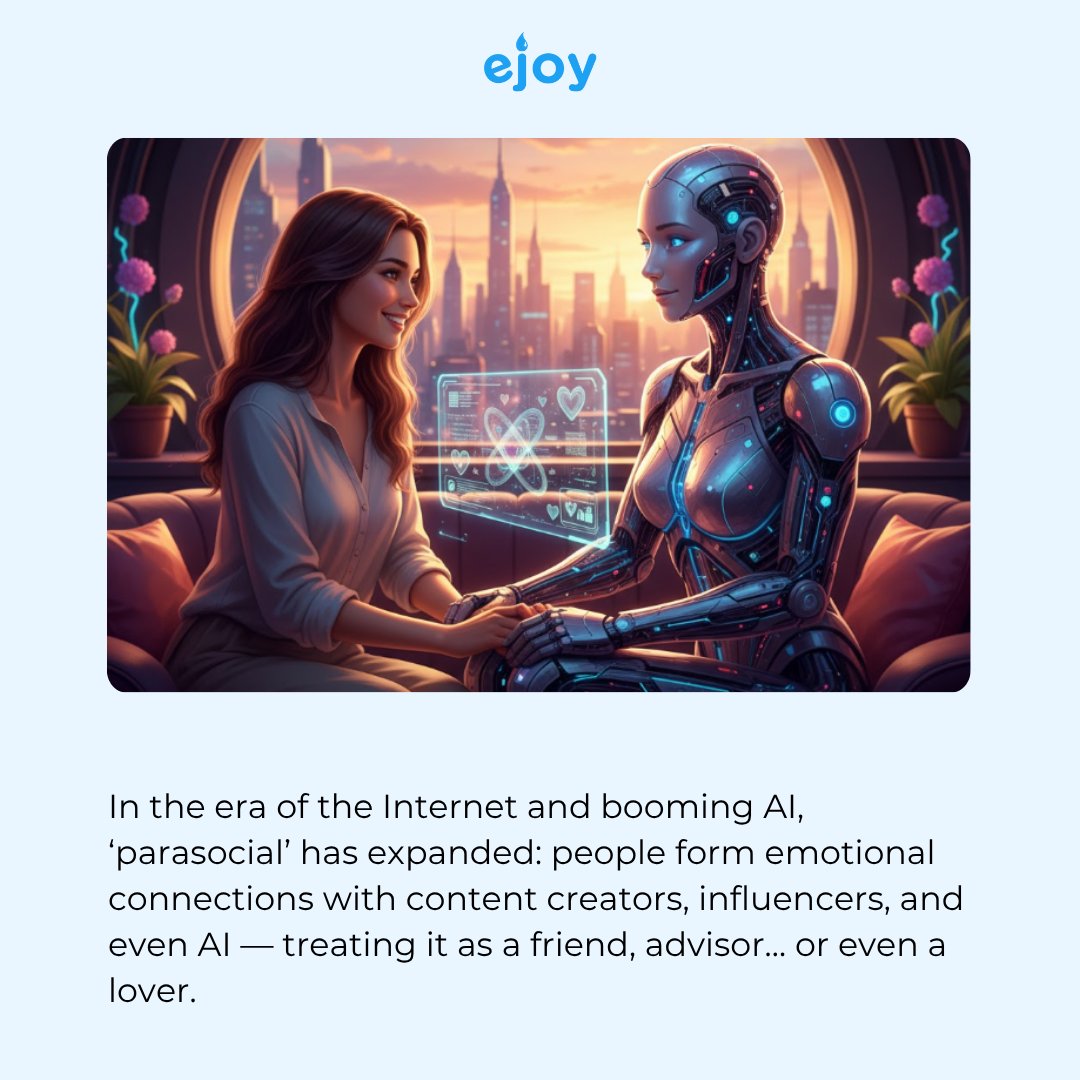
In the era of the Internet and AI, ‘parasocial’ has expanded: people now form emotional bonds with content creators, influencers, and even AI — treating it as a friend, advisor… or even a lover.