One of the most under appreciated risks in Indian manufacturing is workforce capability.
Most diligence focus on capacity, capex and order books. Very few check whether the factory can actually convert installed capacity into revenue over a 3 to 5 year period.
What we have observed is that high attrition prevents learning curves from compounding. Training spend is seen as a maintenance cost rather than capability building.
Critical know-how concentrates as tacit knowledge in small pockets of operators and supervisors, creating single points of operational failure. As automation, quality systems and compliance requirements increase, the gap between machine capability and human capability also widens.
The financial impact is direct and measurable- lower throughput, higher wastage and structurally capped margins. Revenue leakage occurs as the organisation cannot execute consistently at scale.
China addressed this constraint early by treating skills as productive infrastructure and not as labour cost.
Vocational pipelines were aligned with industry demand. Apprenticeships were embedded into factory operations. Firms were expected to invest continuously in workforce upgrading, with wage progression tied to demonstrated capability.
This created manufacturing systems where labour productivity scaled with capital intensity, rather than becoming the bottleneck to it.
For Indian manufacturing, labour should be underwritten as a revenue enabler, not managed as an HR function alone. Workforce depth needs to be evaluated like any operating asset.
Therefore, the metrics that should get equal importance to financial and operational due diligence could be revised to - time taken for new hires, attrition-adjusted productivity, stability in critical roles and whether skill progression is institutionalised or person-dependent.
This requires a robust capability-building system, with structured training, codified and transferable processes, clear role ladders and skill ecosystems, particularly in labour-intensive sectors.
Up-skilling should be treated as a ROCE lever. The quality of an organisation’s skill-development systems determines how effectively capital is converted into revenue and, ultimately, shareholder value.
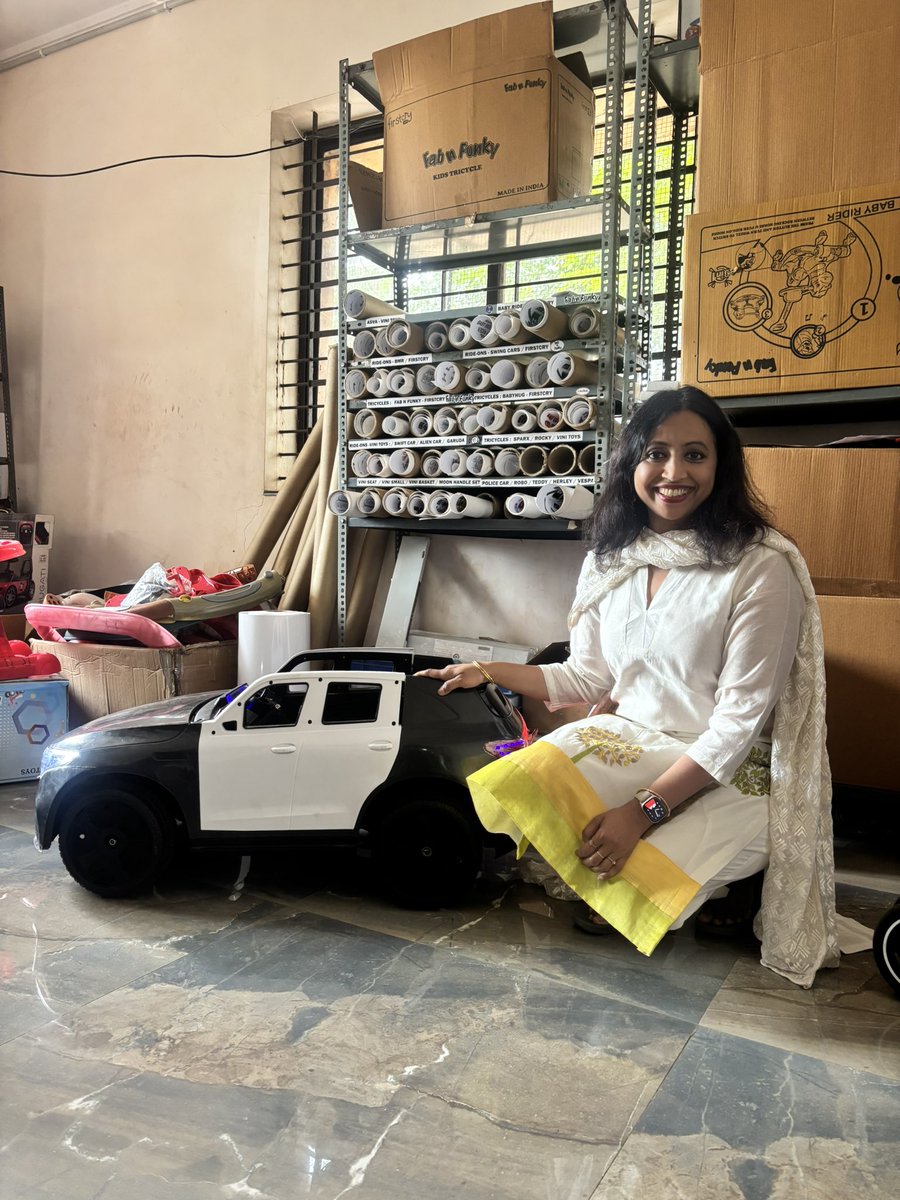
Pic from a client’s manufacturing site- capability in progress.
Let’s say you feel excited looking at the INR decline against the USD. Because why not ! The gurus on sm are saying so.
You now want to get into exports.
You fall in one of the categories:
1. Already a manufacturer
2. Already importing something from abroad(most probably China) and assembling/labelling it for India
3. You are an opportunist- you will buy, label and sell something abroad from India
Fair enough.
To get into exports, you need to do a study - which country, product category, competition, price points, and most importantly local regulations + compliance.
Now for the sake of argument, you have done a desktop research and feel confident to explore the international market and ready for exports.
But no one tells you why exports remain so tough to crack. You are dealing with unstructured and ambiguous conditions:
-freight forwarders
-customs brokers
-bank documentation
-factory delays
- quality consistency
- after sales support, usually non English(or difficult to understand accent)speaking support
- customs inspection
- buyer defaults
- fake payments proof
- finding trustworthy buyers
- building relationship with buyers
- export quality certification and standards
Above all, working capital cycles in exports are long! Something like :
Production: 30–60 days
Shipping: 20–45 days
Payment: 30–90 days
You need to sort out your finances before you get into exports.
Exports are not your plug and play business opportunity.
They are serious business with long cycle. One cannot get into it overnight.
Certainly not, if you expect quick money and immediate orders.
I wouldn't be so hunky dory on the element of strategic tolerance by RBI here. The narrative that RBI is deliberately allowing the slide of INR against USD to push exports is limited; not flawed entirely.
There is a persistent selling by FPIs (YTD ~ INR 1.5 lakh crores) in the Indian equity markets. Forward premiums up 50 bps to 2.5%
The US-India trade deal is still hanging.
India remains a chronic net importer..
Even if we were to push exports, to what extent will the INR recover??!
The ride on toy market in India is at USD 1.8- 2.0 billion for 2025 and is forecasted to grow at a high single-digit CAGR through 2033.
There are only a few are 100% Made in India brand(we are working with one of them). Most are imported or assembled.
I am imagining the IPO scene for a middle class parent, like mine.
On a daily basis- my dad switches on the tv to check the movement of the Sensex.
Then, he logs into his tablet or phone to check his portfolio. He shouts from the living room - aaj up hai, to tell my mum (who is in the kitchen/other room).
He looks at share market prices of the companies and either feels helpless if the stock is down or happy if the stock is up.
Now, imagine it’s your child whose company gets listed- how would this person feel?
That feeling and expression on my Dad and Mum's face and their daily ritual, is what I am imagining when companies like Groww, Lenskart, Zomato, Swiggy get that public validation. The founders, their parents.
A public listed company was "unthinkable" and "inaccessible" in my parent's generation. It was a territory for a different set of people.
Not any more.
When Marcus Freeman took over as head coach of Notre Dame Football, he rebuilt the culture around mental toughness, discipline and intentional choices.
“Choose Hard” became the team’s mantra, meaning choosing early workouts, tougher games and uncomfortable conversations that instills excellence.
Early in your career, you are not being paid for what you know. You are being paid for how fast you can learn.
If learning is uncomfortable, unlearning is painful. Feedback can feel like a personal attack. Efforts might look like late nights, asking “dumb” questions and still showing up the next day- even when you don’t want to.
As Marcus Freeman said: “Life’s full of easy choices and hard choices. Easy choices lead to hard lives. Hard choices lead to easy lives.”
𝐄𝐚𝐬𝐲 𝐝𝐨𝐞𝐬𝐧'𝐭 𝐛𝐮𝐢𝐥𝐝 𝐲𝐨𝐮.
If you are someone in the beginning of your career,
𝗖𝗵𝗼𝗼𝘀𝗲 𝗛𝗮𝗿𝗱.
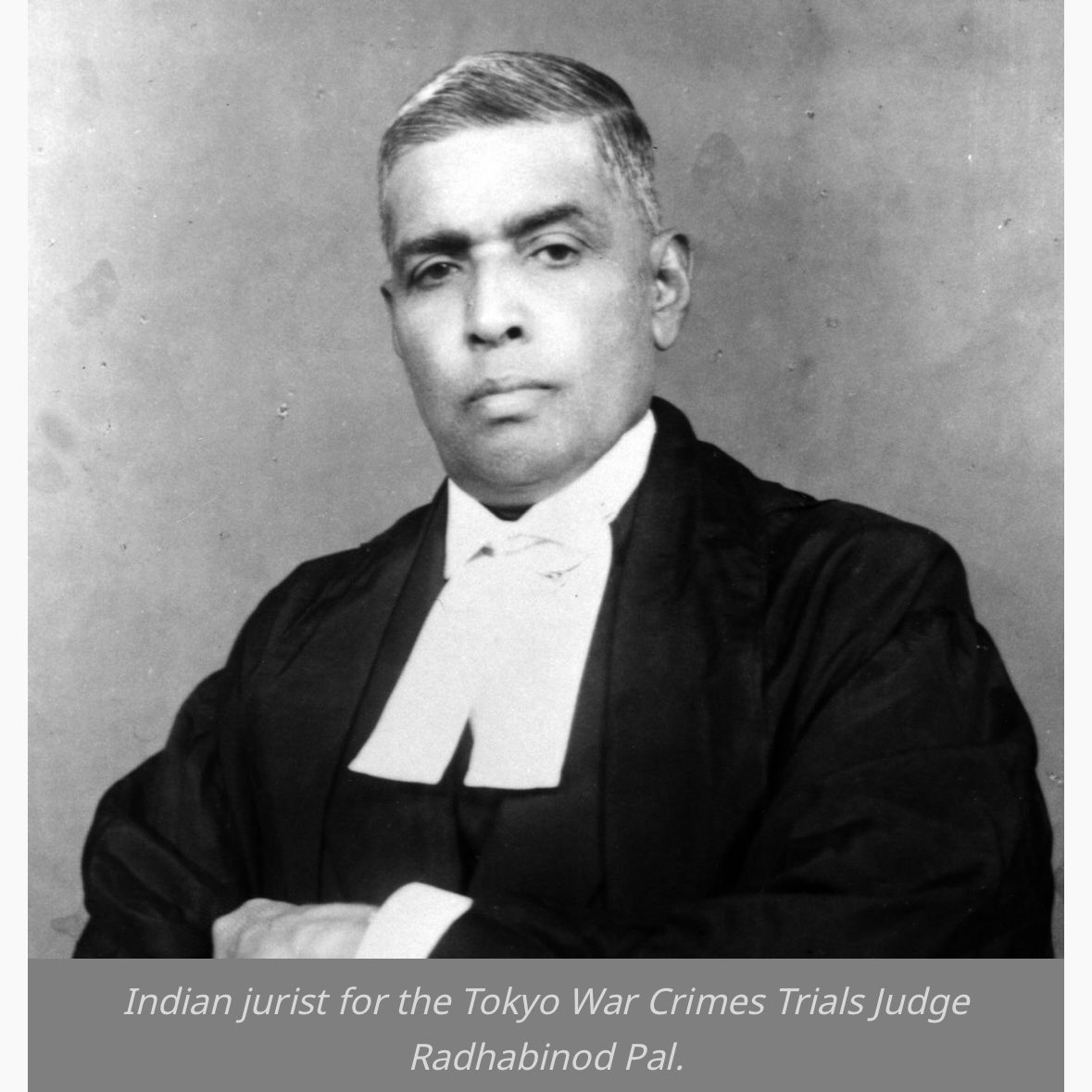
Last week, at a Diwali dinner, the host seated next to me at the table mentioned how his Japanese wife had taken him to Judge Pal’s memorial in Tokyo.
It was his way of bonding with me over my Bengali roots.
I smiled, a little embarrassed that I did not know of Judge Pal. For a moment, I even thought the host might be mistaken about the judge’s ethnicity.
Judge Radhabinod Pal was an Indian judge who became famous in Japan after World War II. When the world’s powers put Japan’s leaders on trial for starting the war, he was the only judge who declared that the trial itself was unfair.
He believed Japan was being punished by the victorious countries, while their own wrongdoings were ignored.
His bold stand was not in support of war, but for justice that treats every nation equally. Because of this courage and fairness, Japan remembers him as a true friend - one who stood for truth when few others did.
He dissented at the Tokyo Trials because he believed that true justice must be impartial and not dictated by the victors of war.
A beautiful reminder of how many Indians have touched lives far beyond our borders and continue to do so even today.
From a capital allocation perspective, venture funding is now functioning as a distribution channel for concentrating returns at the infrastructure layer(Nvidia, Open AI, MS, AWS). Here's how:
𝗜𝗻 𝘁𝗵𝗲𝗼𝗿𝘆, 𝗵𝗼𝘄 𝗩𝗖𝘀 𝘄𝗼𝗿𝗸:
-VCs invest $100M in a startup
- Startup uses that capital to build a product, hire talent, acquire customers
- Startup captures value in its market (e.g., legal tech, healthcare AI)
- Startup grows revenue and profits
The startup becomes valuable--> IPO/ acquisition
- VCs exit with 5-10x return
That $100M stays within the startup's ecosystem, building its own defensible business. The startup captures and retains the value it creates.
Risk and Return= VCs bear the risk, but they also get the full upside if the startup succeeds.
𝗖𝘂𝗿𝗿𝗲𝗻𝘁 𝗠𝗲𝗰𝗵𝗮𝗻𝗶𝘀𝗺 𝗶𝗻 𝗔𝗜 𝘀𝘁𝗮𝗿𝘁𝘂𝗽𝘀
VCs invest $100M in an AI startup (let's call it "Health AI")
- $40M goes to OpenAI for API access (GPT-4 credits, fine-tuning, enterprise tier)
- $20M goes to Microsoft/AWS for cloud infrastructure to run the application
- $10M goes to data providers for training data
Only $30M remains for actual product development, employees/hiring, GTM.
𝗥𝗲𝘀𝘂𝗹𝘁𝘀:
> OpenAI earned: $40M in revenue with ~60% gross margins = $24M gross profit
> Microsoft/AWS earned: $20M in revenue with ~65% gross margins = $13M gross profit
𝗖𝗼𝗺𝗯𝗶𝗻𝗲𝗱 𝗶𝗻𝗳𝗿𝗮𝘀𝘁𝗿𝘂𝗰𝘁𝘂𝗿𝗲 𝗣𝗥𝗢𝗙𝗜𝗧𝗦: $𝟯𝟳𝗠
What happens to Health AI ?
> Burned through most of its remaining $30M, needs Series B to survive.
> If HealthAI shuts down/ gives zero return to VCs, OpenAI and MS/AWS already made $37M in gross profit.
They captured their value upfront, regardless of whether HealthAI ever found PMF.
Important announcement made by RBI yesterday on allowing banks to fund corporate acquisitions.
Here’s what this means:
.. Until now, banks in India were restricted from directly funding acquisitions (M&A financing).
.. NBFCs (non-bank finance companies) owned by banks were also not allowed to overlap in certain businesses.
.. Now, RBI is removing those restrictions, meaning banks can step into acquisition financing and NBFCs can do more business.
Why this matters
.. Private credit funds (like Ares, KKR Credit, Edelweiss Alternatives, etc.) were filling this gap.
Example: If Company A wanted to buy Company B, banks couldn’t finance it, so private credit funds stepped in and lent money (at high yields).
.. With banks entering the M&A lending space, competition increases.
Impact on yields
.. Private credit funds were charging higher interest rates (because they were the only option).
.. Now, banks who have lower cost of funds (cheap deposits) will compete.
.. This will push lending rates down, meaning yields earned by private credit funds will compress.
Positives
..M&A activity will rise → cheaper financing makes it easier for companies to acquire others.
.. Cost of capital reduces → good for businesses and economic growth.
.. Banks with strong risk management and willingness to underwrite such deals will benefit.
Risks for Banks
..M&A loans are riskier than plain vanilla corporate loans:
..Repayments often depend on a “liquidity event” (IPO, sale, refinancing).
..Payments may be structured flexibly (back-ended, bullet or Payment in Kind), which banks traditionally avoid.
So, banks must be careful about concentration risk and exit risk.
When you zoom this out:
…Private credit funds are going to lose pricing power (yields fall).
..Banks gain business they were previously barred from.
.. India Inc. gains cheaper access to capital, fueling M&A and growth.
.. Systemic risk rises a bit if banks overextend into risky, event-linked loans.
But hey, banks will come out with their own covenants and mitigation structures around M&A loans..
This to me is the Dusshera gift to Banks from RBI, that they have been asking for.
If Balaji or Haldiram's were starting today, they would never become the giants that they are.
The tragic irony is that the VC ecosystem has created an elite gatekeeping system that systematically excludes the very entrepreneurs who built India's greatest brands.
The domestic Indian FMCG brands like Marico, Haldiram's or Balaji were built by the "wrong" kind of entrepreneurs - at least by today's VC standards.
They didn’t go to an elite engineering or MBA school.
They were vernacular entrepreneurs first - deeply rooted in their communities, obsessed with product and distribution. They took 20+ years to build their empires through organic growth and reinvestment, never in a rush to prove TAM.
Instead, they built their empires the hard way - through debt, not equity.
Debt builds stronger businesses because you have real skin in the game. You have customer validation that makes your cashflow and profitability appealing to a bank. You are forced to have lean operations over fancy offices because every expense is scrutinized for cash and ultimately loan repayments.
Discipline of debt forces brutal honesty.
Reckless equity enables beautiful spreadsheets.
That's why these brands dominate today.
They were intentionally built for generations and not to impress investors.