Twenty-five years ago today, an accountant in Connecticut left his desk in the middle of the afternoon and went to get a haircut.
His name was Dave Karnes. He was a senior accountant at a firm in Wilton, and before that he had spent most of his adult life as a Marine, finishing as a staff sergeant. He watched the towers come down on a screen in his office and told the people around him that they were going to need men like him down there.
Then he did the strangest and most deliberate sequence of actions anybody performed that day.
He drove home and put on his Marine combat utilities. He stopped at a barbershop and got a regulation Marine haircut, because he was about to be seen in that uniform and it was going to be worn correctly. He stopped at his church and asked his pastor to pray with him. He bought two hamburgers at a McDonald's, because he understood he would not be eating again for a long time. Then he drove 55 miles south toward a city that was closed.
Nobody stopped him. In that uniform, nobody stopped him at a single checkpoint.
He got to the pile in the evening, when the fires were still burning and crews were being pulled back for the night, and he found another Marine already walking the wreckage. Sergeant Jason Thomas, 27 years old, had left active duty in August. He had been dropping his daughter off at his mother's house on Long Island when he heard, and he had pulled his fatigues out of the trunk of his car and driven in.
The two men had never met in their lives. They teamed up without discussion and walked out onto a smoking mountain of steel that everybody else was walking away from, and they started shouting the same thing over and over into the void.
"United States Marines. If you can hear us, yell or tap."
Twenty feet down, somebody tapped.
His name was Will Jimeno, a Port Authority police officer. He had gone in with a squad of five led by Sergeant John McLoughlin. When the South Tower came down on top of them in the concourse, three of the five were killed. Jimeno and McLoughlin were pinned in a void under the rubble, and by that point in the day nobody was looking for them anymore.
The Marines refused to leave. Karnes called his wife in Connecticut and had her phone New York dispatch, because that was faster than finding anyone in the chaos on site. Rescuers came. Jimeno came out after 13 hours. McLoughlin came out the next morning after 22.
Only 20 people were ever pulled alive from that rubble. Jimeno and McLoughlin were numbers 18 and 19.
Then Jason Thomas rode to the hospital with Jimeno and vanished. Karnes stayed at the site, so his name went into the record and Thomas's did not. For five years nobody knew who the second Marine was. When Oliver Stone made a film about the rescue in 2006, the production had no idea and cast a white actor to play him. Thomas, who is Black, saw the trailer and quietly identified himself.
Karnes went back into the Marine Corps and served two tours in Iraq.
An accountant stopped for a haircut, a stranger pulled a uniform out of his trunk, and two of the twenty people who came out of that pile alive came out because of it.
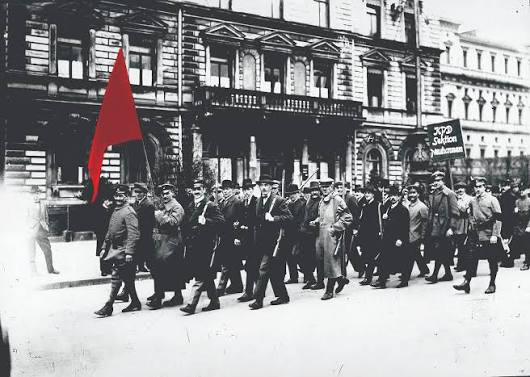
The Bavarian Soviet Republic lasted 58 days in 1919 and managed to compress every failure of socialist central planning into less than two months.
Post-WWI Munich was genuinely desperate: food shortages, demobilized soldiers, a humiliated population. Into that vacuum walked a rotating cast of intellectuals, anarchists, and communists who had strong opinions about workers' control and almost no experience running anything. Ernst Toller, a playwright, briefly led the government. Gustav Landauer, a literary anarchist and "libertarian socialist", became Commissioner of Enlightenment. They could be more accurately described as poets with guns than administrators.
The economic policy followed predictably. The council government nationalized the press, attempted to abolish money (briefly), and ordered banks to hand over cash to the revolutionary treasury. When the banks locked their doors, the councils seized them physically. Credit evaporated. Businesses shut down. The food distribution system, already fragile, collapsed further because no price signal told anyone where food was scarce or where it sat rotting in a warehouse. Planners guessed. People went hungry.
Ludwig von Mises, living in Munich at the time, watched the whole spectacle from street level. Without prices, producers and distributors have no mechanism to coordinate. Abolish the market and you abolish the information system that keeps a city fed. The council government did not accidentally fail, the structure of their program guaranteed failure before they passed a single decree.
Military suppression by Freikorps units ended it in early May 1919. Historians debate the brutality of that crackdown, and the violence was real, but the republic had already economically collapsed before the soldiers arrived. The guns finished what the planning had already started.
The episode contains a lesson governments still will not absorb: seizing control of production does not transfer competence along with the title deeds.
Twenty five years ago today, a 62 year old man with cancer in his bones walked 2,687 people out of the South Tower, and then he went back inside.
Rick Rescorla was born in Hayle, Cornwall in 1939. British Parachute Regiment in Cyprus at 18. Colonial police in Northern Rhodesia. Then he came to America, enlisted in the US Army in 1963, and in November 1965 he went into the Ia Drang Valley as a platoon leader with the 2nd Battalion, 7th Cavalry.
Hal Moore called him the best platoon leader he ever saw. His men called him Hard Core. He sang to them in the dark, Wild Colonial Boy in an Australian accent, because he had worked out that men who are singing are not men who are panicking. That is Rescorla on the cover of We Were Soldiers Once and Young, bayonet fixed.
Thirty five years later he was head of security for Dean Witter, later Morgan Stanley, in the South Tower of the World Trade Center.
In 1990 he brought in his old friend Dan Hill and the two of them walked the basement. He warned the Port Authority that the parking garage was wide open, that somebody could drive in a truck full of explosives, walk out and light it off. Nothing was done. Three years later the 1993 bomb went off about thirty feet from the spot he had flagged.
After that he told Morgan Stanley the towers were still a target and the next attack would come out of the sky. He wanted the firm to leave Manhattan. The lease ran to 2006, so they stayed. Twenty two floors of the South Tower, roughly 2,700 people.
So he drilled them. Every three months, everyone, no exceptions, down the stairwells two abreast while he stood there with a stopwatch. Traders pulling seven figures resented being marched down concrete stairs by a Cornishman with a clipboard. He kept doing it anyway.
8:46 a.m. The North Tower is hit. Port Authority comes over the South Tower loudspeakers and tells everyone the building is secure and to go back to their desks. Rescorla picks up a bullhorn and tells his people to get out.
He phones Dan Hill. "The dumb sons of bitches told me not to evacuate. They said it's just Building One. I told them I'm getting my people out of here."
9:03 a.m. The second plane hits the South Tower, floors 77 through 85. His people are already in the stairwells, moving exactly the way they had been drilled, and Rescorla is on the bullhorn singing to them. Cornish songs. A version of Men of Harlech he had rewritten for Cornwall. Men of Cornwall stop your dreaming, can't you see their spearpoints gleaming.
He called his wife Susan from the stairs. They had been married two and a half years, met jogging in New Jersey. He told her to stop crying, that he had to get these people out safely, and that if something happened to him he wanted her to know he had never been happier, that she made his life.
Someone told him to get out. He said, as soon as I make sure everyone else is out.
2,687 Morgan Stanley employees went home that day. Thirteen did not, and four of those were Rescorla and the men who stayed in the building with him: Wesley Mercer, Jorge Velazquez, Godwin Forde.
He was last seen on the 10th floor, walking up.
The South Tower fell at 9:59. They never found him.
A reminder from Atomic Habits by James Clear:
“Every action you take is a vote for the type of person you wish to become. No single instance will transform your beliefs, but as the votes build up, so does the evidence of your new identity. This is one reason why meaningful change does not require radical change. Small habits can make a meaningful difference by providing evidence of a new identity. And if a change is meaningful, it is actually big. That's the paradox of making small improvements.”
I’d heard about the Staten Island landfill site sortation after 9/11 but wasn’t aware of all this detail.
Found this on YouTube after your informative post. Very well produced with considered and detailed narration.
The part he describes when they find a victim’s frequent flyer card and contacting her family and “that was a really big deal” just hits home how desperate families were for any proof and any, smallest link to their loved ones.
Two parts, here’s part 1…
https://t.co/qWMgDYoLpN
In 24 years of watching 9/11 memorials and the reading of the names of the dead, I have never heard applause.
This morning the crowd did — because one brave widow, @TerrySStrada, looked at the leaders in front of her and refused to let the day pass in silence.
She called out Saudi Arabia’s role, the broken promises, and a string of administrations that protected the Kingdom instead of helping to deliver justice for the families.
A stunning, must-watch minute. Stand with the families.
Mamdani and AOC are facing backlash after appearing to share a lighthearted moment during the solemn reading of victims' names at the 9/11 Memorial.
The television feed cut from a young man sobbing at Ground Zero to Mayor Mamdani and Rep. Ocasio-Cortez appearing to smile and laugh as they spoke, though their conversation could not be heard.
The moment came as Mamdani was already facing criticism from some 9/11 victims' families over his attendance at the memorial.
2 days post 9/11, HM Queen Elizabeth II ordered the playing of the Star Spangled Banner during the Changing of the Guard at Buckingham Palace.
This marked the first ever time a foreign anthem was played during the ceremony. Today, The King has ordered the same. Never forget 🇬🇧🇺🇸
On September 11, 2011, on the 10th anniversary of the tragic attack on the Twin Towers, Paul Simon performed “The Sound of Silence” at Ground Zero. Surrounded by the victims’ families, he sang amid complete silence.
25 Jahre nach 9/11 regiert in New York ein muslimischer Bürgermeister, der für „Kontroversen“ sorgt. Wahlwerbung wird in Europa und Deutschland auf arabisch verbreitet, politische Podiumsdiskussionen finden in Moscheen statt, die nachweislich Verbindungen zur Muslimbruderschaft haben. Auf unseren Straßen kann das Kalifat genauso gefordert werden, wie das Existenzrecht Israels geleugnet wird. Die Hälfte muslimischer befragter Jugendlicher findet die Scharia wichtiger als das Grundgesetz. Autos fahren in Weihnachtsmärkte und Veranstaltungen und Feste müssen abgesagt werden, weil die Sicherheit nicht gewährleistet werden kann oder die notwendigen Maßnahen schlicht zu teuer sind. Zufallsopfer werden auf offener Straße abgestochen und Mädchen und Frauen werden (gruppen)vergewaltigt. An Ramadan dürfen unsere Kinder in der Schule ihr Pausenbrot nicht mehr offen essen und das Kopftuch wird für Mädchen zur Pflicht. Unsere Gesellschaft hat sich massiv verändert und kaum jemand freut das. Doch wer das anspricht und der Meinung ist, dass der Islam nicht zu Deutschland gehört, wird zum Problem und als Nazi oder als Rassist diffamiert.
Beklemmend, wie es in weitern 25 Jahren hier aussehen wird, gingen wir genauso weiter wie bisher.
“I’ll take the cockpit.”
“I’ll take the tail.”
On September 11 2001, two F-16 pilots took off from Andrews Air Force Base knowing their mission could end with them deliberately crashing their own fighters into a hijacked passenger jet.
Lt. Col. Marc Sasseville and 1st Lt. Heather “Lucky” Penney were scrambled as the attacks unfolded and United Airlines Flight 93 was believed to be heading toward Washington. There was one enormous problem: their F-16s had no live missiles aboard. There simply wasn’t time to arm them before launching.
So the two pilots devised an extraordinary last-resort plan.
Sasseville would ram Flight 93’s cockpit. Penney would strike the tail, destroying the aircraft’s ability to remain airborne.
“I’m going to go for the cockpit,” Sasseville told her.
“I’ll take the tail,” Penney replied.
Both understood what that could mean. Penney later described it as potentially a one-way mission.
They raced toward Washington and searched for the missing airliner, unaware that the passengers and crew aboard Flight 93 had already fought back against the hijackers. The Boeing 757 had crashed near Shanksville, Pennsylvania, before the fighters were airborne.
Penney would later insist that the real heroes that morning were the people aboard Flight 93.
They had done what the two fighter pilots were preparing to sacrifice their own lives to do: stop the aircraft from reaching Washington.
#September11 #Flight93 #USAirForce
Paul Simon pays tribute to 9/11 by performing "The Sound Of Silence".
A native New Yorker, you can see the deep emotion in Paul's face as he sings.
Heartbreaking.