Every time I adjust my collar or button my shirt, I remind myself I deserve to face today in my best possible form. External strength will gradually develop into inner confidence
@PochoSalcedo@DNAoftheNews Lol, I don t think this will affect the United States, but it will have a very good outcome for the people of Bolivia and Chile
Morning runs deepen my breathing, and walks help me ground my emotions. This is the quietest start to my day, allowing me to enjoy a relaxed and pleasant morning 🥰
Not being swayed by the weather is the quietest strength of an adult woman. Choosing to exercise at home on a rainy day, taking care of her body with a steady rhythm, is also an investment in her long-term well-being 😊
After my morning run, I was invited by my neighbor to have breakfast together. Perhaps Sunday breakfast is not just about filling your stomach, but also about giving your heart a space to rest. Spending time with friends and neighbors makes life simple and warm 🥰
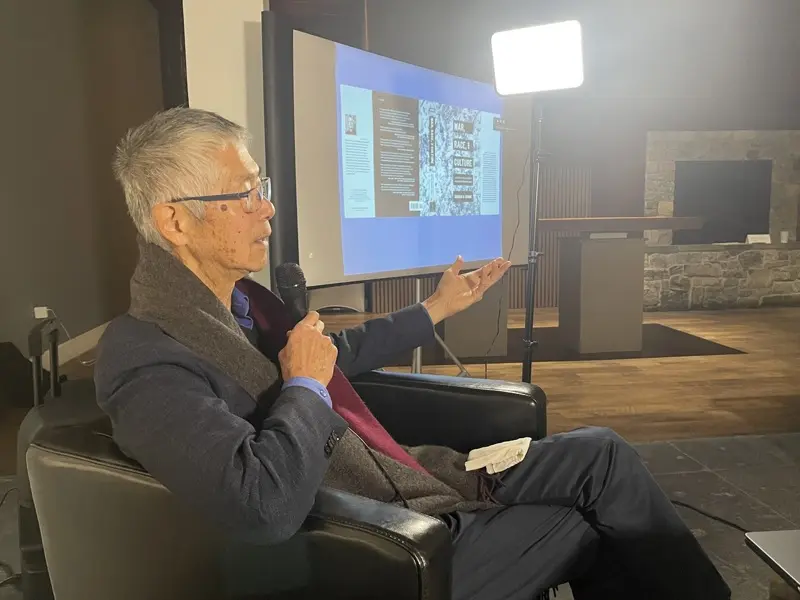
Gordon H. Chang, a professor of history at Stanford University and a renowned scholar of Asian American history, recently held a book launch and presented a special lecture on his new book War, Race and Culture at the new space of the Silicon Valley Asian Art Center in San Jose. This was one of the significant academic and cultural events held at the gallery since its opening, providing a rare opportunity for Bay Area audiences interested in Asian American history and culture to engage in a close dialogue. The event was co-organized by the Chinese Performing Arts Center, whose upcoming new play about Chinese railroad workers Silent Spikes has benefited from Professor Chang's research
Gordon H. Chang is currently the Olive H. Palmer Professor of Humanities at Stanford University. He has long studied American racial and ethnic history, US-China relations, trans-Pacific interactions, and Asian American history, and enjoys a distinguished reputation in the international academic community
His new book, War, Race and Culture is a semi-autobiographical collection of academic essays, offering a retrospective look at his 30 years of historical research. Through multiple case studies spanning time and space, the book discusses how war, race, and culture intertwine, collide, and reconstruct identity in the trans-Pacific world and Asian American history. The book combines a macro perspective on international relations with nuanced writing about the fates of individual immigrants, continuing his consistent academic focus on ordinary people in grand history The audience included local artists, members of Asian American communities, and citizens concerned about ethnic and cultural issues, resulting in lively discussions and enthusiastic questions
In his presentation, Professor Chang began by sharing his own family's story, grounding the abstract issues of war and race in the concrete and complex experiences of individual lives. He specifically recounted his father's Zhang Shuqi, a renowned modern painter of flowers and birds—artistic diplomatic journey during the War of Resistance against Japan. In the autumn of 1940, during the most difficult period of the war, Zhang Shuqi, encouraged by his colleagues Zong Baihua and Fang Dongmei, painted "One Hundred Doves" in Chongqing, the wartime capital, symbolizing peace and integrity. The artwork, commissioned by Luo Jialun, president of National Central University, featured the calligraphy "Faith, Righteousness, and Peace" inscribed by Chiang Kai-shek. It was then specially airfreighted to U.S. President Franklin D. Roosevelt by then-U.S. Ambassador to China, Nelson T. Johnson, on the eve of Christmas, receiving high praise and causing a sensation both domestically and internationally
At the press conference, Zhang Shaoshu began by discussing his family history, leading into what he called his Double Asia (Asia-Pacific history/Asian American history) intellectual journey. He shared his newly published anthology, a collection of his representative essays, with a particularly moving introduction. He recounted growing up in Berkeley during the radical atmosphere of the 1950s and 60s, losing his father at a young age, yet still being accepted by both Princeton and Stanford with excellent grades. He chose to study history at Princeton and, in 1971, as a representative of young American scholars, visited China before President Nixon, witnessing a historical turning point
After earning his master's degree at Stanford, he did not immediately pursue an academic career, but instead taught at Oakland Community College for ten years. He said that this was not a waste of time, but rather a decade of deeper understanding of society and human nature Later, he returned to Stanford to pursue his doctorate, studying under Professor V. L. Slyke, a scholar of the history of the Kuomintang and the Communist Party of China, finally receiving his doctorate at the age of 40
The South Bay City Leaders' Prayer Breakfast was held on the 19th at the Saratoga Country Club, attracting a large turnout of political, business, and community leaders, as well as religious leaders from various cities in Northern California. This event brought together important figures from local and national levels, demonstrating the strong energy of inter-city cooperation and public dialogue in the South Bay area
Participating cities and organizations included Dublin, Fremont, Cupertino, Campbell, Gilroy, Los Altos, Los Gatos, Los Altos Hills, Milpitas, Saratoga, Santa Clara, San Jose, Union City, and representatives from Santa Clara County
Woody Wu, Director General of the Taipei Economic and Cultural Office in San Francisco, attended the event. In an interview with the media, he expressed his honor at having the opportunity to participate in such a meaningful prayer breakfast after only three months in the Bay Area
Wu pointed out that the prayer breakfast platform allows local leaders who usually promote public affairs at different levels to exchange opinions in a calm and peaceful atmosphere, fostering continued dialogue and deeper cooperation on diverse issues. He also expressed his hope to further promote exchanges and cooperation between Taiwan and the United States, particularly with local cities in Northern California, and to continue moving forward
This prayer breakfast not only symbolized regional unity but also provided a platform for interfaith and intercultural exchange. Attendees included mayors, city council members, school district board representatives, and numerous religious leaders. The event focused on several challenges facing society today, including political divisions, public safety, educational equity, and overall social progress. Several local leaders shared their governance experiences and discussed future directions for cooperation
During the event, Liu Xiaohong, Chairman of the Life River Foundation, also shared the foundation's achievements in community service and charitable activities over the past year, emphasizing the important role of civil society in social care and public affairs
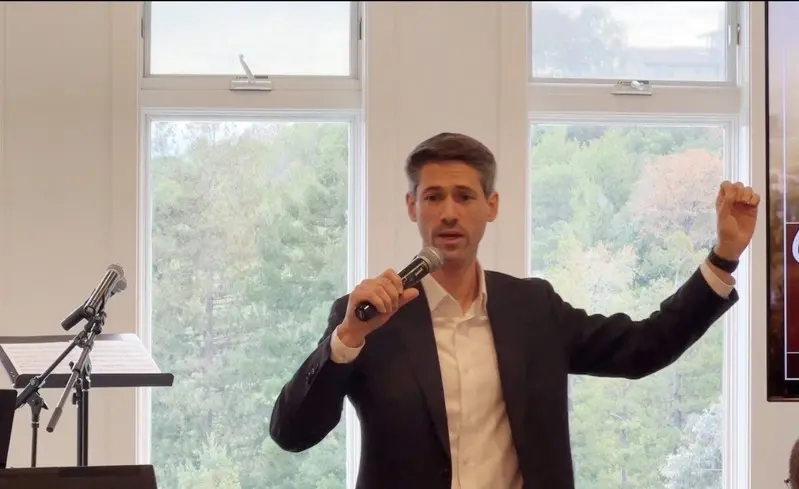
San Jose Mayor Matt Mahan was invited as the keynote speaker. In his address, he pointed out that building affordable housing alone cannot quickly solve the problem of homelessness. In recent years, the City of San Jose has adjusted its policy direction, adopting a more pragmatic approach that prioritizes preventative measures. Through short-term rental assistance and case management, the city has successfully helped many families avoid homelessness
Mayor Mahan stated that over the past five years, San Jose has established 23 temporary shelter locations, providing over 2,200 beds, reducing the number of people sleeping on the streets by more than one-third. In January of this year, for the first time, more than half of the homeless population was housed indoors, demonstrating the gradual effectiveness of the policy
This South Bay Prayer Breakfast not only provided a platform for political, business, and community leaders to network, but also showcased the potential for local community cohesion and cross-sector collaboration. Attendees unanimously agreed that through dialogue and cooperation, they can bring about more positive impacts on society and promote the continuous development of public policies and community services
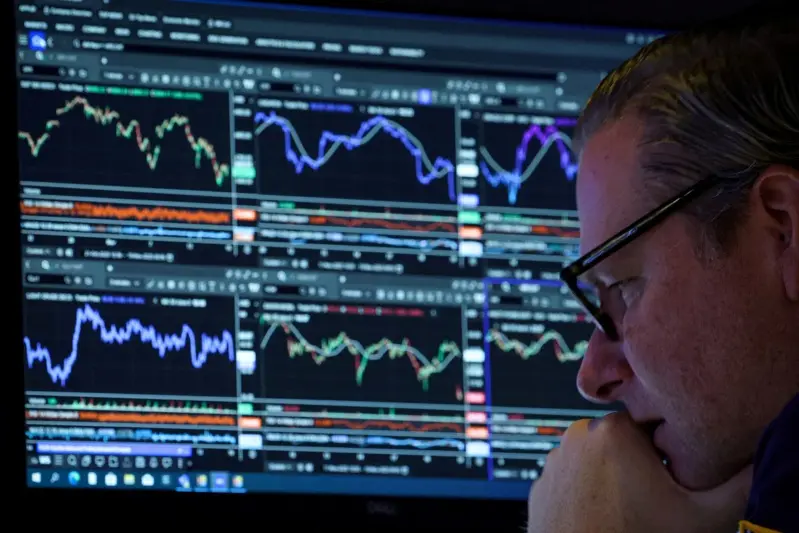
U.S. stocks rose in early trading on December 18th, driven by lower-than-expected U.S. inflation data and strong earnings from Micron. The Dow Jones Industrial Average rose over 400 points, while the S&P 500 and Nasdaq Composite indices gained more than 1%.
The S&P 500 index rose 1.08% to 6,793.98 points in early trading on December 18th, the Dow Jones Industrial Average gained 406.32 points, or 0.85%, to 48,292.29 points; and the Nasdaq Composite index climbed to 23,033.55 points, a gain of 1.5%.
The U.S. Bureau of Labor Statistics (BLS) announced on December 18th that the November Consumer Price Index (CPI) rose 2.7% year-on-year, less than the 3.1% expected by economists; the core CPI, excluding food and energy, rose 2.6%, also less than the 3% expected by economists. The BLS had originally scheduled the release of the November CPI data for December 10th, but the government shutdown delayed the release.
Micron announced on December 17th that its adjusted earnings per share (EPS) for the last quarter were $4.78, with revenue reaching $13.64 billion, both exceeding market expectations. Looking ahead to the current quarter, Micron projected revenue of approximately $18.7 billion, also better than the market forecast of $14.2 billion. Micron's stock price surged as much as 16.9% in early trading on December 18th, reaching $263.65, while TSMC ADRs rose by more than 3%.
In other stock news, Trump Media & Technology Group announced on December 18th a merger agreement with nuclear fusion energy company TAE Technologies. The transaction is expected to be completed in mid-2026, at which time shareholders of both companies will each hold approximately half of the shares in the combined new company. Trump Media's stock price surged nearly 30% in early trading on December 18th.
The S&P 500 and Dow Jones indices closed lower for the fourth consecutive trading day on December 17th, reflecting the impact of sharp declines in major semiconductor stocks related to artificial intelligence (AI). The Financial Times reported on May 17 that a major investor in cloud infrastructure provider Oracle has withdrawn from the company's $10 billion data center project in Michigan, causing Oracle's stock price to fall by more than 5%.
An hour of free and wild Pilates and yoga at home, all done! [frowning face emoji] Modern Pilates is for work, classical Pilates is a passion and an art. My yoga room is also my workspace and study room, full of Zen. I do Pilates early in the morning to greet the greenery, and after get off work in the evening, I study and practice yoga before bed, lighting an incense stick. That's life! 🥰
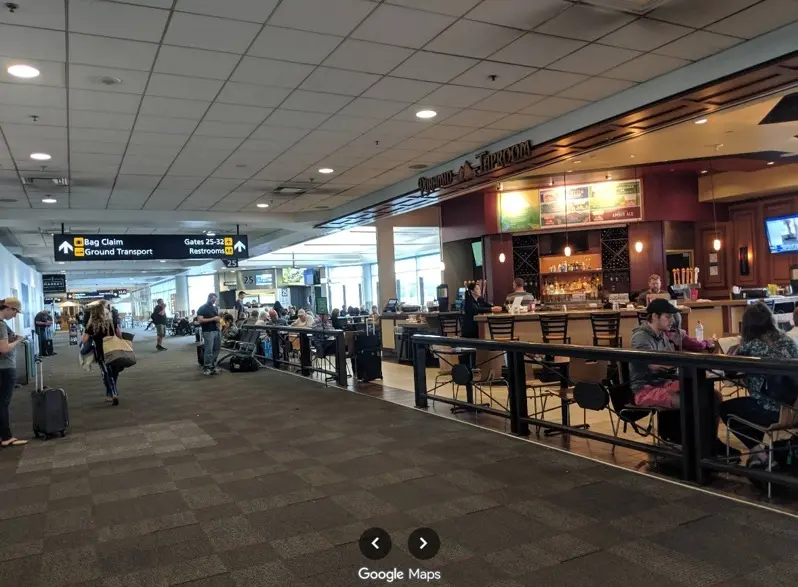
Following the 9/11 attacks, the sight of families embracing at the boarding gate and friends waving goodbye until the jet bridge doors closed became a rarity at U.S. airports. However, this scene is beginning to reappear at Oakland International Airport, at least for those travelers willing to plan ahead
Oakland San Francisco Bay Area Airport (formerly Oakland International Airport) began offering the "OAK Guest Pass" on the 15th of this month, allowing individuals without airline tickets to enter the area beyond the security checkpoint in the terminal building
Oakland Airport stated that the purpose of this program is to allow people to greet arriving passengers at the gate or continue accompanying departing passengers inside the terminal, while also having time to shop and dine in the area beyond security
Kristi McKenney, Executive Director of the Port of Oakland, said in a statement, "We want Oakland Airport to provide a meaningful experience for all visitors, not just those driving through. The 'OAK Guest Pass' allows visitors to share more precious time with loved ones, whether sending them off on a new journey or welcoming them back at the end of their trip
According to Oakland Airport's new regulations, individuals can apply online on the day of arrival or up to seven days in advance, and must provide valid photo identification approved by the Transportation Security Administration (TSA). Airport authorities stated that the TSA will be responsible for reviewing all applications. Those who apply in advance will receive an approval email after midnight on the day of the flight's arrival, while those who apply on the same day will receive an approval decision within 15 minutes
Oakland Airport noted that the "OAK Guest Pass" is only available electronically and must be presented at security along with identification. Visitors must undergo the same security procedures as ticketed passengers, and there are limited passes available on a first-come, first-served basis
Oakland Airport also reminded the public that this program is not permanent and may be canceled or changed due to security or operational needs
In addition to Oakland Airport, a growing number of U.S. airports are also offering similar visitor passes, including San Francisco International Airport, San Diego Airport, and Palm Springs Airport. This project reflects the airport's efforts to transform the terminal into a destination for the public, attracting people to visit the renovated shops and restaurants
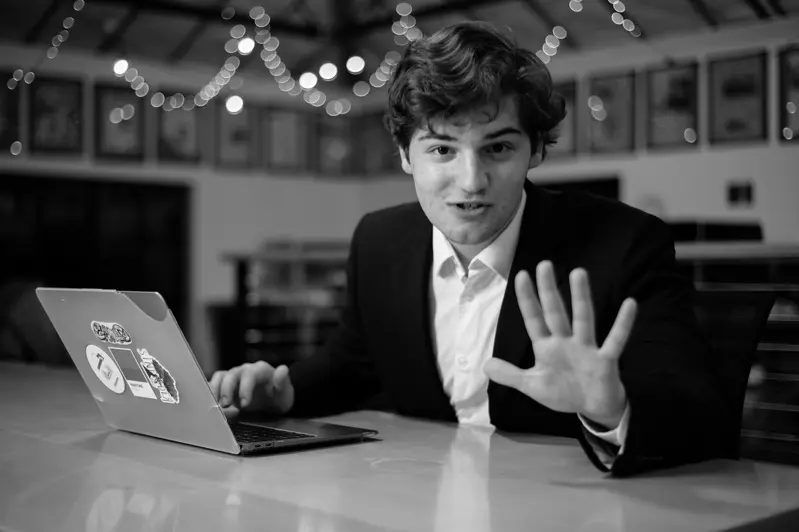
Theo Baker, while still a freshman at Stanford University, wrote a series of articles for the campus newspaper that ultimately led to the resignation of the university president. Now, he is about to publish a new book titled "How to Rule the World," which explores Stanford's role in cultivating billionaires and powerful figures.
The San Francisco Chronicle reports that Baker's new book will be published on May 19th of next year, a month before he is scheduled to receive his college diploma (if he graduates on time).
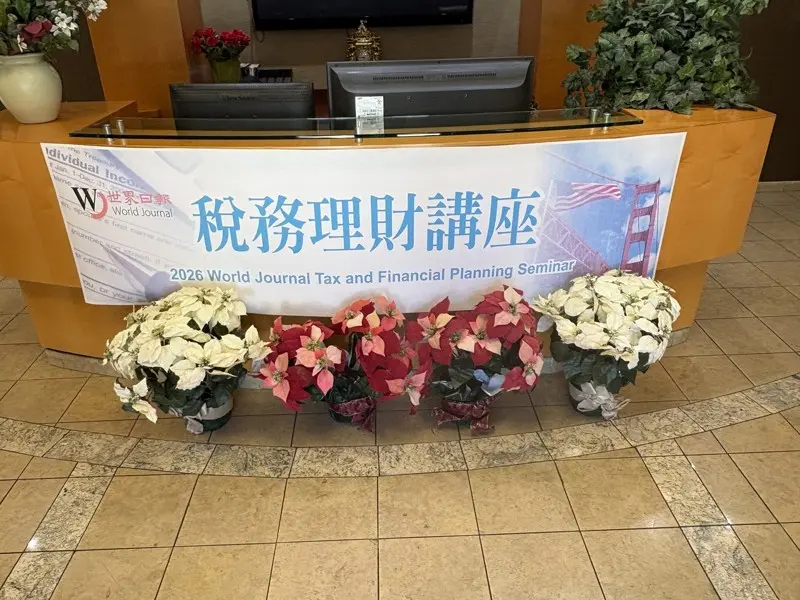
Although the 2026 US tax reform is still some time away, anxiety regarding tax filing, asset allocation, and real estate investment has already spread throughout the community. On the morning of December 13th, the "2026 Tax and Financial Planning Seminar – Mastering Tax Reform, Tax Savings, and Real Estate Investment," hosted by the San Francisco branch of the World Journal, took place at the Agape Business Center in Cupertino. The event was fully booked, with many attendees arriving early to secure seats. Participants listened attentively throughout the seminar, and the Q&A session was filled with questions, demonstrating the community's high level of concern about the new tax system and investment strategies.
Tea and refreshments were provided on one side of the venue, and many participants took notes and engaged in discussions, creating a lively yet focused atmosphere. Attendees came from diverse backgrounds, ranging from those nearing retirement to dual-income families, but all shared the common goal of preparing their finances for the coming years before the tax reform takes effect.
The seminar focused on three main themes: taxation, real estate, and investment. Bay Area renowned accountant Wang Rongmei, real estate expert Cai Ruisheng, and Zhou Weiyu, head of a diversified investment consulting company, jointly analyzed the potential practical impacts of the 2026 tax reform. The content was practical and well-received by the attendees.
Wang Rongmei began by analyzing the impact of Trump's new round of tax reform on middle-class families, senior citizens, and small business owners. She pointed out that the increase in the standard deduction is one of the most direct changes affecting most families. In the future, the standard deduction for married couples filing jointly will increase to $31,500, equivalent to a tax-free income, which is a significant benefit for dual-income families.
She also reminded attendees that seniors aged 65 and older can enjoy an additional senior citizen deduction of $6,000 per person, bringing the total deduction for elderly couples to a maximum of $46,700. However, she cautioned that there are income limitations, and those with high incomes may not be able to fully utilize the deduction. She repeatedly emphasized that "calculating" under the new tax reform is more important than ever, as misapplying the rules could actually increase tax burdens. The atmosphere at the event was enthusiastic, with audience members actively asking questions. Wang Rongmei patiently and thoroughly answered each question; many attendees, unable to clearly see the projected content from their seats, stood up to take photos and remained fully engaged throughout the presentation.
On the topic of real estate, real estate expert Cai Ruisheng analyzed potential new opportunities in the housing market over the next three years, focusing on urban development and population migration in Northern California. He pointed out that, in addition to the traditional South Bay and San Francisco areas, some university towns and inland cities are gradually becoming "satellite markets" of interest to investors due to lower housing price bases and higher rental yields. He illustrated with practical examples how some areas can create stable cash flow while controlling costs through ADUs (Accessory Dwelling Units) and student rental models, prompting many attendees to ask for more details. "It's not that there are no opportunities now, but the opportunities look different," he reminded investors, emphasizing the importance of paying more attention to regional development and policy directions.
Investment consultant Zhou Weiyu introduced the "DST 1031 Exchange," which has gained considerable attention among high-net-worth individuals in recent years. He explained that DST allows investors to defer taxes while avoiding the burden of managing properties themselves, making it suitable for those preparing for retirement or hoping to simplify their asset structure. DST offers three advantages: tax deferral, peace of mind, and stable cash flow. Furthermore, DST assets still have appreciation potential during the holding period, so more and more people are considering it as a long-term strategy for retirement financial planning and asset transfer. Some investors can even combine it with a 721 Exchange to create more diverse investment portfolios. However, he also reminded attendees that DST has eligibility requirements for qualified investors, and investors should fully understand the risks and liquidity limitations before investing.
As the lecture concluded amidst enthusiastic interaction, many attendees still wanted more information and stayed after the event to exchange ideas with the speakers, seeking further advice on their personal tax and investment planning.
Some attendees frankly stated that the lecture content made them rethink their asset allocation strategies for the next few years. What they took away from the event was not just notes and materials, but also a more solid preparation and confidence in facing new tax systems and market changes.