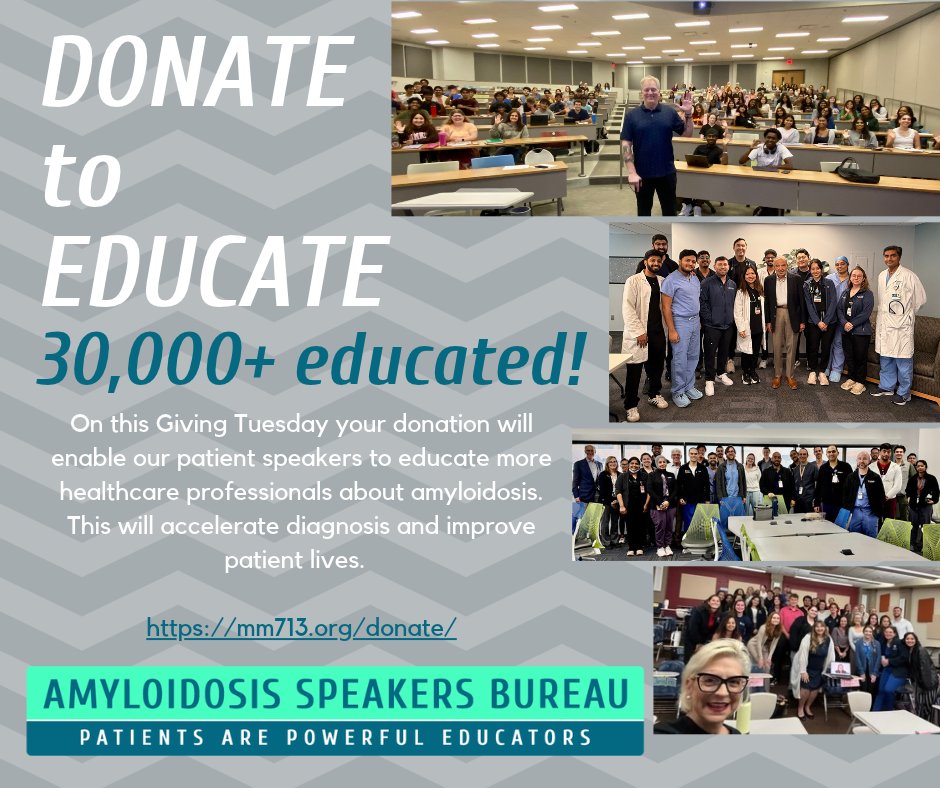
Wanna help us educate doctors that know nothing about this disease?
https://t.co/akqWwgFawo
Sad but very true. There are thousands of them out there. BUT, we have a response to that — our Amyloidosis Speakers Bureau — calling on residents in internal and family medicine, hand surgery, and PM&R. These folks are seeing patients now and making diagnoses that can change the trajectory of their lives. Make a difference with us today.
Presented at #ISA2026
Acoramidis vs tafamidis analysis from Komodo
We will start to see more analyses coming out as the experience builds up with using other therapies
But we still need more granular data to match
#cardiotwitter#MedIQISA2026
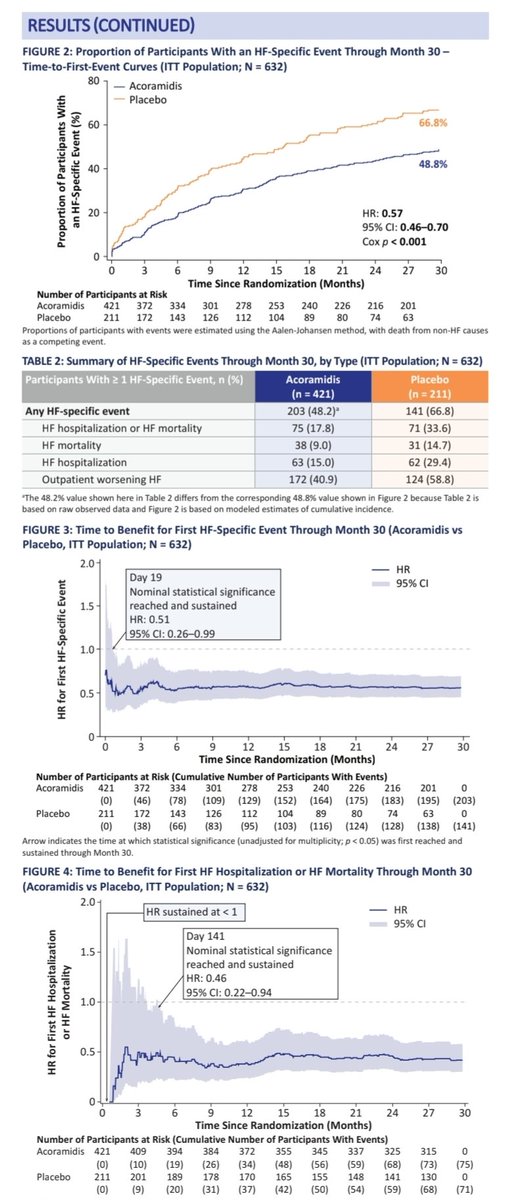
ISA 2026 Preview 1: #ISA2026@ISA_Amyloidosis@BridgeBioPharma Acoramidis ATTRibute-CM: win ratio 1.8 vs placebo (p<0.001); 28 abstracts at ISA. If you like this content please hit the follow button. Like and retweet, then like and subscribe on YouTube: https://t.co/SXEzd8RCn2
How do you measure a disease you can’t see? Stabilizers raise blood TTR. Knockdown agents lower it. Our scientists built a model of ATTR-CM whose core output, monomer efflux, puts both on one scale.
Read more: https://t.co/wlDqlLsuc2
ALERT - If you are on medicare and have amyloidosis, you need to listen to these 2 podcasts from Ann — she is a medicare expert.
(1) How to Make the Most of Your Coverage
https://t.co/yYDy89xTpp
(2) Learn How Medicare Rules Impact Your Amyloidosis Treatment and Out of Pocket Costs
https://t.co/lhaKj53YxM
Sex Differences at Diagnosis Among Patients with Hereditary and Wild-Type Transthyretin Amyloidosis: Analysis from the ConTTRibute Study
#CardioTwitter#AHA2026#MedIQHFSA2026
The Scottish Medicines Consortium (SMC) has accepted vutrisiran sodium (Amvuttra, Alnylam UK Ltd) for restricted use in NHS Scotland as monotherapy in adults with wild-type or hereditary transthyretin amyloidosis with cardiomyopathy (ATTR-CM).
https://t.co/h4k3QAU77D
DISCOVER THE POWER OF THE PATIENT/PHYSICIAN COLLABORATION
https://t.co/uuBDW2C06t
In this unique webinar, you will hear Dr. Rodney H. Falk and his patient Sean Riley discuss the importance of patient/physician collaboration in diagnosis, using Sean’s personal journey to illustrate the challenges of diagnosing hereditary amyloidosis, a life-threatening rare disease that hides in plain sight. Hear how listening, observing, and questioning are critical to getting to a diagnosis, along with the recommendation for providers to always bring an elevated suspicion and curiosity to find answers.
NEW PODCAST DROP!
“BECOMING BRAVE TOGETHER: THE UNIVERSAL GIFT OF CAREGIVING
https://t.co/T78amFTgcP
Caregiving seems to be a universal role that many of us play at some time in our lives, whether we are ready for it or not. It may be for a child, parent, spouse, family member, or friend who is facing illness. Patient needs can vary widely - from permanent 24/7 need, to temporary. The challenges they take on can come from just about anything, which is why the act of caregiving is a universal gift. So how do caregivers adapt their ongoing lives to these patient needs, and how do they care for themselves? We’re going to explore this in our discussion with book and podcast author Jessica Patay, who will share her personal experience caring for her son, Ryan. To learn more about her work please visit her website, https://t.co/P1pdmmctqu.
Check this out!
ARC Founder and CEO Isabelle Lousada and patient advocate Ted Keenaghan discuss progress in amyloidosis research, the power of patient advocacy, and the work still ahead.
Read more: https://t.co/nRz9qPZF26
Great news re: Evuzamitide PET/CT scans for detecting amyloid!
@MathewMaurer discusses the results of the phase 3 REVEAL study, which highlighted this novel scanning technology’s capacity for identifying amyloidosis early.
I-124 evuzamitide positron emission tomography (PET)/computed tomography (CT) scans are highly sensitive and specific for detecting cardiac amyloidosis, according to results from the REVEAL study.
https://t.co/frUR0rchlg
ATTN: HAND SURGEONS If you are an orthopedic/hand surgeon, or know one, this is a must read!! A study of over 185 patients having carpal tunnel release surgery documented a whopping 29% tested Congo red stain positive for amyloid. With drugs available now for treatment, the key is getting diagnosed. See attached study.
https://t.co/OC96kB1sKw
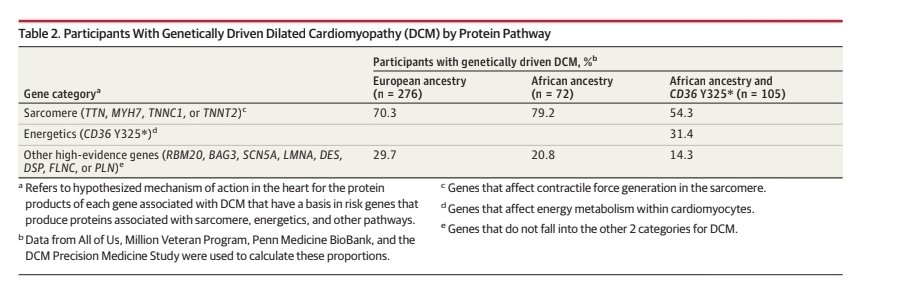
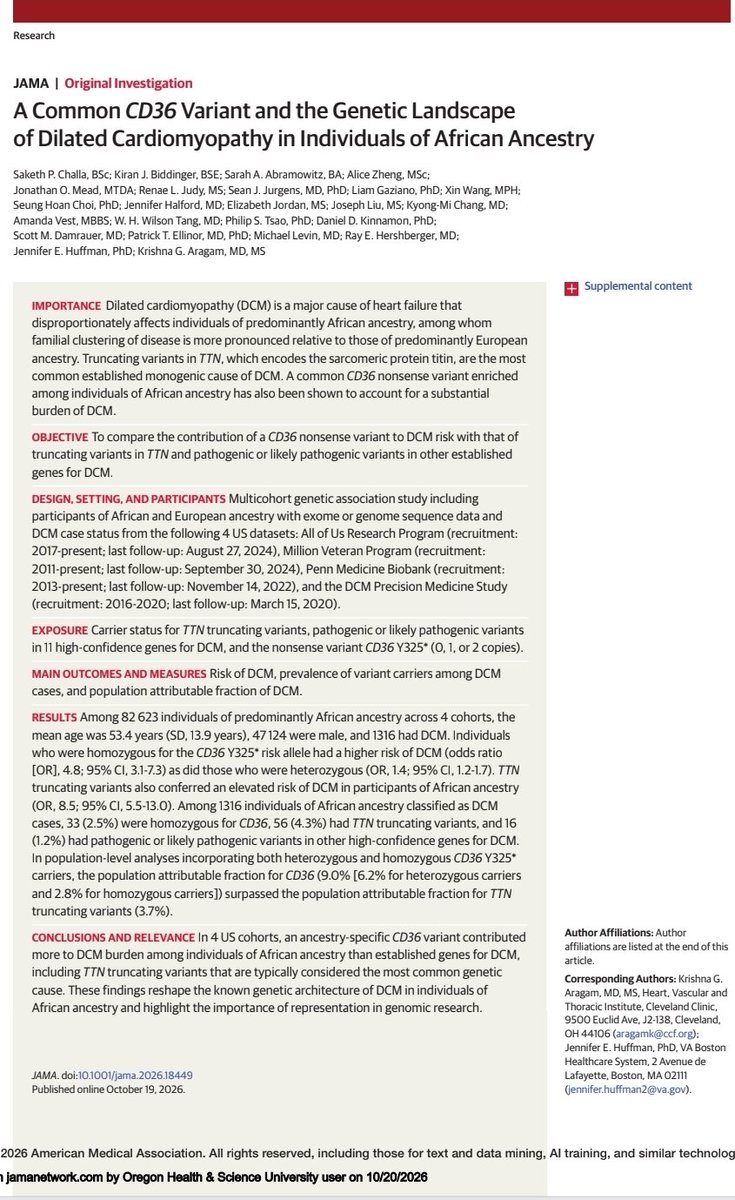
An excellent paper on CD36 nonsense variant and how common it is in individuals of African ancestry. This variant causes DCM.
CD36--> fatty acid transport and metabolism --> energy homeostasis impaired --> DCM
https://t.co/Nf88dKO4zF
#CardioTwitter
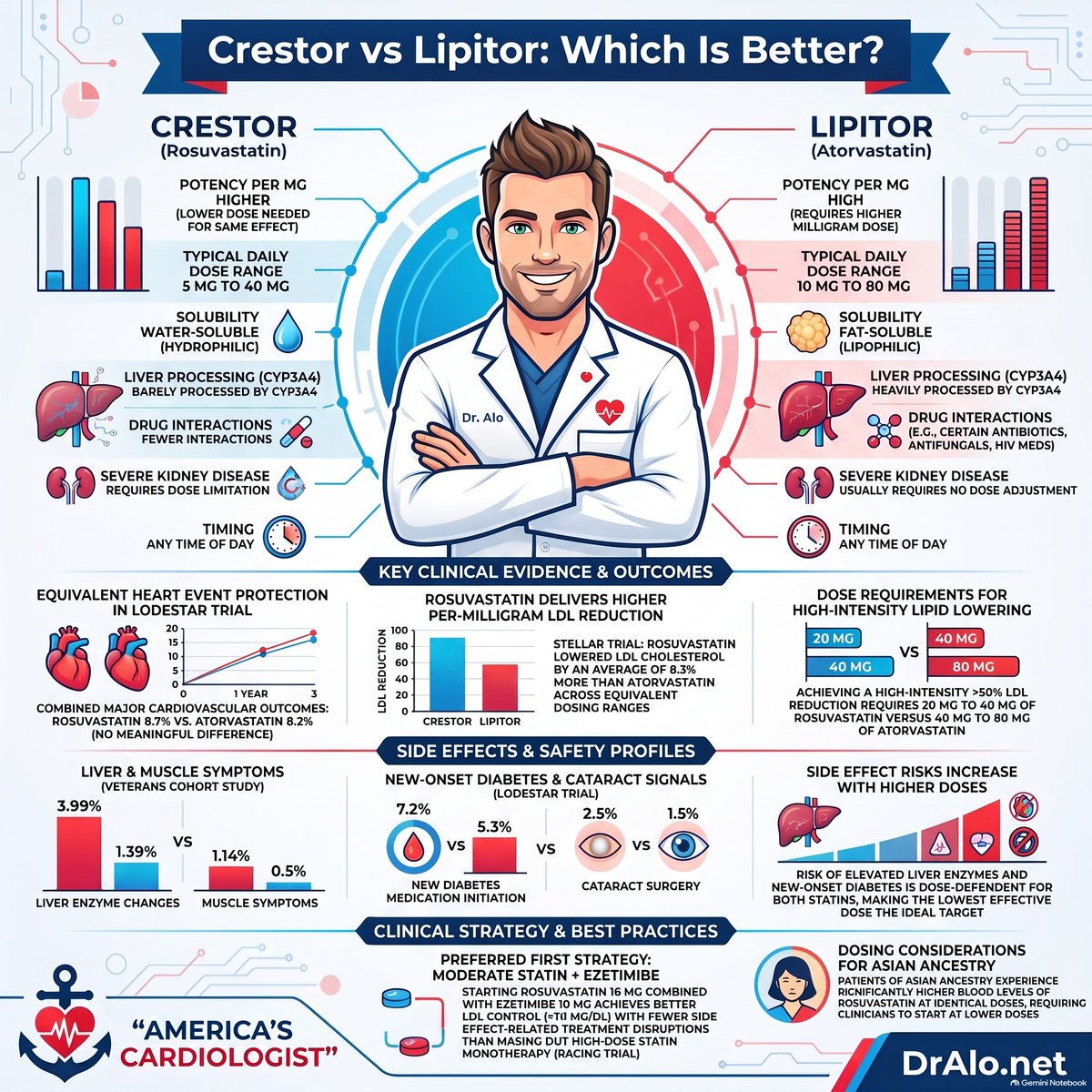
🚨 Crestor and Lipitor are not interchangeable, and the one your doctor picked might be wrong for you.
Rosuvastatin crushes LDL harder per milligram than atorvastatin.
But in a head-to-head trial, they prevented the exact same number of heart attacks over 3 years.
"But the data says otherwise."
And no, this is not a case where one drug is simply better.
I am a cardiologist. I have thousands of patients on statins, and I pick between these two every single day.
🩺 Here is what the science actually says.
🔬 Potency:
✅ STELLAR: Rosuvastatin lowered LDL 8.2% more than atorvastatin across doses in 2,431 adults.
✅ Cochrane review of 108 trials: Rosuvastatin runs roughly 3 times more potent per milligram.
💓 Outcomes:
✅ LODESTAR: 4,400 patients with coronary artery disease. Combined heart event rate was 8.7% on rosuvastatin vs 8.2% on atorvastatin over 3 years. That is not a meaningful difference.
That matters because a 10 mg pill is not automatically "weaker" than a 40 mg pill. Intensity depends on the drug, not the number on the bottle.
⚠️ Side effects run both directions:
🔸 Veterans hospital study: Atorvastatin showed more liver enzyme changes (3.99% vs 1.39%) and muscle symptoms (1.14% vs 0.5%). But this was retrospective, single-hospital, and compared groups treated in different years. I do not treat it as proof.
🔸 LODESTAR and a China/UK database study found more diabetes-medicine starts (7.2% vs 5.3%) and cataract surgery (2.5% vs 1.5%) with rosuvastatin.
I want to be direct here. That diabetes signal showed up only in people who were already prediabetic or near-diabetic. It did not cause new diabetes in healthy people. Do not let anyone tell you otherwise.
🫀 Interactions:
Rosuvastatin is barely touched by the CYP3A4 liver enzyme. Atorvastatin is heavily processed by it. That means atorvastatin interacts with far more medications.
Rosuvastatin has limits too. Dosing gets capped in severe kidney disease and in people of Asian ancestry, since blood levels run higher at the same dose.
📋 My actual approach:
I start patients on moderate-dose rosuvastatin.
I add ezetimibe before I push the statin dose higher. RACING showed rosuvastatin 10mg plus ezetimibe matched rosuvastatin 20mg alone for events, got more patients under LDL 70 (73% vs 55%), and caused fewer dropouts (4.8% vs 8.2%).
I switch to atorvastatin only if rosuvastatin is not tolerated.
Atorvastatin earns its place too. TNT, PROVE-IT, SPARCL, ASCOT-LLA, and CARDS gave it one of the longest outcome track records in medicine. ASCOT-LLA alone cut nonfatal MI and fatal CHD risk by 36% in 10,305 people.
❤️ Bottom line:
Neither drug is clearly superior for preventing heart attacks.
Both are backed by tens of thousands of patients across multiple landmark trials.
Rosuvastatin hits LDL harder with fewer interactions. Atorvastatin has the longer outcomes resume.
The right choice depends on your kidneys, your ancestry, your other medications, and how your body responds.
This is not a DIY decision. Work it out with your doctor.
The question is no longer which statin is "stronger." The question is which one is right for you.
#Cardiology #HeartDisease #HeartHealth #CardiovascularHealth #Statins #Rosuvastatin #Atorvastatin #LDL #PreventiveCardiology #LifestyleMedicine
SPECIAL ALL THINGS AMYLOID PODCAST DROP!
Have Medicare & Amyloidosis? How to Make the Most of Your Coverage
https://t.co/yYDy89xTpp
It’s that time of year for Medicare Open Enrollment - a season that impacts so many of our amyloidosis patients. I’ll be speaking with Ann Kayrish, an expert in this area and someone who worked for decades helping Medicare beneficiaries make better choices for both the State Health Insurance Assistance Programs and the National Council on Aging. During our conversation we hope to provide you with a basic understanding of Medicare - the largest insurer of older adults. We’ll review the critical decisions you face when you first enroll, as well as the decisions you must make about your coverage each year.