Bob Uecker — Milwaukee's own, the backup catcher who turned a .200 batting average into the most beloved second act in baseball history.
As a player, Uecker was gloriously ordinary, and he never pretended otherwise: six seasons as a backup catcher, a .200 lifetime average and 14 home runs — though he did win a World Series ring with the 1964 Cardinals, and once homered off Sandy Koufax, a feat he liked to say should have kept Koufax out of Cooperstown. The second career dwarfed the first. He called Milwaukee Brewers games on the radio for 54 seasons, from 1971 through 2024 — the only voice whole generations of Brewers fans ever knew. Johnny Carson made him a Tonight Show regular and hung the nickname "Mr. Baseball" on him. He starred in the Miller Lite commercials, played sportswriter George Owens on Mr. Belvedere, and stole Major League as Harry Doyle — "just a bit outside." In 2003 he received the Ford C. Frick Award, broadcasting's highest honor.
Is Uecker the most beloved man in baseball history who never starred on the field? ⚾ 👇️
1958年,联邦调查局(FBI)向一位74岁的祖母发出警告。三K党对她悬赏2.5万美元,要其項上人頭。探员告诉她,如果她坚持前往田纳西州,他们无法保护她。
她还是去了。一把上了膛的手枪就放在她身边的座位上。
她的名字是埃莉诺·罗斯福(Eleanor Roosevelt)。
作为西奥多·罗斯福总统的侄女、富兰克林·D·罗斯福总统的妻子,埃莉诺出身显赫。她的成长背景完全看不出她日后会成为种族隔离的南方最遭憎恨的女性之一。但在丈夫第一任期时,她已经认定:沉默本身就是一种���忍。
1934年,她加入全国有色人种协进会(NAACP),并与其领袖沃尔特·怀特(Walter White)合作,推动将针对黑人的私刑谋杀定为联邦罪行。她的丈夫却不愿公开支持这项法案,因为他担心失去南方参议员对新政的支持。
于是埃莉诺私下反复劝说他。1937年,当南方参议员用冗长发言把后续法案拖死时,她在参议院旁听席上坐了好几天,以第一夫人的身份进行无声而鲜明的谴责。法案最终还是失败了,但她的决心没有动摇。
代价是真实的。仇恨邮件如潮水般涌来。南方流传谣言,说她在煽动黑人佣人反抗。死亡威胁伴随她余生,FBI也对她的活动建立了不断扩充的档案。
她的回应是申请手枪执照并学习射击。独自在南方旅行时,她始终把枪带在身边。
1939年,美国革命女儿会(DAR)拒绝让伟大的女低音歌唱家玛丽安·安德森(Marian Anderson)在他们的大厅演唱,埃莉诺退出了该组织的会员身份,并协助把音乐会移到林肯纪念堂台阶上举行,现场聚集了7.5万人聆听。
1958年,即便头上悬着赏金,她仍信守承诺,前往高地人民学校(Highlander Folk School)的民权工作坊发表演讲。
她本可以一辈子只为照片微笑。她选择成为靶子,并且从未退缩过。
作者:women in world history
Another straight six that deserves a mention. This is another great six.
American Motors Corporation was the smallest of the major American manufacturers, and much of its history was defined by limited budgets and the need to make existing engineering go further than its competitors did. Chrysler acquired AMC in 1987, and the AMC name disappeared from new cars the following year. But one of the company's most successful creations survived long after the company itself was gone: the 4.0-litre inline-six. Introduced for the 1987 model year, the engine was not an entirely new design but a substantial development of AMC's long-running six-cylinder architecture, adapted for the increasingly demanding role of the Jeep. It displaced 242 cubic inches, or 3,965 cc, with a 3.88-inch bore and 3.41-inch stroke. The most important change was the adoption of electronic fuel injection in place of the carburetor, transforming an old-fashioned engine architecture into something much more suitable for modern vehicle use.
The difference between the two systems mattered particularly in a Jeep. A carburetor relies on airflow through a venturi to create a pressure drop that draws fuel from a float bowl. It is a mechanical arrangement that works well under ordinary conditions, but it has limitations. Cold starting requires a choke, mixture calibration can drift, and changes in altitude affect how much fuel is delivered relative to the available air. Electronic fuel injection replaces that mechanical dependence with sensors and computer-controlled metering. The system can account for coolant temperature, intake-air temperature, throttle position, and engine speed, adjusting fuel delivery as operating conditions change. For an off-road vehicle, the advantages are substantial. A carburetor can suffer fuel-delivery problems when a vehicle is climbing or descending at extreme angles, while a fuel-injected engine is far less affected by vehicle attitude. At high altitude, where thinner air would otherwise produce an excessively rich mixture, the injection system can compensate automatically. The driver can concentrate on navigating the terrain instead of managing the fuel system.
The original 4.0 produced approximately 173 horsepower and 220 lb-ft of torque in the Cherokee and Wrangler. A major revision for 1991 introduced a redesigned cylinder head and intake system, raising output to around 190 horsepower and 225 lb-ft. Those figures were not extraordinary, but the engine's strength was never its peak horsepower. Its 3.41-inch stroke and six-cylinder configuration provided useful torque at low engine speeds, exactly where a Jeep needed it when crawling over rocks, climbing steep trails, or pulling through difficult terrain. At those speeds, the ability to deliver steady torque without constantly slipping the clutch or building engine revs mattered far more than a high peak-power figure. The construction also reflected AMC's priorities. The engine retained a cast-iron block, pushrods, two valves per cylinder, and seven main bearings. It was not technologically elaborate, and much of its mechanical work could be handled without specialised equipment. Its design favoured durability, straightforward servicing, and the ability to keep working far from a dealership.
The 4.0 became the defining engine of the modern Jeep, appearing in the Cherokee, Wrangler, and Grand Cherokee across successive generations. It remained in production through the 2006 model year, giving it a lifespan of roughly two decades in vehicles that subjected it to everything from daily commuting to serious off-road use. That longevity was especially remarkable given the circumstances of its birth. AMC had developed the engine with limited resources, yet it outlasted the company that created it and continued serving under Chrysler ownership for years. It was not the most powerful six-cylinder, the most advanced, or the most sophisticated. It simply delivered the characteristics Jeep owners needed: dependable starting, useful low-speed torque, uncomplicated construction, and the ability to keep running under conditions that would expose the weaknesses of less suitable engines. AMC disappeared, but its 4.0 kept going.
May 5, 1945. American tanks smash through the gates of Mauthausen and find a starving 15-year-old boy.
Barely alive, he made a vow to the GIs who carried him out: if he ever reached America, he would wear their uniform and pay that debt back.
His name was Tibor "Ted" Rubin—a Hungarian Jew whose parents and younger sister were murdered in Nazi camps.
In 1948, he arrived in New York penniless, speaking almost no English, and tried to join the U.S. Army.
He failed the exam twice.
In 1950, he passed.
He wasn't even a U.S. citizen when he shipped out to Korea. Worse, his own First Sergeant hated Jews—and sent Rubin on suicide missions, hoping he wouldn't come back.
In July 1950, that sergeant ordered him to hold a hill alone while his company retreated. With rifles and grenades, Rubin fought off waves of North Korean troops by himself for 24 straight hours.
That October, Chinese forces attacked at night. Three gunners died on the last machine gun. Rubin took the triggers and fired until every round was gone—buying his men time to escape before grenades shattered him.
Then came the real test.
In a freezing POW camp where GIs died daily, Chinese guards learned he was Hungarian—and repeatedly offered to send him home free.
He refused every time.
He wouldn't leave American boys behind. For 30 months, risking execution almost nightly, he crawled under barbed wire to steal food from enemy depots—nursing dying GIs and keeping at least 40 fellow POWs alive.
His sergeant buried every medal recommendation. So the survivors Rubin saved fought for decades—until September 23, 2005, when 76-year-old Tibor Rubin received the Medal of Honor at the White House.
The only Holocaust survivor ever to wear it, he died a proud U.S. citizen in 2015 at age 86.
Some men are born Americans; Tibor Rubin chose this country in chains, bled for it without citizenship, and turned down his own freedom so 40 of his brothers could come home.
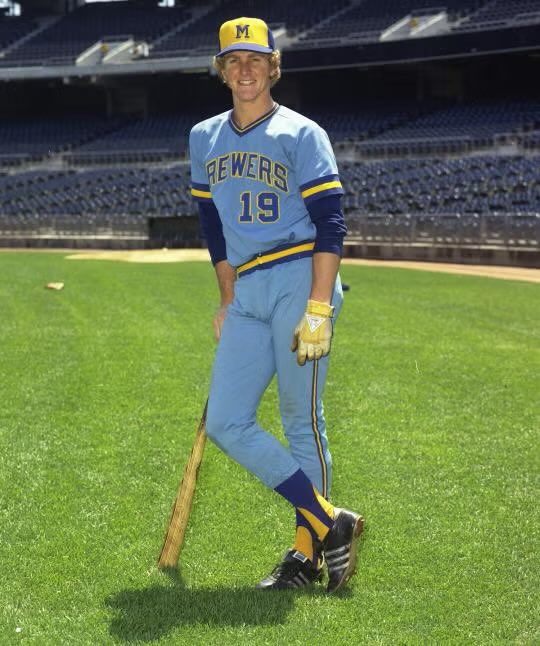
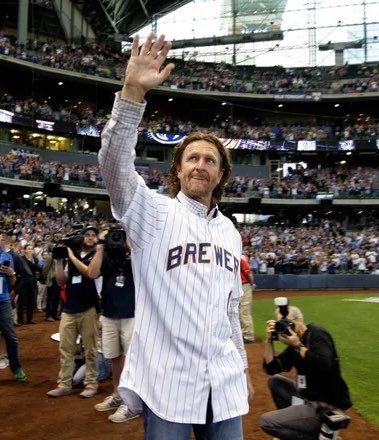
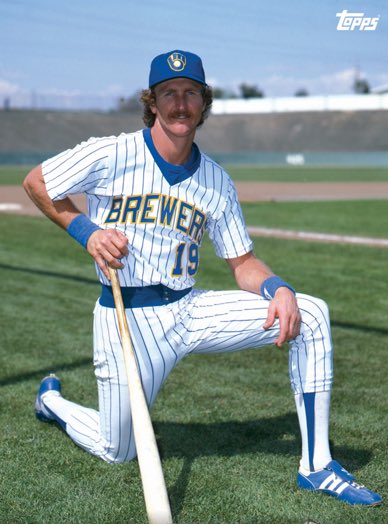
Robin Yount!
He was drafted by the Brewers, went through a long period of horrible baseball & that World Series loss but stayed with the same team for two decades regardless.
The fact he still has blue and yellow blood through his veins, has been coming back to Milwaukee year after year for their playoff runs through this successful stretch of Brewers baseball and finally got to see the team do what his ‘82 team couldn’t - win a ring means so much to me.
If you don’t like The Kid, something is wrong with you. He’s the best 💛💙
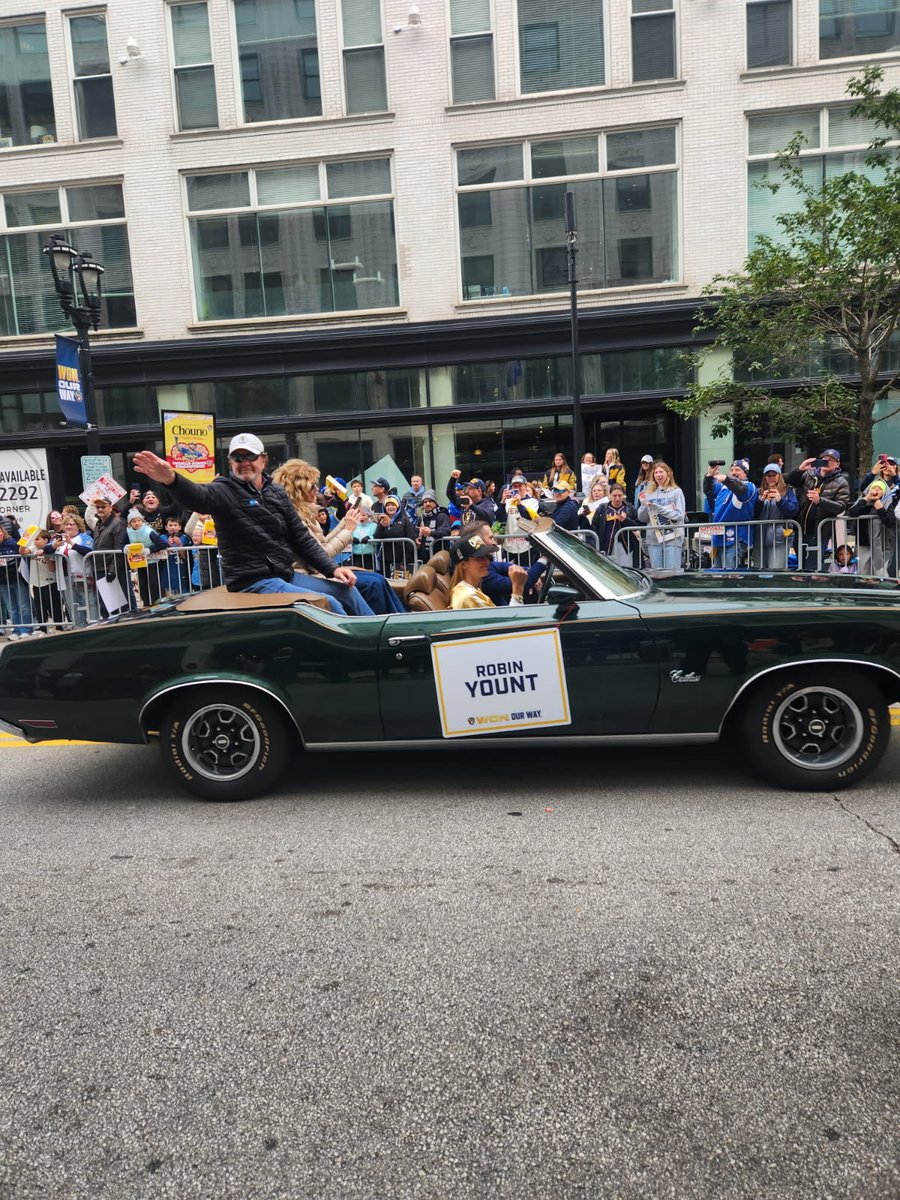
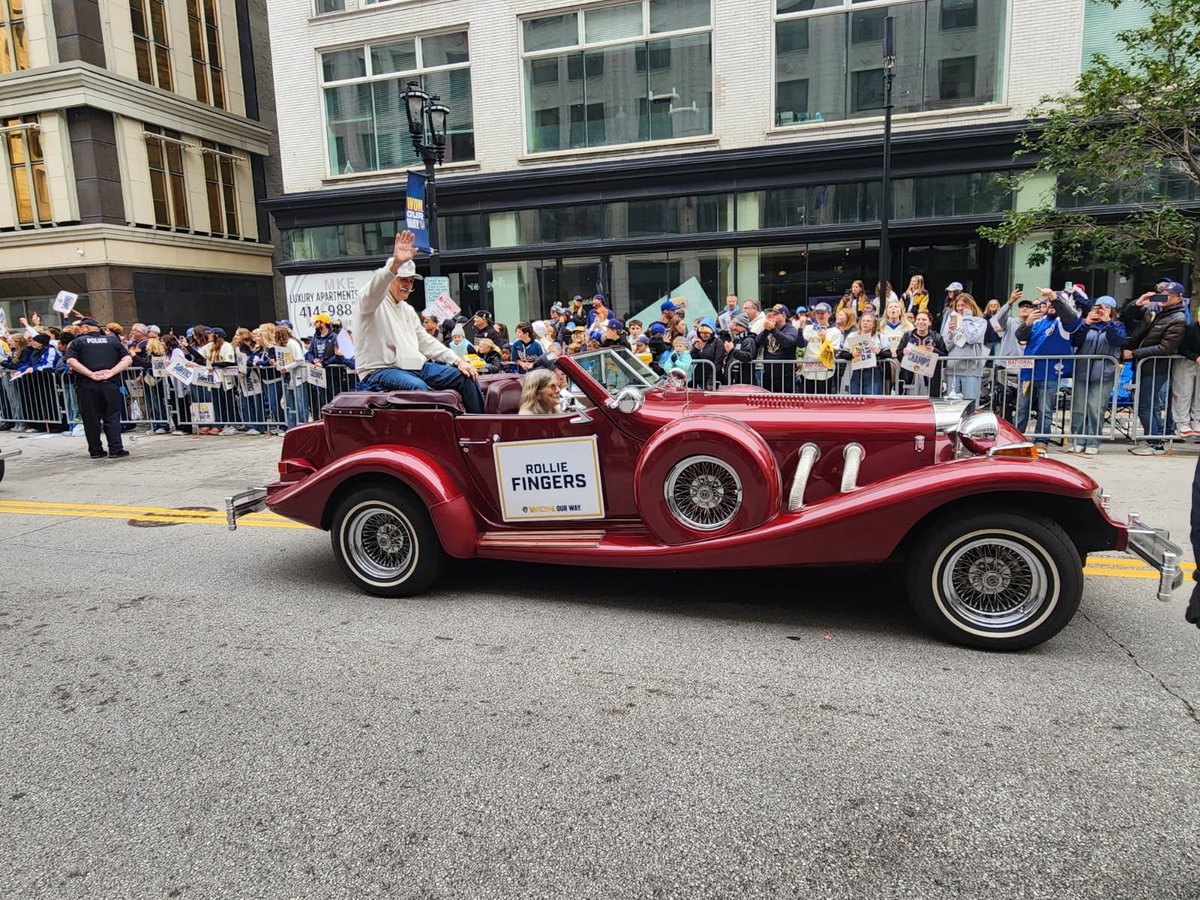
How cool to see some of the 1982 Brewers in the parade! Class act @Brewers . Robin Yount who lived several blocks from me in Greendale, WI. Rollie Fingers whose mustache always amazed me and Paul Molitor who I sold a suit to at the Men’s Clothing Store in the Mall I worked at!! He was a regular customer!
Hall of Fame catcher Ted Simmons on what the Brewers World Series championship means after losing the 7th Game of the 1982 World Series: ‘It was horrible…Never got over it. None of us did. We're now over it because this group has made it happen for all of us.’’
An emotional Robin Yount at the parade:
“We didn’t lose Ueck. We didn’t lose him. He’s here. I threw out the first pitch. I felt him all around me. Why do you think the pitch went just a bit outside? I didn’t try to do that.
He’s here. You can’t get rid of him.”
Patrick was one of those icons who we somehow all took for granted would always be with us.
I grew up as a fan, and was later gifted the privilege of becoming a colleague and friend, working with him for many years on “American Dad!”, “Family Guy”, and “Ted”. He was that rare actor who could take any bit of dialogue and elevate it, making a good writer sound great, and a great writer sound masterful. He was also as humble as they come. I remember exchanging emails with him a number of years ago when he was beginning day 1 of a new film. He commented to me that he always walked onto a new set feeling like the biggest novice there. My stunned reaction was the same as anyone’s would be. I said, “Patrick, if you feel that way, the rest of us are screwed.” We have lost a legendary actor today, and for many of us, a good friend. He will be deeply missed by the entire planet.