Calling all experts in Windows internals and low-level systems architecture! 'The Root of DllMain Problems' (or 'DllMain Rules Rewritten') is now in preparation for its final publication! Feedback and sign-offs from the community are greatly appreciated.
https://t.co/rnnfyVzbuw
To all my infosec friends, if your blog doesn't yet have an email newsletter for your subscribers... well now you can have one set up in no time at virtually no cost - all open source. You're welcome.
https://t.co/oVhrgZM3uL
Today, I'm releasing a new project that automates sending email newsletter notifications for new content on your blog: rss2newsletter! In just 300 lines of code, it easily replaces any overpriced and bloated proprietary solution that charges you per-contact. See link in bio 🔗
Today, I'm releasing a new project that automates sending email newsletter notifications for new content on your blog: rss2newsletter! In 300 lines of code, it easily replaces any overpriced and bloated proprietary solution that charges you per-contact
https://t.co/oVhrgZM3uL
I just released a new tool for searching Microsoft Developer Blogs in bulk and fully local. Really helpful for finding information on that one Windows internals component
https://t.co/rDMTei4LdT
A comprehensive analysis of all the internal Windows 10 loader states? Done - Have a look at that and a high-level analysis of how a library load works under the parallel loader
https://t.co/1A6iDbMFok
Reverse engineering the Windows 10 parallel loader is challenging but interesting work. I recently fully reversed the pivotal LdrpDrainWorkQueue function and I'm just now working on LdrpLoadDllInternal plus others
https://t.co/urs7UA7rfG
DllMain Rules Rewritten are Microsoft's infamous DllMain Rules - rewritten. After countless spent hours researching and reverse engineering the new and old Windows loaders, they are now complete.
https://t.co/rnnfyVzbuw
I just spent the last few months of my life reverse engineering the Windows 10 parallel loader and figuring out how it does concurrency. Updates have now been published!
https://t.co/iQtWoJbwep
@sixtyvividtails Sure. You have to break on data access of the SRW lock because the loader modifies it directly without calling RtlAcquireSRWLockExclusive sometimes
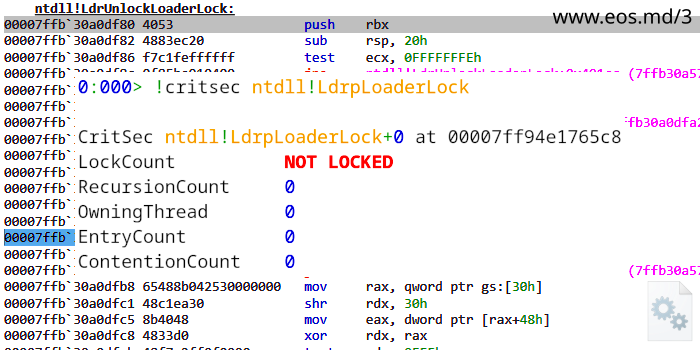
What is Loader Lock? 🤔 Going BEYOND undocumented, we delve into the heart of the modern Windows loader investigating some internals for the first time and demystifying Loader Lock. 🔒 Check out the research article
https://t.co/q98cfTJYIM
Thrilled to unveil the "Windows vs Linux Loader Architecture" project! The FIRST side-by-side comparison ever done unraveling the similarities and differences of this core component between operating systems. Check out the new repo!
https://t.co/iQtWoJc43X
@sixtyvividtails Yes, so the list heads are part of the circular list. Look for yourself in WinDbg. I didn't make the pic but I'll check that. Any more perceived errors could only be due to your misunderstanding for which I would be happy to clarify.
@sixtyvividtails Nope, you don't know what you're on about. ntdll!PebLdr is part of the module linked list. I verified this in multiple ways. My research is entirely accurate. Twitter commenters like you are unfortunately common.
Perfect DLL Hijacking: It's now possible with the latest in security research. Building on previous insights from @NetSPI, we reverse engineer the Windows library loader to disable the infamous Loader Lock and achieve ShellExecute straight from DllMain. 🔍 Link in bio 🔗