Credit Without a Smart Contract
Most people hear lending on XRPL and picture the usual DeFi model. Deposit assets, borrow against collateral, let software manage the position, then liquidate when the numbers break. XRPL’s planned lending system takes a different path.
It’s being built around pooled capital, fixed-term loans, human underwriting and ledger-enforced administration. XRPL can enforce a loan without deciding whether the borrower deserves one. The credit decision stays with the people making the loan.
Single Asset Vaults are the capital layer. A vault pools one asset from multiple depositors. That asset could be $XRP, RLUSD, another issued asset or an MPT. Depositors receive vault shares represented as Multi-Purpose Tokens, giving them a proportional claim on the pool.
Then you have the loan broker. The broker assesses the borrower, negotiates the terms and decides whether to extend credit. Once that agreement exists, XRPL handles the mechanics. Principal, interest, fees, payment schedules, grace periods, impairment and default can all become part of the ledger state.
The broker can also put up first-loss capital. That gives the lending pool a buffer before depositor capital starts taking the hit. XRPL tracks how much cover exists and how much needs to be maintained against outstanding debt. If that protection falls below the required level, new loan originations can stop and broker fees can be redirected toward rebuilding the buffer.
LendingProtocolV1_1, included in xrpld 3.4.0, takes the design further with closed-ended vaults. They move through subscription, investment and redemption phases. Capital comes in, gets deployed for a defined period, then moves toward repayment and redemption. That looks a lot closer to how an actual credit fund operates.
The accounting changes too. Under the revised model, interest gets recognized when it’s actually paid. Future interest isn’t treated like money already earned. For institutional credit, that matters because the value of the vault should reflect what has actually come back into the pool.
This gets more interesting when you look at how the rest of XRPL fits around it. Credentials can control access to private vaults. Permissioned Domains define those requirements. MPTs represent ownership shares. Freeze and clawback rules can apply to issued assets. $XRP can also be used as the vault asset itself while keeping its native role for fees and reserves across XRPL.
XRPL still doesn’t decide whether a company has strong cash flow, whether its business is healthy or what some piece of real-world collateral is worth. That work stays with the lender. XRPL takes the agreement they reached and handles the execution, accounting and enforcement around it.
That’s the part I find interesting. Credit judgment stays with the people responsible for making the call, while the machinery around the loan can move onto XRPL.
None of this means native lending is live on mainnet today. Code inside xrpld and an active XRPL amendment are two different stages. Single Asset Vaults, the Lending Protocol and the newer V1.1 changes still have to move through validator governance before they become active network rules.
Native lending on XRPL deserves more than the usual DeFi is coming treatment. The architecture being built here could put capital, ownership, payments, defaults and loss protection directly on XRPL while underwriting stays in human hands.
That’s a much more interesting machine.
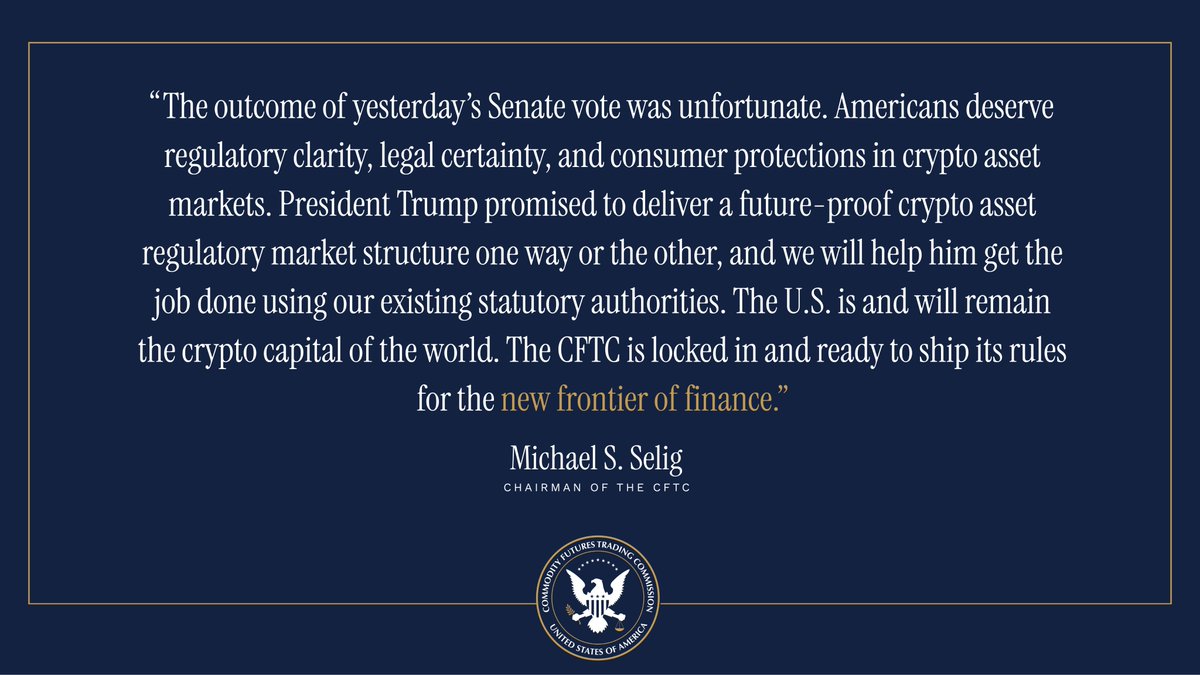
🚨WRAPPED: WHY CLARITY FAILED YESTERDAY? — The Problem Was BIGGER Than Just Democrats 😳🇺🇸🔥
This honestly explains a lot about how we got here.
Republicans kept taking Democratic requests and changing the bill — but they NEVER actually opened the DRAFTING process and wrote Clarity TOGETHER. ❌
👉 that meant Democrats could keep asking for changes WITHOUT EVER becoming truly invested in the final product.
That made every new version another round of negotiating instead of something BOTH SIDES already owned. 👀
And while Republicans were trying to win Democrats, BANKS were creating problems inside their OWN party over stablecoins too. 😳
Not enough Democratic ownership + growing Republican resistance. DONE.
Important Notice
We have detected abnormal asset transfers involving the DCENT App Wallet and are currently conducting an urgent investigation.
Based on our initial findings, the issue appears to be limited to the DCENT App Wallet.
If either of the following applies to you, we strongly recommend transferring your assets as soon as possible to a secure hardware wallet or another trusted wallet address:
• You hold any assets, regardless of amount, in the DCENT App Wallet.
• You use the same mnemonic phrase for both the DCENT App Wallet and a hardware wallet.
⚠️ Please be alert for scams.
Do not send assets to any wallet address provided through DMs or unofficial channels, and do not click links or follow transfer instructions from unverified sources.
We will provide further updates through this official account as soon as we confirm the cause, scope of impact, and necessary response measures.
Official X accounts:
@DCENTWALLETS@DCENTWALLETS_KR@DCENTWALLETS_JP
Customer Support:
https://t.co/uwzNYzLkuu
So many of you are falling for the Clarity Act all or nothing, zero sum bull shit narrative being pushed out of DC.
The 1% have retail hook line and sinker here, and it’s the perfect setup for the clarity act to fail and retail to mass liquidate. 🎣
OPEN YOUR EYES. 👀
@bgarlinghouse I get your point , but there will always be a demand for physical gold at hand in the world
The Dutch don’t say it but what they mean by moving their gold out of the US is We don’t trust you save keeping our physical gold anymore .
What could be the reason for that?