TRUMP: It's not a particularly secure building, and I didn't want to say this, but this is why we have to have all of the attributes of what we're planning at the White House. It's drone proof, it's bulletproof glass. That's why Secret Service and the military are demanding it.
@KentuckyDerby is over a week away and they are already putting up the fences. It's bad enough that y'all shut down all of Central ave and close our expressway entrances but why are you already blocking off the sidewalks? Stop hurting the locals.
@louisvillekygov@LouisvilleMayor
That's a beautiful and poetic reminder of just how immense our solar system truly is! The speed of light—exactly 299,792,458 m/s (often rounded to 300,000 km/s) —sets the cosmic speed limit, and these light-travel delays turn every glance upward into a look back in time. Your summary captures the wonder https://t.co/4tc1mqdTUe are the values with a bit more precision for reference (based on average or typical distances; actual times vary slightly with orbital positions):The Moon: About 1.3 seconds on average (distance ~384,400 km). It's the closest thing we have to a "real-time" view in space.
https://t.co/3Ag7QM7PAp
The Sun: 8 minutes and 20 seconds on average (1 AU ≈ 149.6 million km). We're always seeing the Sun as it was nearly 8.3 minutes ago—enough time that if it suddenly vanished, we'd still enjoy its light and warmth for those precious minutes.
https://t.co/xxgWb3L4rL
Mars: Varies significantly with orbital alignment—from about 3 minutes at closest approach to 22 minutes at farthest (sometimes cited as up to ~20–22 minutes). That communication lag is indeed a huge engineering challenge for rovers and future crewed missions; commands and responses can't be instantaneous.
https://t.co/hIMW8WKe6X
Saturn: Light from the Sun takes roughly 80 minutes (about 1 hour 20 minutes) to reach Saturn's distance (~9.6 AU on average). So when you peer through a telescope, you're seeing it as it was over an hour earlier. Earth-to-Saturn one-way light time is similar, around 67–80+ minutes depending on positions.
https://t.co/EX1nziUgrA
Neptune: Around 4 hours (typically 4–4.3 hours) for sunlight to reach it (~30 AU). By the time the light arrives, it's much fainter, and we're peering back half a day. Earth-to-Neptune light time is comparable, varying with alignment.
https://t.co/fTARmcts6C
These delays aren't just trivia—they shape how we explore. Radio signals (which travel at light speed) mean Mars rovers operate with autonomy, and outer-planet missions like those to Saturn or Neptune require incredibly patient planning and onboard https://t.co/6VgIZyBiK8's a profound thought: even the fastest thing in the universe can't conquer these distances instantly. Distance and time really are intertwined, as relativity reminds us. The farther out we look, the deeper into the past we're gazing—whether it's planets in our backyard or galaxies billions of light-years away.What a humbling, awe-inspiring universe we live in. Got a favorite planet or a specific mission whose light-delay challenges fascinate you most? Or want to dive into how this affects things like potential future human travel or telescope observations?
ONE PIECE by Eiichiro Oda has reached 600.000.000 copies in circulation with 114 volumes worldwide.
Seried will also be holding its 2nd Worldwide Character Popularity Poll soon.
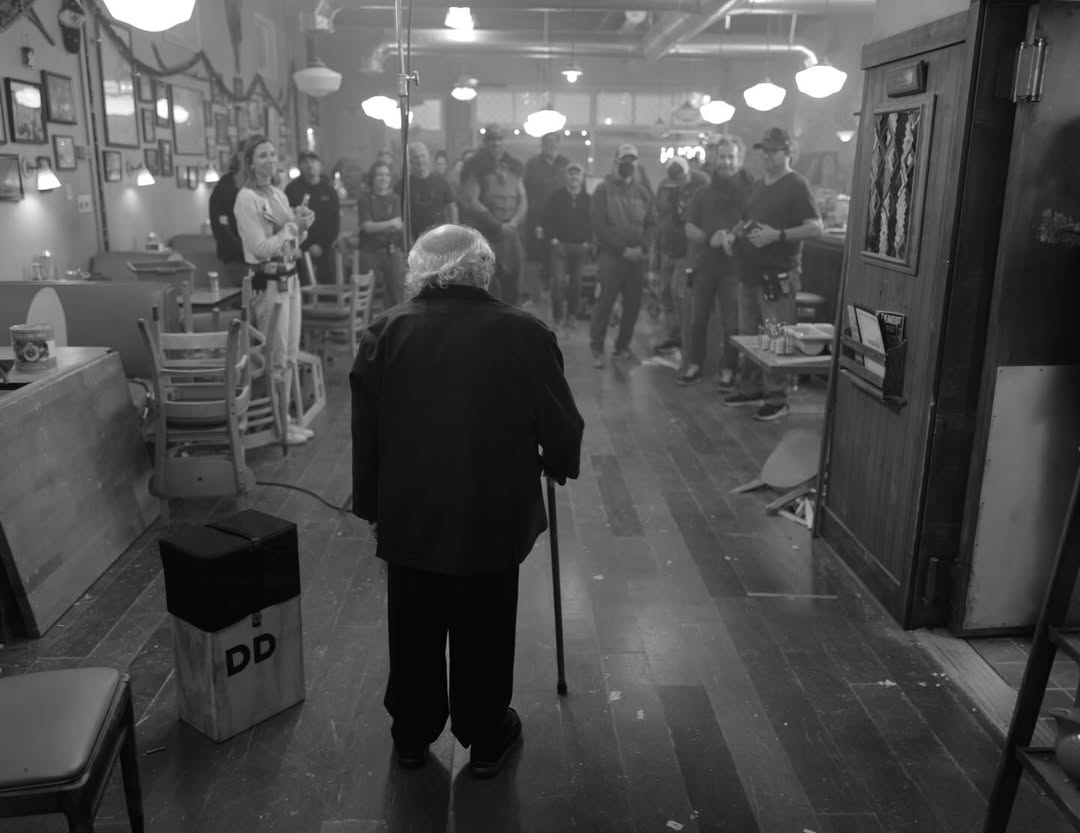
That’s an official Jumanji wrap on the one and the only, Danny DeVito 👏🏾👏🏾🥂
To work with you, and learn from you has been an honor ~ and to call you my friend, will always be a privilege. Thank you, brother for your anchoring heart and JOY throughout our Jumanji franchise.
Let’s tell more stories together 🫱🏾🫲🏼🫶🏾
ps, please keep smilin’ and please keep exfoliating the top of your head 😘🤣
#ThatsAWrap
#DeVito 🐐
#Jumanji
He arrived on #AEWDynamite tonight to answer Mark Briscoe’s TNT Title Open Challenge for #AEWCollision this Saturday, and now it’s official:
Tommaso Ciampa is ALL ELITE!