If you're still using raw JSON in your LLM prompts, you're wasting tokens.
You're burning budget and slowing down your app just to send braces, quotes, and keys that get repeated thousands of times.
TOON (Token-Oriented Object Notation) just landed, and it’s the fix.
#LLM
💭 By applying these principles, I aim to make learning stick, transforming theoretical knowledge into practical skills.
What are your favorite instructional design techniques for creating impactful learning experiences? Let's connect and share ideas!
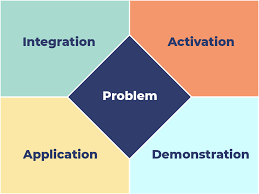
✅ 3. Demonstration: Show, Don’t Just Tell
I use interactive simulations, live demos, and real-world datasets.
✅ 4. Application: Learning by Doing
Every concept is followed by hands-on activities.
✅ 1. Task-Centered Learning
Instead of starting with theory, I begin with real-world problems.
✅ 2. Activating Prior Knowledge
Before introducing a new concept, I encourage students to reflect on their previous experiences.
Specifically, how I'm applying Merrill's Principles of Instruction to make learning truly stick!
These principles, developed by David Merrill, are a powerful framework for creating effective and engaging learning experiences.
So, how do I apply these principles in my teaching?
@letsquitteachin This ensures all students have access to the curriculum and are supported in their learning, regardless of their individual needs. The 'tools to escape' and 'pathways to accelerate' further demonstrate a commitment to meeting diverse learners within the general education setting
@letsquitteachin This framework clearly outlines a Tier 1 approach by emphasizing differentiation and universal design for learning within the 'Work Session.' Notice how it stresses 'purposefully assigning collaborative groups and differentiated Tasks' based on formative assessment.
As an instructional designer in computer science, I'm eager to bring a fresh perspective to this module. Stay tuned for future posts where I'll share insights into the instructional design process behind creating engaging and effective lessons!
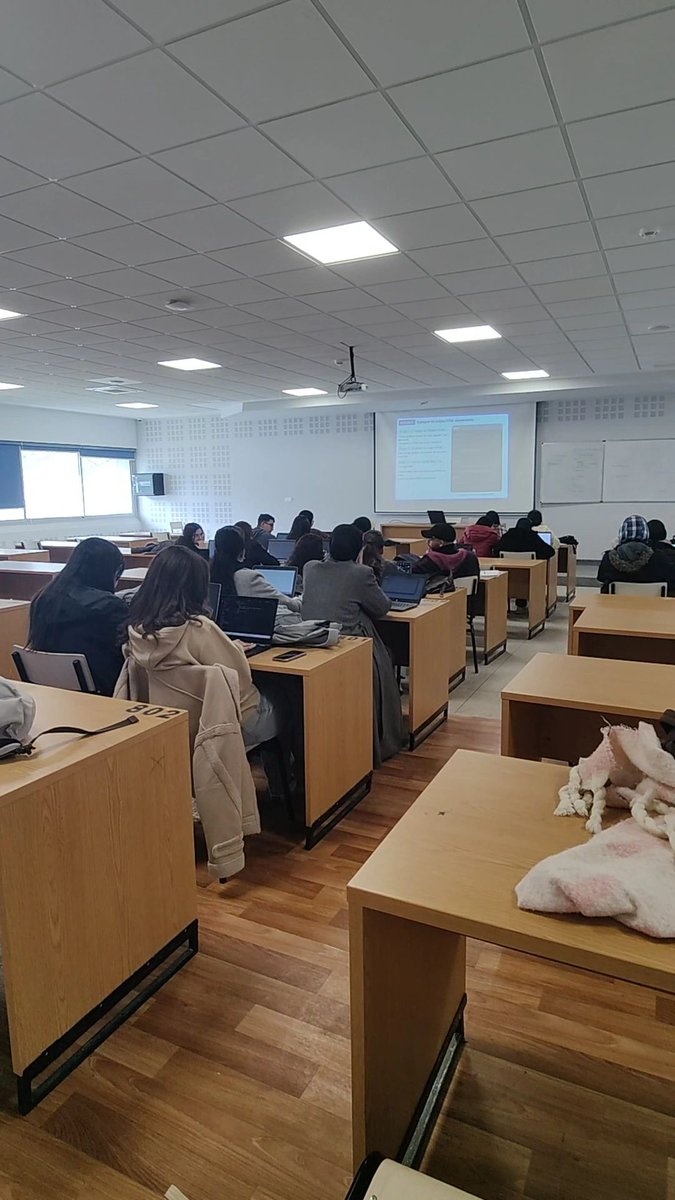
Excited to announce I'm starting a new teaching journey! I'll be leading the "Culture Digitale" module for the Master's program in Finance, Actuarial Science, and Data Science at the Faculty of Economics in Tetouan.
#DigitalCulture#InstructionalDesign#HigherEducation#Teaching
In my latest exploration of building Large Language Models (LLMs) from scratch, I delved into attention mechanisms, the game-changers in natural language processing (NLP).
What are attention mechanisms?
#AI#MachineLearning#LLMs#AttentionMechanisms#Transformers#GPT#NLP
Attention mechanisms allow models to understand relationships in sequences, such as determining which words in a sentence influence the meaning of others. This is pivotal for tasks like translation, summarization, and text generation.
3. Self-Attention Today: The backbone of modern transformers, enabling context-aware token processing with mechanisms like causal and multi-head attention.
Why is this important?
A quick evolution:
1. RNNs and Bahdanau Attention (2014): The first step toward enabling models to "pay attention" selectively.
2. Transformers (2017): "Attention Is All You Need" replaced RNNs with self-attention, introducing revolutionary architectures like GPT and BERT.
Think of them as the model’s ability to selectively focus on different parts of the input when processing sequences like text. Instead of treating every word equally, attention mechanisms prioritize information relevant to the task at hand.