Most of my day in Web3 is explaining things.
What the team is working on, to the community. What the community is stuck on, to the team.
Nobody really teaches you this part. I'm figuring it out as I go.
Computer-use agents are teaching me patience.
While one works on my laptop, I can't touch the mouse without breaking its run. So I sit there, hands in the air, like I'm being arrested by my own computer.
New plan: one machine for me, one for my agent.
Before any writer → designer → developer handoff, get clear on three things:
1. What “done” looks like
2. Who signs off
3. When the scope freezes
Miss one and you’ll be fixing it at 2am before launch.
Clear handoffs > last-minute heroics.
@Cryptic_Web3@KeystoneWallet Good that they said keys and payment data weren't touched. The next 48 hours are the real test though. Affected users will get phishing emails pretending to be support, so a clear "we will never ask for X" note helps a lot.
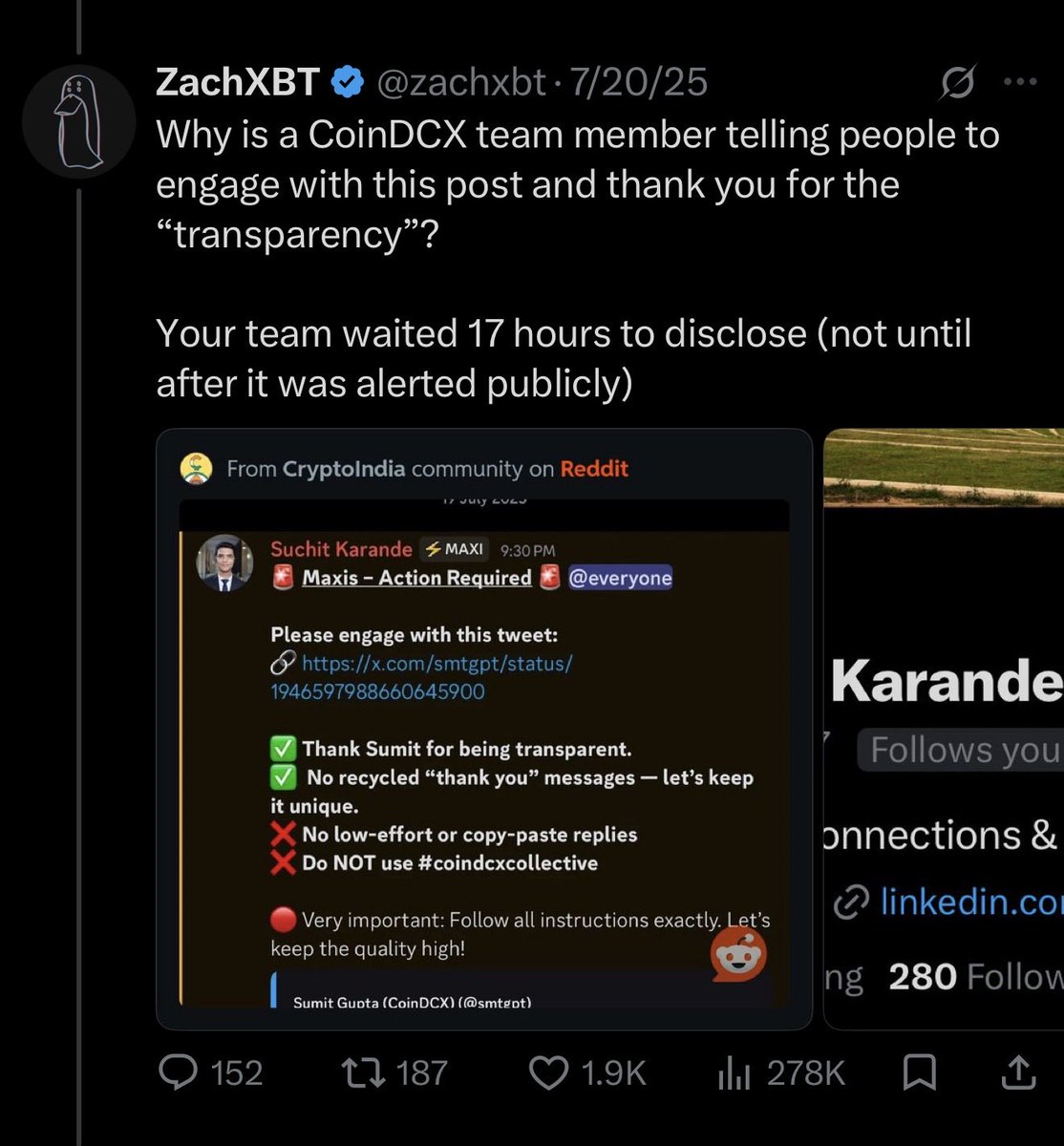
@CoinDesk@CoinDCX The part that gets me is the order: "false alarm" first, confirmation later. When you only have half the picture, "we're looking into it" is a much safer sentence. Easy to say, hard to do when everyone's asking for answers right now.
Everyone says "communicate fast" after an incident. But what do you write when you only know 20% of what happened?
My rough rule: what we see, what we don't know, when the next update lands. No guessing.
CoinDCX's "false alarm" is what happens when you skip the last part.
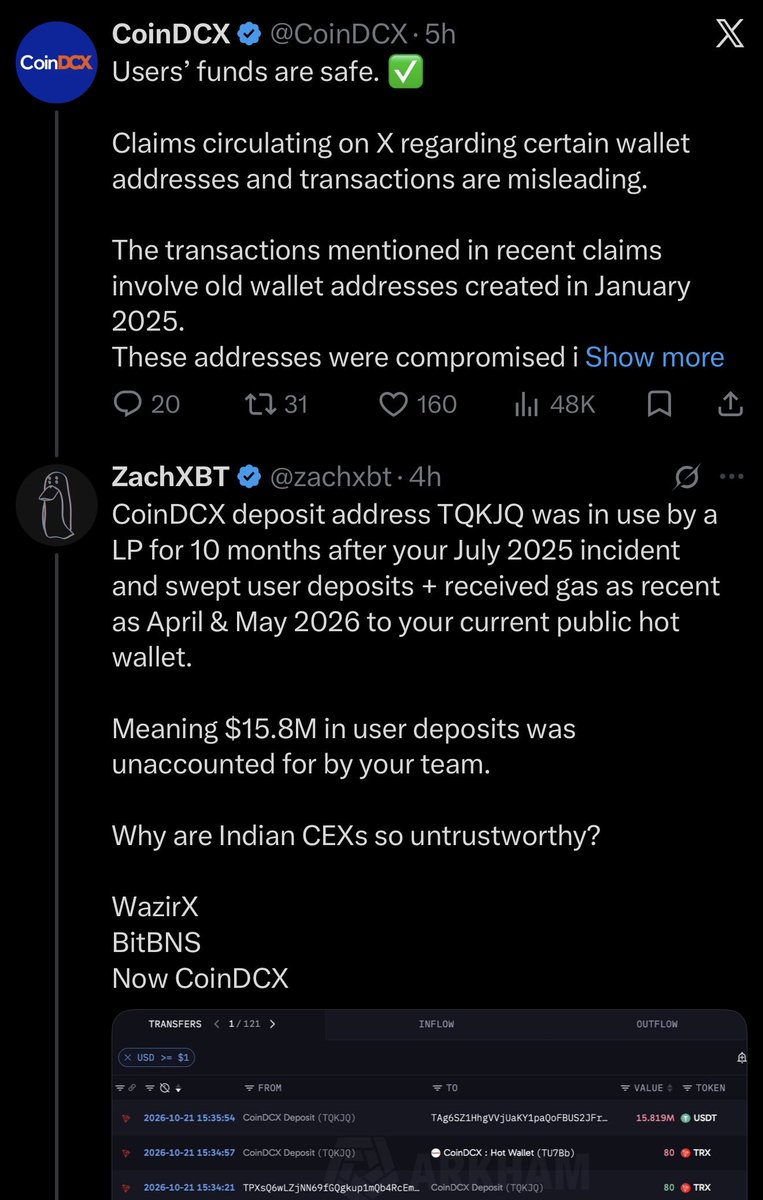
Withdraw all funds from CoinDCX if you value your assets.
Its co-founders are clowns running a circus.
They publicly and privately denied a theft of its assets occurred meaning they straight up lied or are negligently incompetent.
Later they disclosed the $16M theft and wasted everyone’s time instead of being transparent with the public initially.
Not the first time CoinDCX has done it.
Indian CEXs like CoinDCX, WazirX, BitBNS are all the same.
(I still helped freeze 6 figures for CoinDCX)
A lot of hacks don't start with a new bug. They start with a known one someone said they'd fix next sprint.
The exploit is just the moment the debt comes due.
@hashtag_web3 Worth saying: crypto “support ops” isn’t ticket volume. It’s escalation design, fraud triage, and holding community trust together during volatile markets, usually with less tooling than a traditional support org.
@IntCyberDigest One cent per dollar, no charges filed, that’s where communities actually fracture, not at the hack itself. Inconsistent updates during recovery erode trust faster than the loss did. Is there a fixed update cadence, or is this reactive?
@OnchainLens The number grabs headlines, but the real ops question: what’s the victim-communication playbook right now? What should users preserve, where do they submit it? That gap usually hurts trust more than the exploit itself.
@wublockchain12 Certification sounds safer, but it can become a moat, big platforms afford compliance, small ones can’t.
Real question: what cadence re-certifies a protocol after an upgrade? “Certified once” isn’t “safe forever.”
France just told the EU: exchanges should be on the hook when your DeFi trade blows up.
Sounds reasonable, right? Consumer protection and all that.
I don’t think it is. I think it quietly kills permissionless DeFi as we know it. Let me explain👇
I get why this exists. Nobody wants to tell a user “sorry, that was always your risk” after they lose their savings to a hack their platform knew about.
But I also don’t think you get to have safer platforms AND a genuinely open, permissionless DeFi. Pick one.