I’m excited to announce that after going part time at the BL I am now also working as a freelance preventive conservator and consultant. For further information on services I offer please do check out my new website https://t.co/WuSvWxRyEy
The detached section was repaired and tears were consolidated. Gelatine was used for the repairs due to its low moisture content—this was to preserve the iron gall ink with which the letter was written.
Following acquisition, the letter from Mary, Queen of Scots, to Jacques Bochetel, Sieur de la Forest, 26 June 1568 (Add MS 89480) came into the conservation studio to undergo minor conservation treatment. Below are some timelapse videos of the treatments being carried out. 🧵
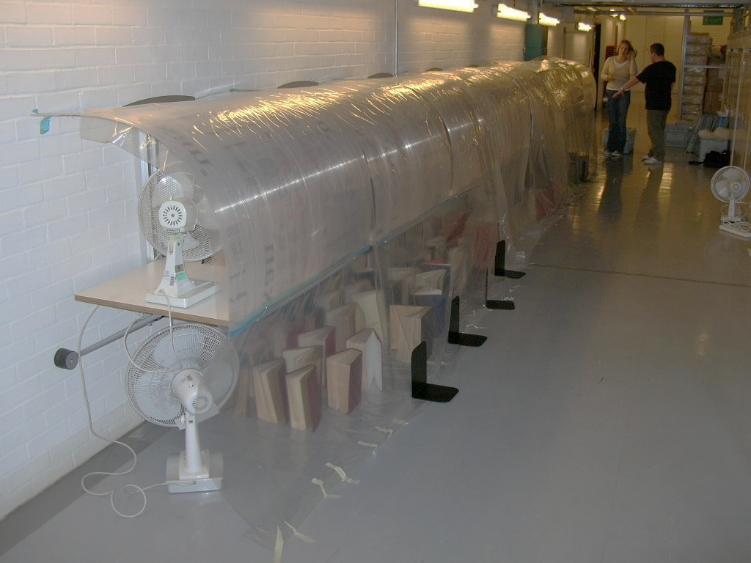
In a water incident, getting books & paper dry as quickly as possible is important. This is to prevent secondary levels of damage such as mould. To help dry items we use blotting paper, which absorbs water. We also use fans & wind tunnels to speed up the drying process. (7/7)
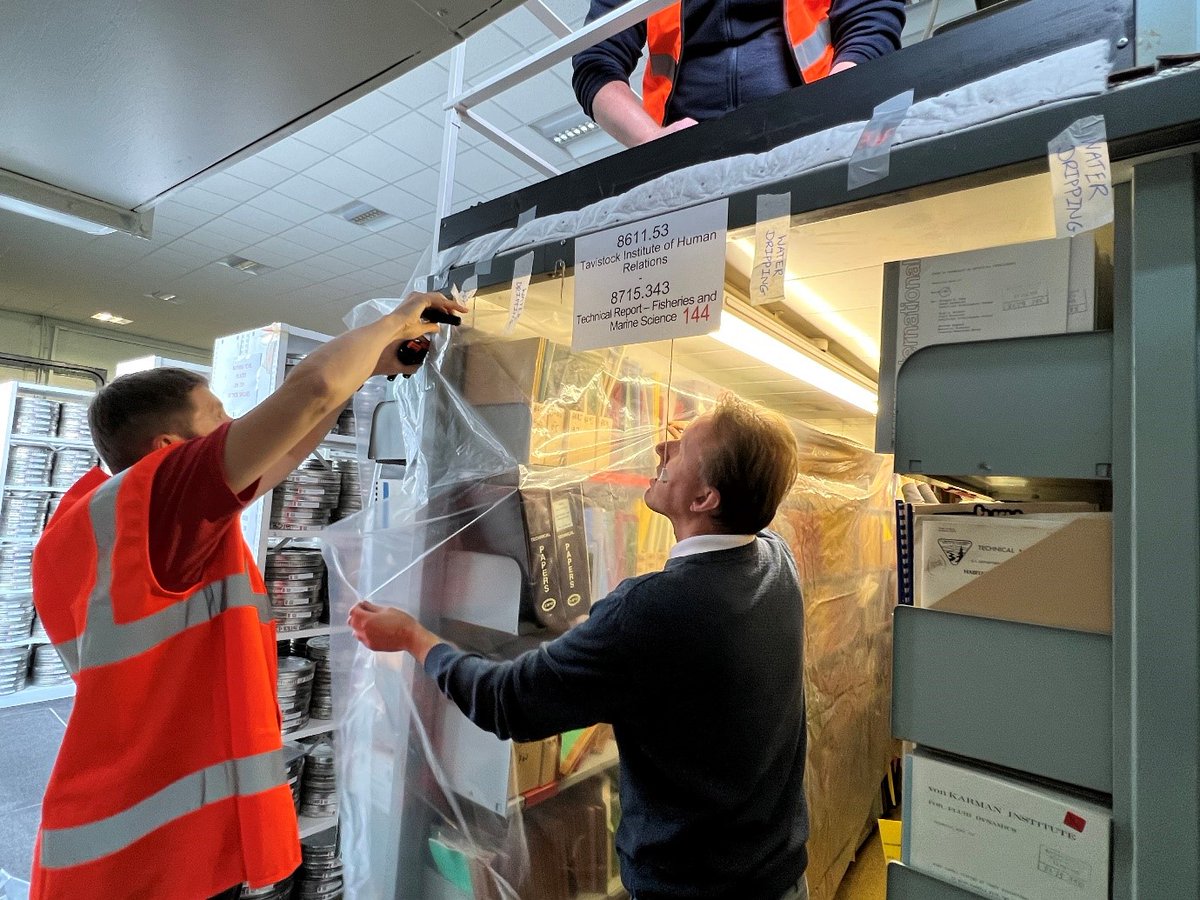
Our response preparation also includes having the necessary equipment we need in key strategic locations around our stores, in our salvage trollies. The salvage trollies are then backed up with further equipment and consumables we might need in a central salvage store. (6/7)
We regularly train in responding to incidents with table top and practical exercises. The teams are trained in minimising the impact of an incident, rescuing collection items away from the risk, and collections first aid. (5/7)
Secondly, if a fire or flood does occur we have our response planned and ready to be implemented at all times. Members of our emergency salvage teams are on-call at both sites 24/7 & will work with colleagues in our Estates & Security departments to respond with incidents. (4/7)
Some of our stores in London have an Inergen system, which is a method of oxygen displacement, reducing the amount of oxygen in a room so if there is a fire it is extinguished. We also have leak detection systems to alert us to any water ingress. (3/7)
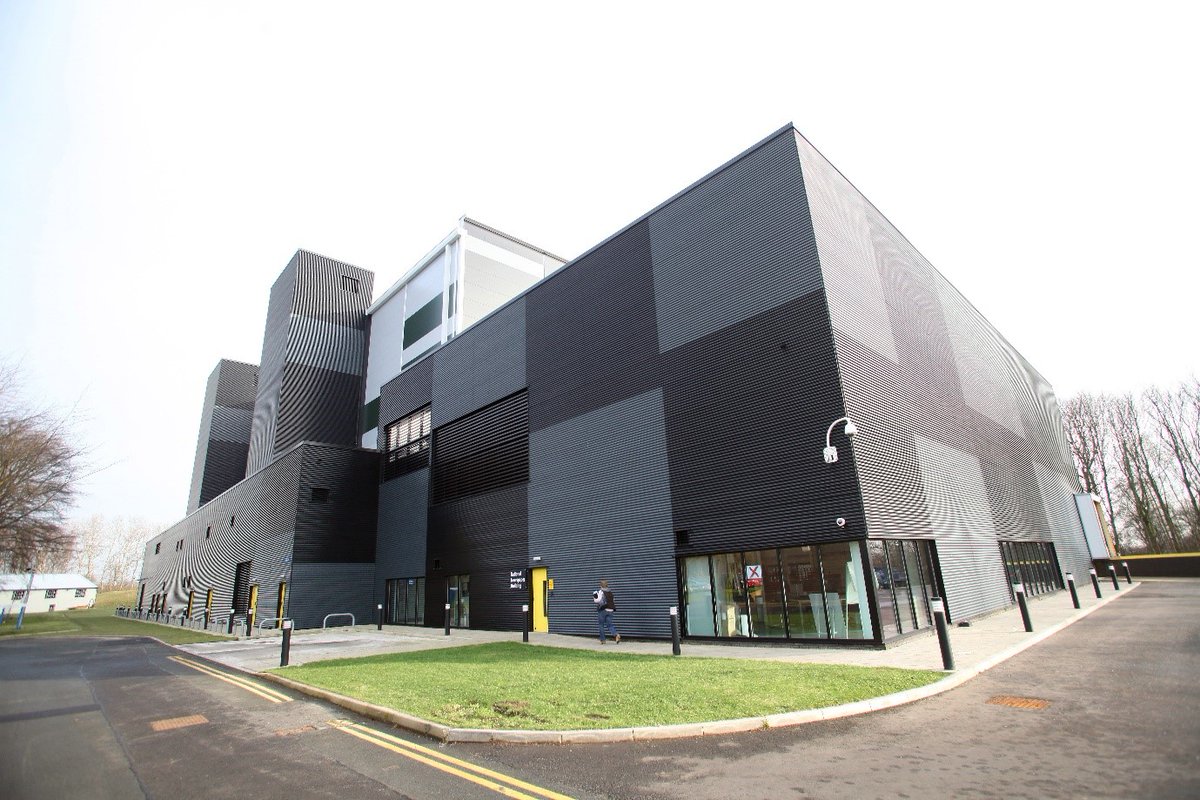
Firstly with our storage facilities, for our purpose built stores we use a number of options to prevent fire and flood. These range from our low oxygen automated storage buildings in Yorkshire. The oxygen is kept to below 17% which prevents combustion. (2/7)
Q: How do you deal with the aftermath of disasters such as fires, floods?
A: Being prepared for such events is key! We do this in a number of ways. (1/7)
#AskAConservator
If you are curious to what @Conservators_UK thinks are the must-have traits for conservators, have a read of this interesting Icon article - (7/7)
https://t.co/qqwKOKy297
Choices: As with many colleagues of mine, I have had to make tough choices during my career. I’ve chosen to do what makes me happy. This means that I have managed to keep my enthusiasm and passion for my work high over the years. (6/7)
Attitude: I am really stubborn. I practice, practice & practice again until I have the result I want. A glass-half-full mindset has helped me to keep going when I made mistakes & to overcome difficult moments when things were not going as I planned (it is hard sometimes!). (5/7)
Experience: I worked for years in short contracts for institutions and private conservation studios in Italy, the UK and Austria. The uncertainty was frustrating and stressful, but I also realised how lucky I was to learn from so many experts. (4/7)
Skills: Working as an artist, before joining conservation, helped me greatly in developing my manual skills, to hone fine motor skills and to get to know the characteristics and behaviour of paper. (3/7)