We have freedom of religion in Australia @MRobertsQLD.
That means, you get to practice whatever religion you want. It doesn't mean you get to force your beliefs on others.
Abortion is about HEALTHCARE, not your ideology. Keep your mitts off our bits.
https://t.co/uTVYFAwFIu
Prof Hal Pawson says Labor’s CGT changes are “to be commended” & shreds the LNP’s “well out of line” tax scheme that incentivised investors to pile in “causing inflation in the system”💥
Says we’re “already seeing the beginnings of the beneficial impact” of the changes✅ #auspol
For most of us, we can’t even imagine what Nestory’s journey has been like.
As with all refugees.
Displaced, homeless, full of hope but in desperate need of safety. A chance. An opportunity at life.
With a dream and a ball, making a new life, in a country with a proud history of welcoming refugees, but facing its own forces of opposition today.
Nestory didn’t just shoot the ball into the Turkish net, he struck a lightning bolt to the conscience of millions of Australians.
How can we cheer one brilliant, skilled, explosive and confident young kid representing us, and we him, and simultaneously portray refugees or new arrivals as less worthy?
It also should raise the question of how refugees come to be? Everyone wants to live a safe life at home, with kin, generations of family, not having to ask for a chance..
But conflict, it’s funding, the breakdown in international law, the weapons industry needing to be fed, exploitation of resources, religious tribalism and extremism, all create the more than a hundred million people who have fled their home.
It is these drivers we must stop, and these causes we must never support nor participate in.
Football brings everyone together and shows us what we share.
Now, we share a love of a young Aussie kid who overcame every barrier put in his way, to reach the pinnacle of world sport.
And that is needed more than ever.
Eslake says it’s "not true" that rents will rise as a result of Labor’s CGT changes. Calls the 1980s comparison a 'latter-day' Goebbels tactic: "If you tell a lie often enough...it becomes accepted as the truth."💥💯#auspol
Typical One Nation Trump tactic. WA Premier Cook said Hanson voted against Medicare Improvements. She says that is a "Labor Lie". Trouble is, it isn't, it's a fact. When her amendment to the Health Amendment Bill failed, she voted against the entire bill. She is a blatant liar.
Angus Taylor repeatedly saying ‘this rotten Labor government!’ I can only imagine how rotten the country would have been under the LNP. Do people forget the long list of Labor achievements during a difficult time globally. What did the LNP achieve? Fuck all! #auspol
‘congratulations to Chalmers & Albanese. After 30 yrs, we have 2 leaders, supported by cabinet, with the courage, determination & commitment to serve the public interest by resisting the self-serving calls of private vested interests..’
- Graeme Samuel.
https://t.co/ioKtauj574
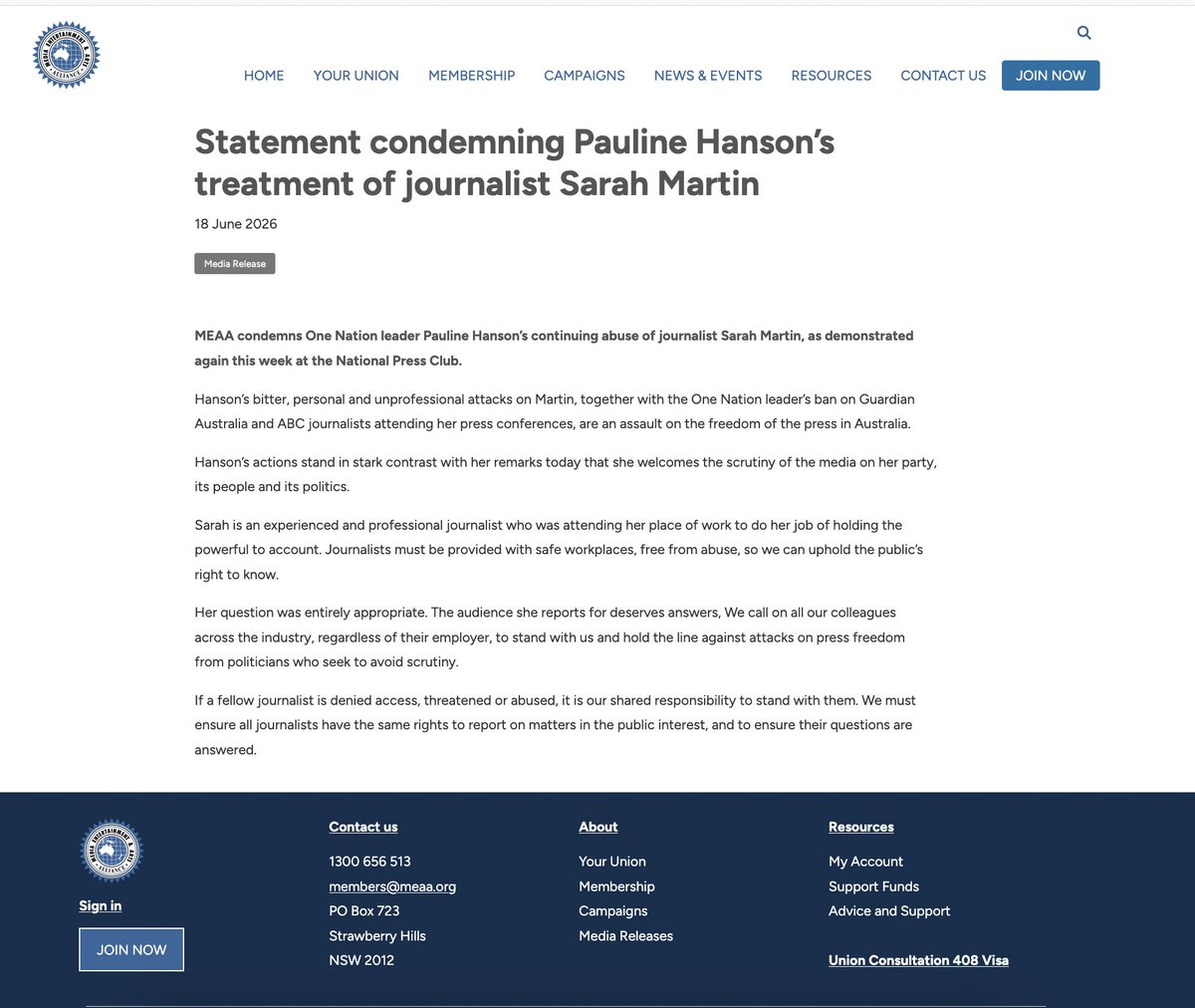
One Nation leader Pauline Hanson appears to have responded to growing scrutiny of her Senate Estimates attendance record by making a rare appearance at the latest round of hearings. Rather than silencing criticism, however, the appearance has raised fresh questions about her preparedness and understanding of the issues under discussion.
Senate Estimates hearings are among Parliament’s most important accountability mechanisms. They allow senators to scrutinise government spending, question departmental officials and hold ministers accountable for decisions affecting Australians. Attendance is not optional in any practical sense; it is a core responsibility of elected representatives.
For years, critics have pointed to Hanson’s poor attendance record at Estimates hearings. Since returning to the Senate in 2016, she has been absent from the overwhelming majority of proceedings, leading many to question whether she has fully discharged one of the most important duties attached to her role.
Against that backdrop, Hanson attended a hearing examining defence expenditure and Australia’s reporting of defence spending against GDP. Yet instead of demonstrating expertise or detailed preparation, the exchange appeared to expose a limited understanding of the subject she was attempting to challenge.
During questioning, Hanson sought to criticise the adoption of NATO methodology for measuring defence spending. However, departmental officials repeatedly found themselves explaining basic aspects of the reporting framework, while Hanson appeared to struggle to clearly articulate the distinction she was trying to draw between previous reporting methods and the NATO benchmark.
Officials explained that NATO methodology is an internationally recognised standard and that Australia’s defence spending decisions are driven by strategic requirements rather than adherence to a fixed percentage of GDP. Rather than exposing flaws in government policy, the questioning often appeared confused and lacking a clear line of inquiry.
The contrast with experienced Estimates participants was striking. Effective scrutiny requires preparation, subject matter knowledge and the ability to pursue detailed questioning when officials attempt to avoid providing clear answers. Senators who regularly engage in the process develop those skills through consistent participation and a deep understanding of their portfolios.
Critics argue that Hanson’s performance demonstrated what happens when a senator rarely engages with the process. Senate Estimates is a powerful accountability tool, but only when it is used effectively. Simply attending after years of absence is not enough.
The episode has reignited debate about Hanson’s attendance record and whether her appearance ultimately achieved the opposite of what was intended. Instead of showcasing rigorous parliamentary scrutiny, it highlighted concerns about preparation, policy knowledge and effectiveness.
Parliamentary accountability is not merely about turning up. It is about understanding the issues, asking informed questions and using the powers of the Senate to serve the Australian public.
As independent senator David Pocock has demonstrated during his relatively short time in Parliament, effective scrutiny comes from preparation, consistency and a willingness to engage deeply with complex policy matters.
In the end, parliamentary performance is measured not by media appearances or political slogans, but by the ability to understand complex issues and hold governments to account. On that measure, critics argue Hanson’s latest appearance did little to strengthen her case.
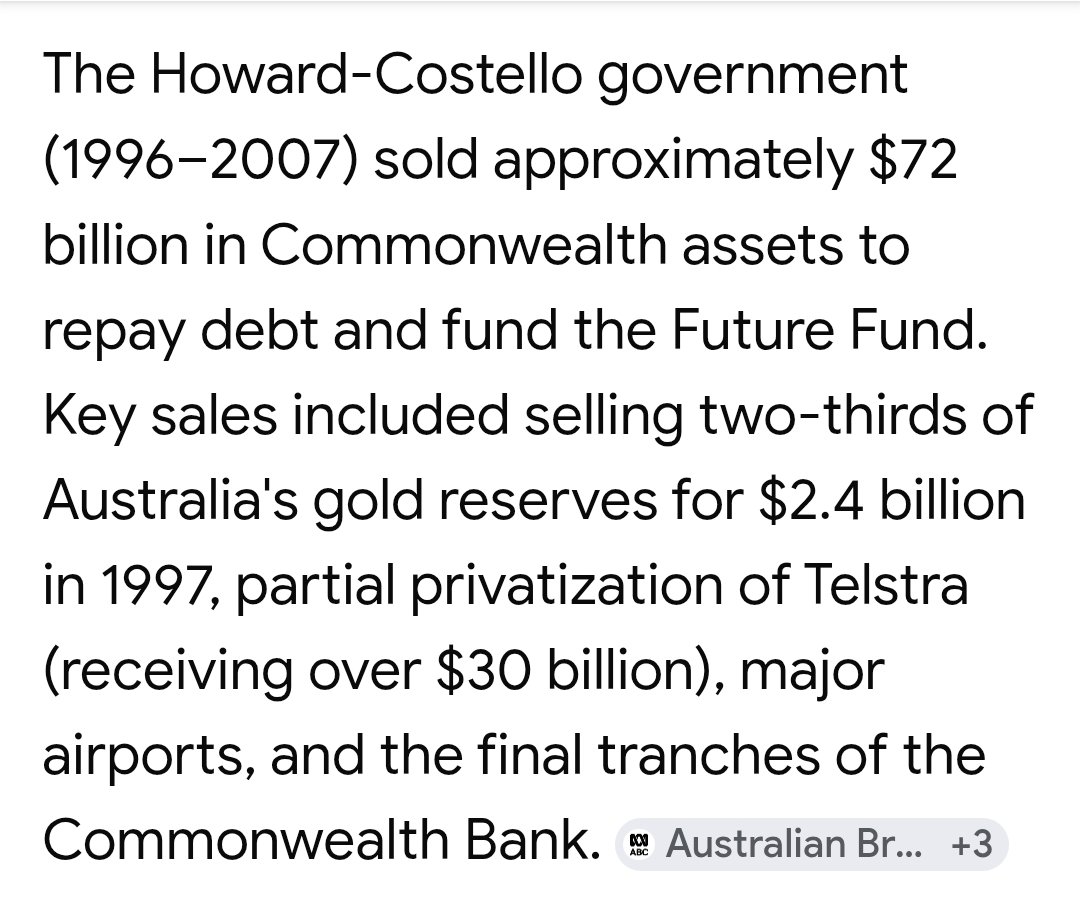
Just your friendly reminder that the highest taxing Government in Australian history is the Howard-Costello Government
And that if the LNP applied their fiscal rules, they would be able to increase taxes
Just as they proposed to do at the last election
NEWS: One month until 14 million Australians get another tax cut.
Altogether Labor's five different tax cuts will benefit the average worker by up to $2816.
We're getting on with the job of cutting income taxes and making the tax system better and fairer.
Australia now has the world’s strongest economy and some of its weakest economic reporting.
Coverage of the latest Federal Budget exposed just how far standards in Australia’s media have declined.
The Budget data showed Australia remains one of the strongest-performing advanced economies on Earth. It is currently the only country with unemployment and inflation both below 4.7%, median adult wealth above US$250,000, triple-A credit ratings from all major agencies, moderate interest rates, and government debt below 25% of GDP.
On top of that, the Budget introduced reforms aimed at tackling long-standing structural inequities changes that many economists argue were overdue.
In most countries, results like these would dominate headlines and strengthen public confidence. Instead, much of Australia’s media responded with outrage, fear campaigns and ideological attacks.
Headlines warned of “budget debacles”, “dire consequences”, “war on wealth”, and “further pain”, while largely ignoring Australia’s globally leading economic performance.
Much of the commentary relied on the same recycled narratives that have dominated economic reporting for years narratives that often collapse under scrutiny.
Claim: Living standards are falling.
Reality: Living standards dipped globally after COVID, including in Australia, but key indicators have rebounded strongly since 2023. Australians are travelling overseas in record numbers, spending more on dining, retail and discretionary goods, and consumer activity has surged.
Claim: Wages are going backwards.
Reality: Real wages were hit during the inflation spike that followed the pandemic, but wage growth has now outpaced inflation. Since late 2023, wages, pensions and welfare payments have all risen faster than consumer prices.
Claim: Australia is a high-tax country.
Reality: Australia remains one of the lower-taxed advanced economies. The GST is just 10%, far below consumption taxes across much of Europe, while Australia’s total tax-to-GDP ratio sits near the bottom of the OECD.
Claim: Labor keeps increasing taxes.
Reality: IMF data places Australia among the lowest-taxing developed economies in both 2025 and 2026.
Claim: Labor is anti-business.
Reality: Business profits outside mining have reached record highs, while employment and expansion across many sectors continue to grow.
Claim: Labor spends recklessly.
Reality: Spending as a share of GDP under Anthony Albanese remains below levels seen under several previous governments, including the Morrison Government.
Claim: Business investment is collapsing.
Reality: Investment stagnated during the Coalition years but has resumed growth under the current government.
The bigger issue is what this says about Australia’s media culture.
Economic reporting increasingly resembles political campaigning rather than factual analysis. Too often, selective statistics, misleading framing and emotionally loaded commentary replace balanced reporting.
When positive economic outcomes are ignored while fear and outrage dominate coverage, it damages public trust, distorts national debate and weakens social cohesion.
Australia’s economy is not perfect. Productivity, housing affordability and inequality remain serious challenges. But pretending the country is in economic collapse despite internationally strong results does not inform the public. It misleads them.
“Anzac Day is a day to remember the ultimate sacrifice of so many people." 🤍
Jess Allan, who's part of the Australian Defence Force’s 3rd Health Battalion, shares the significance of Anzac Day and how she’s combining footy with remembrance this year.
https://t.co/zM1jnQpxV1
So who really has the best dog at the Club? 🐶
Catch the “Our Pets” segment, plus an inside look at Charlie Edwards’ debut, on this week’s episode of The Crows Show at 11am this Sunday on Channel 7 Adelaide.
@toiletpaperaus1 You're welcome to incorporate some of this info (below) in the ongoing battle against Liberal Party lies attacking Labor re economic management