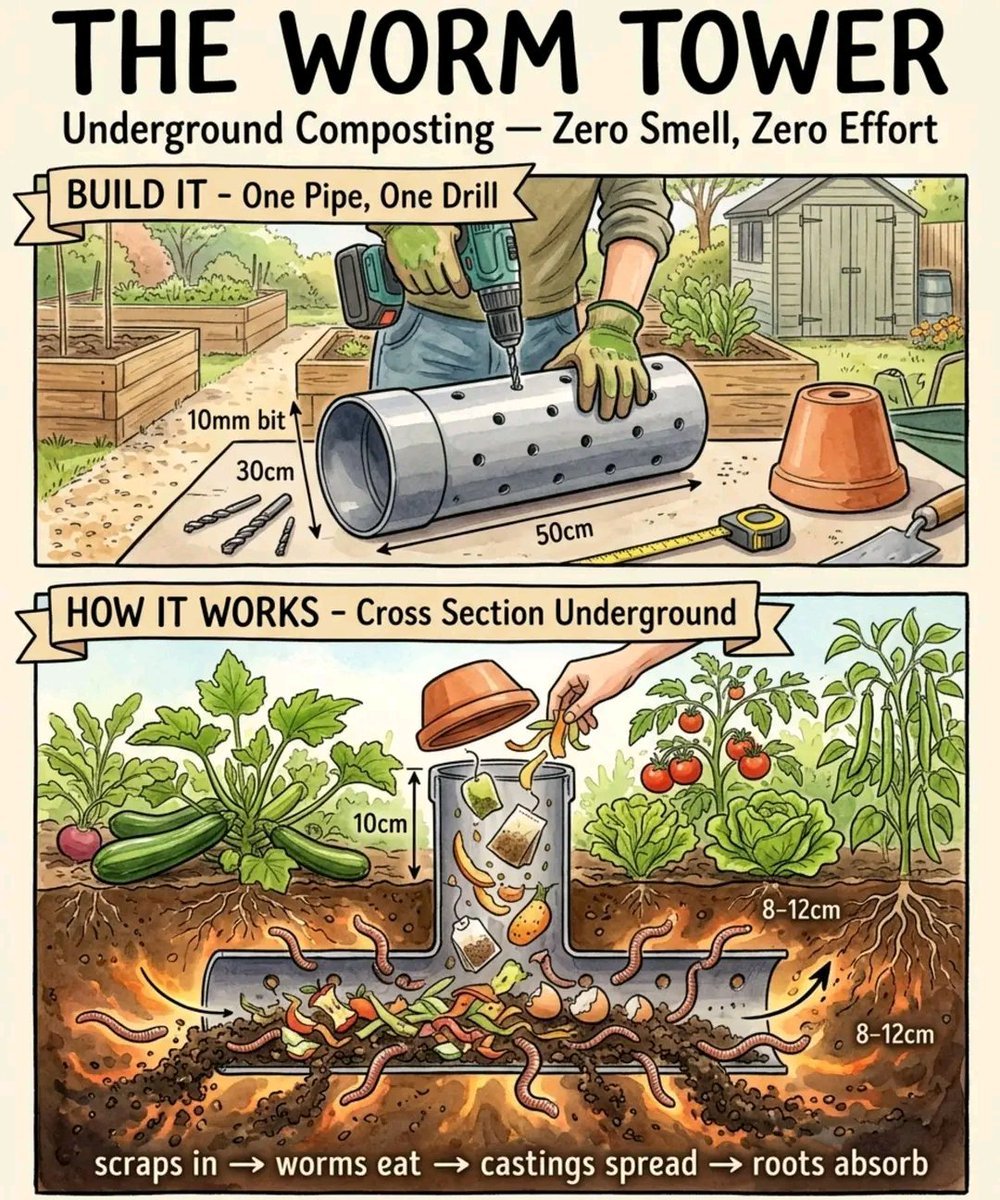
A Buried Pipe Feeds Your Garden Bed From the Inside — Worms Do All the Work
A worm tower is an underground compost system that delivers nutrients directly to plant roots without a compost bin, without turning, and without any smell. Kitchen scraps go in the top. Worm castings spread through the soil below. The bed feeds itself.
The idea is almost too simple to believe: bury a pipe with holes in a raised bed, drop scraps in, let worms handle everything.
🪵 What you need:
- A section of drainpipe — 30cm diameter, 50cm long
- A drill with 10mm bit
- A lid or upturned pot to keep rain out
- A garden bed to bury it in
🌿 How to build it:
- Drill holes every 5cm across the lower two-thirds of the pipe
- Dig a hole in the centre of your garden bed deep enough to bury the pipe with 10cm above soil level
- Backfill around the pipe and firm soil gently
- Add a handful of compost and a few worms from the garden to start
- Place lid on top
🐛 How to use it:
- Drop small kitchen scraps in weekly — vegetable peelings, tea bags, fruit cores, crushed eggshells
- Worms enter through the drilled holes, eat the scraps, and carry castings back into the surrounding soil
- The bed receives a slow, continuous feed of the richest fertiliser on earth
- Never needs turning. Never smells. Never attracts flies if the lid stays on
One tower feeds a 2-metre radius of garden bed. Two towers handle a full-sized raised bed. Your food waste becomes plant food without ever touching a compost heap. 🌱
Many people think papaya's greatest value is its fruit, but the milky sap is just as valuable.
Papaya latex contains papain, a natural enzyme widely used in food processing, cosmetics, pharmaceuticals, and meat tenderizing. In some farming systems, harvesting the sap can create an additional source of income while the trees continue producing fruit.
This is a great reminder that agriculture isn't only about harvesting crops—it's also about understanding the hidden value of every plant and finding smarter ways to use natural resources.
Would you consider growing papaya for its sap as well as its fruit?
Vertical Gardening Made Simple: How to Grow Cucumbers on a Wooden Trellis Tower
If you love maximizing space in your backyard garden, vertical growing systems are a game changer. This wooden trellis tower shows a perfect example of how a simple structure can transform a small planting area into a high-yield, visually stunning feature.
From bare frame to lush cucumber column, this design is practical, beautiful, and ideal for modern backyard landscapes.
Why Grow Cucumbers Vertically?
Cucumbers naturally vine and climb. Giving them vertical support offers major benefits:
Saves ground space for other crops
Improves air circulation, reducing disease
Produces straighter fruit
Makes harvesting easier
Adds visual height and structure to the garden
Instead of sprawling across your garden beds, cucumbers climb upward, creating a living green tower.
The Trellis Tower Design
This structure is simple yet effective:
A sturdy central post
Horizontal slats spaced evenly
Durable outdoor wood (cedar or pressure-treated lumber)
Anchored securely into the soil
The horizontal tiers provide natural grip points for climbing vines. As the plant grows, tendrils wrap around the slats, supporting heavy fruit without additional netting.
Step-by-Step: How to Build It
Materials:
4x4 wooden post (6–8 ft tall)
1x4 or 2x4 horizontal slats
Exterior-grade screws
Post hole digger
Level
Basic Build Process:
Dig a hole 18–24 inches deep.
Set the main post in concrete or compacted soil.
Attach horizontal slats every 10–12 inches.
Ensure the structure is level and sturdy.
Pro Tip: Position the trellis before planting to avoid disturbing roots later.
Planting for Maximum Yield
Space cucumber seedlings evenly around the base.
Mulch heavily to retain moisture.
Train vines upward early by gently guiding them to the slats.
Water consistently—vertical plants dry faster.
With proper care, vines will climb quickly and produce abundant fruit.
Aesthetic Value in Backyard Design
For someone interested in outdoor living design and structured garden layouts, a trellis tower adds:
Vertical interest
A defined focal point in raised beds
Seasonal visual transformation
A productive edible feature
You can even integrate multiple towers along a pathway or near a pergola for a cohesive garden theme.
Bonus: Other Plants That Thrive on This Structure
This trellis works beautifully for:
Pole beans
Sugar snap peas
Small melons
Decorative gourds
Climbing flowers like nasturtiums
It’s versatile, reusable, and adaptable year after year.
From Structure to Harvest
What starts as a simple wooden frame quickly becomes a lush column of greenery and bright yellow blossoms, followed by crisp, ready-to-pick cucumbers hanging in neat vertical rows.
It’s efficient.
It’s beautiful.
And it proves that smart garden design isn’t just about growing more—
It’s about growing better.
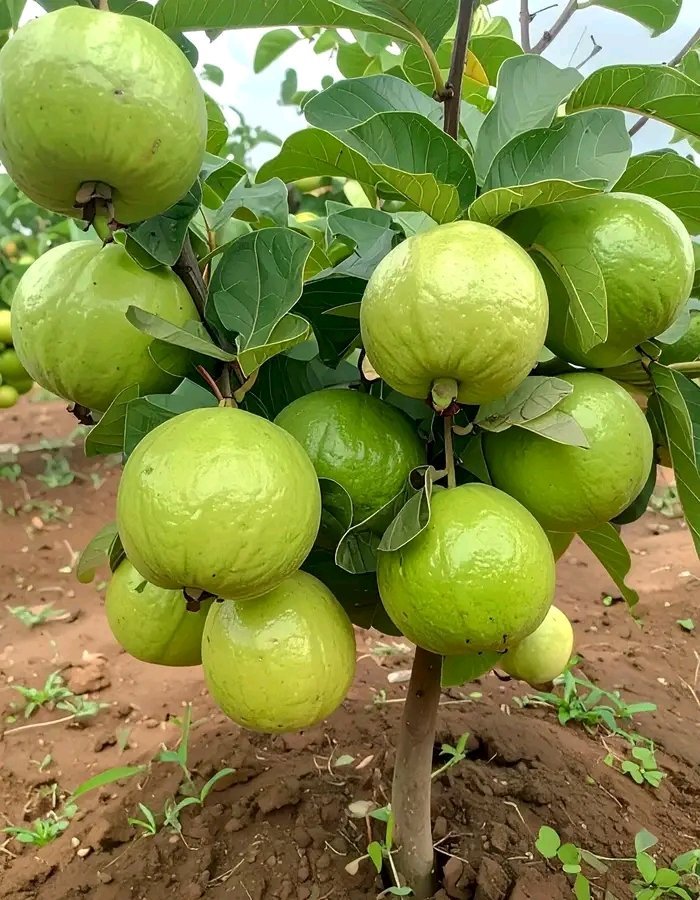
Every guava on this tree is a bundle of health, a gift of nature waiting to be shared.
The sight of branches bending with fruit reminds us how generous the earth can be when cared for with love and respect.