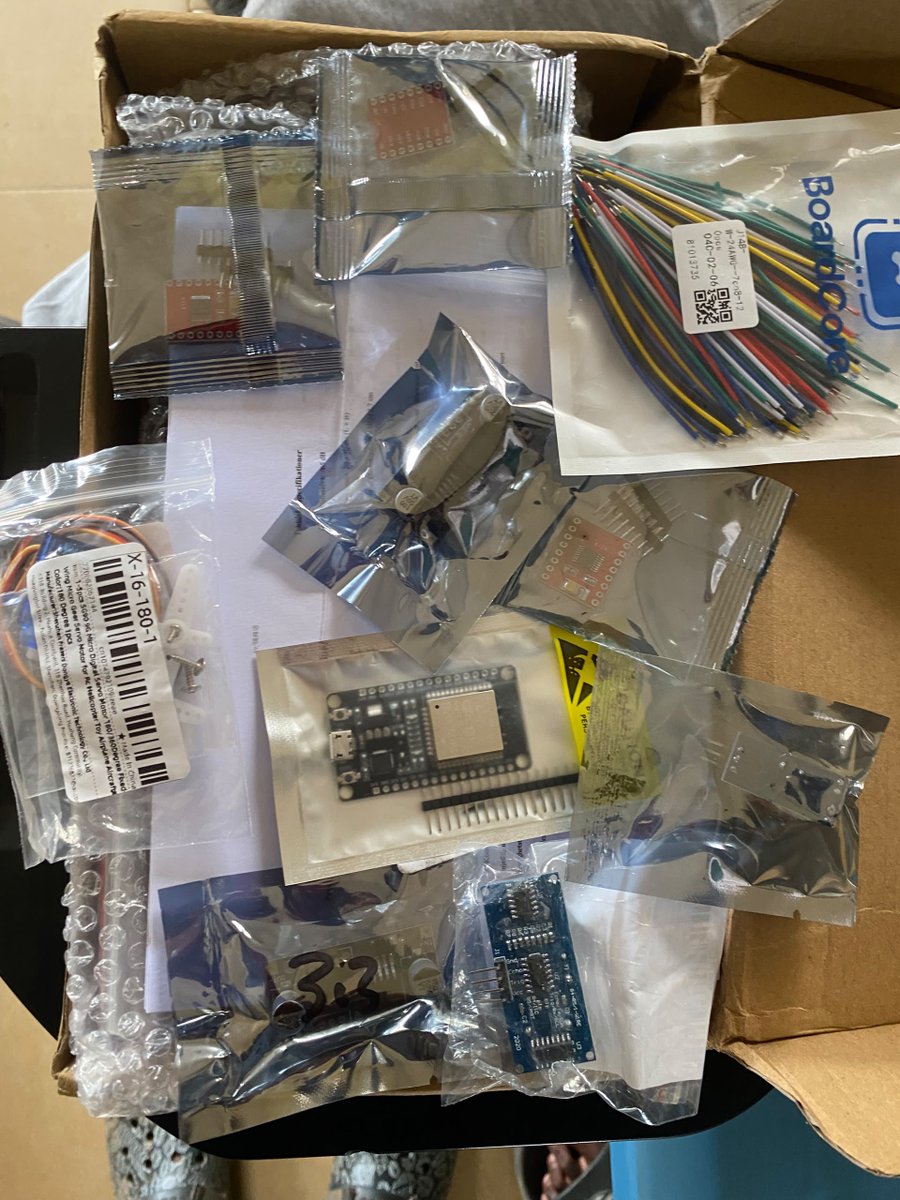
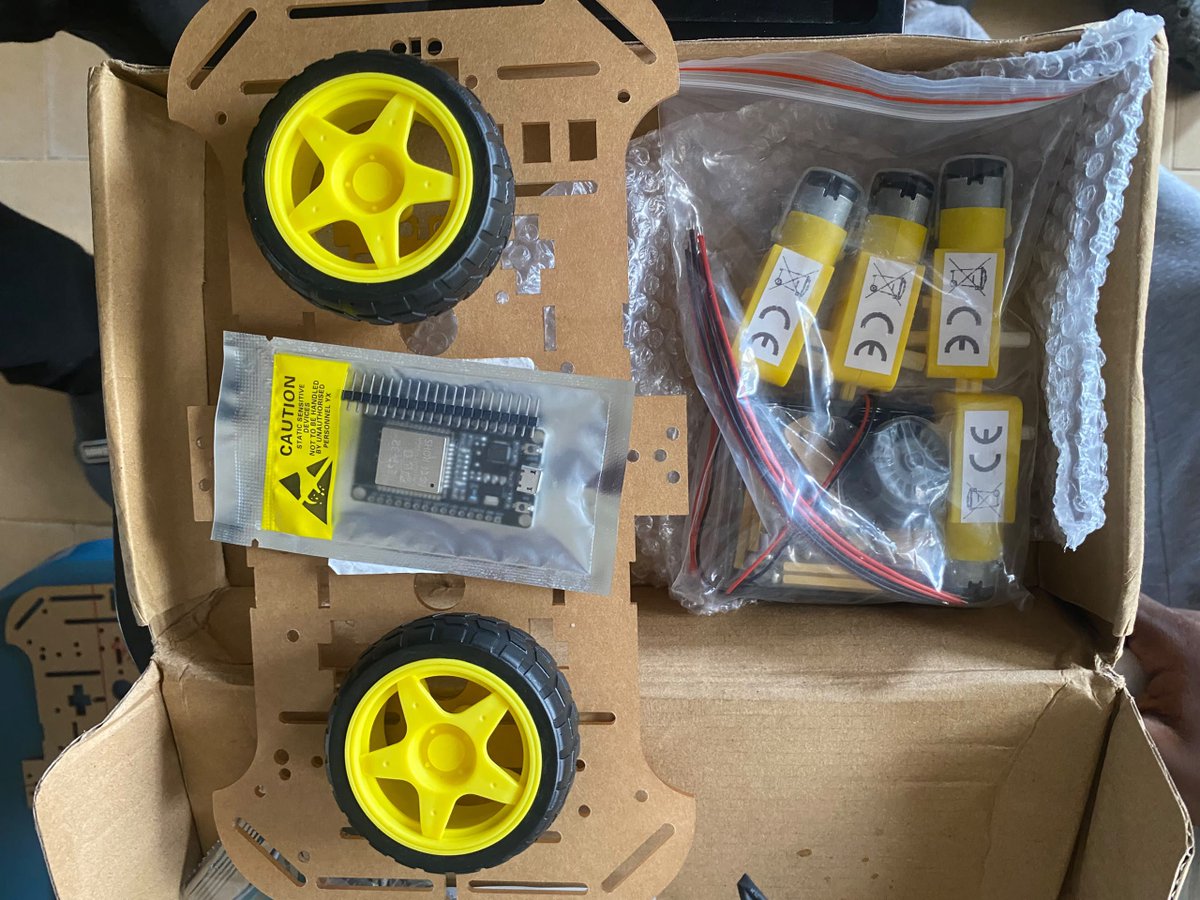
The components for EERC's first physical project landed today, and I couldn't be more excited!
Can't wait to get into action with this amazing team, and learn a lot along the way. Here's to building, innovating, and making every step count.
Yesterday, I attended the IEEE SB FUTA Launchpad.
The event was packed with insightful sessions and gave us the opportunity to explore exciting fields like Embedded Systems & IoT, Web & Software Development, Cloud & DevOps, and AI/ML & Data.
Thanks @IEEEFUTA#IEEE#FUTA
So, I haven't been inactive. I just shifted my focus from embedded systems simulations back to learning Python. A friend of mine also told me that posting code isn't really that cool, so I probably won't be posting much for now.
I used the basic knowledge of the blink led to create a traffic light with all LEDs on for 2 seconds and a 0.5 seconds delay in between. This is needed to stabilize hardware 😁
Happy Sunday everyone.
A switch to embedded systems simulations. I did the Arduino "hello world" that is the blink led, I programmed the led to stay on for 2 seconds and off for 1 seconds. Using @tinkercad was really great 😃.
Awesome Robotics! 💾
Building your own robot just got a lot easier.
MathWorks have released an open-source GitHub repository packed with robotics resources for anyone interested in getting hands-on.
The repo includes examples for robot arms, ground vehicles, and drones, with projects that show how to connect with ROS and ROS2 or even deploy Simulink models directly as ROS nodes.
There are also more advanced demos, like modeling off-road environments and testing navigation algorithms in photorealistic simulations.
Everything is well-documented, with tutorials and links that make it easy to go from concept to prototype. 📑
Whether you’re a student, researcher, or just curious, there’s material here for every level. And since it’s an open community project, you can not only explore but also share your own contributions.
For anyone looking to learn robotics by doing, this is a solid place to start!
Here’s the link: https://t.co/2KyP6YMFny
~~
♻️ Join the weekly robotics newsletter, and never miss any news → https://t.co/GoA3ZuwoPB
So this morning, I learnt about different data types in python.
So I decided to store different data types to variables, print the data out and also print out the data type.
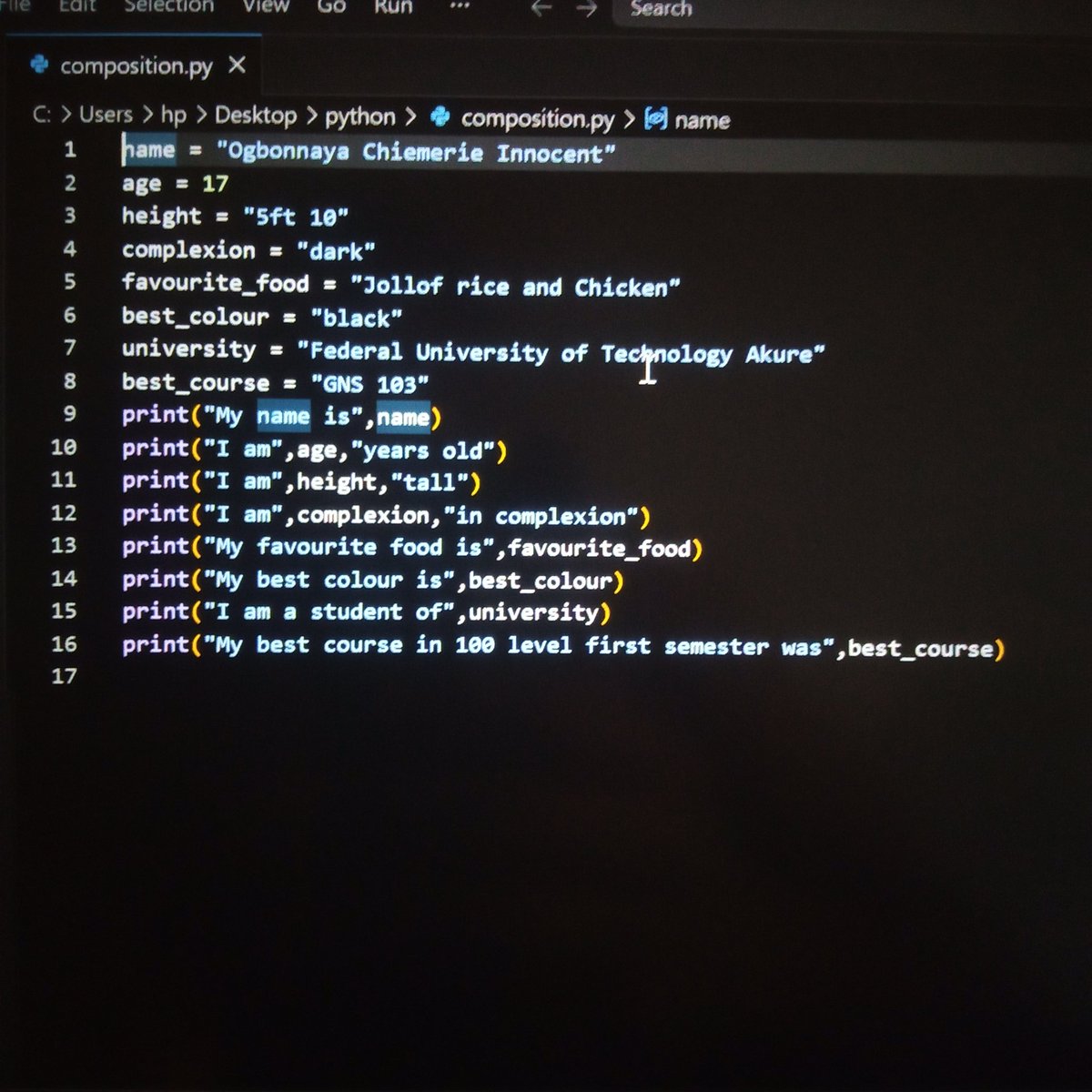
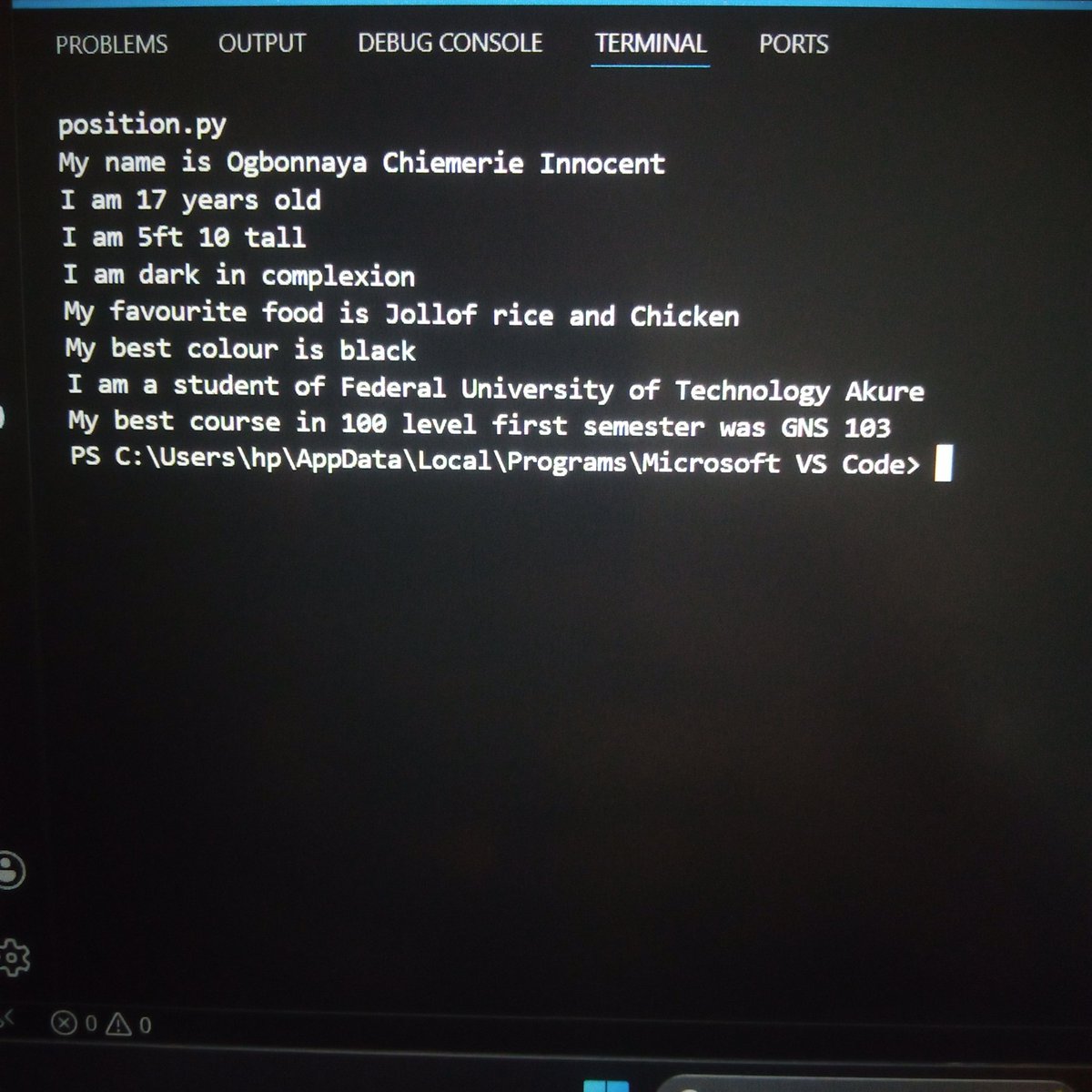
So this morning I learnt how to assign data to variables and also how to use the print() function in python and so I used it to write a little composition about myself😁.
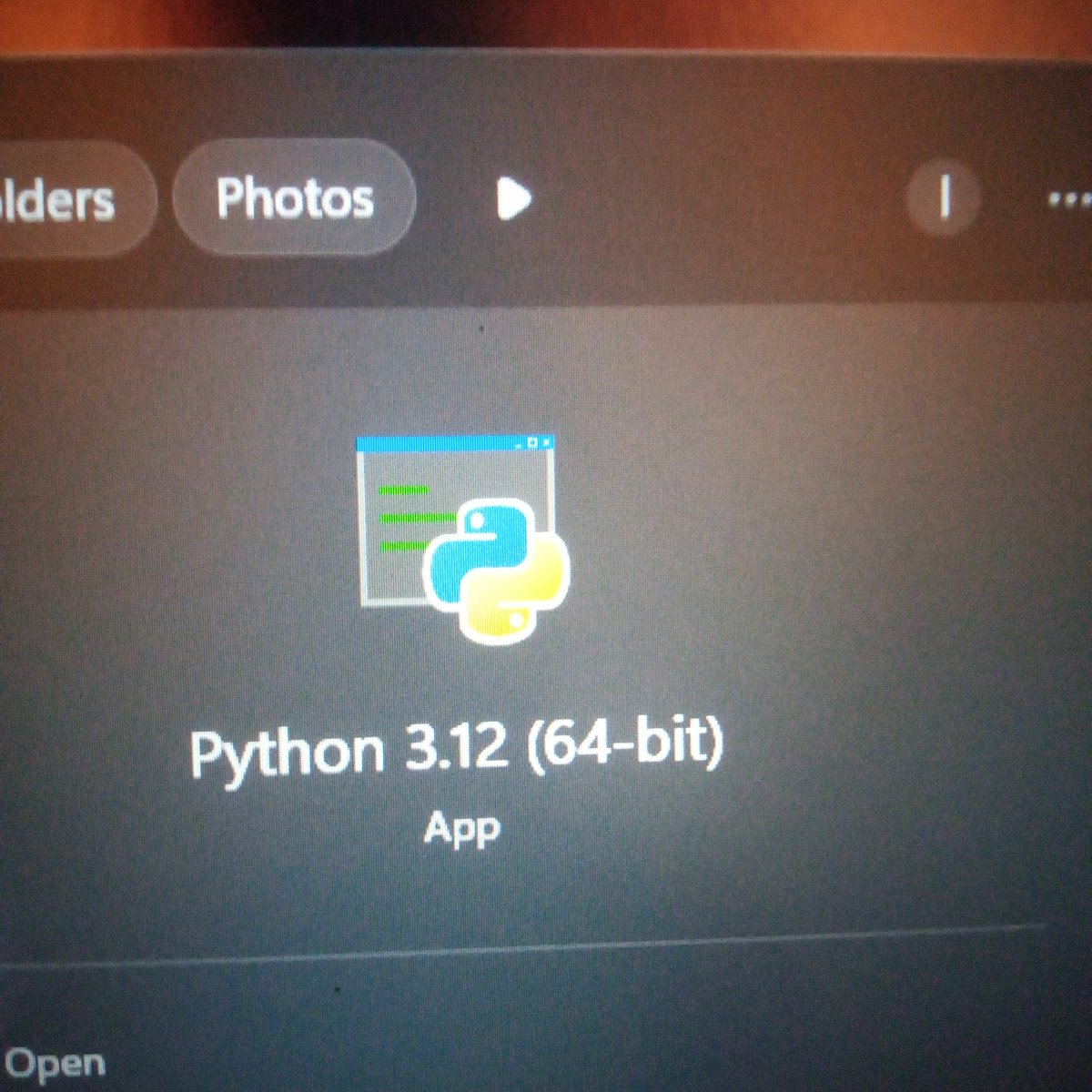
So yesterday I installed the python application on my PC version 3.12(64-bit) and also installed visual studio code.
I also installed the python extension file in vs code provided by Microsoft.
So I am ready for some coding 😁
Engineering is not about learning the theoretical aspects from lectures, so I recently got a laptop in order to engage in tech and to get my hands on real world solutions.
I plan to begin this by learning python @clcoding and embedded systems
We’re building a language model in public because Africa needs more people participating in the future of Artificial Intelligence. So we’re demystifying the process and open-sourcing what we learn so anyone can study it, replicate it, and build on it.
In this video, I break down the three stages of building an AI model and where we currently are in the journey.
We’ve developed a memory system for our models that provides both short-term visual memory and long-term semantic memory.
Our approach allows us to train robots to perform long and complex tasks, like cleaning up a kitchen or preparing a grilled cheese sandwich from scratch 👇