Every dollar that gets lost in the correspondent banking chain is a dollar that should have moved on better rails.
Pre-funded accounts. Opaque fees. Locked-up capital. The old system extracts wealth from the people it was never really built for.
Stablecoins issued on sound reserve management aren't just a crypto story, they're the infrastructure that makes fairer payments possible.
That's what we're building at Anzens.
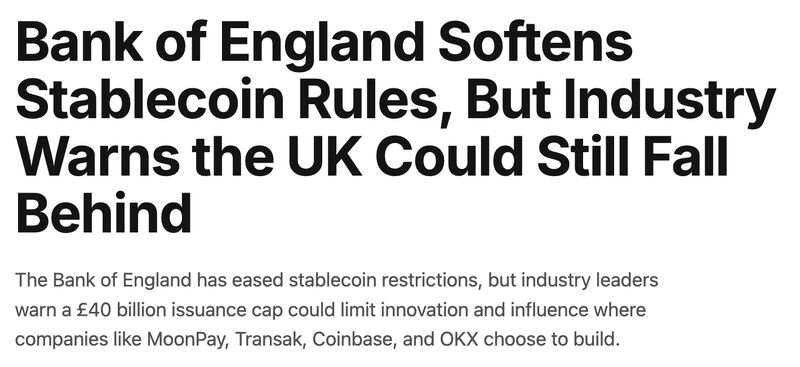
As our CEO @Shantnoo6 points out in an article on @BlocksterCom, policymakers continue to focus on stablecoins as competitors to domestic bank deposits, when the real demand is being driven by cross-border payments.
https://t.co/igUd8OqL0W
At Encryptus, we're building cross-border payments that skip the intermediaries, cut the fees, and actually reach people whole.
https://t.co/BTEz1jrUSH
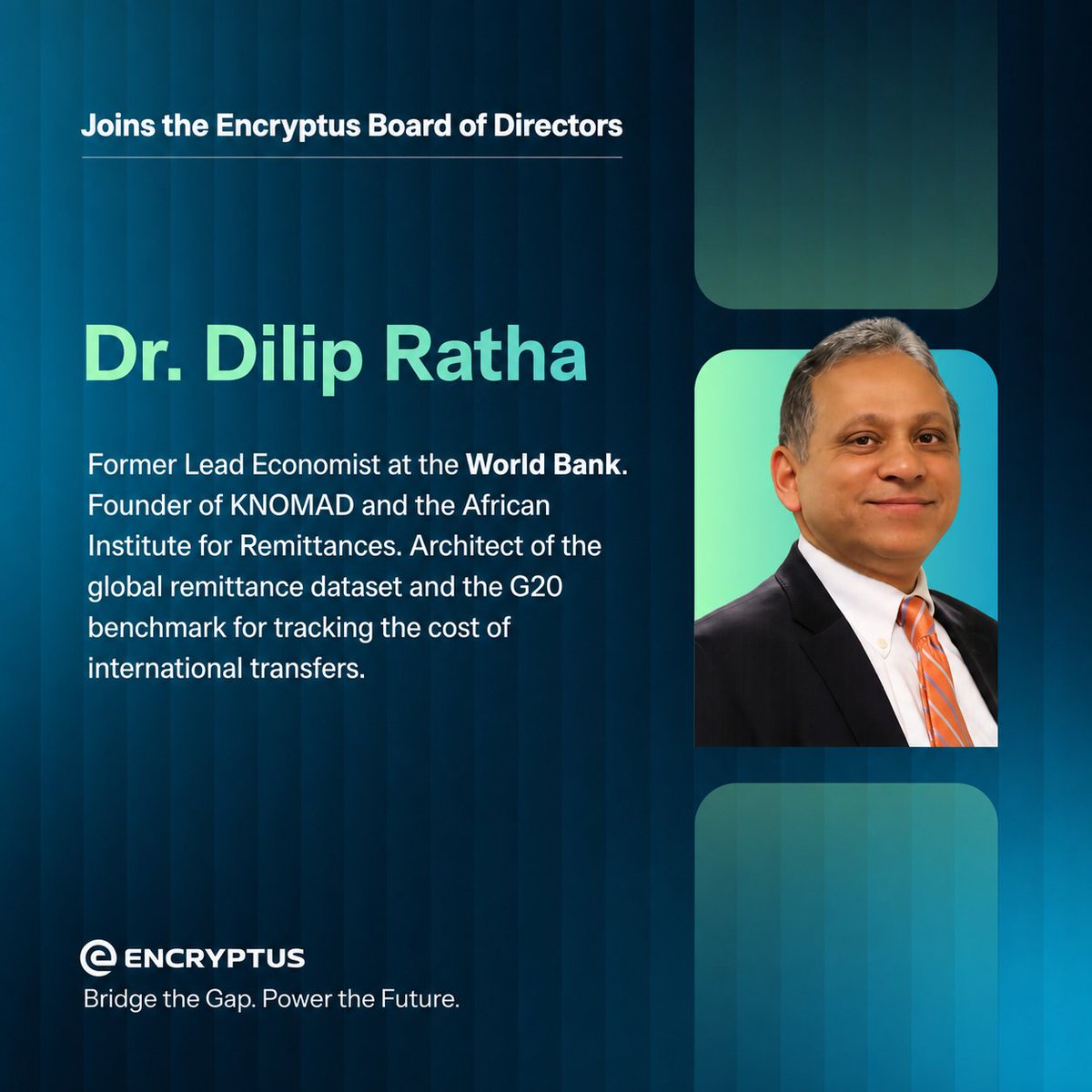
Dr. Dilip Ratha spent three decades at the World Bank quantifying what correspondent banking actually costs migrant workers.
He's joining the Encryptus board and working closely with Anzens.
His view on USDA, in his own words:
"The risk profile of a regulated, dollar-backed stablecoin operating through licensed financial institutions is fundamentally different from speculative cryptocurrency trading.
USDA is fully reserved with US dollars and US Treasuries, held in institutional custody, and integrated into regulated banking infrastructure.
The alternative is correspondent banking, which carries its own embedded risks: settlement delays, exchange rate volatility between initiation and completion, and opacity in fee structures.
The question isn't whether stablecoins carry risk, but whether they introduce more risk than the system they replace. The data suggests they don't."
A voice that helped define the field, on the infrastructure that comes next.
His visionary leadership will strengthen our mission to build cheaper, faster, and more inclusive financial solutions for millions worldwide.🌍
Welcome aboard, Dr. Ratha! The future just got brighter.
Exciting news! We are Welcoming a Visionary to Our Board of Directors.
Encryptus is thrilled to announce that Dr. Dilip Ratha; globally renowned economist, former Head of the World Bank's Migration & Remittances Unit§has joined the Encryptus Board. 🧵
With decades of expertise in diaspora finance, cross-border remittances, and structured finance, Dr. Ratha brings unparalleled strategic insight to help Encryptus redefine the future of digital payments and crypto-driven financial inclusion.
Access to dollars should be simpler, especially in markets where opening and maintaining a bank account is still a real barrier.
USDA is about making digital dollars usable through the wallets people already rely on.
India received $135B in remittances last year, more than any country in the world. Of that, $6.5B was lost to fees.
The UN SDG target for remittance costs is 3% or less. Banks still charge an average of 14.55%. For the families on the receiving end, that isn't a fee. It's a tax.
For crypto wallets, exchanges, and fintechs serving the Indian remittance corridor: one integration replaces a dozen banking relationships, and gives your users a path that costs less, settles faster, and clears compliance cleanly.
Proud to announce we are partnering with @secondfiapp.
Crypto to bank account, mobile wallet, or gift card, all in a single integration.
100+ countries, two minutes, self-custody the whole way.
We power the off-ramp. They power the experience.
Welcome to the future, @EncryptusGlobal. 🟦
Send your money home. Cash out to a bank.
Top up a mobile wallet. Two minutes to 90+ countries.
Self-custody the whole way.
The future is onchain. SecondFi is how you get there.
🔗 https://t.co/B6ceKBOJja
Sending money shouldn't require a bank account on both ends.
1.4 billion adults don't have one. Most of them have a phone.
The rails to reach them already exist. The industry just keeps pretending they don't.
Learn more: https://t.co/5BaLYLOFRt
That's the work.
Licensed crypto-fiat delivery across 100+ countries, built for the last mile.
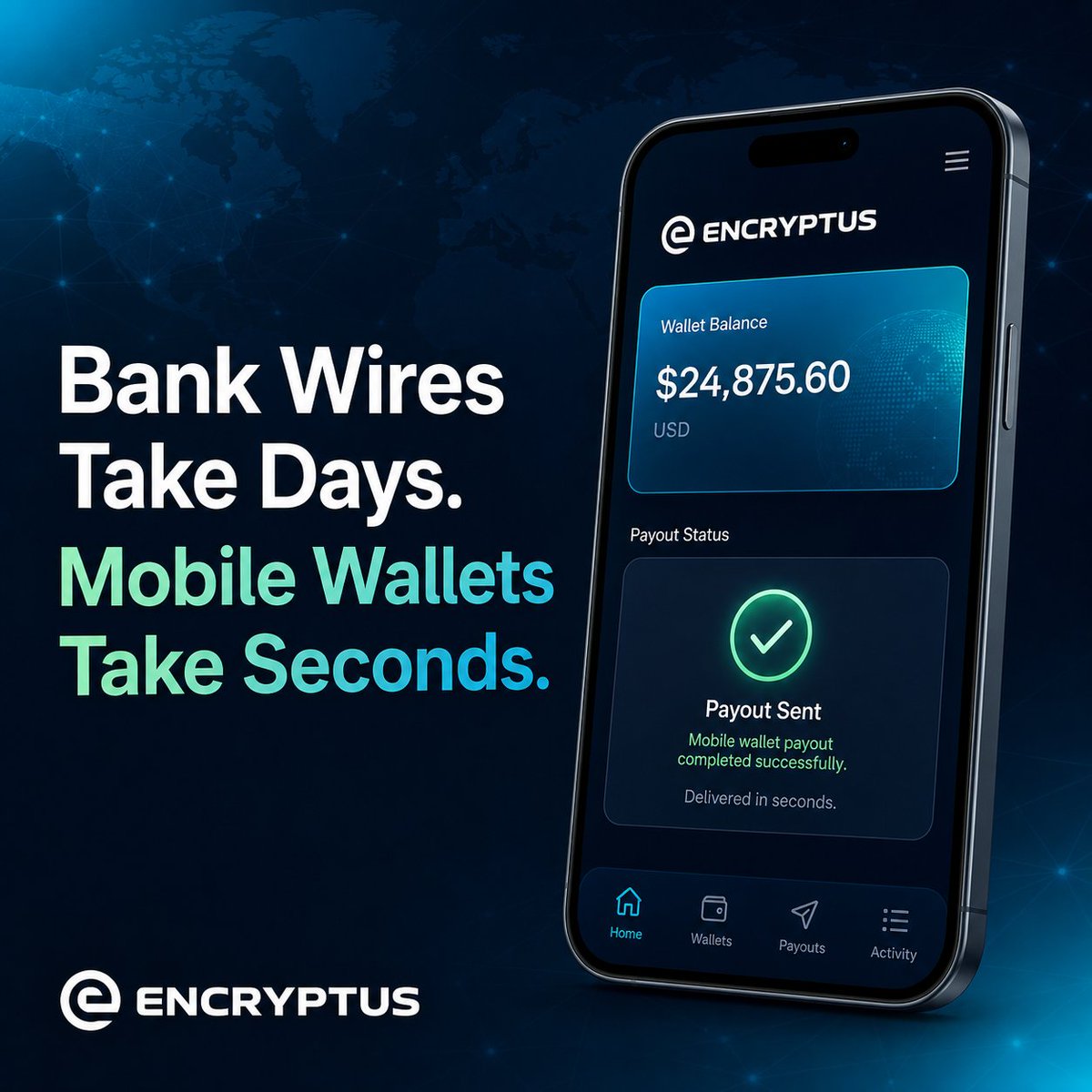
Bank wires in 79+.
Mobile wallets in 39+.
Direct integrations in APAC and Africa.
https://t.co/0XktZj4Mib
@Shantnoo6 in @expert_payment this week on the gap between stablecoin adoption and real financial inclusion in Asia:
"If we are unable to pass on the benefit of technology to the end customer, how are we solving the problem?"
More 🧵
In India, the dollar trades at 95 INR.
A stablecoin trades at 98 or 99.
For a business in an emerging market, the math doesn't favor blockchain unless the off-ramp actually closes the loop.