Can we predict metastatic risk in papillary thyroid carcinoma at diagnosis?
A new study validates THYT1, a ddPCR-based genetic signature identifying up to 80% of metastatic cases - even years before metastasis.
https://t.co/R7oPt6Udhw
Thymic and pulmonary neuroendocrine neoplasms look alike - but are they molecularly similar?
New multi-omics research reveals distinct NET profiles, overlapping NEC signatures, and CD44 as a promising marker of pulmonary origin!
https://t.co/wVKlCXFnoJ
🚨 c-MYC may help distinguish neuroendocrine carcinomas (NEC) from tumors (NET). In 1,380 neuroendocrine neoplasms, c-MYC was expressed in 43% of NEC vs 2% of NET/carcinoids. Strong positivity may support NEC classification in borderline cases!
https://t.co/NZ2yMMRuMO
🔬 Ampullary somatostatin-producing (D-cell) neuroendocrine tumors are rare and poorly characterized. A multicenter study reveals distinctive diagnostic features and potentially actionable kinase-related alterations in 64% of tumors!
https://t.co/qXkVaBHHcS
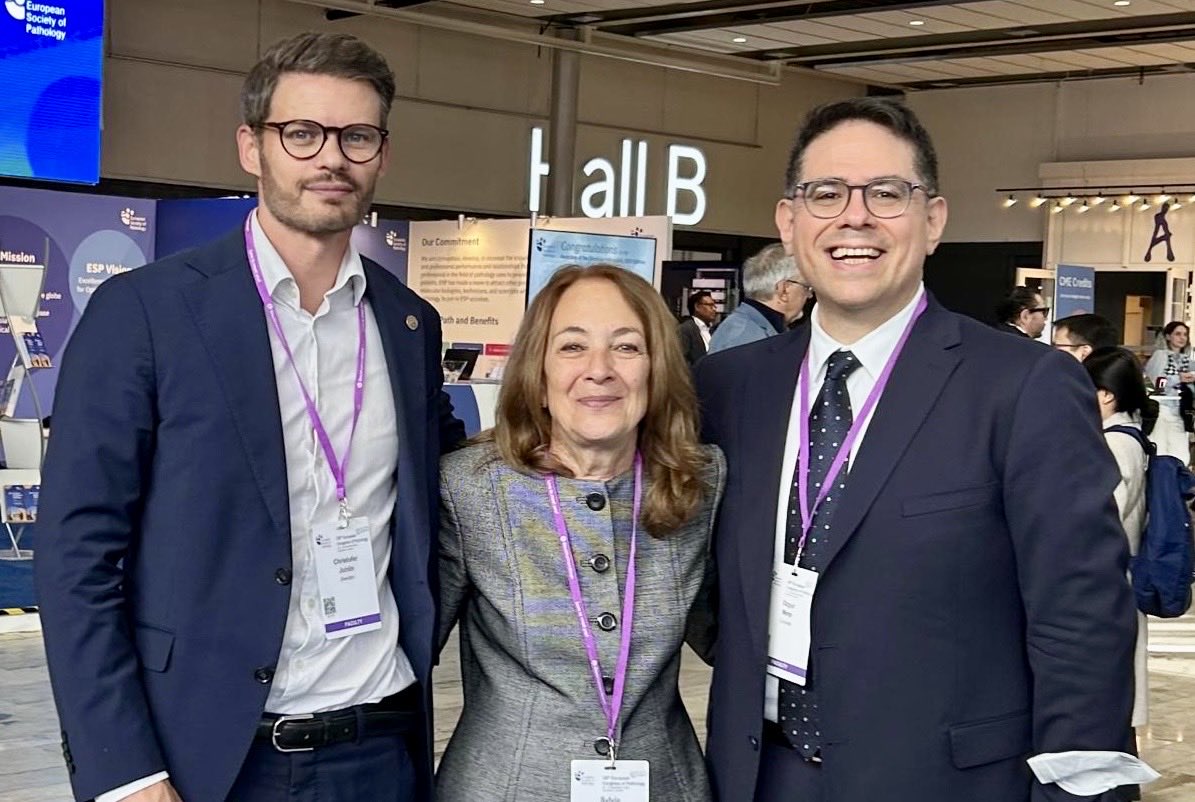
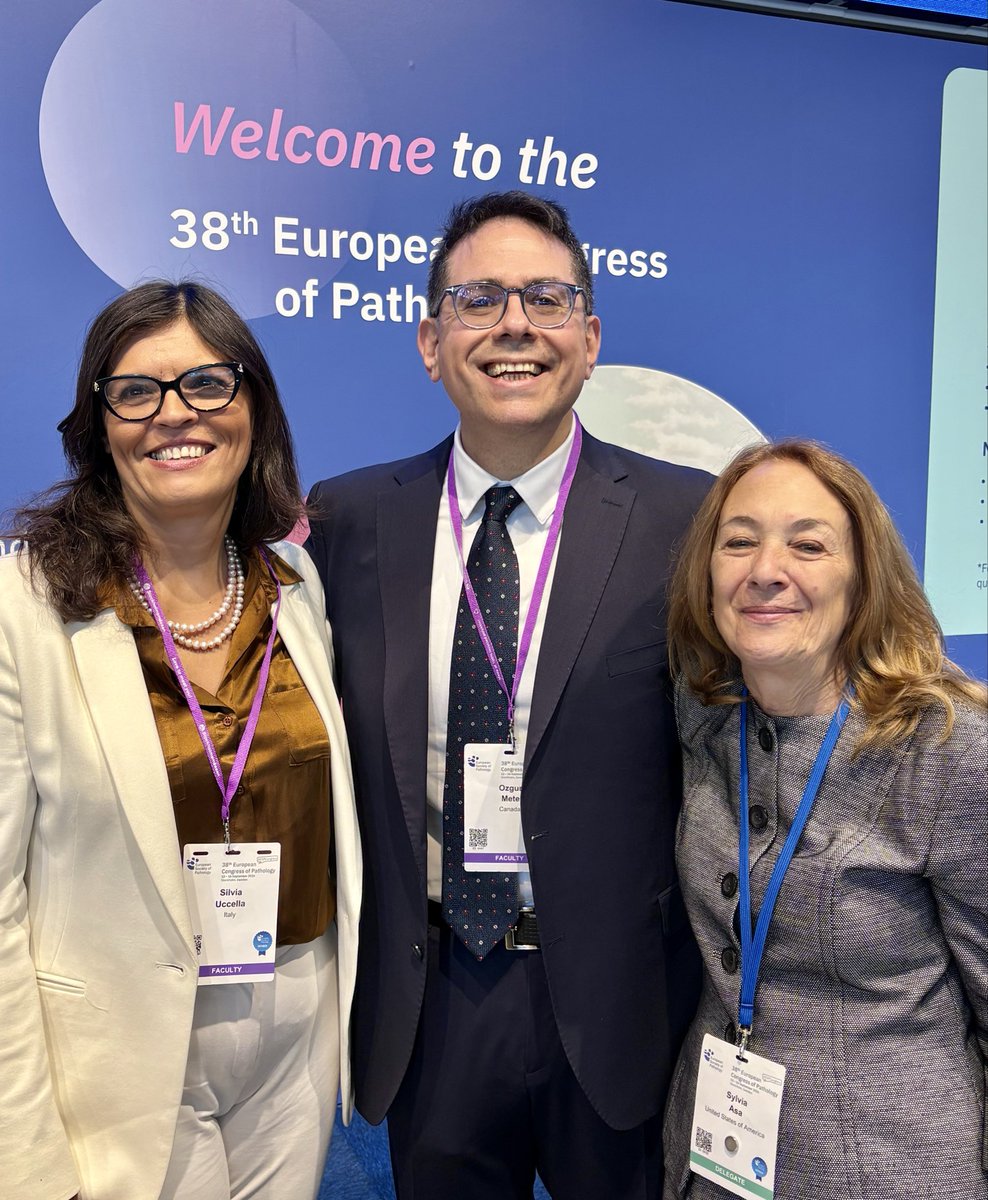
Endocrine pathology came out in full force at ECP2026 in Stockholm, Sweden!
Depicted here are three leaders in the field who need no formal introduction: Silvia Uccella, Ozgur Mete and Sylvia Asa!
🇸🇪 Endocrine Pathology at #ECP2026 in Stockholm!
Monday highlights: 🧩 The Endocrine Challenge, 🏆 Best Poster Session & 🧬 Adrenal and paraganglia: are there new kids on the blocks?
From morphology to molecular diagnostics - lots to discuss!
https://t.co/Nf9CgZBY2i
🇸🇪 Endocrine Pathology at #ECP2026 in Stockholm!
Monday highlights: 🧩 The Endocrine Challenge, 🏆 Best Poster Session & 🧬 Adrenal and paraganglia: are there new kids on the blocks?
From morphology to molecular diagnostics - lots to discuss!
https://t.co/Nf9CgZBY2i
Can we better predict recurrence in non-functioning pancreatic NET? 🧬
No recurrences occurred in tumors with isolated Menin loss, vs 48% with ATRX/DAXX loss - highlighting the potential of molecular risk stratification to guide follow-up.
Read it here:
https://t.co/LFaz6MEKha
Rare. Aggressive. Biologically complex. 🧬
Bladder neuroendocrine neoplasms challenge current classifications. This review uncovers their molecular heterogeneity and proposes a bladder-specific framework to sharpen diagnosis and personalized medicine.
https://t.co/XBrQNOsLdt
🧬 New PPGL genetics research:
Germline testing found pathogenic variants in nearly one-third of 110 pheo/paraganglioma patients, highlighting the value of tiered testing and equitable variant interpretation across diverse populations.
https://t.co/9erfo77cOU
🔬 New in Endocrine Pathology: Necrosis in paragangliomas (only 3.9% of cases) is linked to 75% metastasis rate (vs 10%), larger tumors & cardiovascular complications. Cystic changes don't affect outcomes. Pathology matters for risk stratification!
https://t.co/WdXVZULBez
💡 A new genetic cause of hereditary hyperparathyroidism?
New findings implicate fumarate hydratase (FH) deficiency in a subset of parathyroid adenomas - expanding the phenotypic spectrum of FH tumor predisposition syndromes!
https://t.co/DCrHswe2Ny
🩸 Could ctDNA improve monitoring of adrenocortical carcinoma?
In 87 tests from 20 patients, ctDNA showed 88% sensitivity, 91.7% specificity - and strongly correlated with tumor burden (R=0.844).
Promising evidence for personalized ACC surveillance!
https://t.co/QcnD0hQ7Tx
Where do rare renal neuroendocrine tumors come from? 🕵🏼♀️
Genomic & transcriptomic profiling of RenNETs reveals neuroendocrine programs, universal SSTR2A expression and genetic evidence that GI-type epithelium may be a precursor in some cases.
https://t.co/uhu5TepA5i
🦋 Multifocal fibrosing thyroiditis: rarer - or simply underrecognized?
Found in 1.56% of 1,736 thyroid resections, MFT can mimic papillary thyroid carcinoma and frequently coexists with other thyroid lesions.
A closer look at this enigmatic entity 👇
https://t.co/T4Hu4BSgOo
🧬 Could RNA splicing help explain PanNET heterogeneity?
Analysis of 174 tumors reveals 3 distinct “spliceosomic” groups with unique clinical, molecular & splicing profiles - opening new avenues for biomarkers and personalized therapy.
https://t.co/kXpweesEXl
🧬 Are all ALK rearrangements in oncocytic thyroid tumors equal? Not necessarily.
New research shows STRN::ALK transcript heterogeneity, only canonical in-frame fusions showed ALK protein expression.
Resd why FISH-positive ≠ ALK-driven 👇
https://t.co/R5YdAZeffo
Are gallbladder neuroendocrine tumors really aggressive?
A new study in Endocrine Pathology suggests most GB-NETs are small, low-grade, and indolent, with tumor size and grade emerging as key predictors of metastatic risk.
https://t.co/6NKPAZvMX6