The energy conversation moves fast. Finding the facts shouldn’t take all day.
NCEA Energy Chat puts research, sources, and context in one place.
See the NCEA research behind an answer. Read the exact passage. Explore related media. Put current headlines in context. Save the conversation and come back when you’re ready.
Try it: https://t.co/x69kteoeRd
#EnergyChat
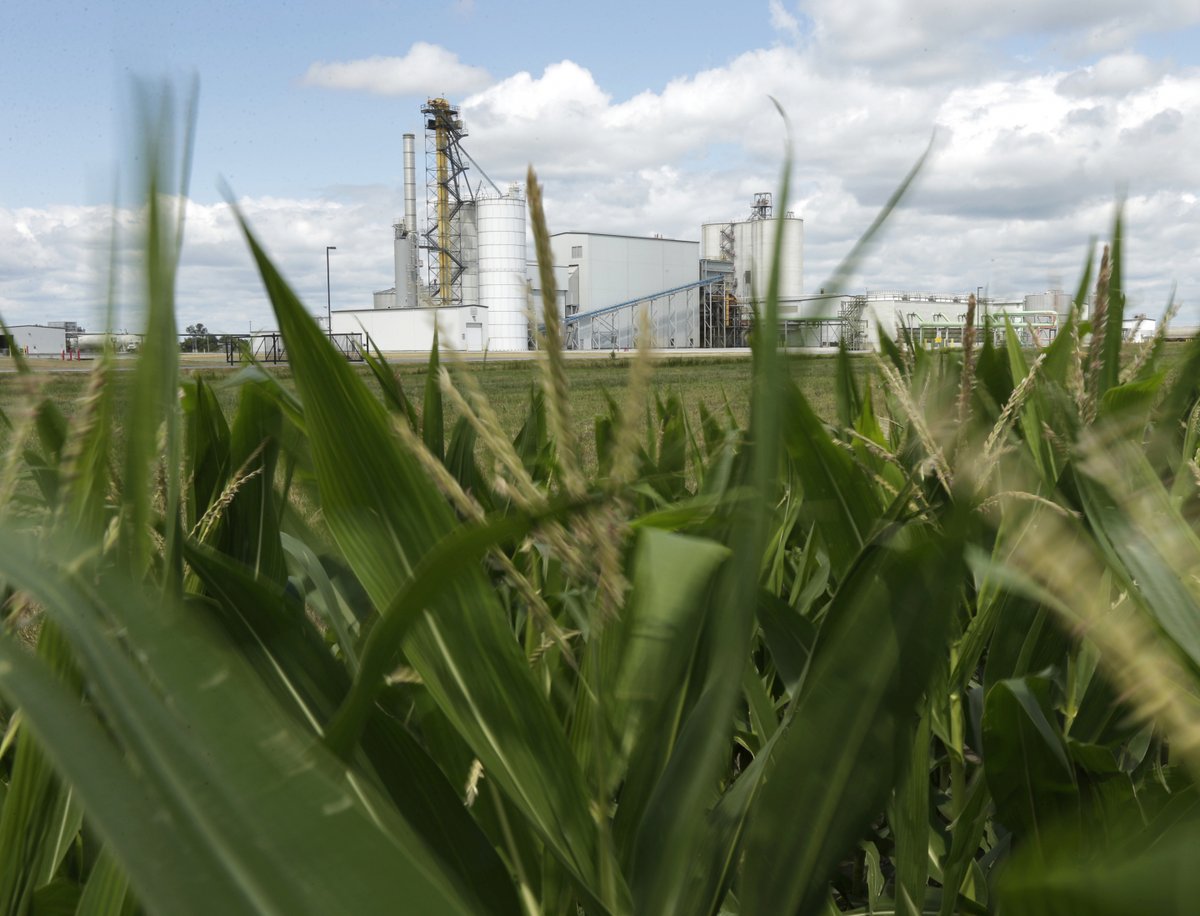
Every gallon of fuel carries a hidden water cost. Driving on E10 uses 19 times more water per mile than ethanol-free gasoline, and E85 uses 186 times more.
As farms, communities, and a growing energy system compete for the same supply, some energy choices use far more water than others, and federal policy continues to support one of the thirstiest.
In a new issue brief, NCEA Visiting Fellow Todd "Ike" Kiefer outlines four steps toward sustainable water use: end subsidies for water-intensive fuels, let water prices reflect supply and demand, quantify and price gray water, and make eliminating the Gulf Coast dead zone a national priority.
Corn ethanol consumes 8% of the nation's water footprint but supplies only 1.2% of U.S. primary energy. A gallon of water used by power plants produces about 45 times as much energy.
America's energy and technological future depends on water policies that put every gallon to its most productive use. If water is needed for farms, communities, and energy, should public policy continue to favor a fuel that consumes so much of it?
Read the full brief: https://t.co/gIiwGJPpQB
ICYMI: Brent crude gets the headlines but diesel is the number that matters.
NCEA Senior Fellow @NeilAtkinson58 joined @CNBC's Squawk Box yesterday to discuss the UAE’s exit from OPEC and what it signals for global oil markets.
His view: after years of investing billions in production, midstream, and downstream capacity, the UAE intends to use it, operating with the commercial freedom of an international oil company. With demand set to keep rising, Saudi Arabia, Iraq, and other producers will compete hard for market share, alongside growing supply from the U.S., Canada, Venezuela, Brazil, Argentina, and Guyana.
“Demand for fossil fuels as a whole is going to continue to grow for many years to come,” Atkinson said.
He also pointed to what consumers are actually feeling: with Brent around $95, diesel is running about $180 a barrel, as conflicts in the Middle East, Ukraine, and the Red Sea keep refined product supply unreliable. Those prices feed directly into inflation and cost-of-living pressures worldwide.
Atkinson has been tracking these shifts in his recent NCEA research. After UAE Departure, What’s Next for OPEC? explains why the exit was years in the making, and Energy Investment and the Iran War makes the case that meeting future demand will take more oil and gas investment, not less.
Watch: https://t.co/bcPV4nZTcs
Read the briefs:
https://t.co/fSK5Mvwg3C
https://t.co/rln7Td6HgK
Shipping gasoline from Houston to New York on a Jones Act tanker adds almost 4 cents a gallon. With the waiver now extended another 90 days, that cost is back in focus.
NCEA’s new issue brief, What Is the Price of the Jones Act?, by Visiting Fellow Ryan Lynch, finds that shipbuilding drives the gap. A medium-range product tanker costs about 3.8 times as much to build at an existing U.S. yard, largely because U.S. yards charge facility costs to one hull while Korean yards spread them across dozens.
Expanded Title XI loan guarantees, tax parity, allied foreign investment, and series production together cut the ship’s capital charge by more than 40%. Payments based on the fleet’s capability value would bring the extra cost from 59% to 14%. The 0.98 cents per gallon that remains is the cost of a U.S. crew, which the brief keeps in place.
As Lynch writes, “Every serious critique of the Jones Act is correct about cost impacts, while every serious defender is right about its need and purpose.” The brief shows how policymakers can close most of the gap with tools that largely exist, without repealing the law.
🔗https://t.co/9aTirw9V0V
What are your thoughts on the need for US industrial regulatory reform?
That's what my article this week is about, along with my new issue brief from the National Center for Energy Analytics @EnergyRealities . Links to both are in the comments.
Can American shipbuilding go global?
As the latest Jones Act waiver expires Sunday, Visiting Fellow Ryan Lynch says America’s tanker shortage is a demand and financing problem, not a workforce one.
In the latest Energy Future Now, Lynch joins RealClear’s Maggie Miller to examine why shipping on American tankers costs nearly four cents more per gallon than on international vessels, and how to cut that in half without repealing the Jones Act.
Lynch outlines three essential takeaways: the premium comes from the cost of building ships, not labor; better financing, tax treatment, and serial shipbuilding could close more than half the gap; and U.S.-built ships are shut out of international markets today, a door that could open just as crude exports did in 2012.
“Let American maritime capabilities be our projection of force globally.”
Energy Future Now is a series from @_RCEnergy and the National Center for Energy Analytics, offering timely conversations on markets, policy, and technology in energy.
🔗https://t.co/L4hKdugtk8
At any given time, $1.1–$1.5 trillion in planned infrastructure spending is waiting for federal approval.
America has the resources, capital, and demand to build. What slows energy and industrial projects is regulatory friction: years of sequential reviews, serial litigation, and grid interconnection queues that leave viable projects waiting.
A new NCEA issue brief, Regulatory Reform for America’s Energy and Industrial Future, by Visiting Fellow @JimVinoski lays out how a simpler, more predictable system could move projects forward. It calls for one lead agency and firm deadlines for permitting, interconnection reform to clear grid queues, and a nonpartisan commission to review industrial regulations. It also estimates that about $39 billion a year in regulatory costs falls on energy-related manufacturing.
As Vinoski writes, “This agenda is much broader than ‘drill, baby, drill.’” If America wants more reliable energy and stronger industry, should the priority be building more, or clearing the way for projects already waiting in line?
Read the issue brief:
https://t.co/5I4FsgLYvJ
A headline tells you what happened. NCEA Energy Chat helps you understand why it matters—or whether the headline tells the full story.
Ask about a recent grid alert, regulatory change, or market shift. Add the event name, paste a link, or use phrases such as “this week” or “latest.”
Energy Chat brings in current coverage when you ask for it, then connects the story to relevant NCEA research. It can also identify what a claim leaves out or may overstate.
Current coverage and NCEA research are labeled separately.
Ask about this week’s news: https://t.co/x69kteoeRd
Pulling one billion tonnes of CO₂ out of the air each year would take more than three times Great Britain’s entire annual electricity output.
That’s one finding from a new peer-reviewed article in Economic Affairs by NCEA Senior Fellow Jonathan Lesser on the feasibility of large-scale direct air capture.
Even a perfectly efficient DAC plant needs about 233 kWh per tonne of CO₂, a floor set by thermodynamics, and real-world estimates average about 1,890 kWh. Removing 10 billion tonnes a year would use about one-third of today’s global electricity, requiring roughly $6.5 trillion in new nuclear plants or $13 trillion in offshore wind before storage. Total DAC costs exceed even the $185 per tonne median estimate of the social cost of carbon.
No breakthrough can engineer away the physics. Governments should weigh DAC subsidies against more cost-effective options, including adaptation.
Read more 👇
https://t.co/P7S7FjQMMs
For 21 years, Washington has mandated how much corn ethanol goes into America’s gasoline. The family farmers who grow that corn have seen surprisingly little of the reward.
In a new RealClearEnergy op-ed, NCEA Visiting Fellow Todd "Ike" Kiefer follows the money behind the Renewable Fuel Standard. Corn-suitable farmland values climbed 44% after the RFS, which benefits large landholders and outside investors while raising costs for farmers who lease. Only about a quarter of local biorefineries are still farmer-owned co-ops, and the largest gains go to vertically integrated ag giants.
Kiefer’s alternative is to clear trade barriers, lower the cost of local processing and direct sales, and ease the tax hurdles that make it hard to pass farms down.
Read it here: https://t.co/t94MrSztt9
What makes a mineral “critical” in a country with vast natural resources?
For the United States, the real vulnerability lies not in raw materials but in the loss of the manufacturing that once turned them into finished goods.
In a new NCEA issue brief, Energy and Materials: A New Synthesis, Visiting Fellow Michelle Michot Foss argues that policymakers should move beyond critical minerals lists and ask what services are actually needed from materials, from conductivity and strength to thermal stability.
Michot Foss shows how commercialization, credible institutions, and lessons from oil and gas can help advanced materials reach scale, why the issue offers rare common ground for a bipartisan coalition, and why turning a new framework into action takes real operational discipline.
If the goal is both secure supply chains and a revitalized industrial base, is a longer list of critical minerals the answer?
Read or listen to the full issue brief:
https://t.co/znUcE4ZXCA
AI isn’t a cure-all for healthcare, but it may be one of the most practical tools the sector has seen in decades.
Executive Director @MarkPMills joined Bryan Hyde on the @healthpolicypod to separate hype from reality. Mills points to three areas where AI can deliver: speeding up research, sharpening diagnostics, and cutting into administrative overhead, which accounts for up to 35% of healthcare spending.
🎧 Listen to the full episode: https://t.co/C5HgRkKJgH
Research, podcasts, videos, and commentary—ranked by relevance.
NCEA Energy Chat brings related media into the conversation without confusing it with NCEA research.
Ask about a topic such as grid reliability or critical minerals, then scroll to Related Media below the answer. Podcasts, videos, webinars, and outside commentary are ranked by relevance, so you can start with the most useful item.
Related media is clearly labeled separately from NCEA’s published research.
Explore a topic at https://t.co/x69kteoeRd
NCEA senior fellow Rupert Darwall has published a new book, The Age of Error and the West’s Undoing (Encounter Books).
The book examines Western politics from the 2008 financial crisis to Russia’s 2022 invasion of Ukraine and argues that the West’s retreat from affordable, reliable energy was a strategic choice.
Key arguments:
▪️ Climate policy as elite therapy: After the financial crisis, Western leaders handed economic policy to central bankers and focused on climate change, neglecting energy security, growth and geopolitics.
▪️ Net zero vs. national security: While committed to net zero, Europe can’t generate the resources for its own security or be a credible U.S. security partner.
▪️ The EU as a paper empire: The EU seeks to rival the U.S. as a superpower while depending on it for security.
▪️ Brexit and net zero: Britain traded EU membership, which had some economic benefits, for net zero, which has none.
▪️ The Ukraine test: The war exposed a Europe that had spent a decade appeasing Russia and cutting defense budgets.
▪️ Strategic dependence on China: Net zero deepens reliance on America’s chief rival for energy transition materials and manufacturing.
▪️ Experts over voters: From monetary policy to pandemic response, “follow the science” weakened democratic accountability.
▪️ America’s divergence: Fracking, AI energy demand and the Trump administration’s rejection of net zero have set the U.S. on a different growth path from Europe and Britain.
Read more about the book: https://t.co/JM5wOlkVMQ
Electricity bills are on voters’ minds this election season. In Virginia, renewable energy credits alone made up 20% of the average retail electric bill in 2025.
In a new issue brief, Green Energy Mandates and Electricity Affordability, NCEA Senior Fellow Jonathan A. Lesser, PhD estimates what state renewable portfolio standards, RGGI, and cap-and-trade programs cost electricity customers.
RECs accounted for about 15% of bills in DC, 11% in New Jersey, and 10% in Massachusetts. Customers in reporting states paid more than $41 billion for RECs from 2020 through 2025, including over $10 billion in 2025 alone. Generators in RGGI states paid over $9.2 billion for carbon allowances, costs largely passed on to retail customers. California and Washington have raised tens of billions of dollars in cap-and-trade revenues, spent at legislators’ discretion.
Affordability debates tend to focus on rebates and relief programs. Fewer look at what state energy mandates add to customers’ bills every year.
Read the full brief or Listen on the Go: https://t.co/dRxjoh2aMg
The EPA’s own analysis says the Renewable Fuel Standard will cost the U.S. economy more than $40 billion in 2026 and 2027. The energy security benefit? About $800 million.
In “Renewable Fuel Follies,” published today in @_RCEnergy, NCEA Senior Fellow Jonathan Lesser explains how a nearly 50-year-old push for corn ethanol grew into a mandate that raises what Americans pay at the pump, while delivering little of what it promised.
The RFS has cost the U.S. more than $250 billion from 2011 to 2025, by recent estimates. It adds almost 20 cents per gallon to diesel this year, rising to 22 cents in 2027, and more than 5 cents to gasoline. Its possible emissions cuts amount to less than 1% of U.S. emissions, and depending on how the fuels are made, total emissions could actually rise. Those higher fuel costs ripple through the economy, from transportation to food prices.
With fuel prices on voters’ minds this November, Lesser argues the mandate has outlived any justification it once had, kept alive by bipartisan politics rather than economics.
https://t.co/NISZoJVyI7
Diesel averaged $6.28 a gallon in mid-October, about 70% higher than a year ago. Can importing Russian diesel bring that down?
In a new @realclearenergy op-ed, NCEA Senior Fellow @NeilAtkinson58 explains why not. U.S. refineries already produce far more diesel than the country uses, and the initial Russian deal amounts to only about 70,000 barrels a day over a month. Russia’s own exports have collapsed under Ukrainian strikes, and an export ban would only cut U.S. refinery output, including gasoline.
The real issue is a broken global supply chain, and as Atkinson writes, the only solution is peace.
Full op-ed: https://t.co/UpWcmc9GwT
Want to verify a claim without searching through a 40-page report?
Open the source behind an Energy Chat answer and view the Quote. You’ll see the specific passage that supports the claim, along with a link to the full NCEA publication.
It’s a faster way to check a figure or finding before using it in testimony, an op-ed, or a briefing memo.
Try it on a question: https://t.co/x69kteoMGL
Wind and solar only produce electricity when the weather allows. Batteries are often presented as the way to close that gap. Can they?
In a new issue brief, Can Batteries Help Wind and Solar Provide Continuous Electricity Year-Round?, Visiting Fellow @lars_schernikau examines what simple comparisons often leave out:
▪️ Producing enough electricity over a year does not mean it will be available whenever it’s needed.
▪️ Periods of low wind and sun can last for days or weeks, and batteries cannot recharge during them.
▪️ In Germany, just 12 hours of storage at average demand would require almost the world’s entire installed utility-scale battery capacity.
▪️ Keeping the grid stable takes more than stored energy, including backup generation, transmission, and services that generation costs alone don’t capture.
Batteries can help manage the ups and downs of wind and solar. The harder question is whether they can make wind and solar reliable around the clock, every day of the year.
🔗https://t.co/Byrsqv2x7L