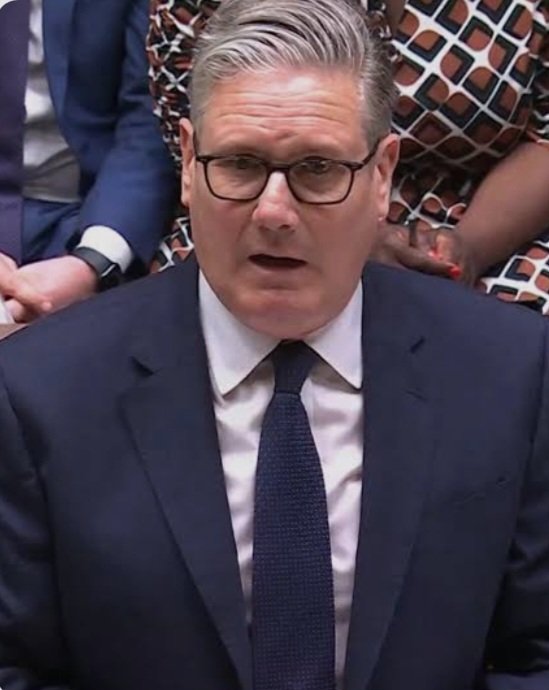
@LizWebsterSBF Burnham is popular because he’s the best chance of a Labour recovery. Starmer has no common touch, no connection with the people, they don’t even understand what his offer is, he is neither a triumph of substance nor presentation. His Government is a massive disappointment!
@WelshLabour The two most persuasive vote propositions
Hold onto nurse for fear of something worse, or
Time for change!
I think this election will prove to fall to the latter.
The pound has lost 69% of its purchasing power since 2000.
A loaf of bread that cost 50p now costs £1.40.
A pint that cost £2 now costs £6.
A house that cost £80,000 now costs £280,000.
Your wages did not keep up.
Nothing you did caused this.
They printed. You paid.
And they are about to do it again.
You and your children will work harder for less forever to pay back decades of government incompetence.
The UK just issued £15 billion of debt in a single day.
The largest gilt issuance in British history.
At the highest yield in nearly twenty years.
Last month they borrowed £14 billion.
£13 billion of that went straight out the door on debt interest.
They borrowed to pay the interest on what they already borrowed.
Now they are doing it again.
At the highest rate in twenty years.
That yield is not a number.
It is the bond market's verdict on Britain.
It is saying we will lend to you but we want more return because we do not trust where this ends.
The 30 year gilt is now at 5.49%.
Locked in for thirty years.
That is not a fiscal strategy.
That is a country that has run out of road and is borrowing to pretend otherwise.
The bond market always knows first.
It always does.
And because of it you will work harder for less.
Forever.
The Defence of the Realm vs The Defence of the Majority
George Robertson has been a Labour man for sixty years. He served as Tony Blair's Defence Secretary. He ran NATO. When Keir Starmer needed someone to write his Strategic Defence Review, he turned to Robertson. That is the context in which Robertson's words this week must be understood.
Britain's national security, he said, is "in peril." The Treasury is committing "vandalism." The government is gripped by "corrosive complacency." His co-author, General Sir Richard Barrons, was equally precise: the British Army can currently "seize a small market town on a good day."
That verdict comes from the men Starmer himself commissioned. But Robertson said something else, something quieter, that explains everything. The reason Starmer will not act, he told the Guardian, is that everybody is "worried about votes." Left and right. Reactions. The political situation. He said it almost as an aside. It should have been the headline.
The Defence Investment Plan was due last October. It has still not appeared. The military faces a funding gap of £28 billion over four years. Defence chiefs are meeting this week to discuss cuts of £3.5 billion. The Treasury, it is widely reported in Whitehall, is simply refusing to release money. Meanwhile the welfare budget runs at five times what Britain spends on defence.
Robertson's remedy is direct: the welfare budget must be reduced to fund the armed forces. Within hours, Diane Abbott was on cue. Cutting welfare to spend on armaments, she said, was "appalling." Labour would lose votes to the Greens. That was the authentic voice of the constraint Robertson was describing.
Starmer cannot cut welfare. A backbench rebellion of over a hundred Labour MPs killed his welfare reform bill last year. He cannot borrow more without alarming markets. He cannot raise taxes without another political crisis. So the system deadlocks. The review sits on a shelf. The investment plan drifts toward June, then perhaps beyond. And the men who wrote the review go public.
Those who follow my work will know I have written at length about Starmer's paralysis on Iran. The inability to act decisively in the Gulf, the refusal to name what is actually driving his hesitation. The answer, in both cases, is the same. Starmer leads a coalition held together by Muslim communities whose votes he cannot afford to lose and whose instincts run directly against any muscular projection of British power abroad. That constraint does not stop at the water's edge. The same electoral arithmetic is now preventing him funding the armed forces. It is not a coincidence. It is a governing philosophy. When survival of the parliamentary party conflicts with the national interest, the parliamentary party wins. Every time.
The government's response to Robertson was to say Britain's armed forces are "among the best in the world" and that Starmer is "determined" the investment plan will be fit for purpose. Determined. Not funded. Not scheduled. Determined.
General Barrons put the timeline plainly. At the current pace, Britain needs ten years to reach genuine war readiness. British intelligence, alongside allied assessments, gives Russia three to five years before it tests European resolve directly. That is the gap. That is what "corrosive complacency" means in operational terms.
Lord Hutton, another former Labour Defence Secretary, has called this the defining moment of Starmer's premiership. He is right, though not in the way he intends. The defining moment has already passed. Starmer has chosen. Faced with a direct conflict between what the defence of this country requires and what his backbenchers will tolerate, he has chosen the backbenchers.
Robertson said he believes his country is in danger. He said he had to speak out even though it would be uncomfortable. A sixty-year Labour loyalist broke with his own government because he concluded the alternative was worse. And he was right.
The Islamic Republic of Iran has just been nominated to the UN Committee for Programme and Coordination to shape policy on women's rights, human rights, disarmament and terrorism prevention.
The British government, of course, did not object to Iran’s appointment — even though the Iranian regime has been massacring thousands and thousands of protestors this year.
At least it shows satire is not dead.
NEXT UP> Satan nominated to investigate sin.
🍺 SPOT THE ODD ONE OUT 🍺
(Hint: it’s the one killing its own pubs)
🇫🇷 France — Hospitality VAT 10%
🇪🇸 Spain — Hospitality VAT 10%
🇮🇹 Italy — Hospitality VAT 10%
🇩🇪 Germany — Hospitality VAT 7%
🇧🇪 Belgium — Hospitality VAT 12%
🇮🇪 Ireland — Hospitality VAT 9%
🇬🇧 United Kingdom — Hospitality VAT 20%
Same industry.
Same food.
Same drink.
Same jobs.
But one country decided pubs were a luxury - not a cultural asset!
Then we act surprised when:
🍺 Pint prices rise
🍽️ Eating out costs more
🏚️ Pubs shut
✈️ It’s cheaper to drink abroad
It’s not the pub being greedy. It’s yet more tax!
You can’t squeeze pubs dry…then act surprised when they close!
Share if you think UK pubs deserve fairer VAT - not a punishment rate!
#GrumpyLandlord #HospitalityVAT #SpotTheOddOneOut #pubs #vat #SaveOurPubs 🍺
This needs addressing
@reformparty_uk@RobertJenrick@Nigel_Farage@LeeAndersonMP_@ZiaYusufUK@drdavidbull #reformuk
Why do councils own 2 million-pound houses in Kensington and Chelsea?
Because they are lazy and useless.
They could buy 20 houses in Hull for that or even 6 in the South.
Numerous cases of Somali families in these houses. They were not old tenants. They were placed there.
It's a total failure of council asset management.
Then there is the question of why new Somali immigrants are more worthy than an English family or twenty homeless English families.
Before 2010, one Somali family was receiving £2000 a week, tax-free in housing benefits. (£104,000 tax-free). This was then paid to a landlord in the Cayman Islands.
The housing benefit cap stopped this, but it did not stop councils putting asylum seekers in £2.2 million houses. This carries on all to this day.
Taxpayers have a right to be incandescent.
@DwrCymru Sir James Bevan not a proper and suitable person to be on your board! Disgraceful. What manner of incompetence to recruit him, and he should be thrown off the board at the earliest opportunity.
@aliciakearns Our special relationship close five eyes security partners the USA were aware that Mandelson was sharing secret UK Government correspondence with Epstein and yet chose not to mention it when we appointed him Ambassador? Or did they?
Arrested for calling someone a rug-muncher as a joke. Keir Starmer ‘We are very proud of our history of free speech in the UK and we will arrest anyone who says we are not.”
There's a line in a democracy that, once crossed, changes everything: when elections cease to be an obligation and become a variable. That line has now been crossed in Britain, and it's the state's own elections watchdog saying so.
The Electoral Commission has been explicit: Labour's justification for delaying local elections is not legitimate. Not unwise. Not clumsy. Illegitimate. Extending mandates damages public confidence, undermines local legitimacy, and creates a clear conflict of interest by letting councils decide how long they can avoid voters. In any functioning democracy, that would end the matter. Here, the government presses on regardless.
That's the scandal. This is no longer a party political dispute or a row between Reform and Labour. The referee has intervened and said the game is being rigged, and the players have decided to ignore the whistle. When a government continues with election delays after being told by the independent authority charged with protecting electoral integrity that its reasoning does not hold, the issue stops being reform and becomes power protecting itself.
The language Labour uses is revealing. Elections are framed as an inconvenience. Voters are framed as an administrative burden. Democracy is reduced to a cost-saving exercise, something to be postponed if the spreadsheets look untidy or the reorganisation plans are mid-flow. Ministers speak of "capacity constraints" as if the right to vote is a luxury item that must wait until the filing cabinets are rearranged. In a democracy, administration exists to serve elections. Elections do not exist to suit administration.
The conflict of interest identified by the Electoral Commission should alarm anyone who still believes in democratic norms. Councils are being asked whether they would like to delay the moment they must answer to voters. That's not consultation. It's self-dealing. No serious system allows those in power to decide how long they may remain there without consent. Yet this is now presented as a "locally led approach," as though outsourcing democratic suspension makes it virtuous.
Worse still is the uncertainty. Candidates have been selected. Campaigns have begun. Money has been spent. And with months to go before polling day, the government is still dangling the possibility of cancellation. The watchdog describes this uncertainty as unprecedented. That word matters. Democracies rely on predictability. Once elections become provisional, subject to last-minute ministerial approval, the entire process is degraded.
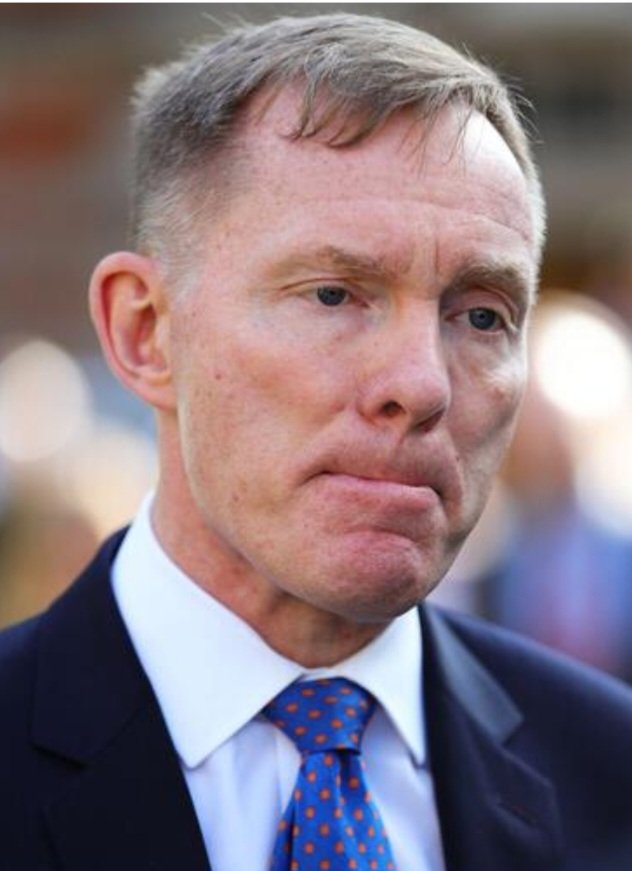
When challenged, ministers retreat into condescension. Chris Bryant waves away concerns as conspiracy and insists that "ordinary people" would think elections are "a bit daft." This is a familiar trick: speak for the public while denying them a voice. Redefine democratic rights as common-sense nuisances that sensible adults should stop fussing over. It's the rhetoric of managed democracy, where participation is tolerated only when it produces the correct outcome.
None of this is happening in isolation. Mayoral elections have already been postponed. Now council elections are being pushed back again. The pattern is clear. When the polls turn hostile, the timetable moves. When voters become unpredictable, the vote is delayed. Governments confident in their mandate do not need to buy time. They face the electorate and take their chances. Labour is not doing that because it knows what the numbers say.
The danger is not just that millions of people may be denied a vote next year. It's the precedent now being set. Once a government learns it can delay elections after the watchdog objects, after campaigns have begun and candidates are in place, the principle is broken. Elections become conditional. Democracy becomes something you are granted when those in power feel safe enough to allow it.
"Chris Bryant waves away concerns as conspiracy and insists that "ordinary people" would think elections are "a bit daft.""
@afneil If we must go to war can I suggest a deployment plan:-
Front Rank: MP’s, Lords, Monarchy
Second Rank: Judges, Bishops, Immams, CEO’s, Billionaires
Third Rank: Press (sorry Andrew), Councillors, Celebrities
If sadly they should all fail, let’s just surrender!
Juries have been the last line of defence against the authoritarian cancel mob.
When our members have found themselves charged with criminal offences for speaking out, juries have reliably said no dice to overzealous prosecutors. This has infuriated the CPS and the activists who make malicious complaints.
One was Jamie Michael, a decorated Royal Marines veteran, who was charged with inciting racial hatred after a Labour staffer reported him to the police for a video he posted on Facebook. Jamie spent 20 days in prison on remand. A jury took just 17 minutes to clear him. The local Labour Party were said to be furious.
Now David Lammy wants to scrap juries and give judges — who are required to follow DEI policies — the sole power to convict and jail Brits for up to 5 years for online posts.
This move is about power, not saving costs. Nothing in our present national situation warrants abandoning an 800-year-old right: that in a court of law, your peers decide if you're guilty, not the state.
We will fight any such proposal with everything we’ve got.
Read more below 👇