This rightly points out that unfunded research can result in strong impact case studies - I've got 4 star case studies out of unfunded research. The hard part is finding out the research is happening in the first place. How should we track unfunded research?
@ree_s89 I think the distinction in my mind is between impact as a thing that may eventually arise from research, and impact as a planned aspect of a research programme.
@ree_s89 It certainly is! However, I was around for a whole lot of "Space Weather" malarkey in the 2000s which would make any impact manager blush. As for microlensing, I don't think any impact has come from the whole field. But that's OK. There should be space for pure research as well.
@ree_s89 I don't think gravitational microlensing (my PhD subject) has had any substantive non-academic impact. It might end up doing so in the future, but it feels a bit futile to try to force it. And I can tell tales of space physics impact debacles I've witnessed, but only over a pint.
@ree_s89 That said, and it may be heretical of me, I do think there is a case for keeping some academics focused on basic research without being concerned with impact.
@ree_s89 Academics need time/money for impact activities, clear expectations and recognition for impact, along with support with IP, engagement, evidence gathering etc. Professional services can only do so much: ultimately it's about buy-in and leadership from the very top.
This "Hidden REF" is an interesting idea. It seems to me it's effectively highlighting information that the REF would ideally seek to capture in the Environment section. Not sure they'll get many submissions, though, given how people grumble about the burden of the actual REF.
How should we celebrate the research excellence obscured by the REF? The case of the Research Software Engineer @j_w_baker@HiddenRef#REF2021
https://t.co/27jW2LmIfg
Universities despair as EU research spending stagnates: Horizon Europe will receive only a tiny fraction of an unprecedented €750bn pandemic recovery package. @DavidMJourno reports
https://t.co/NcdsioIiFR
I remember this well, it was a remarkable sight. What sticks in my mind most, though, is the line of black impact sites across the surface of Jupiter, from where the separate chunks of the comet had struck in turn.
#OnThisDay in 1994, the last large fragment of Comet Shoemaker-Levy 9 struck Jupiter. Impacts had happened for days, creating fireballs at temperatures of 23,700 degrees Celsius, and impact marks across the planet. Below you can see a collision (left) and the moon Io (right).
This is a great article about doing scientific development at speed and at scale. Gilbert and her team have achieved remarkable results so far. I worry, though, that Boris Johnson is betting the farm on this being an unqualified success by autumn. https://t.co/8fAJJO109z
I've long thought that randomising funding decisions (for proposals above some reasonable quality bar) would be a good idea: glad to see randomisation having positive effects at Nesta.
Random funding unleashes creativity: Lottery approach has increased Nesta scheme’s diversity and reach, say Laurie Smith and Bernardo Maza. (£) @nesta_uk
https://t.co/OKp8QkLAi0
😮 Huge story in this morning’s 8am Playbook, revealing that the odds are now against the UK seeking associate membership of Horizon Europe. Great work by @benwupton and @mgmcquillan.
Subscribers can read Ben’s scoop here: https://t.co/mrRTJjy1Bd
@bellastarling The context was PE events rather than patient involvement, which I agree is different. Conclusion was that impact on institutions and people delivering engagement is both more substantial and more readily evidenced than impact on broader public.
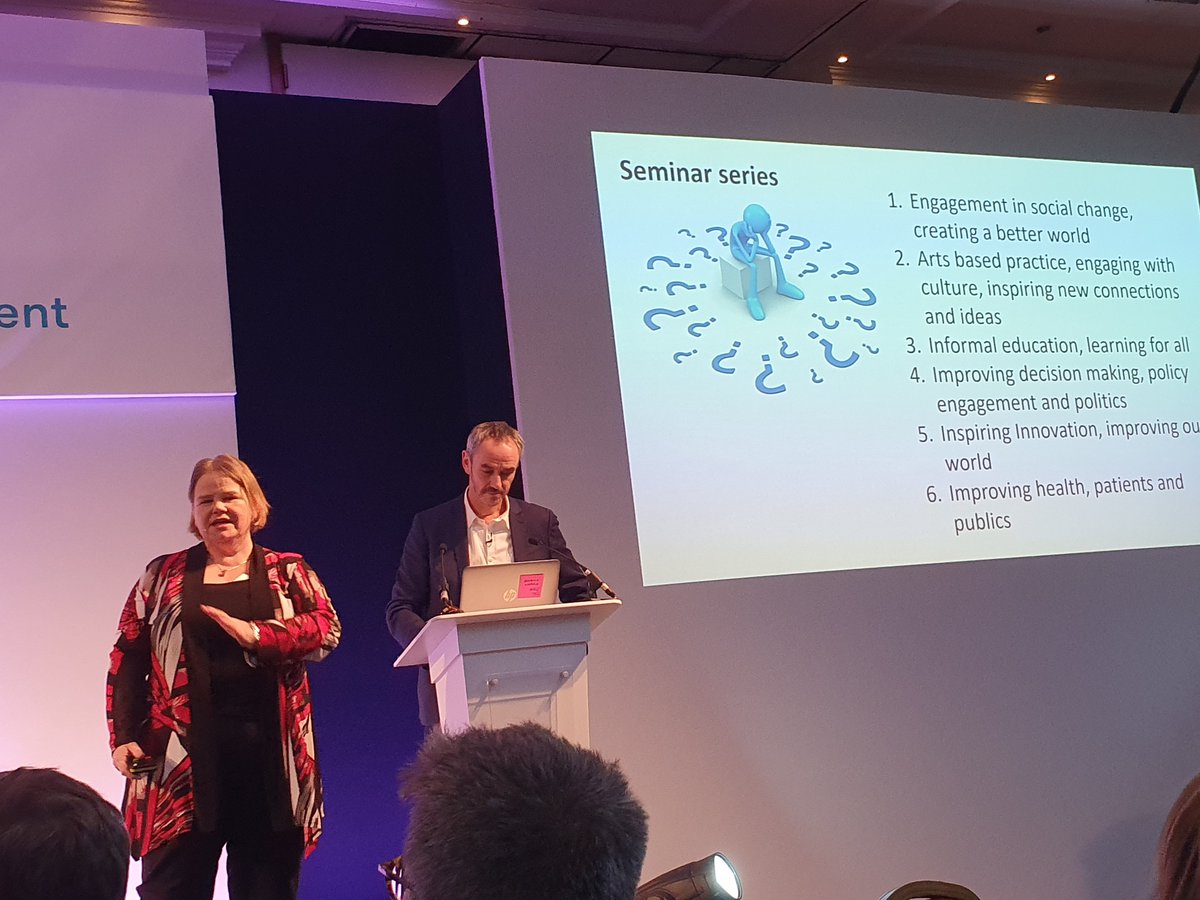
Sarah McLusky challenging whether public engagement can ever provide evidence of impact on the public - but might be able to demonstrate impact on the volunteers delivering the events. #Engage2019
@EngagetoImpact has partnered with
@VertigoVentures to provide research institutions in the #UK with services and systematic support for more efficient and productive impact management. #researchimpact
https://t.co/Xh0k6O7YZe
“When you leave a gap it gets filled by others - including journalists. We need to fill in the gaps ourselves” says Zena Creed @RussellGroup on the communication pressures facing #HE in the twenty-first century.