📽️We recently sat down with Jim Bazzani from @calebandbrown to discuss a different side of crypto investing, one that focuses on personal brokers and why many people value guidance when buying, selling, or managing digital assets.
In the conversation, we cover how a personalised crypto brokerage works, why some investors prefer speaking to a real person when making decisions and how this model is valued by both newcomers and veterans in the digital asset space!
🔧New in our Tools section🔧
We understand that many people have issues with some of the complexities associated with buying and holding crypto, for example, private keys, self custody and wallet addresses etc
@calebandbrown offers a different take on crypto investing. A brokerage model built around direct contact with a personal broker. We explore how this approach works, who it’s for, and how it compares to traditional exchanges
🔗 https://t.co/Qt2BKp2zJa
#BTC #learncrypto #CryptoMarket #cryptobrokers
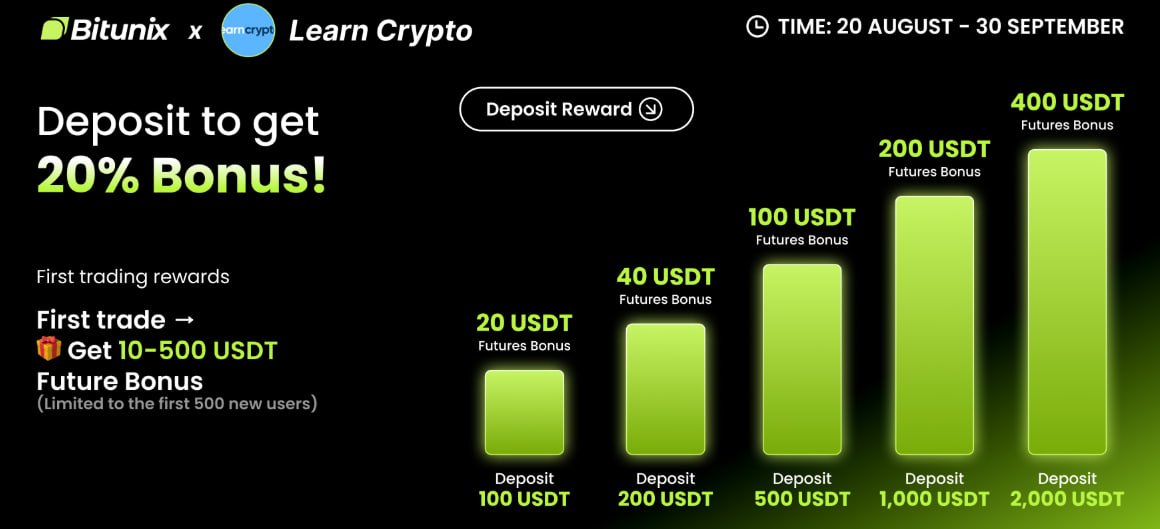
🚀Exclusive Offer Alert from Bitunix!
We have teamed up with Bitunix to bring our followers a special offer:
🎁Receive a deposit bonus of 20% - up to 400 USDT - when you join via the Learncrypto link. You can read all the details there as well.
Why it’s worth your while:
With Bitunix you can access tools like Spot markets, Futures trading, Copy-Trading, Auto-Invest & more.
This offer is only available until September 30th 2025.
Tap the link, get started 👉 Bitunix Offer (https://t.co/ADRXaXdO5H)
30 DAYS LEARN CRYPTO CHALLENGE
DAY 4
IS CRYPTO REALLY ANONYMOUS?
"Crypto is anonymous."
That’s what I used to think until I learnt more about onchain activities.
I believed crypto was the perfect way to move money without leaving a trace.
No banks. No paperwork. No names attached.
Sounded like the dream tool for secret deals or shady transactions, right?
Wrong.
Here’s what most people don’t realise:
🛑 Every transaction is permanently stored on the blockchain.
🛑 Anyone can view it if they know where to look.
That’s why hackers who steal millions often still get caught.
Eventually, they need to cash out through a CEX or some service that asks for ID and boom, they’re exposed.
People like @zachxbt have made a career tracking stolen funds and uncovering scammers using nothing but on-chain data.
So, is crypto really anonymous?
Or is it just pseudo-anonymous until someone connects the dots?
Drop your thoughts in the comments.
And if you want to actually earn legitimately in crypto,
learn from the pros at @Learncrypto_com → https://t.co/xrh4NZAozT
Remind me when I dey use button phone with no memory card.
I'll browse through different radio channels to find which one was playing music so I can chill and listen to music with my earpiece on.
30 DAYS LEARN CRYPTO CHALLENGE
DAY 5
DOES BITCOIN REALLY CONTRIBUTE TO GLOBAL WARMING?
It’s true that Bitcoin uses a lot of electricity. But here’s why that might not be a bad thing
Security isn’t free
Bitcoin’s Proof-of-Work is designed to be energy-intensive.
That’s what makes it secure, decentralized, and nearly impossible to hack.
On the other hand Banks aren’t green either.
Banks require offices, servers, security systems and paid staff.
Traditional finance burns huge resources compared to Bitcoin’s only major cost is electricity.
Shifting to renewables:
More miners are going green, and energy use will likely peak as fewer coins are mined.
The real question we should ask is not
“Does Bitcoin consumes energy?"
INSTEAD
Do the benefits outweigh the cost?
Learn the full story at https://t.co/xrh4NZAozT
Use code ALPHA for a discount on your course.
Also follow @Learncrypto_com
#Bitcoin #CryptoEducation #LearnCrypto
30 DAYS LEARN CRYPTO CHALLENGE
DAY 6
With more people gradually accepting cryptocurrency, it’s safe to say it’s becoming the new money. Many in developing countries now have access to financial services they never had before.
Today, more stores are accepting crypto as payment. And considering cryptocurrency has only existed for just over a decade, one can only imagine what the next few years will bring.
Beyond payments, the investment side of crypto has been life-changing. Many millionaires have been made and yes, many have lost money trying to invest.
The key? Finding the right projects to invest in.
But how do you know which projects are worth your time and money?
That’s where @Learncrypto_com comes in.
Visit https://t.co/xrh4NZAozT to gain the knowledge you need to trade and invest in cryptocurrency the smart way.
30 DAYS LEARN CRYPTO CHALLENGE
DAY 7
HOW TO KEEP YOUR CRYPTO SAFE
It would be a shame to work so hard, save diligently, and then lose it all.
Or imagine spending years learning crypto trading, growing your portfolio, only to have all your profits wiped out by scammers or hackers.
In every field, security is important and crypto is no exception. As we strive to learn about blockchain, trading, investing, and everything cryptocurrency, we must also learn how to protect and secure our assets.
There are various ways to keep your crypto safe, many of which are outlined in the Learn Crypto courses.
Simply visit https://t.co/xrh4NZAozT to gain the knowledge you need, and remember to follow @Learncrypto_com for more tips.
When signing up, use the unique code ALPHA.
Best regards, champs 🏆
30 DAYS LEARN CRYPTO CHALLENGE
DAY 8
TODAY WE'LL LOOK AT A BRIEF HISTORY OF CRYPTO REGULATIONS
From wild west beginnings to today’s global rule here’s how crypto regulation evolved.
2009 → BITCOIN IS BORN
Bitcoin launches during the global financial crisis.
Early adopters are inspired by the cypherpunk movement focused on privacy and freedom from banks and governments.
THE WILD WEST ERA
No rules. No oversight.
Early crypto grew creatively but became a target for scammers, Ponzi schemes, and hackers.
Many investors lost funds with zero consumer protection.
2013–2014 → REGULATORS WAKE UP
2013 → U.S. Treasury calls Bitcoin a virtual currency.
2013 → Silk Road (underground marketplace) seized.
2014 → Mt. Gox, the biggest Bitcoin exchange, gets hacked hundreds of millions lost.
Note: Big incidents push regulators to act.
MIXED DEFINITIONS
2013 – Virtual currency (U.S. Treasury)
2014 – Commodity (CFTC)
2014 – Property (IRS)
2021 – Physical cash (U.S. Infrastructure Bill)
One asset leads to many legal definitions.
2022 – THE YEAR OF SCANDALS
Terra/Luna collapse wipes out $5 billion.
FTX fraud leads to billions in customer losses.
Pressure mounts for tighter crypto regulation worldwide.
THE PATTERN
Crypto regulation has mostly been reactive, following major failures.
Each crisis leads to new laws designed to prevent a repeat.
TAKEAWAY
Crypto is still young, but regulation is growing fast.
Knowing how and why laws evolved can help you invest and trade more safely.
Learn more: https://t.co/xrh4NZAozT | Use code ALPHA for a discount.
Follow @Learncrypto_com for more updates
30 DAYS LEARN CRYPTO CHALLENGE
DAY 9
I thought I knew EVERYTHING about cryptocurrency.
I mean with blockchain, everything is on-chain, right? You can trace any transaction using a wallet address.
Well, today I found out on the learncrypto site that’s NOT always true
Let’s talk about what I learnt Privacy Coins
So, what are Privacy Coins?
Also called Anonymity-Enhanced Coins (AECs), these are cryptocurrencies designed to hide:
• Who’s sending
• Who’s receiving
• How much is being sent
Basically it’s crypto with a mask on.
Why they exist
Bitcoin is pseudo-anonymous, your name isn’t shown, but your wallet’s activity is public for the whole world to see.
Privacy coins were made for people who want:
• Financial privacy
• Protection from tracking
• Security in risky situations or countries
How they pull off the “invisibility” trick
They use some crypto wizardry like:
• Ring Signatures → mix your transaction with others so no one knows who sent it
• Stealth Addresses → one-time wallet addresses so transactions can’t be linked
• Zero-Knowledge Proofs (ZKPs) → prove a transaction is valid without showing any details
Popular Privacy Coins
• Monero (XMR) → king of privacy coins
• Zcash (ZEC) → lets you choose between transparent & private transactions
• Dash (DASH) → optional “PrivateSend” feature
• Beam & Grin → use MimbleWimble protocol
The drama around them
Because they hide everything, regulators worry they can be used for activities like:
• Money laundering
• Black-market transactions
Some exchanges have even delisted them.
But fans argue: “Privacy is a right, just like cash transactions.”
My takeaway today
Crypto is much deeper than I thought.
Not everything is visible on-chain.
Some blockchains are built so that only you and the other party know the details everyone else sees nothing.
The internet never forgets but privacy coins make it very hard for it to remember.
If you’re following this 30 DAYS LEARN CRYPTO CHALLENGE, privacy coins might just change how you think about blockchain entirely.
What’s your take necessary freedom or dangerous tool?
Endeavour to follow @Learncrypto_com
And sign up at https://t.co/xrh4NZAozT with the unique code ALPHA for discounts
#LearnCrypto #Blockchain #PrivacyCoins
30 DAYS LEARN CRYPTO CHALLENGE
DAY 10
Still on Privacy Technology of crypto.
Yesterday I talked about Privacy Coins and how they trigger Anonymity on blockchain transactions.
Today I'll be explaining the different means which these transactions are triggered in order to conceal the identity of the addresses involved in the transactions:
1. Ring Signatures: A ring signature conceals a crypto sender’s identity by blending their transaction with decoys, making all signers appear equally likely and preserving both privacy and fungibility.
Example,
Imagine you’re in a group photo with several people.
Someone sends a letter signed “by one person in the photo,” but doesn’t say who.
Anyone looking can’t tell which person wrote it, it could be you, or any of the others.
That’s what a ring signature does in crypto, it consists of:
→ Actual signer = the person sending the transaction.
→ Decoys = unrelated past transactions pulled in to form the “ring.”
→ The signature proves someone in the ring approved the transaction, but hides exactly who.
2. Stealth Addresses: A stealth address is a privacy technique in cryptocurrency where the recipient generates a single public address but the sender uses it to create a unique, one-time destination address for each transaction.
This ensures that multiple payments to the same person cannot be linked together on the blockchain, effectively hiding the connection between transactions and protecting the recipient’s identity.
It's like giving someone a one-time use mailbox instead of your real home address.
Even if you get paid many times, each payment goes to a unique, random-looking address so no one watching the blockchain can link those payments together or trace them back to you.
3. Zero-knowledge Proofs: A zero-knowledge proof (ZKP) is a cryptographic method that lets one party prove to another that a statement is true without revealing any details about why it’s true or the underlying information.
In simple terms:
It’s like proving you know the password to a safe without ever saying the password or even showing what’s inside the safe.
The verifier gets 100% confidence you know it, but learns nothing else.
ZKPs are used in crypto to verify transactions, identities, or computations without exposing sensitive data, boosting both security and privacy.
30 DAYS LEARN CRYPTO CHALLENGE
DAY 11
There’s a big misconception about blockchain that I'll clear up today.
Most people think blockchain was created for Bitcoin or both are the same thing.
But here’s the truth ;
Although, every cryptocurrency runs on the blockchain.
But blockchain itself wasn’t built specifically for crypto.
In fact, the concept of blockchain existed years before Bitcoin was created.
Think of blockchain as a public notebook:
• Everyone can see it.
• Nobody can erase it.
• Once info is written, it’s there forever.
• Everyone has a copy.
Crypto just happens to use this notebook for money.
But imagine using that notebook for other things:
Using Hospitals as a case study:
Hospitals could store medical records on the blockchain.
You won't need to explain your history twice to doctors, they would use the information on the blockchain to instantly know your allergies, past surgeries, treatments, etc. before knowing where to proceed and what treatment to administer next.
It doesn’t stop there.
Blockchain can be used in:
• Government departments
• Police records
• Electoral bodies
Basically, anywhere data must be permanent, transparent, and trustworthy.
The way Bitcoin uses blockchain (as a ledger for transactions) is just one application.
That use case exploded in popularity and gave rise to thousands of cryptocurrencies.
But blockchain itself?
It’s way bigger than just money.
Think of it like this:
→ Bitcoin is an app.
→ Blockchain is the phone it runs on.
That’s the difference most people miss.
We’re still early.
As more industries adopt blockchain for data storage, we’ll see new possibilities unfold.
And it won’t just be about crypto it’ll be about how we trust information in the digital age.
Want to go deeper?
Check out @Learncrypto_com
Visit https://t.co/xrh4NZAozT for free resources & courses
Use code ALPHA for discounts
If you've been struggling to understand crypto, how it works, how to earn, and where to even begin. I know a brand that saves you.
@learncrypto_com specialises in simplifying crypto education in a way that finally clicks for beginners.
Let me show you how:
🎓 Extra Learning Video Series: Episode 4 - Why Cryptocurrency Is Shaking Up the Traditional Banking System 🎓
Join Sofia as we dive into cryptocurrency's role in traditional finance 🔍
Link to full video in the comments👇
Attention Crypto Learners! 🚨
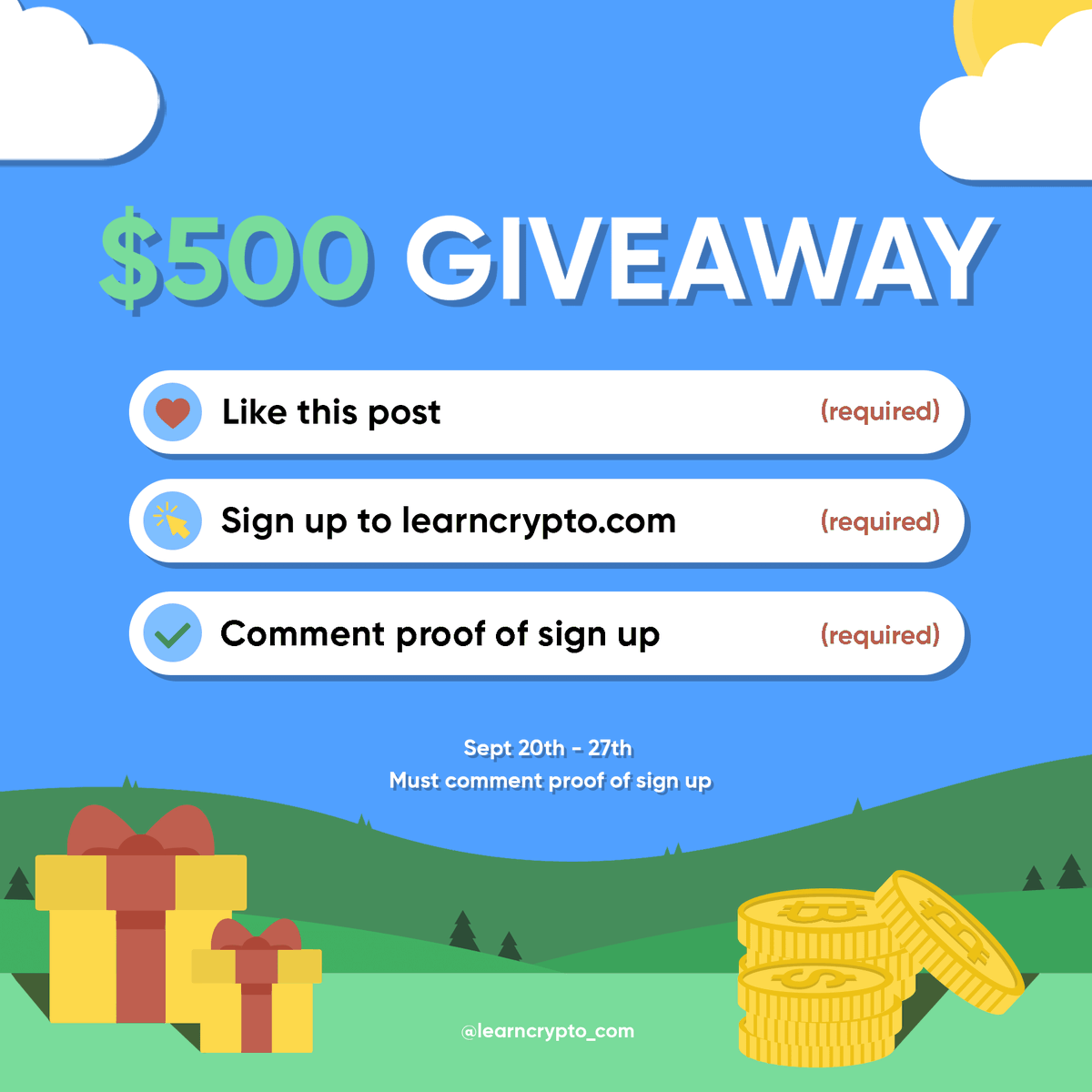
To celebrate the relaunch of our Web Academy, we are holding a WEEKLY $500 GIVEAWAY!
To participate, follow the steps mentioned below and reply with proof of participation 👇
Good luck learners! 💙
🚀ALL TIME HIGH Refers to the highest price a cryptocurrency has ever reached, commonly abbreviated to ATH.
A great time for all #BTC hodlers ���
https://t.co/ICR7v3HGJC
Yesterday, i talked about things your bank doesn't want you to know
I also talked about the difference between traditional finance and cryptocurrency
Today I'll share another case study and tell you why crypto currency is important.
In early 2022, Canada witnessed the “Freedom Convoy” protest, where truckers and their supporters rallied against COVID-19 vaccine mandates and restrictions.
The government, citing national security and public order, invoked the Emergencies Act for the first time ever.
This allowed authorities to:
• Freeze personal bank accounts of protestors and donors without a court order
• Including small donors who gave via GoFundMe or crypto addresses
• Even non-violent supporters were affected
Imagine having your savings, credit cards, and financial access blocked just because you supported a cause the government didn’t like.
2022 Protest Taught Us About DeFi
In 2022, Canada froze bank accounts of peaceful protest donors.
Not criminals. Not money launderers.
Just regular citizens who gave $20 to the wrong side of history.
All it took was one government order.
And all access to your money was gone.
What if your rent was due?
Your kid was sick?
Your groceries were low?
Too bad.
Your bank, your government, your “trusted institutions” shut the door.
( NOT YOUR KEYS, NOT YOUR MONEY)
No trial. No hearing. Just frozen.
Now imagine if those people used Crypto.
• No centralized bank
• No freeze button
• No permission required
• Funds accessible 24/7
Crypto = Financial freedom, no matter your politics.
With DeFi, your money lives on the blockchain.
You control it.
You move it.
You spend or send it as you wish.
No one can take it without your private key.
Not even a government.
Don’t wait to be the next case study.
Learn how to store, manage, and grow your funds with Crypto.
Your financial independence starts now.
To start your crypto education today visit https://t.co/xrh4NZAozT & follow @Learncrypto_com now
#CryptoEducation #DeFi #Crypto #Web3
https://t.co/ub08h8lrkG
Ever notice how new people to crypto talk about XRP like it’s some secret ticket to riches?
Meanwhile, crypto die‑hards can’t stop debating if it’s a legit game‑changer or just hype.
We broke it all down — what $XRP actually is and why it’s still in the spotlight:
👉 https://t.co/lpDU9G4nxz
30 DAYS LEARN CRYPTO CHALLENGE
DAY 1
Started with the introduction to Cryptocurrency, it's inception and the value crypto holds against the original standard of finance even better than gold.
It's availability and why everyone should opt for crypto currency today.
In summary, Cryptocurrency is digital money that uses blockchain technology to allow secure, decentralized transactions without the need for banks or governments.
You can learn further @Learncrypto_com
Sign up at https://t.co/xrh4NZAozT
Use the unique code ALPHA to get discounted offers
NEW on https://t.co/YPUh1a5iE0: Crypto Trading Principles
New to crypto? Our latest blog post covers essentials for smarter trading.
🟢 What drives price movements
🟢 How to manage risk like a pro
🟢 Why discipline beats hype
🟢 Tips for better trading habits
Read the guide: ➡️ Crypto Trading Principles (https://t.co/Mlv3ARsNsl)
Essential for curious beginners or active traders.
#BTCD #ETH #Altseason2025 #Crypto