🙏 Our deepest condolences go to the families who have lost loved ones in the devastating floods along the #Nepal–Tibet border. Our thoughts are with the missing, the injured and all affected communities, including European citizens among the many foreign travellers caught in the disaster. Today, solidarity comes first. This tragedy also reminds us to protect fragile territories, strengthen hydrogeological safety and build a more responsible relationship with nature for the future.
My thoughts and prayers are with the victims and families impacted by the horrific landslide and flash flooding in Nepal and China.
Huge respect and gratitude to the brave search and rescue personnel risking their lives in challenging conditions to save others.
https://t.co/bfszJGQH8b
Mr. @MikeFroman analysis of #China’s overcapacity and the looming economic crisis hits the mark on many points.
But what about China’s demographics?
According to China’s National Health Commission and @TheEIU, by 2035, over 30% of the population – more than 400 million people – will be over 60 years old.
According to the @UN, China will also lose approximately 700 million consumers by 2100.
An economic model that relies on exports because the domestic market is too weak is thus heading down a dead-end path.
Where there are no young consumers, there will be no domestic demand in the future either.
China’s overcapacity is not only a political problem but also a demographic powder keg.
https://t.co/ToyMg7uF89
I have already commented on this issue several times: Europe needs a genuine level playing field.
This applies to wind energy as much as to every other industry and sector. European companies must have fair and comparable opportunities to operate in China. At the same time, we need to ensure that our markets in Europe are not opened unilaterally while European companies continue to face significant barriers to market access in China.
This is not about keeping Chinese companies out of Europe. It is about fairness, reciprocity and equal conditions of competition.
There must, however, be a clear exception where European security interests or critical infrastructure are concerned. Economic openness must never come at the expense of our security.
Especially in strategic future industries such as wind energy, Europe must strengthen its own industrial base while remaining open to fair competition and investment.
Free trade only works when it is fair and security must always come first.
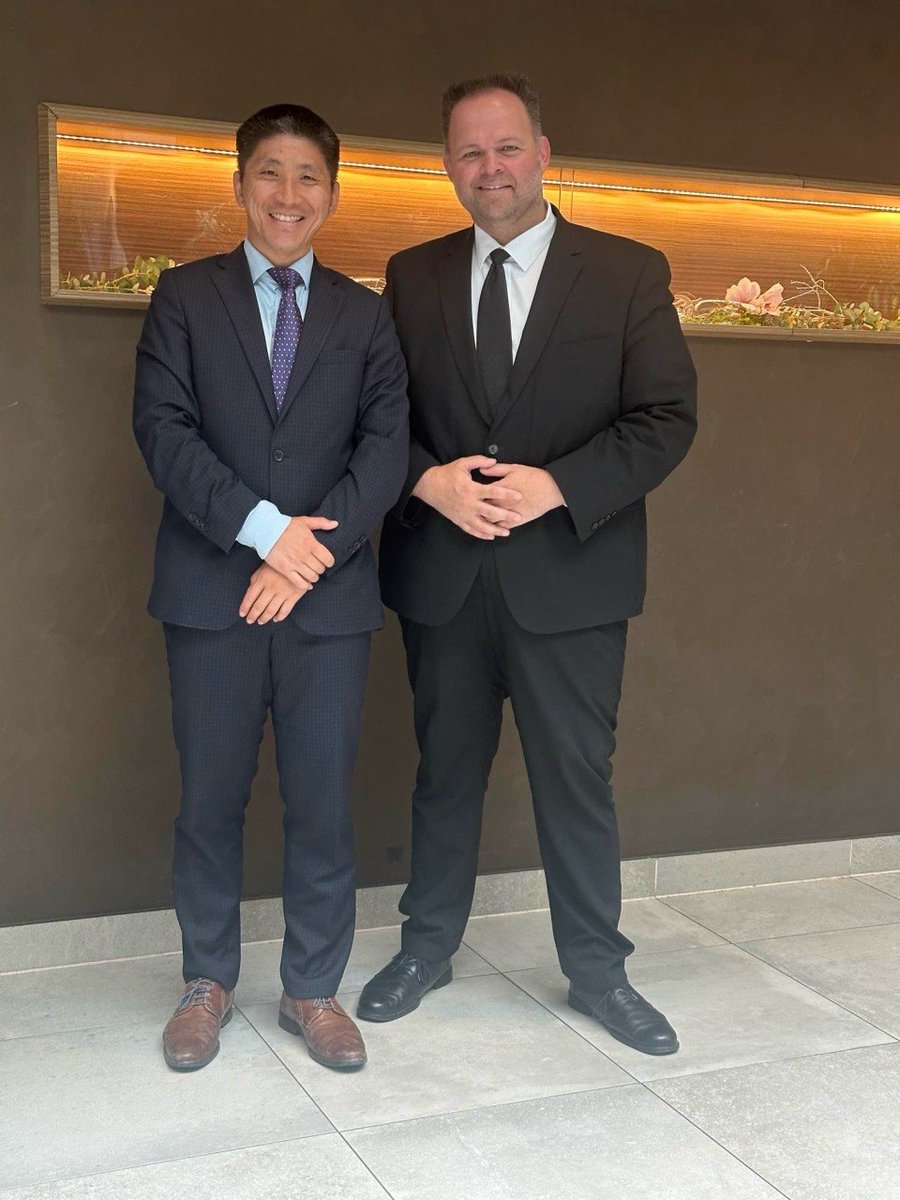
Day 14 MingYang Europe in Hamburg
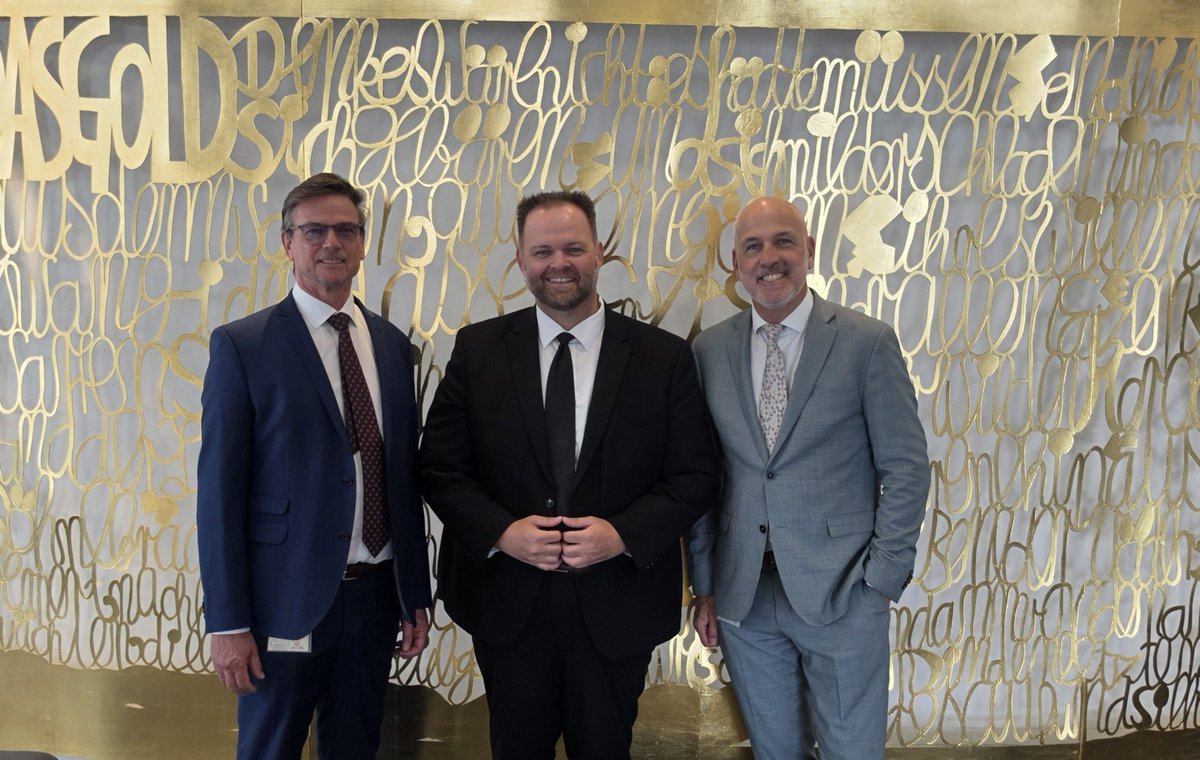
A very good first meeting with Horatio Evers, CEO, and Philipp Pfefferle, Head of Public Affairs & Communications at MingYang Europe.
Thank you both for the open and professional exchange and for the invitation to visit MingYang’s HQ near Hong Kong.
We discussed the company’s plans in #Europe, the #IAA, the #CSA and the challenges ahead.
MingYang is a major global wind energy player. Europe must engage with companies like this from a position of strength, openness and clear interests.
We need European competitiveness, strategic resilience and technological sovereignty but also direct dialogue.
Simple solutions are easy. Solving difficult problems is politics.
I prefer talking with people rather than talking about them.
The first meeting was good. Now the real work begins. 🇪🇺🇨🇳 #China
🇪🇺 Day 13: Putlos, Germany
At Putlos, I saw first-hand that #ReArm#Europe is becoming reality.
What struck me most were the soldiers: highly motivated, studying new systems and learning from Ukraine’s battlefield experience.
Drones, reconnaissance, electronic warfare, precision and speed are transforming warfare.
Europe needs its own defence capability as a key pillar of strategic autonomy.
With 450 million people, the EU has the economic, technological and industrial strength to defend itself.
We must invest, develop key technologies, strengthen our defence industry and equip our soldiers with the best systems.
Peace requires strength. Deterrence requires credibility. Strategic autonomy requires action.
Europe must be strong enough that nobody considers attacking us. 🇪🇺
Europe’s future must be built in Europe.
On his Germany tour, EDP Executive Vice-President Engin Eroglu is meeting innovators working on AI-enabled defence, hybrid-electric aviation and reusable space transport. Their technologies differ, but the strategic task is shared: strengthen Europe’s security, competitiveness and technological sovereignty.
Europe needs faster decisions, simpler rules and more capital for companies developing critical technologies here 🇩🇪🇪🇺
Day 9 of my summer tour in Berlin
A very interesting meeting with Chenchao Liu, Managing Director of SILREAL GmbH.
His personal story is remarkable: He came from China to Germany at just 13 years old. Today, he is an entrepreneur connecting economic interests and business relations between Germany and China.
At a time when relations between Europe and China are becoming increasingly complex, we need more direct dialogue and fewer prejudices.
China needs to take Europe seriously and Europe needs to understand China.
As Chair of the European Parliament’s Delegation for relations with the People’s Republic of China, direct exchange is particularly important to me.
If we want to shape China policy, we need to talk to people who understand both worlds.
Afterwards, I continued with meetings at the German Bundestag, with the state executive board of FREIE WÄHLER Berlin and with the team at our new Berlin office.
For the first time, we are standing for election in two Berlin districts.
Our goal is clear: to continue building FREIE WÄHLER in Berlin and enter the German Bundestag at the next federal election.
🟠 We don’t just want to talk about Berlin. We want to shape Berlin.
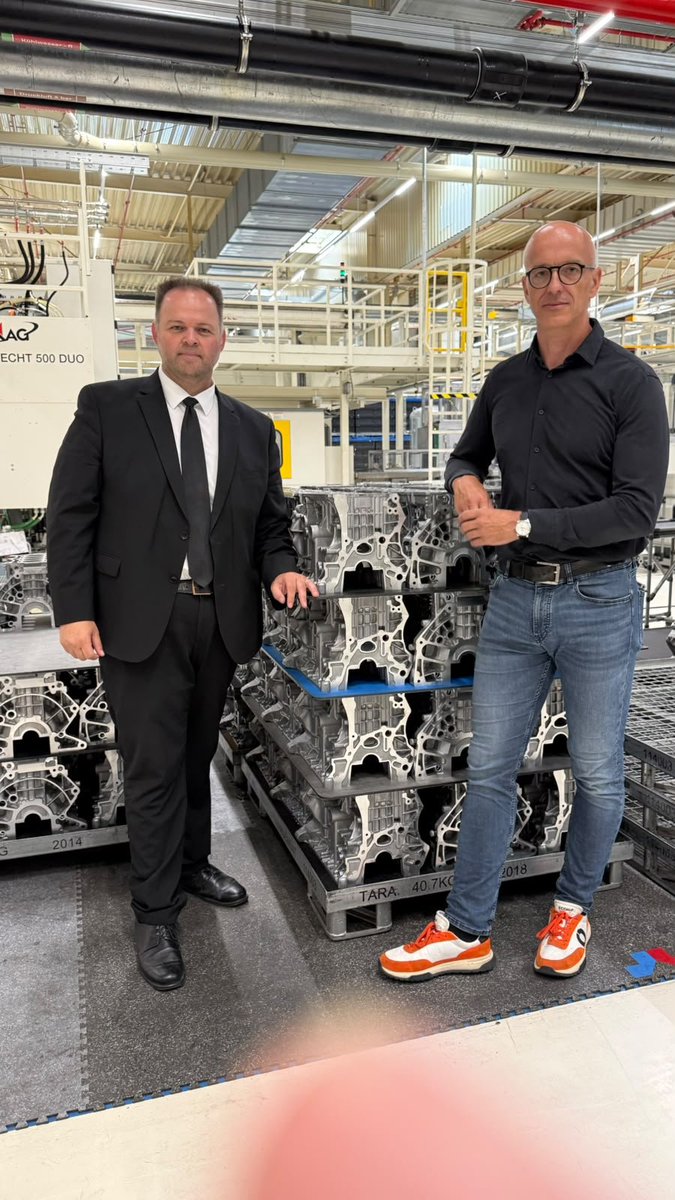
🚗 Day 8 of my summer tour: #Volkswagen Chemnitz
My visit made me optimistic.
On the ground, highly motivated people are working on new products and the cars of tomorrow.
🇩🇪 Germany can do industry.
🇩🇪 Germany can innovate.
🇩🇪 Germany can do high-tech.
🇩🇪 Germany can work hard.
I remain convinced: The ban on the combustion engine was a political mistake. Not because we should prevent e-mobility but because we gave up technological openness and industrial value creation.
With batteries, policymakers and parts of the automotive industry underestimated how much value we lose when we simply buy key technologies from elsewhere.
And now we risk making the same mistake with software: Anyone who believes the software ecosystem of tomorrow’s car can simply be bought is giving away a strategic core of the vehicle.
Master the technology first. Then make the political decisions.
Chemnitz gives me confidence. This region has successfully transformed itself time and again.
🇩🇪 Germany can turn this around. But we have to make it possible again.
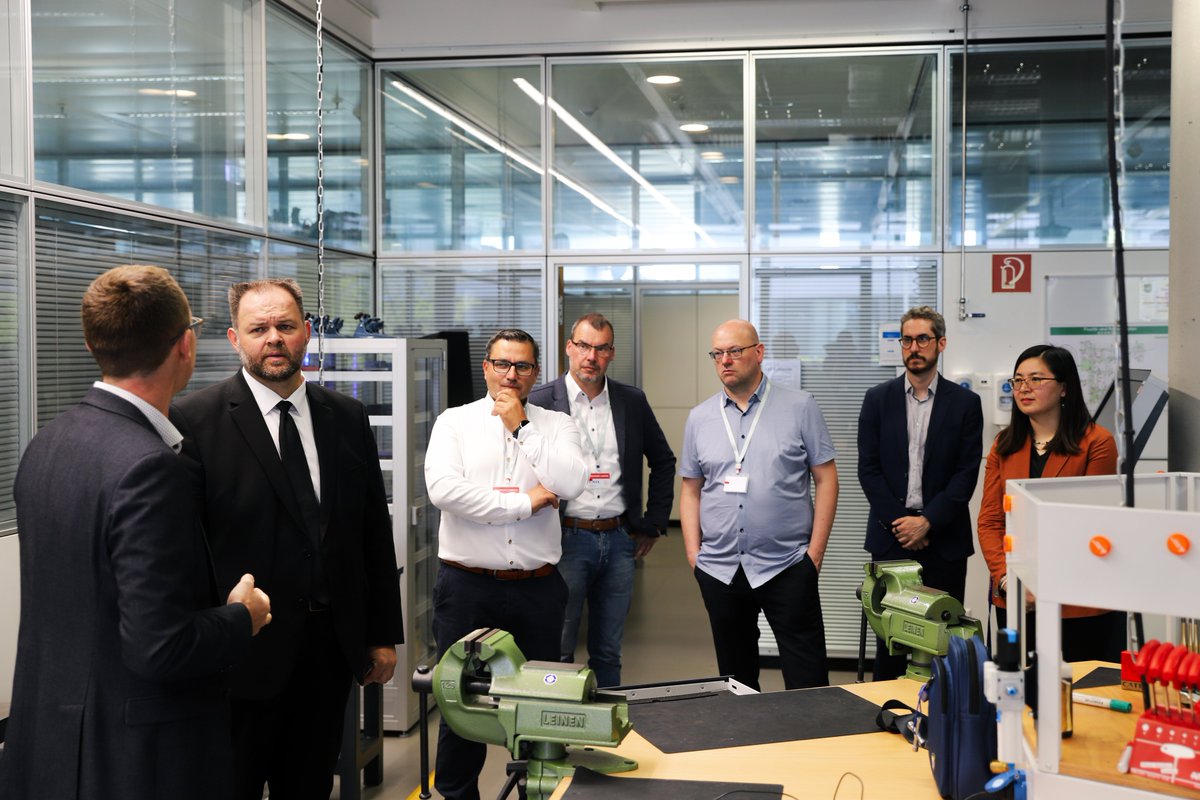
🔋 Visiting CATL in Thuringia
During my summer tour through Germany, I deliberately took plenty of time for this visit. CATL showed us the entire production process from A to Z, followed by an in-depth discussion about technology, e-mobility, investment and Europe’s competitiveness.
The scale is impressive:
39.2% global market share in power batteries making CATL the global market leader once again.
Around €1.8 billion invested in Thuringia.
Around 1,700 employees at the site.
The plant is CATL’s first European production site and supplies European automotive manufacturers with battery cells and modules.
What impressed me most, however, were the people on site. The employees are doing outstanding and highly precise work in this state-of-the-art production facility. A sincere thank you to them!
What do I take away politically?
Europe needs investment, industrial value creation and technological expertise and we need to create the right framework conditions for this.
As Chair of the European Parliament’s Delegation for relations with the People’s Republic of China, direct exchange is particularly important to me.
China policy cannot be shaped from Brussels alone. You have to see what is happening on the ground.
Many thanks to the entire CATL Thuringia team for the impressive insights and the open exchange.
Politics should not just talk about industry. Politics should understand industry.
#SummerTour #CATL #Thuringia #China #Europe #Industry #Innovation #Electromobility
🚀 A thought from Gauting:
Today I stood next to Nyx, the spacecraft being developed by The Exploration Company planned to fly to the International Space Station before 2030.
This is what European technological sovereignty looks like.
Europe should not have to depend on others for access to space, critical infrastructure or strategic technologies.
And the lesson goes far beyond space:
Give European innovators the freedom to build, and Europe can lead.
AI. Defence. Space. Semiconductors.
We have the talent.
We have the engineers.
We have the companies.
Now we need the political courage to let them innovate rather than burying them in bureaucracy.
And to anyone thinking Europe is simply a market to depend on:
Think again.
A stronger, more technologically sovereign Europe is being built right here.
🚀 Innovation is not just about growth. It is about freedom, security and deterrence.
#Europe #Space #Innovation #Technology #Nyx
Germany does not have an innovation problem. Germany increasingly has a political problem.
My visit to LEONHARD KURZ in Fürth on Day 4 of my summer tour reinforced that impression.
More than 125 years of industrial history, high-tech, counterfeiting protection, digitalisation and new applications: Germany can innovate.
What we need is not more mistrust and bureaucracy, but more freedom for companies that invest, research and produce.
Technological sovereignty is not created in ministries.
It is created by companies.
If we want to preserve our industrial base, we must stop trying to manage innovation and start enabling it.
Germany can do it.
We just have to make it possible again.
🇪🇺 A thought from Munich:
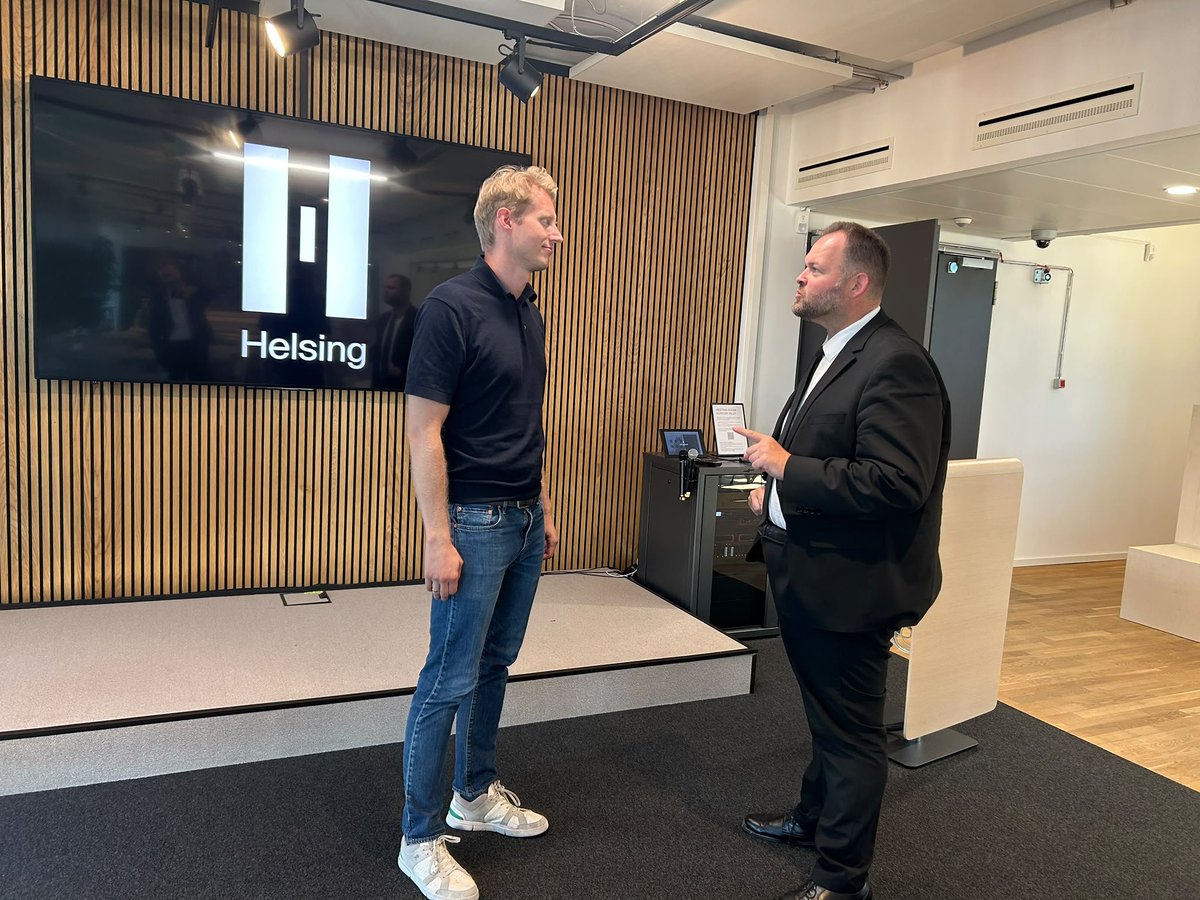
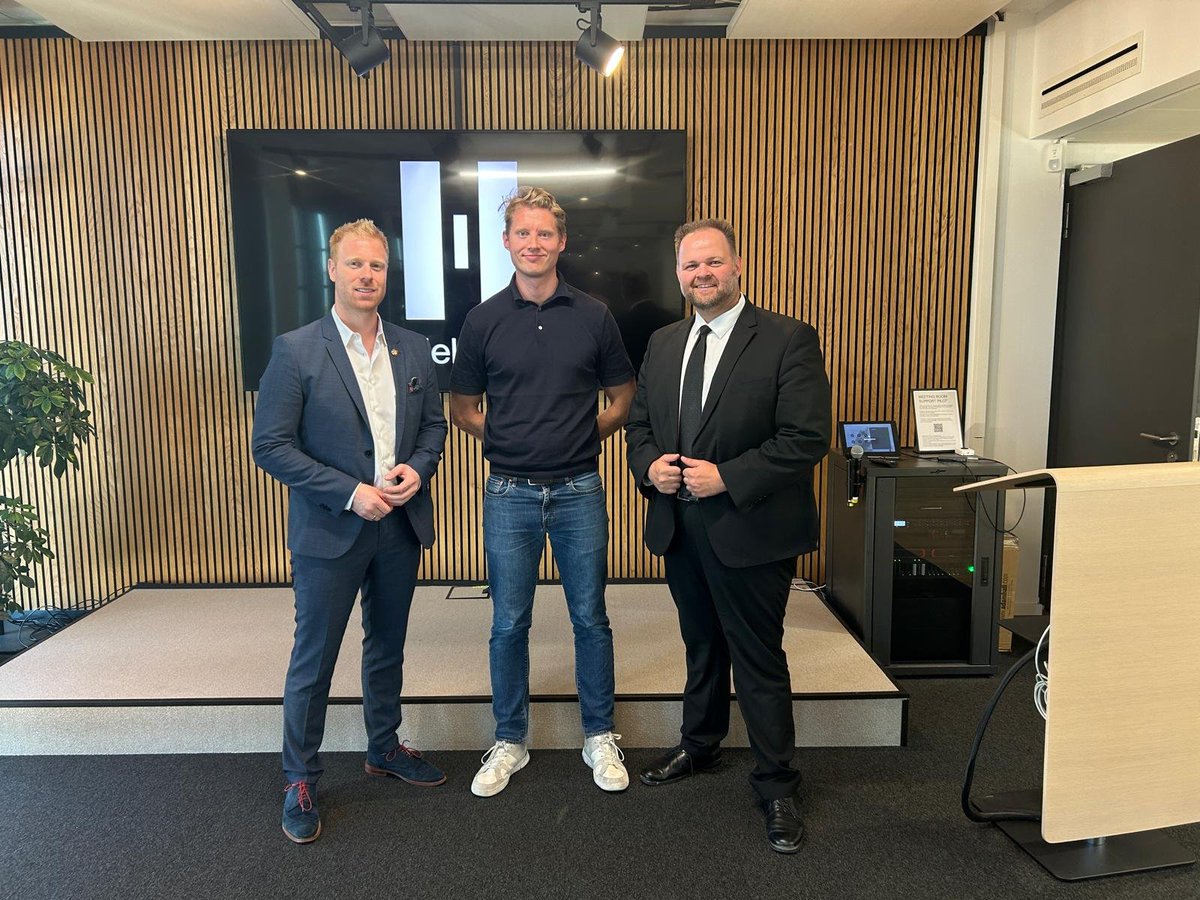
Today, during my summer tour through Germany, I visited Helsing a remarkably young European company working at the intersection of AI, software, autonomous systems, drones and defence technology.
Founded only in 2021, Helsing has already demonstrated that Europe can build globally significant defence technology at extraordinary speed.
And this is exactly the kind of innovation Europe needs.
When we talk about Europe’s security, we should not only talk about tanks, aircraft or troop numbers.
The decisive question is: Who will have the technological edge tomorrow?
AI, autonomous systems, drones, data and electronic capabilities are fundamentally changing modern warfare.
Companies like Helsing show what Europe can achieve when innovation is given the freedom to grow.
This is not just industrial policy. It is deterrence.
Peace is most secure when every potential aggressor understands that an attack on Europe would not only be a mistake it would be strategically unwinnable and carry consequences that should never be underestimated.
Europe does not need to threaten anyone.
Europe needs to become so technologically strong that nobody even considers attacking us.
Technological sovereignty is peace policy.
And Europe should start building that strength now.
#ReArm #Europe #Defence #AI #Innovation #Helsing
With Zhu Rongji, who passed away today at the age of 97, China has lost one of the most influential figures of its modern political and economic history.
As Premier of the People’s Republic of China from 1998 to 2003, Zhu Rongji played a decisive role in a period of profound economic reform and China’s opening to the global economy. His name is closely associated with China’s accession to the WTO in 2001.
For Europe, this period was of great importance. Economic relations between Europe and China expanded rapidly, with trade, investment and global supply chains becoming central pillars of our relationship.
Zhu Rongji belonged to a generation of Chinese leaders who fundamentally shaped China’s economic transformation and its integration into the global economy. His passing is therefore also an occasion to reflect on an important chapter in European-Chinese relations.
My condolences go to his family and to all those who knew him personally.
For Europe, the task remains to develop our relationship with China on the basis of mutual respect, clear interests and a realistic understanding of both the opportunities and challenges we face.
https://t.co/5J92HLKwln
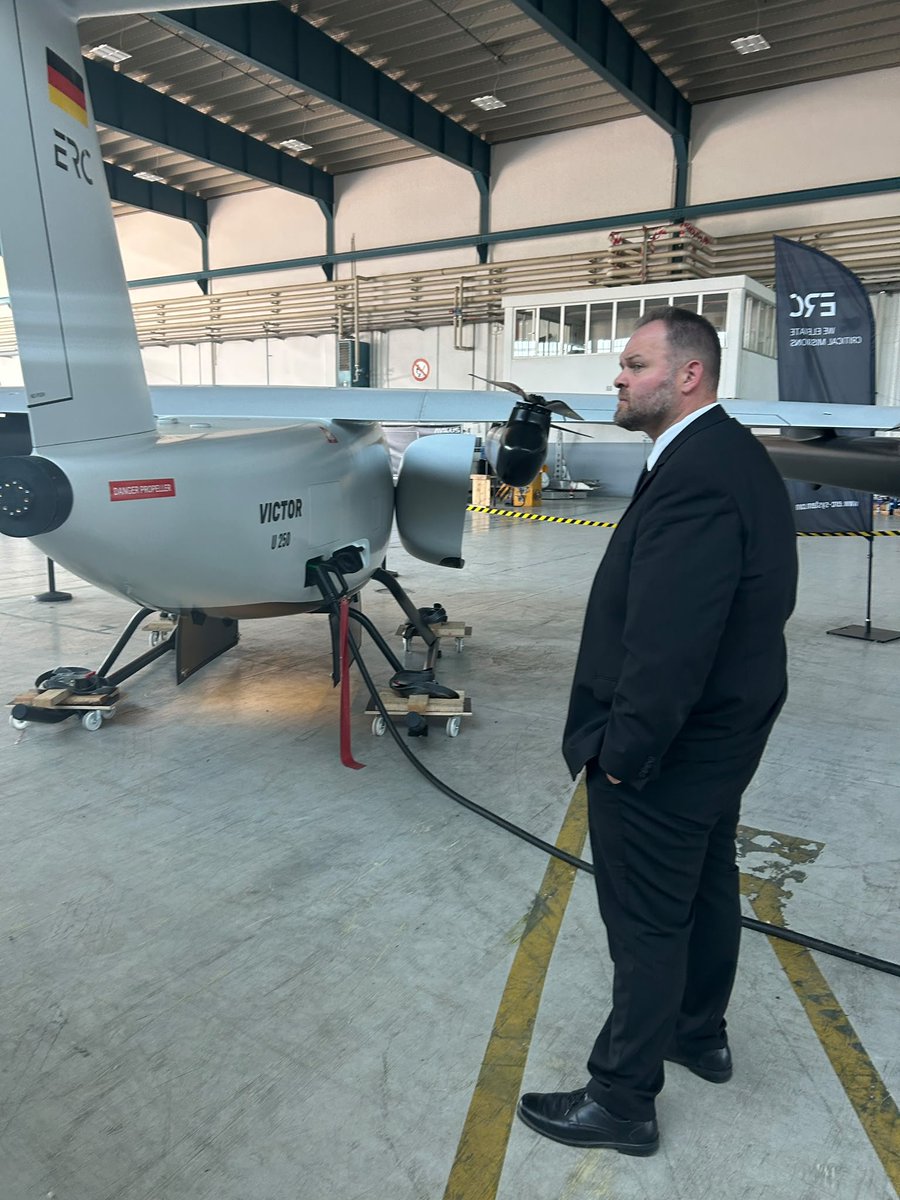
Day 3 of my summer tour through Germany – Meeting 1 of 3: Security and technology at Erding Air Base
Today, I visited ERC Systems at Erding Air Base.
What particularly interests me during visits like this is the question of how we can combine technological innovation and industrial strength in Germany with our security needs.
The past years have shown that security is no longer just about traditional military capabilities. Drones, electronic systems, sensors, digital technologies and artificial intelligence are fundamentally changing the security environment.
That is why we need companies in Germany that develop and produce innovative technologies and strengthen our security capabilities. Security policy today is also industrial and innovation policy.
My impression from today's meeting: Germany has enormous know-how and highly qualified companies. What is often missing are faster decisions, less bureaucracy and better conditions for ensuring that innovation is actually developed, produced and deployed in Europe.
At the European level, we also need to reduce technological dependencies and strengthen our own capabilities.
If we want to be secure, we must also be capable of providing for our own security.
Thank you to the team at ERC Systems for the fascinating insights and the open discussion.
On to meeting 2 of 3 on my summer tour through Germany.
#SummerTour #Erding #Bavaria #Security #Defence #Innovation #Technology #Drones #Germany #Europe #FREIEWÄHLER
Ein Gespräch, das bei mir nachwirkt.
Am zweiten Tag meiner Sommertour durch Deutschland war ich in München zu Gast bei Dr. Peter Gauweiler, dem ehemaligen Bundestagsabgeordneten und langjährigen CSU-Politiker.
Wir haben über Europa, den Euro und vor allem über sein politisches Lebenswerk gesprochen: über politische Entscheidungen, die Deutschland geprägt haben, über die Entwicklung Europas und über die Frage, was unser Land heute braucht.
Für mich war dieses Gespräch persönlich eine große Ehre und zugleich von unschätzbarem Wert.
Dr. Gauweiler gehört zu einer Generation, die Deutschland und Europa über Jahrzehnte erlebt und mitgestaltet hat. 1949 geboren, hat er politische Entwicklungen aus nächster Nähe erlebt, Verantwortung übernommen und sich dabei auch immer wieder gegen den politischen Mainstream gestellt.
Gerade wir jüngeren Politiker können von diesem Erfahrungsschatz enorm profitieren. Vieles kann man in Büchern nachlesen politische Erfahrung, historische Zusammenhänge und die Lehren aus jahrzehntelanger politischer Arbeit bekommt man aber nur im direkten Gespräch.
Wir haben heute intensiv diskutiert, zugehört und unterschiedliche Perspektiven ausgetauscht.
Ich nehme daraus viele Gedanken mit, über die ich sicherlich noch weiter nachdenken werde.
Erfahrung trifft auf Zukunft. Genau diesen Austausch brauchen wir in der Politik wieder viel stärker.
Vielen Dank, Dr. Gauweiler, für das offene, spannende und ausgesprochen wertvolle Gespräch.
#Sommertour #München #Europa #Euro #Deutschland #Politik #FREIEWÄHLER
#China will probably not repeat the mistakes of #Russia and the #USA. But that is not certain.
Anyone looking at the past 15 years can see a pattern.
Russia has strategically weakened itself through its military interventions, from Syria to its war against Ukraine. Today, Russia is no longer a global superpower. However, because of its nuclear arsenal, it remains a highly dangerous power, much like North Korea.
The United States has also paid a high price for its military interventions from Afghanistan to the current conflicts involving Iran.
China has taken a different path.
Over the years, China has continuously strengthened its position economically, technologically, politically and increasingly also militarily. China’s rise is not only the result of its own strength. It is also the result of the weakness and strategic mistakes of the United States and Europe.
The conclusion remains clear: China has succeeded in putting the United States in second place in many sectors.
That is why I consider it unlikely that China would make the same mistake as Russia by launching a military operation against Taiwan and thereby pushing itself into strategic isolation for decades or weaken itself massively for decades, as the United States has done.
But:
Unlikely does not mean impossible.
And that is precisely why Europe must finally get its own house in order.
We must stop blaming third countries for every political mistake we make ourselves.
China is not responsible for our excessive bureaucracy.
The United States is not responsible for our lack of competitiveness.
Russia is not responsible for every one of our energy policy mistakes.
We made these decisions ourselves. And through democratic elections, we can credibly correct them ourselves.
Europe therefore needs a strategic course correction.
We need economic strength.
We need technological sovereignty.
We need secure and affordable energy.
And we need credible military deterrence.
Deterrence strong enough to ensure that no one ever considers attacking the European Union a viable option.
At the same time, Europe should be a shield for states that, like us, want to live in freedom, peace and prosperity.
That is what strategic autonomy means to me:
Not against China.
Not against the United States.
Not against Russia.
But for #Europe.
We should not wait for other powers to make mistakes.
We must ensure that Europe itself is strong enough to defend its interests, its freedom and its prosperity.
Europe’s greatest strategic threat is not the strength of others.
It is our own weakness.
Taiwan's annual Han Kuang Exercise is underway, with reservists joining active-duty troops in nationwide military drills designed to strengthen combat readiness.
VW, China and Europe’s Industrial Failure
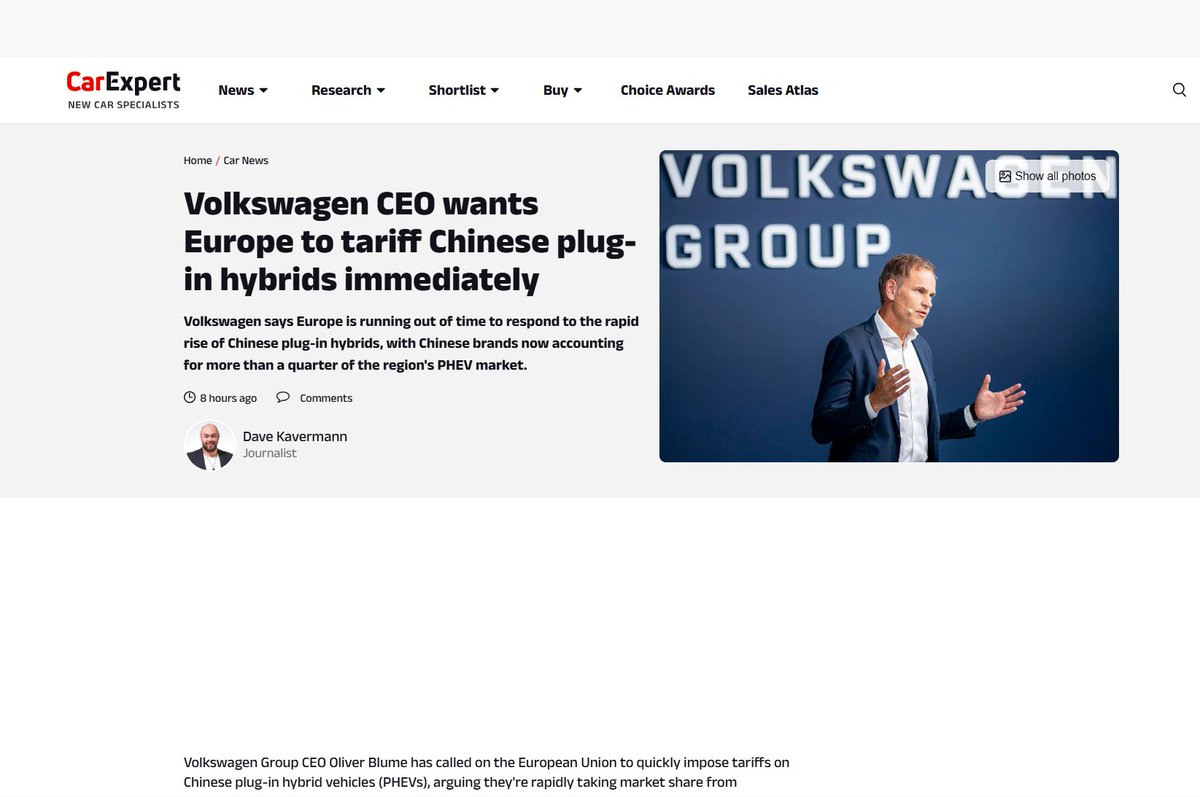
VW CEO Oliver Blume is calling for swift tariffs on Chinese plug-in hybrid vehicles. He has a point: Europe has no time left to lose.
But let’s not fool ourselves:
Tariffs will not save Volkswagen, nor will they save any other European employer.
What we are witnessing today is also the result of the failure of corporate management, trade unions and governments over the past years.
Strategic mistakes were made, warnings were ignored, and necessary changes were postponed time and again. While other countries have consistently geared their industries towards the future, Europe has spent far too long focusing on itself.
Protective measures are therefore necessary now. But only as a temporary breathing space not as permanent life support for companies that have lost their competitiveness.
And these measures must not be shaped according to party politics, lobbying interests or political convenience. They must be consistent, time limited and in Europe’s interest.
Because ultimately, one thing remains true:
You cannot protect prosperity. You have to earn it.
Through innovation. Through productivity. Through performance. Through investment. Through competitiveness.
That was true in the last century. And it will remain true in this century.
So I also want to say this openly to workers:
If trade unions see their role as demanding less and less working time while expecting more and more, as the international competitiveness of our companies declines, then we need new trade unions.
Trade unions must once again stand for performance, skills, good wages and secure jobs not for the gradual erosion of our industrial base.
And to the managers:
Give yourselves your severance packages and retire to your private sanctuaries. Let the well trained people who actually deliver and take responsibility shape the future of our companies.
And to politicians:
Stop making difficult decisions based on party politics.
Europe needs politicians who are willing to make difficult and unpopular decisions before others make those decisions for us.
#China is not waiting.
The #USA is not waiting.
The world is not waiting.
Europe cannot afford to wait any longer either.
We do not need European protectionism as a business model.
We need a European path towards renewed competitiveness.
Less bureaucracy. More innovation. Affordable and reliable energy. More investment. More productivity. More courage.
Because in the end, it is simple:
If you want prosperity for Europe, you have to build competitiveness not manage the decline of prosperity.
#China #Europe #Volkswagen #Industry #Competitiveness #VW
VW CEO Oliver Blume has called on EU to quickly impose tariffs on Chinese plug-in hybrid vehicles
"We have no time to lose... regulations on BEVs are working. There we are competitive on pricing. Where it's not working is PHEV"