Germany's spy agency claimed to have secret intelligence that the nation's most popular political party was "extremist." It lied. It just had a list of things it found offensive, including criticism of Bill Gates, which it labeled anti-Semitic. It's a "Stasi-like" report.
@kesvelt we face from biotech. The wolves were already guarding the henhouse when the SHTF, so I hardly see how empowering more wolves for increased henhouse protection addresses anything at the root cause level. 6/6
@kesvelt that have seen decades of ignoring new antibiotics & AMR research because it doesn’t align with the biotech business model preferred by capital?
Your concerns and willingness to voice them are a good start but don’t nearly go far enough in framing the clear & present dangers 5/
During the American colonial period, lobsters were not valued as food and were mainly eaten by the poor, prisoners, and indentured servants.
Native tribes near the coasts used lobsters as fertilizer or bait rather than food.
People even hid lobster shells to avoid the stigma of poverty. In Massachusetts, indentured servants sued to limit their lobster meals to three times a week, winning the case. Lobsters were abundant, easy to collect from the shore, and considered bottom feeders.
They were often consumed as a paste or stew. In the early 19th century, lobsters were cheaper than Boston baked beans, sometimes even fed to cats.
However, by the late 19th century, as railroads spread and lobsters were served on trains, people who were unfamiliar with them found them delicious.
This led to increased demand and the start of lobster canning. By the 1920s, with lobsters becoming less plentiful but demand growing, lobsters transitioned to a delicacy, popular among celebrities and the wealthy by the 1950s.
If an American was obese 100 years ago, they were in the circus. It was that rare.
Now, nearly 80% of us are overweight.
This is not “personal responsibility”. A system is poisoning us.
We don’t need mass Ozempic. We need to stop poisoning ourselves.
@CaseyMeansMD
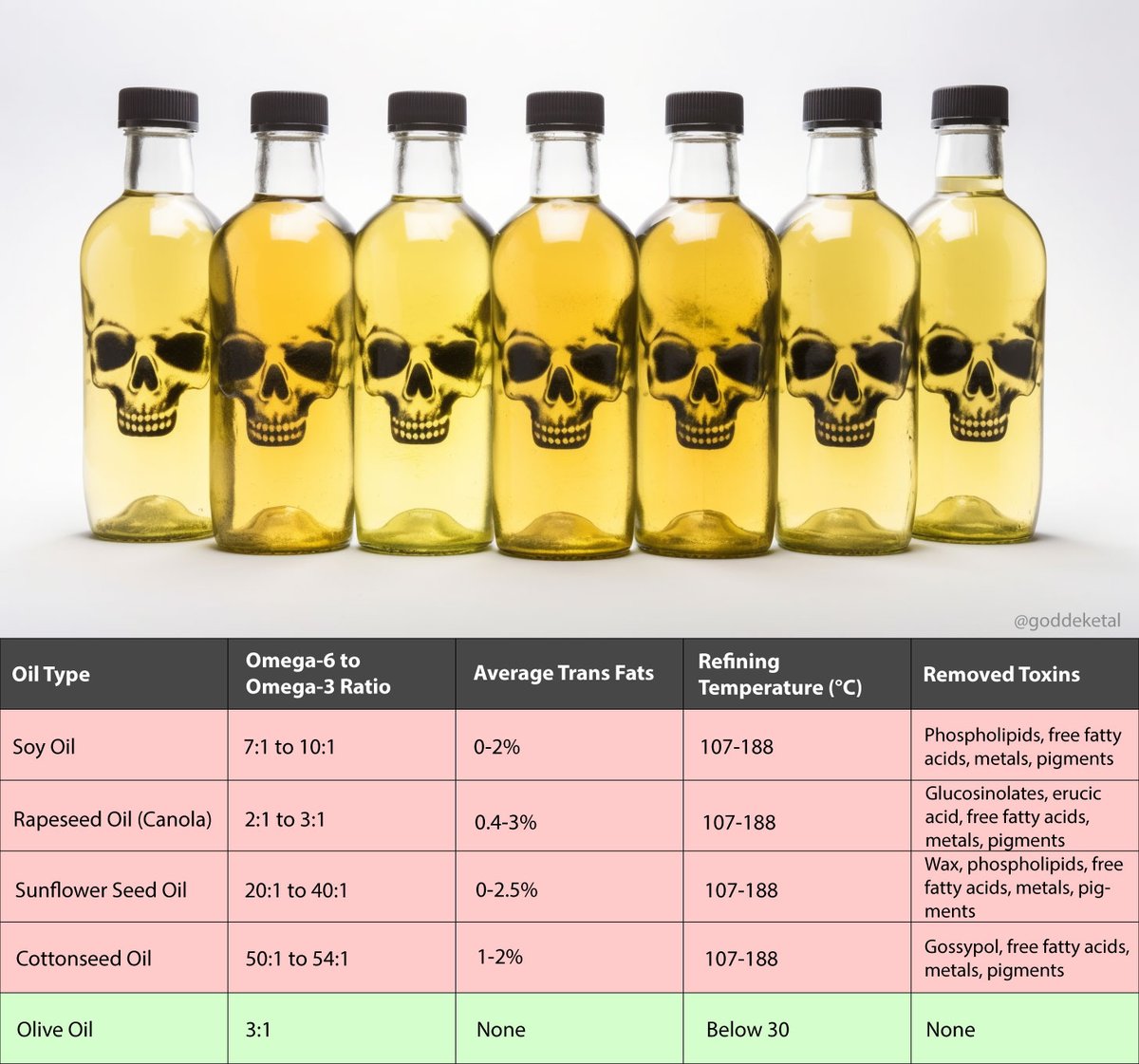
🧵THREAD: Today I am going to red-pill you about dangerous vegetable oils, which are found in almost all processed foods. Consequently, this is likely the most important thread you will read this week. Contrary to popular belief, the term 'vegetable oils' is misleading. These oils are called 'vegetable' not because they come from vegetables in the traditional sense, but because they are derived from plant sources. This includes seeds such as cottonseeds, soybeans, and sunflower seeds.
These oils need to be heavily refined to remove various toxins and natural impurities, which can be harmful or affect the taste and stability of the oil. The refining process also extends the shelf life of these oils.
However, this refining process creates trans fats, a type of unsaturated fat that is detrimental to our health, especially when consumed in large amounts.
Trans fats, along with a high omega-6 to omega-3 fatty acid ratio found in these oils, disrupt our body's metabolic processes. They contribute to inflammation and imbalance cytokine production, which are crucial in our body's immune response and healing processes.
Long-term consumption of these fats is linked to various health hazards, including an increased risk of heart disease, stroke, and other chronic conditions.
To provide a comparison, I've included olive oil in the graphic. Unlike these refined oils, olive oil, especially extra virgin olive oil, is less processed and contains healthy fats. It has a more balanced omega-6 to omega-3 ratio and doesn't contain trans fats, making it a much better choice for your health.
In the posts below, I will delve into the history of vegetable oils and explain the mechanisms that make these seed oils extremely harmful.
What was Diogenes trying to achieve?
Well, something called "parrhesia" was crucial to Cynic philosophy, meaning the freedom to speak openly.
But this doesn't just mean free speech; it means a moral obligation to always say what you believe to be true.