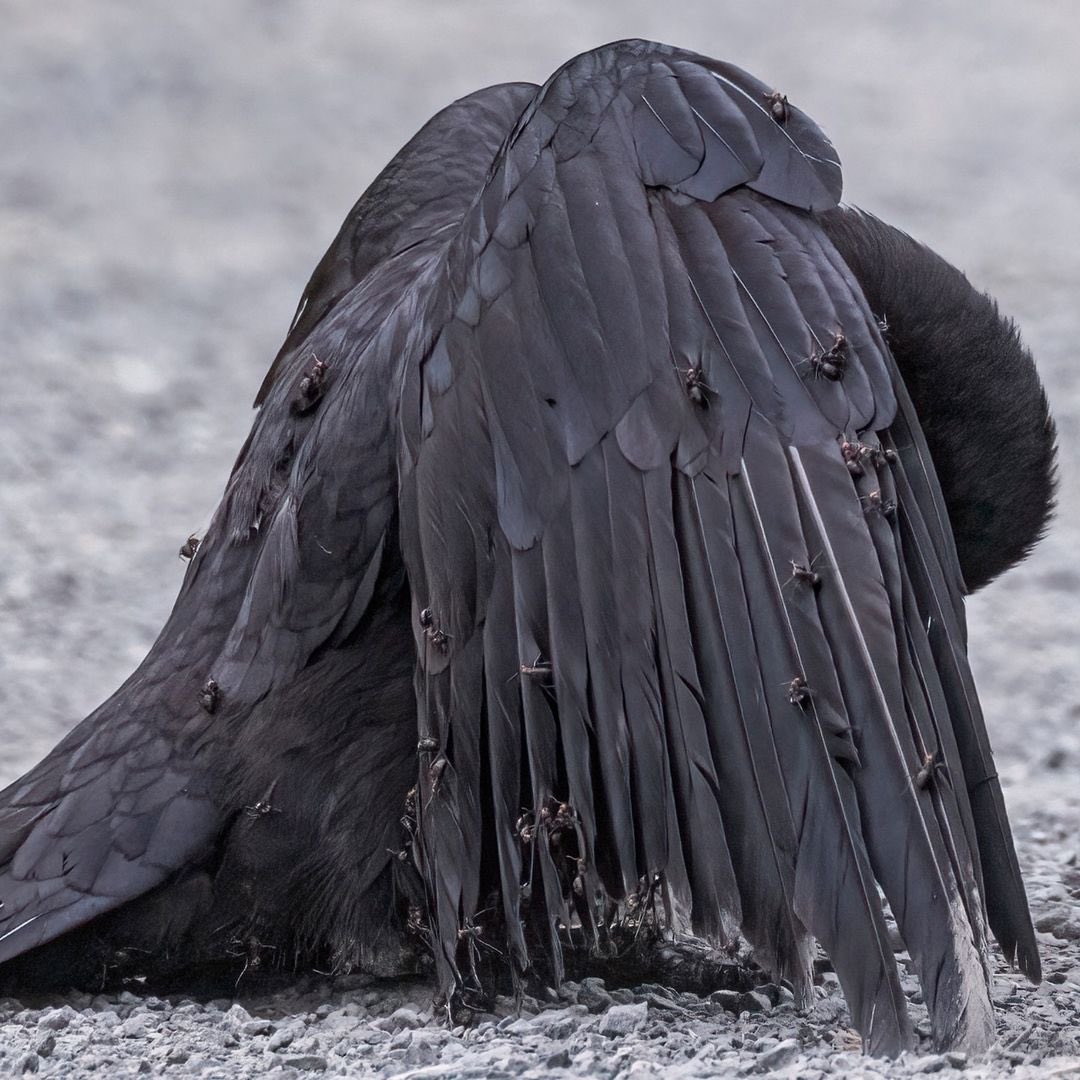
This crow has allowed itself to be covered in ants
Birds engage in a fascinating behavior called anting, where they rub insects, especially ants, on their feathers and skin. This can be done actively by picking up insects and applying them to their body or passively by lying in an area with abundant insects and performing dust-bathing-like movements. The insects secrete chemicals like formic acid, which possess insecticidal, miticidal, fungicidal, or bactericidal properties, providing potential benefits for the birds' health and plumage maintenance.
📸 Tony Austin
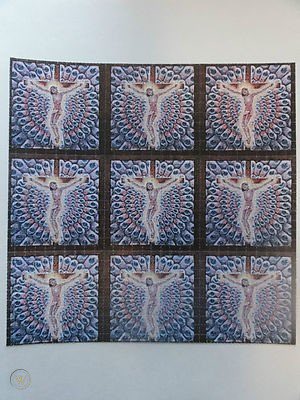
Happy Bicycle Day! If not for two vilified institutions- pharmaceutical companies and the CIA we might not have LSD. A reminder that sometimes the cosmic light shines through even the darkest of cracks…
Take a moment to enjoy this captivating drone footage of whales and dolphins playing together off the southern coast of Australia, a beautiful example of interspecies behavior captured by photographer Jaimen Hudson.
Neurons in a culture dish trying to form connections with each other. Sped up to show 8 hours in 1 second. Bright spots are the neuron nuclei. We have 100 billion of these in our brain. Amazing.
Scallops have a large number (up to 200) of small (about 1 mm) eyes arranged along the edge of their mantles. Each one relies on a concave, parabolic mirror of guanine crystals to focus and retro-reflect light thru millions of square tiles https://t.co/BaRL65MA72
Your regular fix of cool octopus facts...
🐙 Octopus have blue blood, three hearts, and no bones
🐙 They're jam-packed with clever adaptations, including venomous beaks and the ability to change color
🐙 They're smart – the smartest of the invertebrates
🐙 They may even dream...