Got to take a flight in this Ehang autonomous flying taxi. Perhaps a bit of a gimmick for now, but the ambition from China is there. Companies are pumping money and expertise into developing flying vehicles as China aims to develop a ‘low-altitude economy’. #china
Will China beat America in the AI race?
Wall Street is worried that the US AI bubble is about to burst, but the Chinese government is all in on AI and physical high tech such as pilotless flying taxis and highly automated factories.
China said it sentenced an official to death for spying for a foreign intelligence service, publicizing the case as a warning against leaking state secrets. https://t.co/JuW0iPSne1
A busy week in world affairs. But some of the most interesting developments have barely made the headlines. So a quick look at four stories that deserve a bit more attention. 🧵 1/5
"But the final deal proved unacceptable to the EU, Pacific island nations and others because it failed to directly mention fossil fuels, the main cause of global warming."
https://t.co/xSkuRIsTHZ
The mood in China's AI industry is not great. A recent article by Bob Chen, a long-time contributor to Baiguan, has been privately circulated on the Chinese internet, even though it has been taken down by censors after it went viral.
Bob makes six points worth thinking about.
1. Chinese labs used to have a fallback when they couldn’t buy Nvidia chips. They could rent time on the same chips in Southeast Asia. Now that avenue is closing. Switching to Huawei brings up the next question. Can Chinese chipmakers get the equipment to make enough of them?
2. Distillation let Chinese labs learn from the answers of models that US labs had already spent billions training. As OpenAI and Anthropic make that harder, Chinese labs have to collect more of their own data and pay for more experiments, including the ones that go nowhere. Alibaba can fund that from other businesses. An independent lab has to go back to investors, who are already losing faith
3. A lot of money has gone into Chinese startups building specialized “robot brains.” What happens to those valuations if a general-purpose model learns to do the job? In one test, a system using GPT already beat several specialist models at grasping and moving objects. China could build excellent robots while much of the value goes to whoever supplies the intelligence.
4. Chinese AI is creating far less revenue, on a rapidly rising cost base. Epoch AI puts annualized AI revenue for six leading Chinese companies combined at about $11 bn. OpenAI and Anthropic together are at roughly $105 bn.
5. Even where China leads, it depends on American customers. Chinese firms supply roughly two-thirds of the world’s optical transceivers, the components that move data over fiber in AI clusters. Washington is reportedly considering restrictions on new Chinese models. This will be a stupid decision if true. There aren’t many buyers who can replace an order from Microsoft.
6. We’ve spent a lot of time debating whether Chinese models are three months or six months behind. Bob’s question is how much it will cost to close that gap next time. The bet on Chinese AI was that its labs could get close to the frontier on a fraction of the budget. What happens if they have to spend something close to US money while earning a tenth of the revenue?
Read the full article:
https://t.co/5cg5mkF4GF
This does cut to the heart of what we found: Nvidia chips used at a Chinese military-linked lab that works on stuff like simulating how to invade Taiwan, when those chips are made by a company founded by a Taiwanese American, who remains beloved here in Taiwan.
Please France and Europe, do not import the kneejerk anti-Chinese racism emanating from the US' Nvidia-Huang saga.
Awful to hear French experts saying all Chinese citizens & diaspora in France could all be spies. Disgraceful.
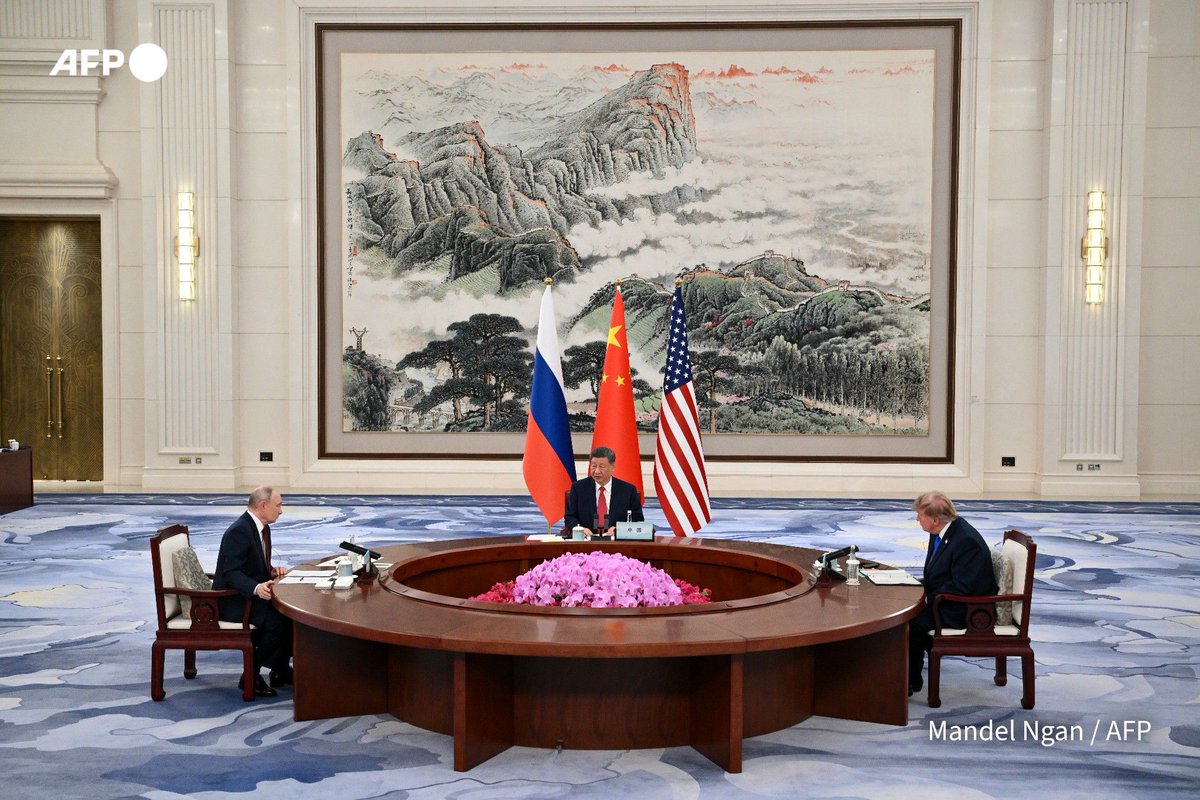
BREAKING The presidents of China, the United States and Russia kicked off their first trilateral talks in China on Thursday, aimed, according to Beijing, as "safeguarding world peace"
@EP_Lawrence Also the money comes out of their own pockets if they miss the deadline/don’t meet performance targets, which is illegal (at least for regular employees) in many countries but common in China across industries
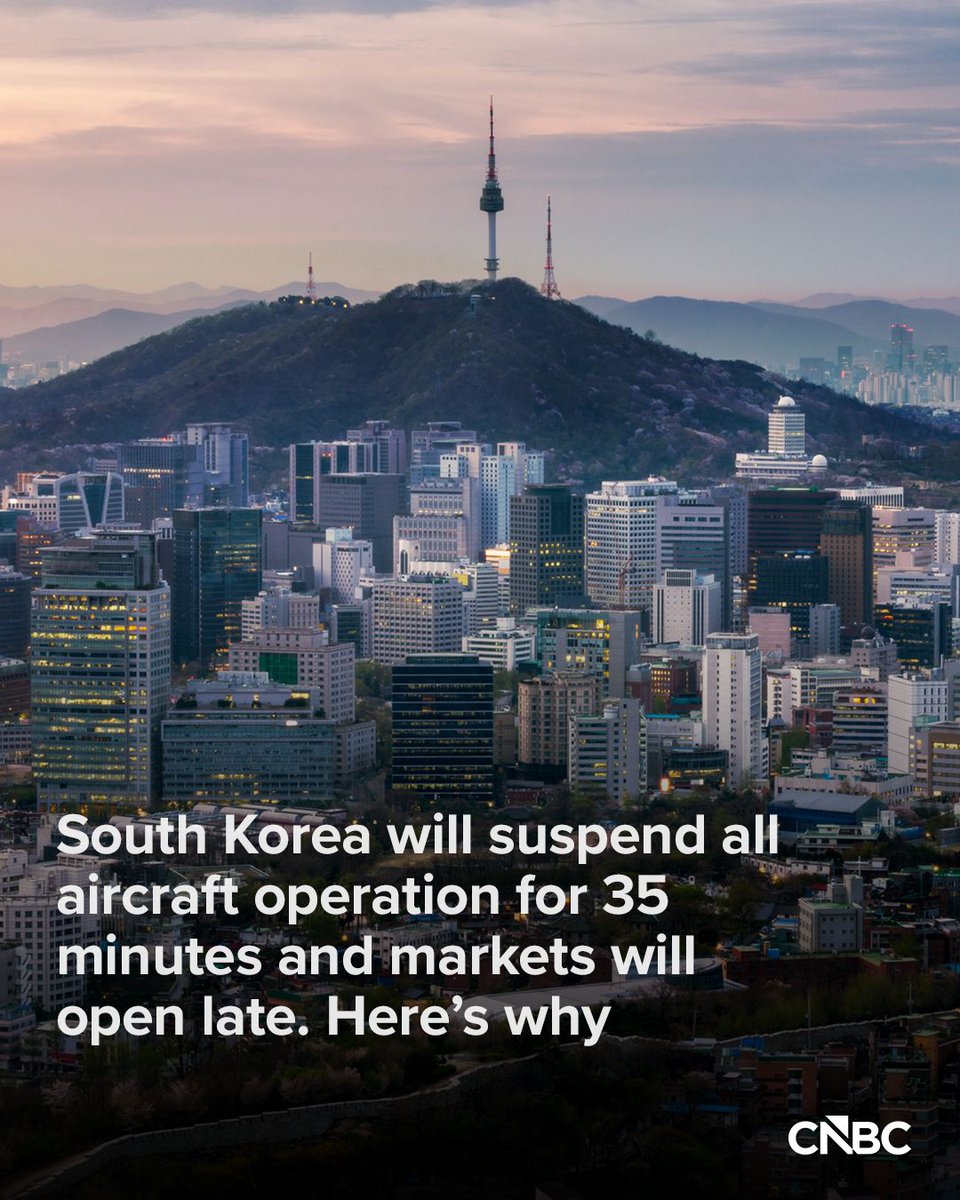
South Korea will suspend all aircraft takeoffs and landings nationwide for 35 minutes on Thursday to minimize noise during the English listening portion of the country’s highly competitive college entrance exam, the government said Tuesday.
The restrictions will be in place from 1:05 p.m. to 1:40 p.m. local time, affecting 130 flights, including 81 international and 49 domestic services, according to the Ministry of Land, Infrastructure and Transport.
Read more: https://t.co/wg6RVQCGmI