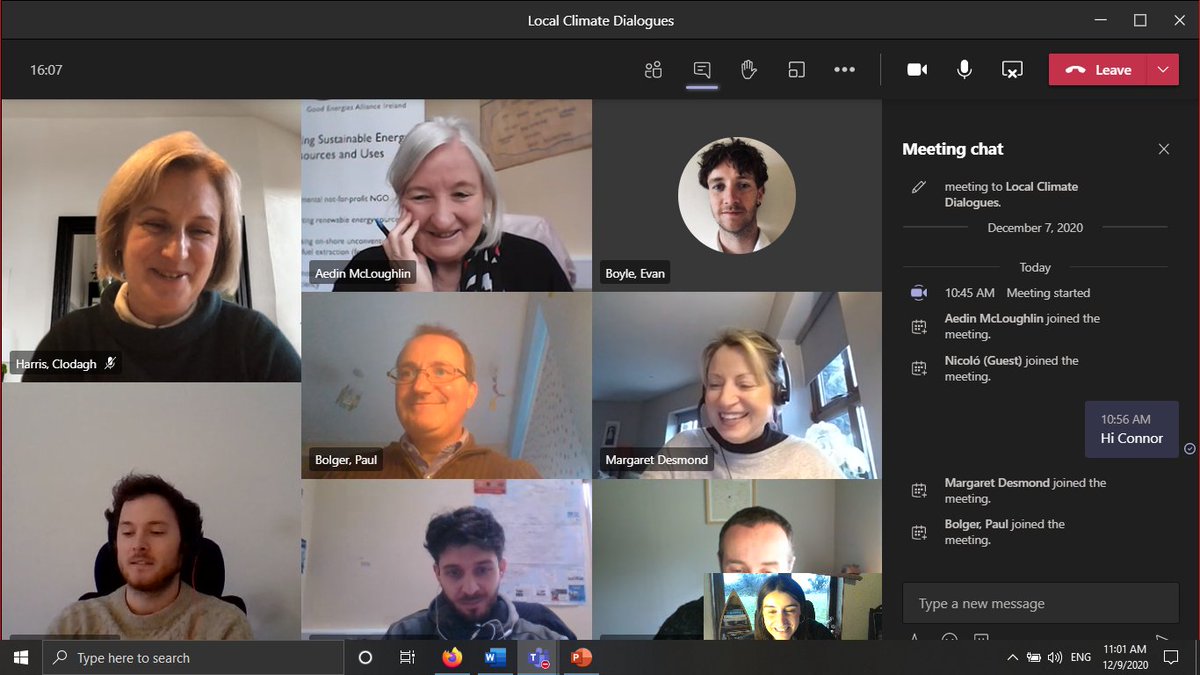
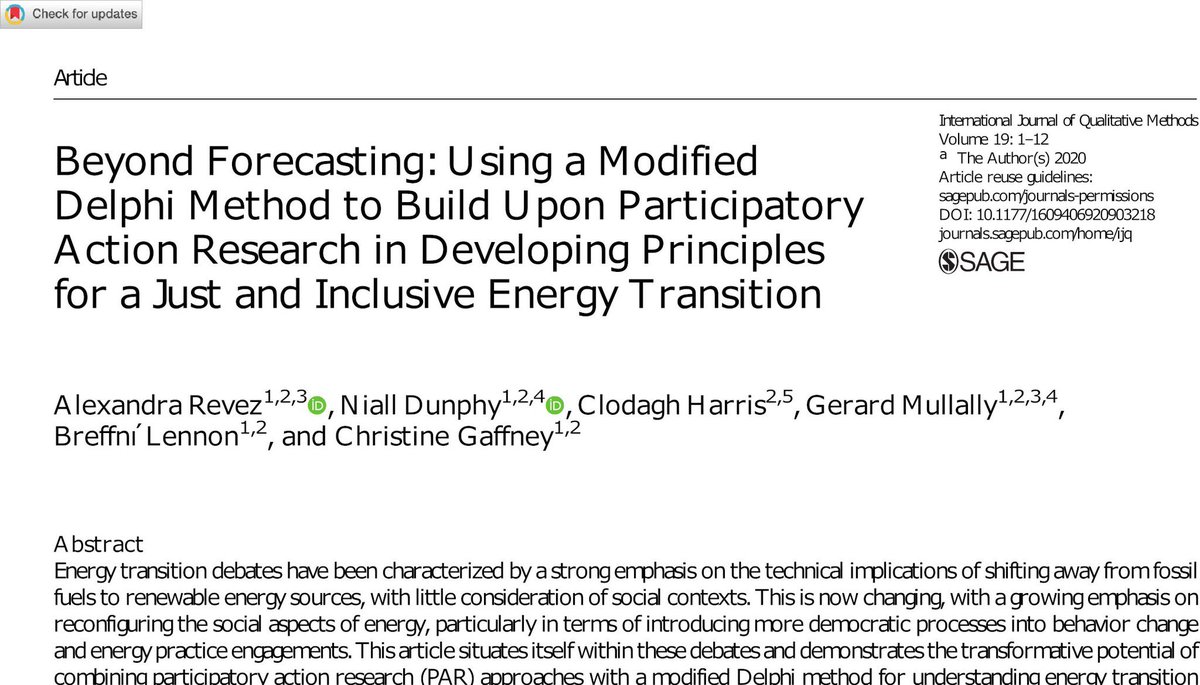
Mixed methods approach to exploring climate action in a campus environment using a modified Delphi panel approach – open access article by Lauren Quinlivan & Niall Dunphy https://t.co/3cfNmbgirX
Day one of @encludeproject General Assembly. @NPDunphy presents work conceptualising the ‘energy citizen’ querying where in the system will participation be allowed? who will be allowed to participate? On what basis? and to what end?
Top-down energy transition sees 'too little engagement with communities. Really great to see our paper mentioned, it was led by Evan Boyle, with @BOGallachoir@gerardmullally1@MaREIcentre
https://t.co/vpu5RuWGWq
Last line of story is key, need to bring people along. But not just matter of convincing - listening & appreciating citizen’s perspectives needed. Social acceptability vital - Participatory decision-making can build trust & enhance legitimacy of process @NPDunphy@breffnilennon
The national grid will need an investment of between €700 million and €3 billion to carry more renewable energy as part of the Government's Climate Action Plan. | Read more: https://t.co/ouPBQStXCw
Opportunity for a postdoctoral researcher to join established group working on the human and societal dimensions of the energy transition. See https://t.co/h0gieOn8Mr for more details. @NPDunphy@eriucc
.@RichardbrutonTD giving address at inaugural #SEAI Research & Policy Conf - mentioning the challenge of communities’ acceptability of new infrastructure. To this end, @EPolities is working to develop real understanding of people’s (different) responses to energy infrastructure.
Great engagement for our exploration of community responses to, and participation in, energy projects. Very interesting participatory business model evident in Ternitz. #civic#mobilisation
Great session at #EUGEO2019 convened by @ENERGISEproject researcher Eimear Heaslip and brilliant presentation from @breffnilennon on ‘weaponising place: contextualizing civic mobilisation and the energy transition. @EPolities