Epping High Street, c1904. Despite this quiet scene, the pace of development in Epping increased in the 18th century as Epping became an important staging point for horse-drawn coaches as well as one of the main suppliers of agricultural produce to the London market. #epping
Epping High Street in 1920s. St Johns Church tower has dominated the skyline since 1908 whilst Market Place in the middle distance, has dominated the street scene since the town was given a charter by King Henry III in 1253. The street scene today is filled with Cars & tractors!
Epping Town in the early 1960s showing St John’s Church built in 1889 on a different alignment to the chapel that went before it. The tower was completed in 1909. The scene from here remains relatively similar except for the new road layouts. #epping#history#essex#church
EPPING THEN & NOW
The Bell Inn on Epping New Road, c1902. The preset building was built in 1900 and replaced a much older country inn of the same name. In 1663, local legend has it that Samuel Pepys stayed at the Inn. Today the building is overshadowed by a modern motel block.
Epping town in the 1920s. A prosperous time for the town, however back in the 1850’s, the advent of the railways ended coach traffic and the town declined, but it revived after the extension of the railway branch line from Loughton in 1865 and the rise of the motor car. #epping
EPPING THEN & NOW
Epping Market Place in c1900. First recorded in 1253, the market was predominantly an animal market until the 20th Century. The cattle market closed in 1961 but a regular shopper’s market still exists.
#epping#history#market
EPPING THEN & NOW
Epping at the turn of the 20th century. The trees along the High Street were planted in 1887 to celebrate Queen Victoria’s Golden Jubilee. Many of the trees have stood the test of time to this day. #epping#history#essex#trees#queenvictoria#jubilee
EPPING THEN & NOW
Epping High Street from 100 years ago. Little has changed at this end of the town. However, the rural atmosphere has been replaced with bustling shoppers and much traffic. All eased to some degree by the opening of the M11 in the late 70’s. #epping#history
EPPING THEN & NOW
Epping High Street around 1905 before St John’s Tower was built.
The Victoria Buildings on the right was at the centre of the town`s weekly market from 1899 until it was demolished in 1966 and replaced by the Co-op supermarket. Today M&S occupies the site.
Photo of Epping High Street from c1915. A horse is drinking from the water fountain installed in 1887 to commemorate Queen Victoria’s Golden Jubilee. Behind the cart is an early Motorcar. Probably in for a service at Cottis Garage (far right). The building survives to this day.
EPPING THEN & NOW
A bustling Epping High Street in the early 1920s. The Thatched House on the right was a popular Inn for visitors at that time. Built in the early 18th Century, it replaced an earlier building made from timber and obviously thatched. Now a hotel and restaurant.
Epping High Street, c1905. The town can trace its routes back to the Domesday Book of 1086. and Today it has over 30 statutory or locally listed buildings and designated as a Conservation Area. Some timber framed buildings from the 17th century still exist.
Epping High Street in the 1950s. Epping Town has owed much of its development to its main road position and its proximity to London. The towns popularity with through traffic increased significantly in the 60s and 70’s until the M11 was built. Today the town is as busy as ever.
Epping Carriage Works c1920. With horse drawn transport still being a popular mode of transport in the 1920s, there were many businesses in the horses and carriage trade. By the end of the 1920s motor vehicles had overtaken horsepower on the roads of Britain for the first time.
EPPING THEN & NOW
A quiet Epping town in the early 1920s when compared to today. A couple can be seen out for a drive in their open top motor car. This was to become the new mode of transport for the 20th century. #epping#history#car#vintagecar
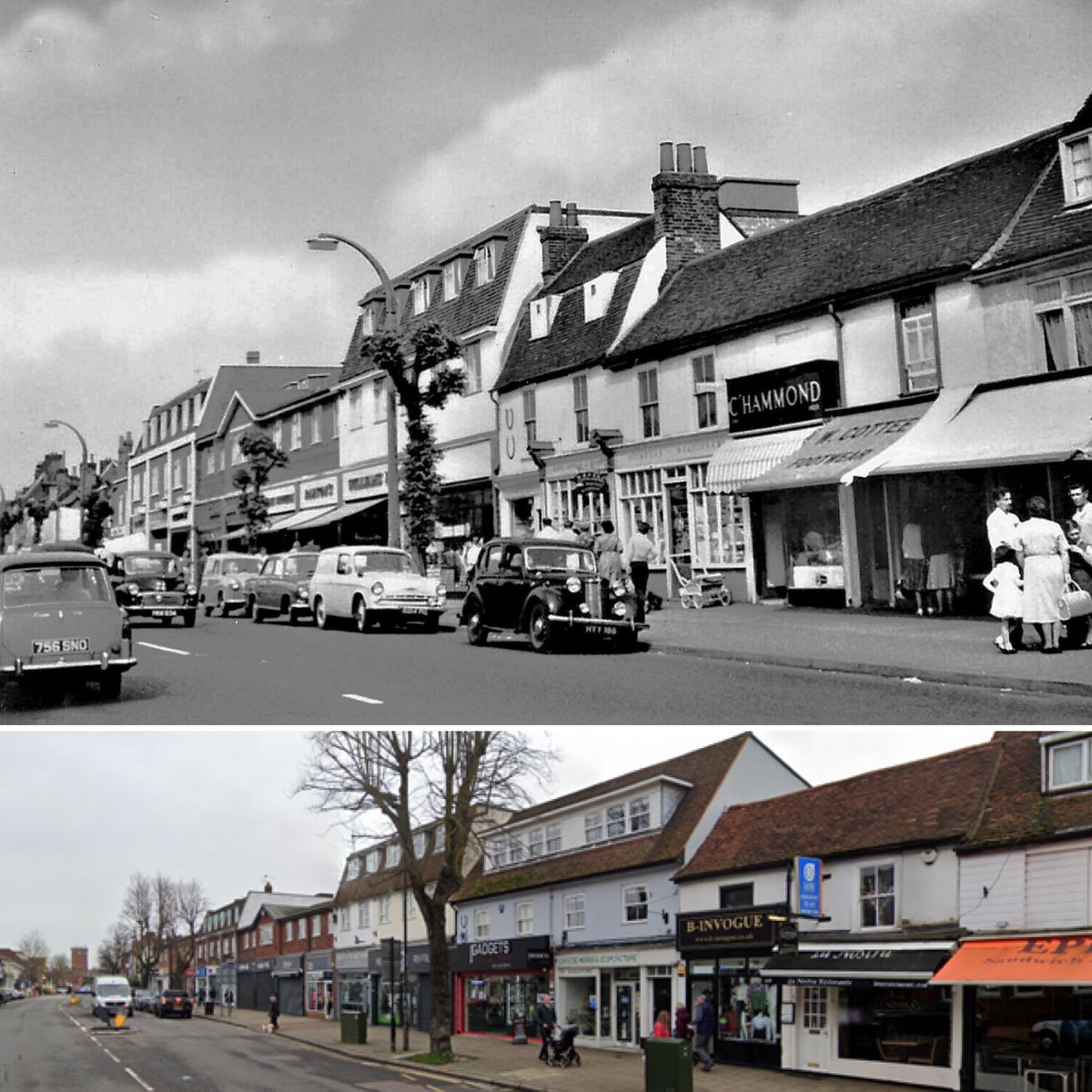
Epping High Street in the swinging 60’s. See the 2 horse shoes on the front of the shop (centre). This marked the location of the Blacksmith run by R G Clark. They were asked to move the business to Hemnall Street in the late 1950’s because of the smell and mess it created.
EPPING THEN & NOW
Epping High Street in 1921 showing a type B, number 10 bus on route to Elephant & Castle. The conductor can be seen on the top deck serving tickets. Interestingly, bus tickets have almost disappeared. The last bus tickets issued on a TFL bus was in 2014.
Epping High Street in May 1961. A visit by the Lord Mayor of London to celebrate the High Street Improvement Scheme. Despite the facelift, the scheme also resulted in the demolition of a number of historic buildings. Today Epping still reveals links to its historic past.
EPPING THEN & NOW
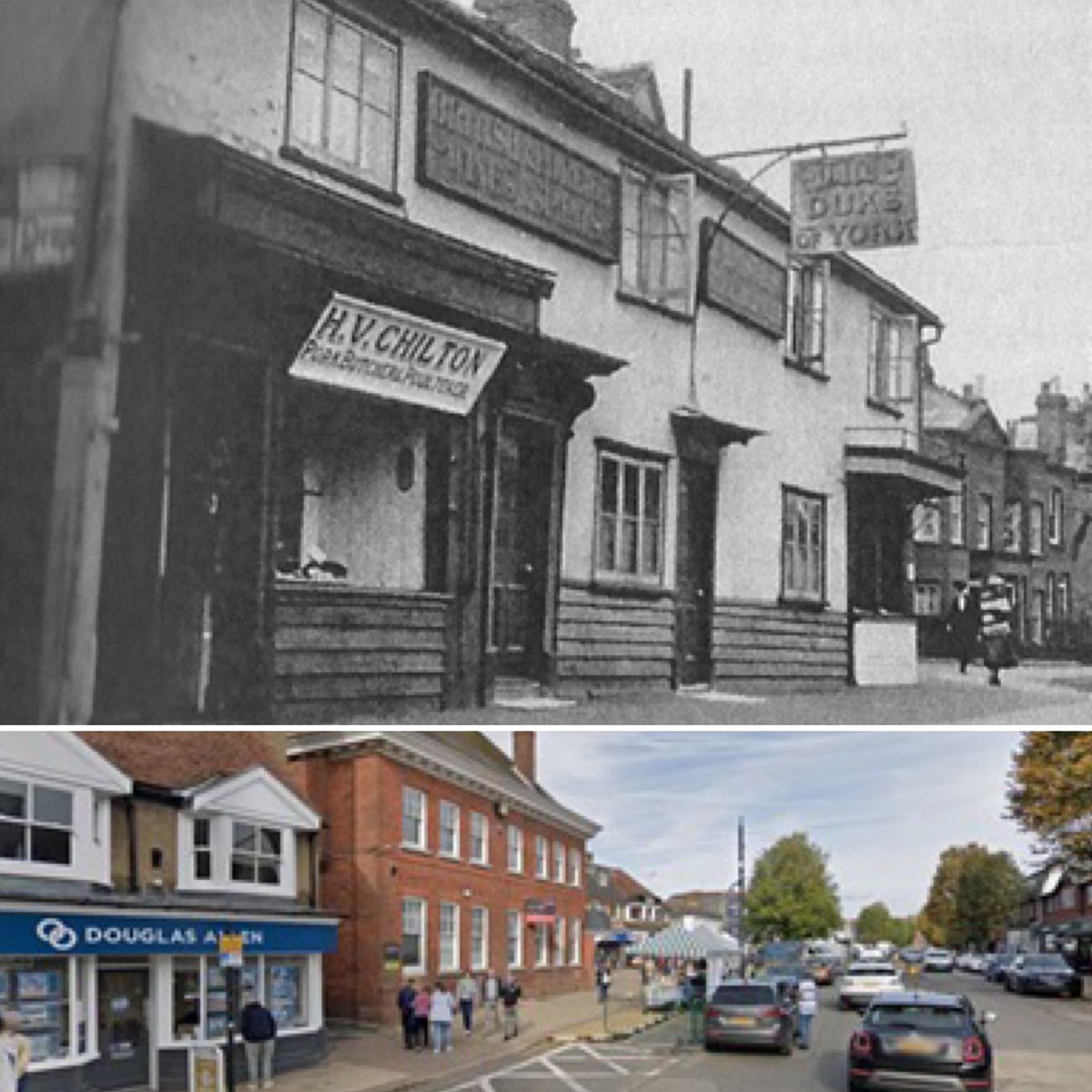
The Old Duke of York, Epping, c1926. The Inn, built in the early 1700’s, once stood where the old Barclays bank building is today. In the 1870’s the old Parish Fire brigade kept their old engine in the yard at the rear of the pub. Demolished in 1931. #epping
EPPING THEN & NOW Epping’s water fountain, c1900. Installed in 1887 to commemorate Queen Victoria’s Golden Jubilee. Despite a period of absence from 1961 to 1989, it has always been a landmark on the Epping High Street. Happy new year to all. #epping#history#essex#fountain