Extremely shortsighted answer
In many ways open models have been SOTA and that’s for a simple reason :
You don’t need frontier models for all tasks types!!
Qwen models have for months internally totally solved some flows why would I put 5.5-moon-terra-pro for that
a lot of ai coding tools ours included have not been clearing the bar for stability and performance you should demand of a daily driver
james is focused on fixing that and there's some novel things we can do to clear that bar more than we ever have
Launching ContainerUtility : the missing native macOS app for Apple’s container CLI
It works with machines, containers, images, networks, volumes, registries. It also has diagnostics, activity, runtime health and a menu bar dashboard!
That just means you don’t fully use all the tools available
- subagents
- /goal
- knowledge grounding
- alerting the model near compaction to recap everything before compaction
Compaction drops Codex's IQ by like 15 points every time. Feels like you have to be really careful with sizing up work.
Part of why Opus & Fable 1M just *feel good* comes from how much you can throw at Claude before the thread feels broken.
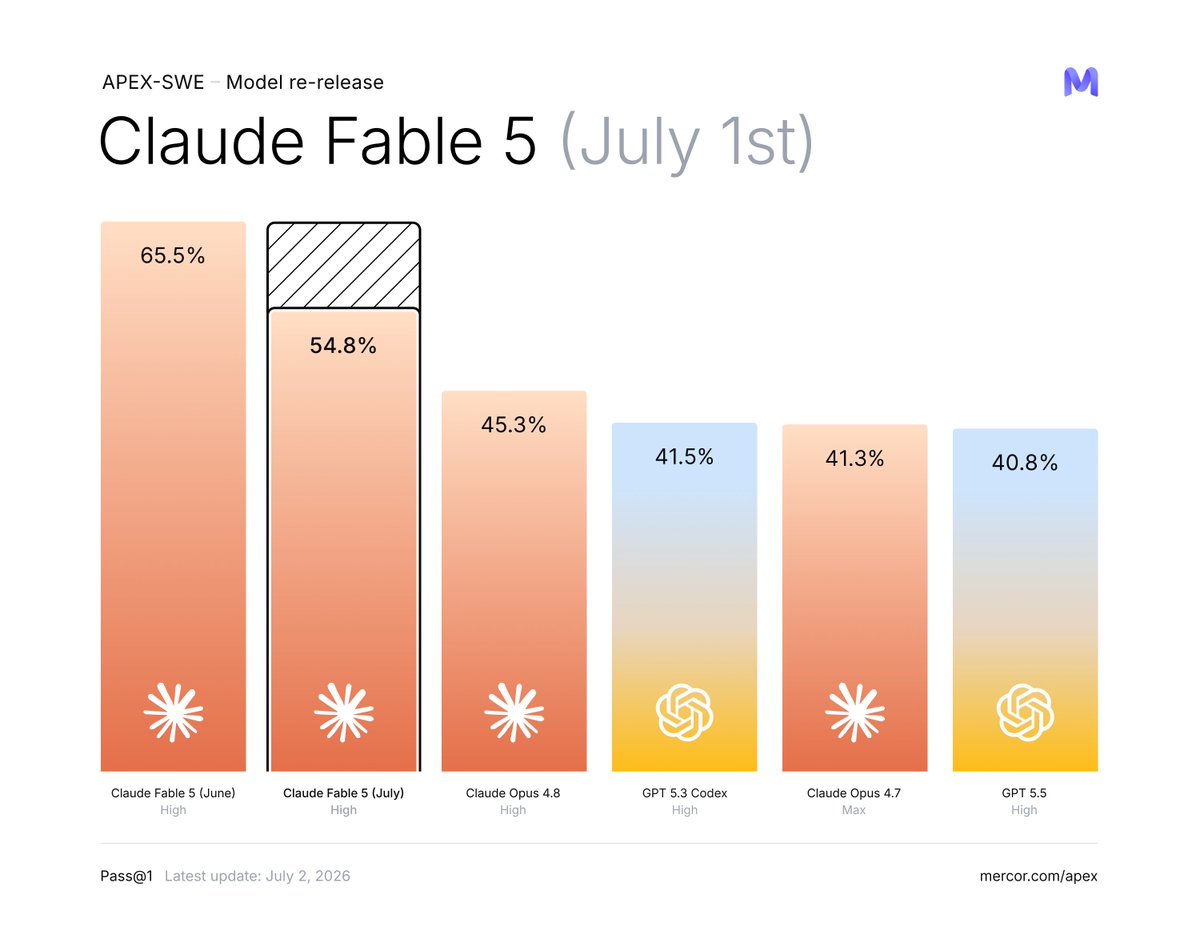
Fable 5 is back and we’ve got results for the re-released version on APEX-SWE.
While it did not perform as well as its earlier version from June, the model still significantly outperforms Opus 4.8.
Fable 5 (June): 65.5% Pass@1
Fable 5 (July): 54.8% Pass@1
Opus 4.8: 45.3% Pass@1
This re-release scored about 10 points below the original Fable 5, however it still beat Opus 4.8 by more than 9 points.
The new AI coding paradigm is a tight ecosystem around
- better git allowing remote and local divergences and reconciliation
- better subagent delegation
- saving traces / resolution steps / human in the loop interventions
- distilling proper knowledge from the loop
Theo and i guess everyone else will discover proxmox lxc agents in 6 months
It's the perfect agent sandbox orchestrator and you can centralize repo state with volume mounts and zfs pools