At eighteen, foster youth are told they are adults. Ready or not.
That is where a lot of careers begin, with no safety net and no one to call.
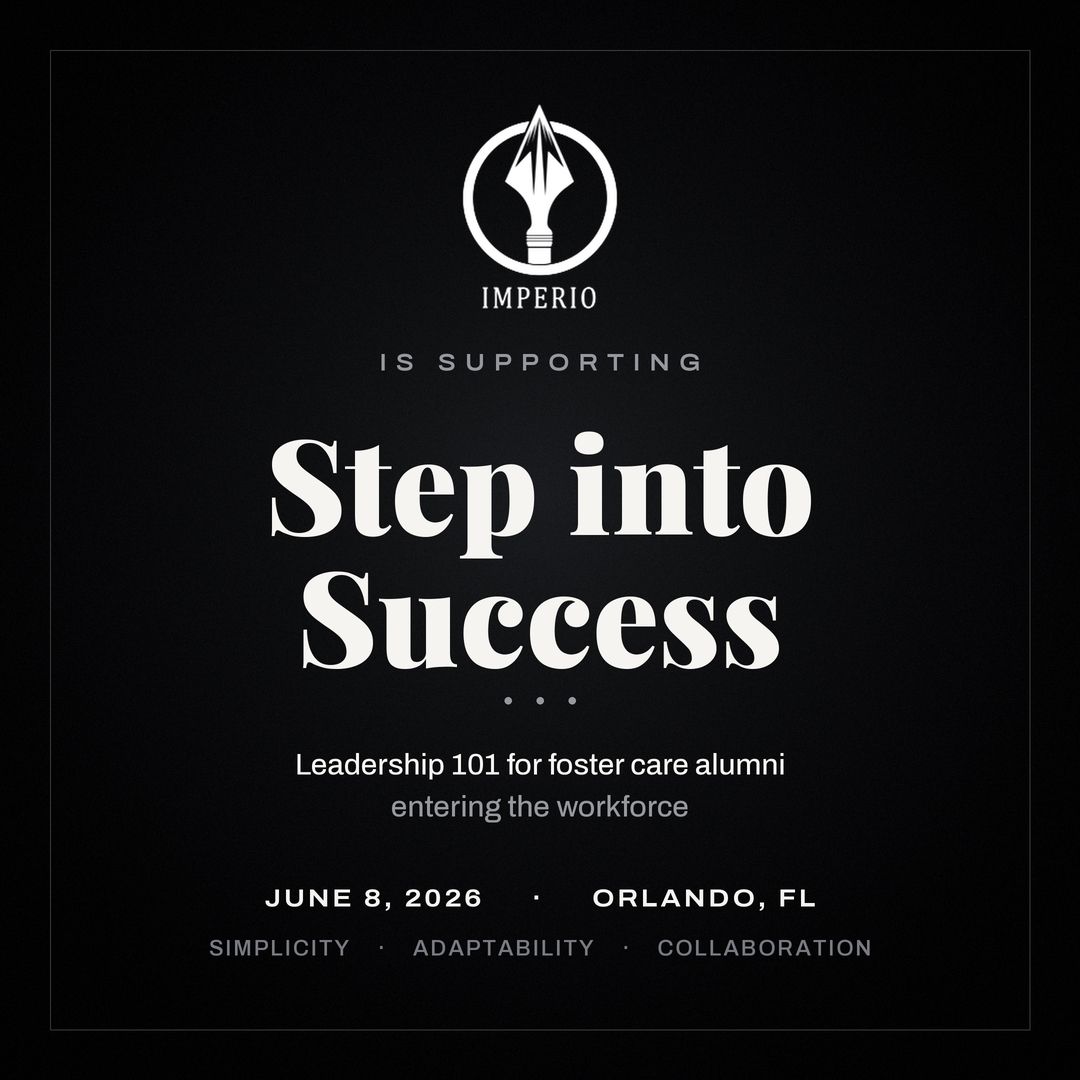
On Monday, June 8, Imperio Consulting is providing a leadership session to Step into Success, a Florida Department of Children and Families program that helps foster care alumni build the skills to land a job and keep it.
Imperio facilitators Steve Toth and Sasha Cooper will lead it. The topic is Leadership 101, built on the same Green Beret Approach we use with our corporate clients. Simplicity. Adaptability. Collaboration.
The principles do not change with the audience. A clear way to handle pressure, earn trust, and finish what you start works the same for someone on their first shift as it does for a senior executive.
These young people already have what it takes. Our job is to hand them a sharper way to use it.
Who took a chance on you early in your career?
#Leadership #FosterCare #Mentorship #WorkforceDevelopment #SDVOSB
Everyone is talking about AI right now.
Layoffs. Smaller teams. Faster output.
Companies are cutting thousands of jobs and saying the same thing:
“We can do more with fewer people.”
And they���re not wrong.
AI is making teams faster.
Leaner.
More efficient.
But here’s what’s getting missed.
Speed doesn’t fix alignment.
Right now, most organizations are increasing output while their teams are still misaligned.
That’s a problem.
Because when you remove people and increase pace, misalignment doesn’t stay the same.
It gets exposed.
Fewer people means fewer informal checkpoints.
Dysfunction that was buffered before now runs unchecked.
In Special Forces, small teams weren’t effective because they were small.
They were effective because they were aligned.
Everyone understood the mission the same way.
Everyone knew exactly what right looked like.
Everyone moved without hesitation.
That’s why 12 could do what 100 couldn’t.
Right now in business, leaders are betting on efficiency.
Fewer people. More technology. Faster execution.
But if alignment isn’t there, all you’ve done is scale confusion.
You get faster mistakes.
More friction.
More failure.
AI is not replacing leadership.
It’s exposing it.
The companies that win won’t be the ones with the most technology.
They’ll be the ones where small teams operate with absolute clarity.
That’s always been the standard.
Now it’s just visible.
What’s the biggest misalignment challenge you’re seeing right now?
I have met a lot of good leaders in 25 years.
I have only met a handful of great ones.
Aaron Bush is one of them.
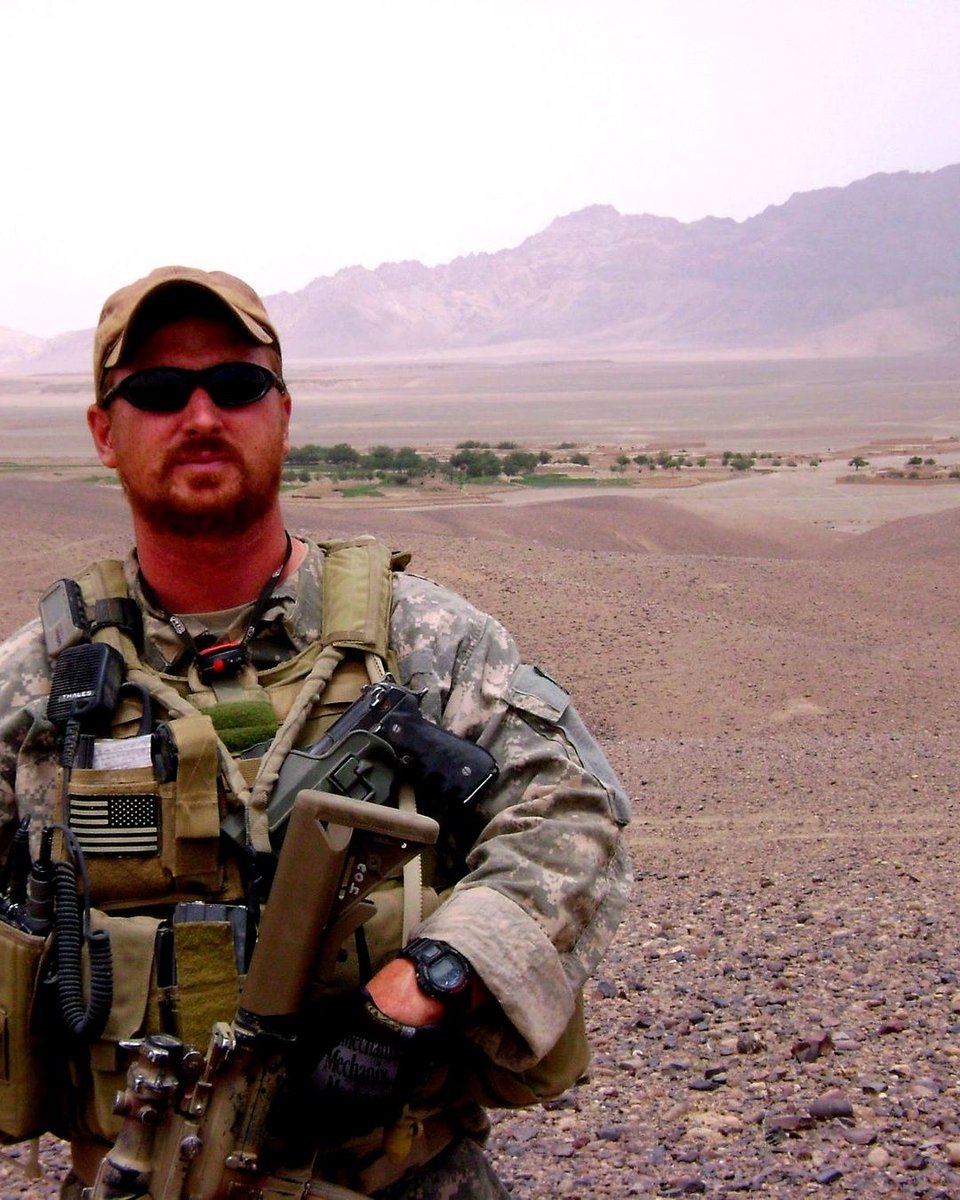
I first met Aaron in Afghanistan. I had just switched teams at the start of a combat rotation under difficult circumstances. New team. New dynamic. High stakes. It was one of the most stressful moments of my career.
The first thing Aaron said to me was simple.
What happened before does not matter. What matters is what you do now. Show me.
That was it. No politics. No judgment. No bias from what he had heard.
Just an opportunity to prove myself.
I spent the next four years on that ODA as his Assistant Detachment Commander. I learned more from Aaron than any other leader I have ever served under. In the military or in business.
Here is what made him different.
He led from the front. Every time. No exceptions.
He was the most competent person in the room and worked to stay that way.
He gave everyone the same opportunity to show they belonged.
He mentored without being asked. He invested in people before they needed it.
His saying was simple. Show me. Don't tell me.
That philosophy built one of the most cohesive and lethal teams I ever served on.
Good leaders manage people. Great leaders transform them.
Aaron transformed everyone around him.
Who is the best leader you have ever served under and what made them great? Drop it in the comments.
Aaron Bush I am grateful for everything.
The fastest way to lose respect is to demand it.
I learned this early in Special Forces.
Rank gets you a title. It does not get you a team.
I have seen senior leaders walk into a room expecting deference simply because of their position. The team gave them compliance. Nothing more.
I have also seen junior leaders with no rank to speak of command the full attention and loyalty of everyone around them.
The difference was never authority.
It was credibility.
In Special Forces, respect was currency. And you earned it the same way every time.
You showed up prepared.
You made the hard call when others hesitated.
You took care of your people before you took care of yourself.
You held the standard even when it was uncomfortable.
And you never asked anyone to do something you would not do yourself.
I see business leaders confuse their title with their influence every week.
They wonder why their team is disengaged.
Why do good people keep leaving?
Why are directives ignored?
Nobody follows a title into a hard situation.
They follow a person they believe in.
Respect is not given with a promotion. It is built one decision at a time.
What is the most important thing a leader can do to earn genuine respect? Drop it in the comments.
Trust is not built in team meetings.
It is built in the moments nobody is watching.
In Special Forces, trust was not assumed because we wore the same uniform.
It was earned. Slowly. Through every decision, every hardship, every moment someone had to rely on the man next to them and found out whether he would hold.
I have been in situations where the mission depended entirely on whether I trusted the team and they trusted me.
Not because we liked each other.
Because we had proven ourselves to each other.
That kind of trust does not come from a team building exercise.
It comes from shared standards, honest communication, and leaders who do what they say they will do every single time.
I see the opposite in business constantly.
Leaders who talk about trust but operate behind closed doors.
Teams that smile in meetings and disengage the moment they leave.
Organizations that wonder why performance is inconsistent.
The answer is always the same.
You cannot perform at a high level with people you do not trust.
And you cannot build trust without consistency.
Not sometimes. Not when it is convenient. Every time.
Trust is either your greatest force multiplier or your biggest liability.
Which one is it in your organization right now? Drop it in the comments.
Resilience is not something you are born with.
It is something you build before you need it.
Most people find out how resilient they are in the middle of a crisis.
That is the wrong time to find out.
In Special Forces, we trained harder than the mission demanded.
Not because we enjoyed suffering.
Because we knew that when things went wrong, and they always went wrong, our training would carry us when our motivation ran out.
Mental toughness is not about gritting your teeth and pushing through.
It is about having built something inside yourself that does not collapse under pressure.
I see leaders in business face their first real crisis and discover they never built that foundation.
The company hits a rough quarter. A key client walks. A team fractures.
And instead of steadying the ship, they panic, retreat, or disappear.
Their team watches. And takes note.
Because resilience is not just personal. It is contagious.
When a leader holds steady under pressure, the team holds steady.
When a leader fractures, the team fractures.
You do not rise to the level of the challenge.
You fall to the level of your preparation.
The time to build resilience is not when the crisis hits.
It is right now, when things are stable enough to do the work.
How are you building resilience in yourself and your team before the next crisis arrives? Drop it in the comments.
Your team is not underperforming because they lack talent.
They are underperforming because nobody built them into a team.
There is a difference between a group of people and a high-performance team. Most organizations never close that gap.
In Special Forces, we did not just recruit the best individuals.
We built them into something greater than the sum of their parts.
Trust was not assumed. It was earned through shared hardship, clear roles, and brutal honesty with one another.
Every man knew his job. Every man knew the man next to him. Every man knew the mission.
That alignment is what made twelve operators more effective than units ten times our size.
I constantly see the opposite in business.
Leaders hire talented people, put them in a room, and call it a team.
Then wonder why communication breaks down.
Why do silos form?
Why performance plateaus.
Talent does not build teams. Leadership does.
High performance is not an accident. It is the result of intentional culture, clear expectations, and leaders who invest in the people, not just the output.
The question is not whether your people are good enough.
It is whether you have built an environment where good people can become great.
What is the one thing that separates a good team from a great one in your experience? Drop it in the comments.
Bad culture does not announce itself.
It shows up quietly. Then it costs you everything.
I have seen it in the military. I see it in business every week.
It starts small.
A leader who says one thing and does another.
A team that stops speaking up because nothing changes when they do.
A standard that gets lowered once, then again, then becomes the new normal.
Nobody calls a meeting to announce that culture is broken.
It just erodes. Slowly. Then all at once.
In Special Forces, culture was not a value on a wall.
It was the standard to which every single person was held every single day.
When someone fell short, the team addressed it. Directly. Without politics. Without delay.
Because we knew that one uncorrected behavior becomes the new standard.
I have seen the same truth play out in business.
Companies do not fail because of bad strategy.
They fail because leaders tolerate behavior that contradicts the mission.
They keep the wrong people too long.
They avoid the hard conversation.
They confuse loyalty with accountability.
Poor culture is not a people problem. It is a leadership problem.
And it is always more expensive to ignore than to fix.
What is the one cultural behavior your organization needs to address right now? Drop it in the comments.
Most people panic in a crisis. Green Berets get quiet.
I have been in situations where everything was falling apart at once. Wrong intelligence. Missing equipment. Plans that dissolved the moment we hit the ground.
What separated our team was not that we were fearless.
It was that we had trained for chaos so many times that chaos felt familiar.
We did not freeze. We assessed. We decided. We moved.
I see the opposite in business every day.
A market shifts. A key person leaves. A deal falls through. And suddenly a leadership team that looked confident is paralyzed, waiting for the situation to stabilize before they act.
But the situation never stabilizes on your timeline.
Crisis does not reward the most prepared plan. It rewards the most prepared mind.
The leaders who perform under pressure share three things.
They stay calm when others escalate.
They make decisions with incomplete information.
They keep their team focused on what they can control.
That is not a personality trait. It is a skill. And it can be trained.
The question is not whether a crisis is coming.
It is whether your team will be ready when it does.
What is the biggest crisis your team has faced and how did your leadership respond? Drop it in the comments.
$22 million on lobster and steak.
That is the headline dominating Washington this week.
The media is calling it “Lobstergate.”
A watchdog report revealed the Pentagon spent millions on lobster tails, ribeye steaks, and king crab during a massive end-of-fiscal-year spending surge.
Cue the outrage.
But after 25 years in the military, I can tell you something most people are missing.
This story is not really about lobster.
It is about incentives.
In the military, surf and turf actually is a tradition.
Before deployments.
After long training cycles.
On holidays far from home.
A good meal can mean a lot to troops who have been grinding for months.
But that is not what this story is really about.
This is about something every military leader understands.
Bad incentives create bad behavior.
The federal budget system runs on a rule called “use it or lose it.”
If an organization does not spend its full budget by the end of the fiscal year, it risks getting less the next year.
So what happens?
Units rush to spend money in September.
Across the government.
Every year.
Not because leaders are reckless.
Because the system rewards spending more than it rewards spending well.
On the battlefield, incentives matter.
If the system rewards speed over accuracy, people move fast and make mistakes.
If it rewards appearance over results, people focus on optics instead of outcomes.
Budgets work the same way.
You get the behavior you incentivize.
The real leadership lesson from “Lobstergate” is not about lobster.
It is about systems.
If you want disciplined outcomes, you need disciplined incentives.
Otherwise, even good leaders end up playing a bad game.
Leadership is tested when the stakes are real.
Right now, the world is watching the conflict with Iran escalate.
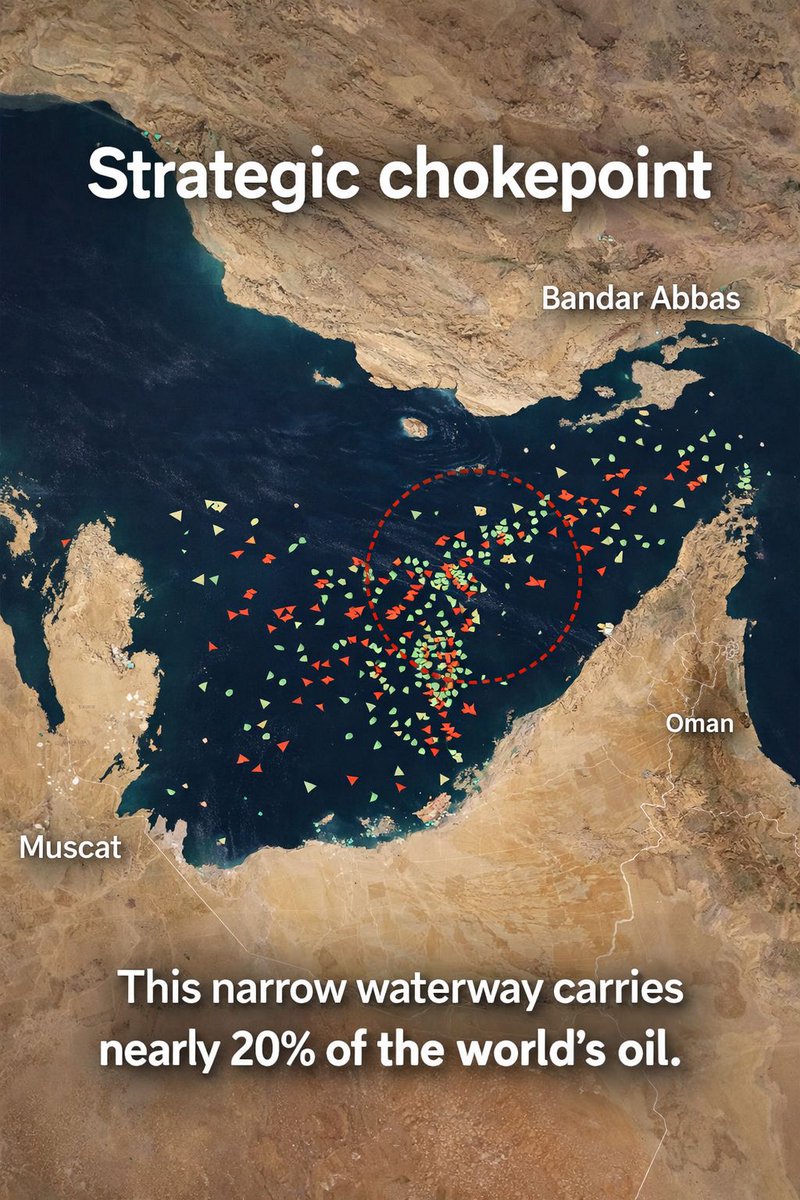
U.S. forces have struck Iranian naval assets in the Strait of Hormuz after intelligence showed Iran laying mines in the waterway. This narrow passage moves about 20% of the world’s oil, and fighting there has already disrupted global shipping and energy markets.
The result is predictable.
Oil prices are spiking. Global supply is tightening. Governments are releasing emergency reserves just to stabilize markets.
But the lesson here goes beyond energy markets.
In Special Forces, we learned something early.
When a strategic chokepoint is threatened, everything downstream feels it.
On the battlefield, that might be a mountain pass or a bridge.
In the global economy, it can be a shipping lane, such as the Strait of Hormuz.
One narrow point of failure can ripple across the entire system.
The same principle applies to organizations.
One broken communication channel.
One weak leader in a critical role.
One decision delayed at the wrong moment.
And suddenly the whole operation slows down.
Good leaders understand the chokepoints in their system.
Great leaders secure them before the crisis starts.
Because once the fight begins, you do not have time to redesign the system.
You only have time to execute.
In Special Forces, we had a saying:
A good decision now beats a perfect decision too late.
Plans don't survive contact with the enemy. They never did. They never will.
The teams that win aren't the ones with the best plan.
They're the ones who adapt fastest when the plan breaks.
We trained for this. Constantly.
Not because we expected to fail.
Because we knew uncertainty was guaranteed.
Most business leaders freeze when things go sideways.
They wait for more information. More consensus. More certainty.
But pressure doesn't wait.
The best leaders I've worked with share three traits:
1. They assess fast.
2. They decide with the information they have.
3. They move and adjust as they go.
Indecision is a decision. It just hands the advantage to your competition.
Stop training your team to execute. Train them to think.
Because the day things go sideways, you need leaders at every level.
Not followers waiting for orders.
Where have you seen indecision cost an organization? Drop it in the comments.
"I already told them."
Four words that have killed more teams than bad strategy ever will.
In Special Forces, we had a rule. Saying it once wasn't communication. It was noise.
Real communication means the message was received, understood, and can be acted on.
We briefed. We back-briefed. We asked questions. Not because the team was slow — because the mission was too important to leave to assumption.
Most leaders overcommunicate the what. Almost none communicate the why.
When your team knows why the mission matters, they stop waiting for instructions.
They start making decisions that move the team forward.
Tell them what you need. Tell them why it matters.
Then trust them enough to get out of the way.
Communication isn't a soft skill.
It's the difference between a team that executes and one that waits to be told.
This deadly mistake was the first thing I learned as a Green Beret.
In Special Forces, confusion was the real enemy.
If the team didn't understand the mission, it didn't matter how skilled we were.
Before every operation, we asked one question:
Does everyone understand the intent?
Because when the plan falls apart, intent keeps you moving in the right direction.
In business, it's no different.
Most teams don't fail because they lack effort.
They fail because they lack clarity.
People can't execute what they don't understand.
Leaders who assume everyone "gets it" are already behind.
Clarity builds confidence.
Confidence builds speed.
Speed builds trust.
When everyone sees the same picture, they move as one team.
Leadership starts with clarity. It ends with results.
Heavy is the crown.
Leadership is not status.
It is weight.
Southern Afghanistan.
All day firefight.
Two vehicles stuck in the open.
RPG blast.
Our Team Sergeant hit with shrapnel.
He was losing blood.
No medevac until we secured the area.
A QRF pushed toward us.
I was tasked to lead it in.
On the way, our RG 33 was hit by an IED.
The vehicle stayed mobile.
I stayed in the fight.
Back at the main element, my commander gave me one job.
Get him out.
I called for exfil.
“Is the HLZ secure?”
We had not taken direct fire for a short window.
Mortars were still possible.
I looked at my CCT.
I made the call.
“HLZ secure.”
The bird came in.
We loaded our teammate.
Pushed the crew to move.
They lifted off.
Moments later, mortars hit near our position.
The helo cleared.
He lived.
Responsibility plus decisiveness equals trust.
Leadership means deciding when the risk does not disappear.
It means acting inside the window you are given.
In business, the rounds look different.
Layoffs.
Strategic pivots.
Removing someone who is hurting the team.
Committing capital when certainty is not there.
You rarely get perfect conditions.
You get a choice.
Strong leaders:
• Own the weight. No deflection.
• Decide within the window. Waiting closes it.
• Stand by the outcome. No public second-guessing.
Heavy is the crown.
What decision are you carrying right now that needs to be made?
#Leadership #HighPerformanceTeams #Decisiveness #Accountability
Mental toughness isn’t born.
It’s forged in the suck, and 90% quit before the real forging even starts.
In 25 years of leading Special Forces teams, missions almost never collapsed because bodies gave out.
They collapsed when their minds gave out first.
One long patrol.
Days with no sleep.
Ambush hits.
Team rattled.
Doubt floods in.
No collapse.
We leaned on habits drilled deep.
Reframed the pain as temporary.
Locked on the next objective.
Pushed forward. Mission done.
Resilience plus discipline equals unbreakable.
High-performing teams don’t wait for calm days.
They train mental armor before the storm.
They use a disciplined framework:
• Embrace controlled stress. Train in fatigue and chaos so it becomes familiar, not fatal.
• Reframe the suck. Turn setbacks into data. What’s the next lesson?
• Anchor in purpose. Remind the team why it matters. Clarity crushes doubt.
If pressure is cracking your team right now, skip hoping for
toughness.
Build the system today.
Resilience follows training.
What’s one habit that keeps you mentally strong when things get brutal?
Drop it below. Let’s exchange notes.
#Leadership #HighPerformanceTeams #Resilience #MentalToughness
I’ve led teams through hell.
The real killer isn’t bullets. It’s confusion.
In 25 years leading Special Forces teams, performance rarely stalled from lack of effort. It stalled from lack of clarity.
One night op.
Bad intel. Wrong building.
Lost comms with my commander.
No panic. No noise. He stayed back and trusted us.
We adjusted. Executed clean.
When comms came back, it was a short debrief and back to mission.
Clarity plus trust equals speed.
High performing teams do not wait for chaos to pass. They remove ambiguity fast.
They use a disciplined framework:
• Clarify roles. Who owns what, even when plans shift?
• Isolate decisions. What is the single move that cuts through the noise?
• Build repeatability. Execution is not hype. It is a system you train into muscle memory.
If volatility is slowing your team right now, skip the motivation speech.
Remove the fog.
Speed follows clarity.
What ambiguity have you eliminated on your team lately?
#Leadership #HighPerformanceTeams #Execution #TeamPerformance
Most leaders choke their teams without realizing it.
They make reversible decisions feel irreversible.
Not every decision carries the same weight.
Some decisions can be changed later.
Some cannot.
Strong leaders know the difference.
In Special Forces, we treated decisions in two categories.
Category one. Reversible.
Move fast. Delegate. Execute. Adjust.
Category two. Irreversible.
Slow down. Pressure test. Gather input. Decide with intent.
The mistake is not making bad decisions.
The mistake is misclassifying them.
When leaders treat every decision as permanent, teams hesitate. Approval chains grow. Momentum dies.
Here is how you fix it.
Define the decision type up front.
Ask one question. If this fails, can we recover without serious damage?
If yes, move. If no, elevate the rigor.
Clarify decision rights.
Not every call belongs at the top. Speed requires clear ownership at every level.
Install tight feedback loops.
Reversible decisions demand rapid review. Weekly metrics. After action reviews. Clear triggers to adjust.
Run a pre-mortem on irreversible calls.
Before committing, ask how it fails. Identify second-order effects. Stress test assumptions.
Document intent.
When people understand the why, they adapt correctly when conditions shift.
Speed without discipline creates chaos.
Discipline without speed kills growth.
Design a system that allows both.
The goal is not perfection.
The goal is to move fast where you can and be deliberate where you must.
That is how teams win.
Complexity is killing your team’s performance. Here’s how to fix that.
Too often, we chase new frameworks when fundamentals will serve us better. A management tip cited by Forbes in Harvard Business Review explained that effective management isn’t about mastering mysterious, complicated methods; it’s about keeping things simple and following proven ideas. Great leaders are still the ones who are competent, caring, and benevolent.
Research from N2Growth points out that complexity often leads to increased costs and failed implementations, and that the most effective way to deal with complexity is to strip it away; simplifying processes drives focus, efficiency, and productivity.
In the Green Beret Approach, simplicity means streamlining workflows and processes to boost operational efficiency and deliver measurable results. During my time leading construction projects and Special Forces teams, cutting through complexity and clarifying goals often unlocked capacity we didn’t know we had. When you remove unnecessary layers, you create space for your people to focus on what matters and act decisively.
How do you ensure your team keeps things simple when problems feel complex? I’d love to hear your thoughts.
Silence is one of the most dangerous signals on a team.
In Special Forces, silence never meant agreement.
It meant confusion, uncertainty, or missing information. Any of those could get people killed.
Leaders who mistook silence for alignment put their teams at risk.
I see the same mistake in business. A leader explains a plan. No one asks questions. Heads nod. The meeting ends. Execution breaks later, and everyone is surprised.
That silence was the warning.
High-performing teams are not quiet. They surface friction early. They ask questions before work starts, not after it fails. They challenge assumptions while there is still time to adapt.
Strong leaders do not reward silence. They interrupt it. They ask people to explain the plan back. They make disagreement safe. They treat questions as a sign of commitment, not resistance.
If your team is quiet, do not assume alignment.
Assume risk.
Leadership is not about being understood once.
It is about ensuring understanding holds under pressure.