I am an advocate for students with learning disabilities and a professor of special education in the College of Education and Human Development, Mizzou
🔍 Wrapping up the year is a great time to reflect on how your MTSS system is working and where to focus next. Use our MTSS Fidelity of Implementation Rubric to review strengths, identify priorities, and plan next steps: https://t.co/QPZwn8wrTd
Culturally Responsive Teaching Tip
Tap the beat of fractions using music from different cultures. The Bomba, a traditional dance rhythm from Puerto Rico, uses 5-beat cycles perfect for practicing fractions like 1/5 or 4/5.
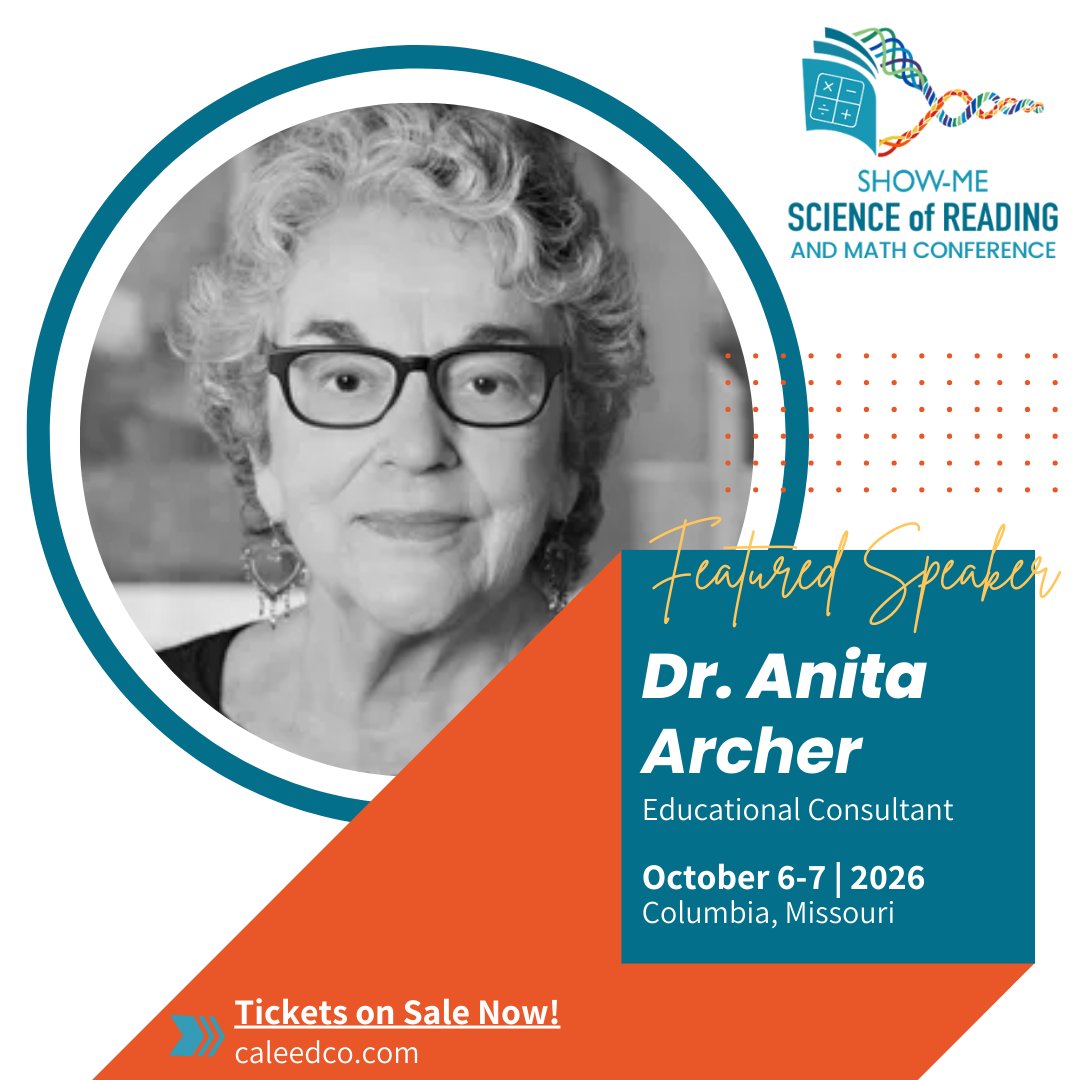
We’re excited to feature Dr. Anita Archer at the 4th Annual Show-Me Science of Reading & Math Conference, bringing practical, research-based explicit instruction educators can use right away.
📍 Oct 6–7, 2026 | Columbia, MO
🎟️ https://t.co/QyZ6lUAAnY
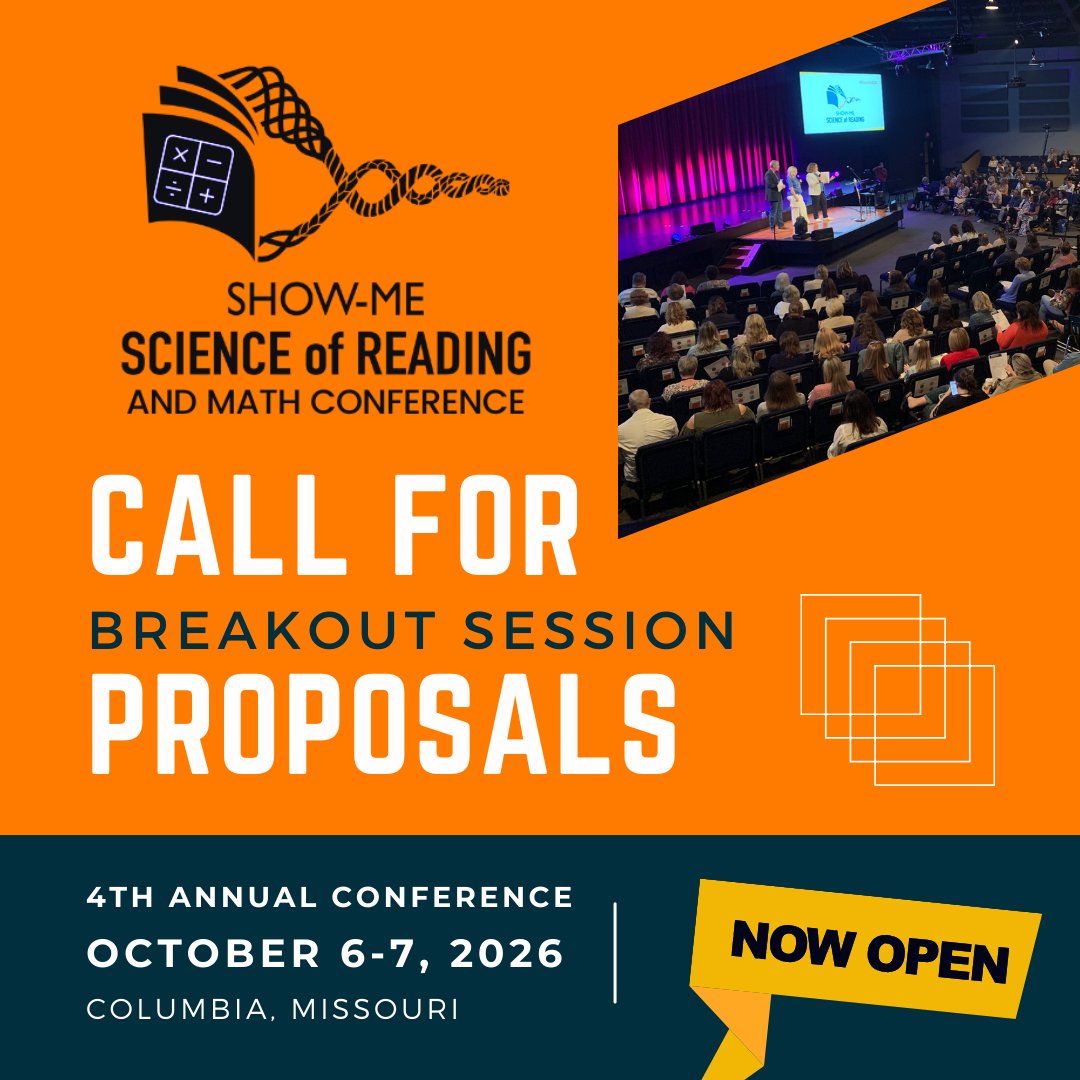
📢 🎤 The call for 𝐁𝐫𝐞𝐚𝐤𝐨𝐮𝐭 𝐒𝐞𝐬𝐬𝐢𝐨𝐧 𝐏𝐫𝐨𝐩𝐨𝐬𝐚𝐥𝐬 is officially open for the 4th Annual Show-Me Science of Reading & Math Conference!
✨ Both experienced & first-time presenters are encouraged to apply.
📅 Proposals open through 2/13 - https://t.co/1vzbZ83Nyv
Researchers from Mizzou’s College of Education and Human Development and Mizzou Engineering are joining forces to drive innovation across disciplines. Learn more about the first “Edu-neering” event: https://t.co/g7inS267sZ
👻 Don't get spooked if students are successful in one setting, but not other settings. Our new Self-Assessment of Generalization Practices tool evaluates how well staff are teaching students to transfer skills across settings. Download the free tool:
https://t.co/umI3Gby8bO
Did you know?
Australian 4th & 6th grade students perform better than US peers at fraction number line estimation. AU curriculum uses multiple representations to teach fractions, while US almost exclusively uses a part-whole (Resnick et al., 2023).
Join our study. Link in bio!
We have a new resource to share with you, Error Analysis in Math. Errors in student work samples are one type of diagnostic data that educators may use to better understand students’ skill gaps. Download our tip sheet! https://t.co/Y6AgMCZZog
Did you know?
Repetitive fluency practice can help free up student’s mental load when trying to solve more complex problems.
Join our study! Link in bio.
Did you know? Using precise math language can help support students’ understanding of fractions.
For example, say “numerator” and “denominator” instead of “top number” and “bottom number.” See Hughes et al. (2016) for more examples.
Join our study! Link in bio
Check out the @MTSScenter and @NCII's Kyle Allen's new blog on practical steps to turn progress monitoring into a powerful tool! https://t.co/NCduvSJzc5